

Nov 11, 2026
Can Liposomal Glutathione Powder Be Combined with Other Antioxidants?
Combining liposomal glutathione powder with a second antioxidant is not a marketing decision that a formulator ratifies at the end of a project. It is a compatibility question that has to be settled before the first stability batch is filled, because two antioxidant systems in one matrix do not simply add their individual behaviours. They interact through redox potential, through pH, through metal traces and through the emulsifier that holds the liposome together. This article sets out how that interaction is assessed in practice, which numbers move when a second active is introduced, and what a buyer should expect to see in the documentation before committing to a combination format.
Why a Combination Starts as a Chemistry Question
Glutathione in its reduced form is a tripeptide with a thiol group that is willing to donate electrons. That is precisely why it is useful in an ingredient context, and precisely why it is difficult to co-formulate. Any second antioxidant with a higher redox potential will tend to oxidise the glutathione pool rather than complement it, and any oxidising agent in the matrix will consume the reduced fraction before the product reaches the consumer. The formulator's task is therefore not to choose the most interesting partner ingredient, but to establish which combinations leave the reduced fraction intact across the shelf life declared on the pack.
Three variables dominate the outcome. The first is the redox potential gap between the two actives. The second is the pH of the finished matrix, because thiol oxidation accelerates as pH rises above the mildly acidic range. The third is the presence of transition-metal traces, which catalyse oxidation at concentrations far below those that would fail a heavy-metals specification. A combination that looks reasonable on a label can fail on any one of these three, and the failure is usually visible first as a colour shift rather than as an assay loss.
The Grade You Are Actually Combining
Before any partner ingredient is discussed, the glutathione grade itself has to be pinned down. Specifications that describe a liposomal glutathione powder in general terms are not sufficient for a combination project, because the loading level determines how much room is left in the matrix for a second active, and the encapsulation efficiency determines how much of the glutathione is protected from the aqueous phase where oxidation occurs.
| Parameter | Specification | Why it matters in a combination |
|---|---|---|
| Glutathione content | 10%–50% (25% is a common standard) | Sets the maximum second-active load before the powder becomes physically unstable |
| Encapsulation efficiency | 85%–98% | Determines the fraction exposed to the aqueous phase and to the partner's redox chemistry |
| Appearance | White to off-white, free-flowing powder | Colour is the earliest visible indicator of oxidation in a blended matrix |
| Sensory | Low sulphur odour | Sulphur notes intensify when the reduced fraction is depleted |
| Lead | < 0.5 ppm | Metal traces catalyse thiol oxidation even at specification-compliant levels |
| Total plate count | < 1,000 cfu/g | Microbial load interacts with preservative strategy in liquid formats |
| Testing methods | HPLC (GSH/GSSG ratio), DLS (particle size), sensory | The ratio, not the total, tells you how much reduced glutathione survived |
The ratio deserves emphasis. A certificate of analysis that reports only total glutathione cannot distinguish a batch that is fully reduced from one in which a substantial fraction has already converted to the disulphide form. For a single-active product that distinction may be tolerable. For a combination it is decisive, because the second antioxidant will continue to drive the equilibrium in one direction during storage.
Redox Coupling: What the Ratio Tells You
The GSH/GSSG ratio is the most useful single number in a combination project. It is measured by HPLC and reported alongside the total glutathione figure. A high ratio indicates that most of the glutathione is in the reduced state; a falling ratio across a stability programme indicates that oxidation is proceeding, whether driven by the partner active, by dissolved oxygen, or by metal traces in the excipient stream.
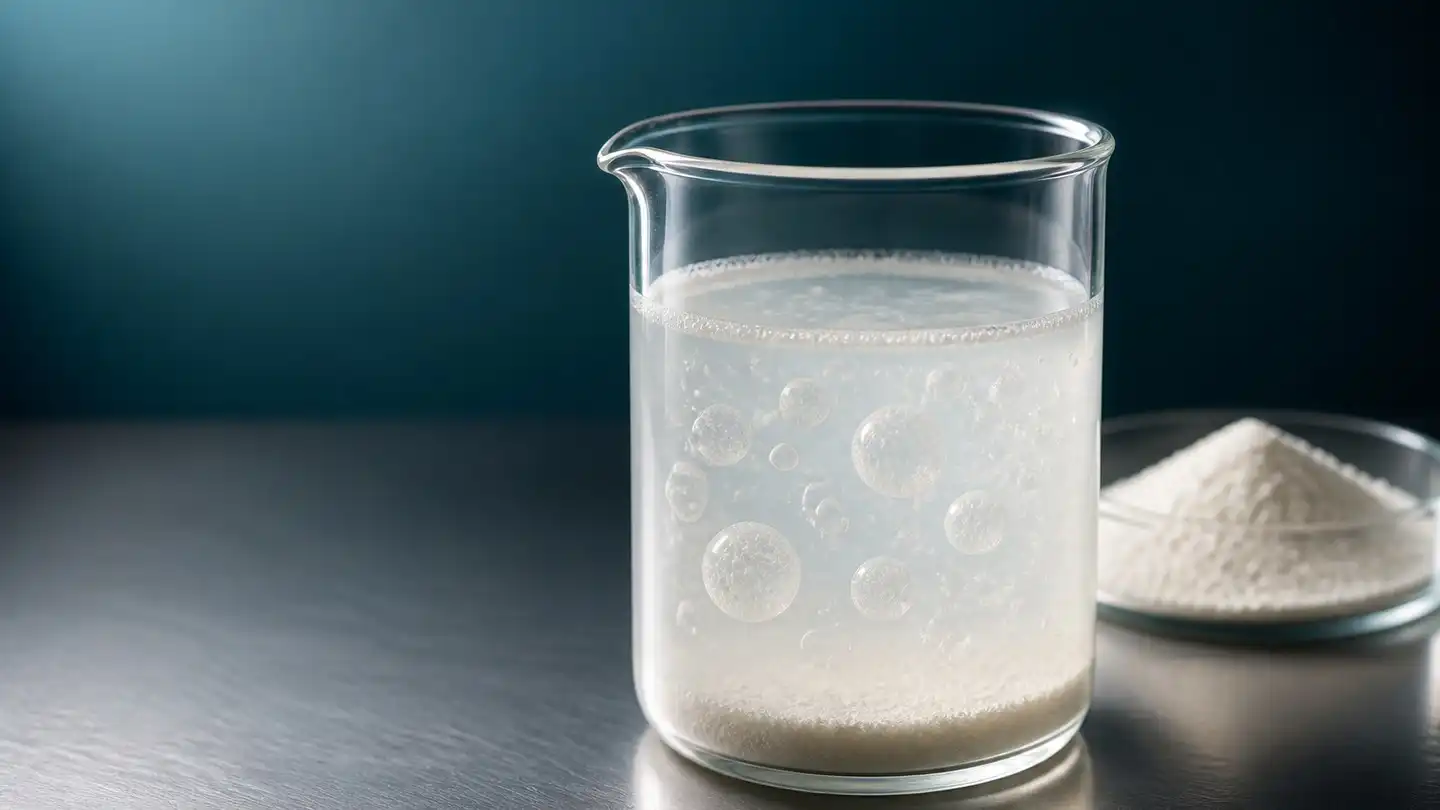
This is where a liposomal format earns its place in a combination rather than merely adding cost. Encapsulation separates the glutathione from the continuous phase, and therefore from the partner ingredient, for as long as the bilayer remains intact. The practical consequence is that the ratio holds better in a liposomal matrix than in a simple blend, provided the encapsulation efficiency is genuinely in the high eighties or above and provided the drying step did not compromise the bilayer. A supplier that reports encapsulation efficiency without reporting the method used to obtain it is giving the formulator a number that cannot be audited.
Three Combination Classes and Their Failure Modes
Most commercial combinations fall into three groups, and each fails in a characteristic way. The table below summarises the mechanism rather than the marketing rationale, because the mechanism is what determines whether a trial will succeed.
| Partner class | Typical example | Interaction mechanism | First visible signal |
|---|---|---|---|
| Reducing agents | Ascorbic acid and its salts | Competes for dissolved oxygen; can reduce the disulphide back to the thiol, but also lowers matrix pH and accelerates hydrolysis of the phospholipid | pH drift downward within days of blending |
| Polyphenols | Resveratrol, curcumin | Undergoes its own oxidation and generates quinones that react with thiols; colour darkens as the quinone pool grows | Browning and a fall in the GSH/GSSG ratio |
| Redox-active minerals | Selenium salts, copper traces | Acts as an oxidation catalyst at trace levels; the effect is disproportionate to the quantity added | Ratio decline without a matching drop in total glutathione |
The polyphenol case is the one that most often surprises formulators, because both ingredients are presented as antioxidants and the assumption is that they reinforce each other. In an aqueous matrix the opposite can occur: the polyphenol oxidises first, its quinone intermediate reacts with the glutathione thiol, and the result is a loss of both actives together with a colour change that is difficult to reverse. Where such a combination is commercially necessary, the workable approach is physical separation within the finished format rather than intimate blending.
What Combining Does to the Label
A combination changes the arithmetic on the supplement facts panel. Each active must be declared at the quantity present at end of shelf life, not at the quantity added at manufacture. That means the overage has to be justified by stability data for the combination, not by data for either active alone. It is common to see a project carry over an overage figure from a single-active predecessor and find, twelve weeks into an accelerated study, that the glutathione figure has fallen below the declared amount while the partner active is still within tolerance.
Two further points belong here. First, the declared glutathione quantity should be expressed on the same basis as the assay method used in release testing, otherwise the label and the certificate will never reconcile. Second, where the combination is sold on the strength of the pairing itself, the ratio between the two actives becomes a specification in its own right and should be written into the purchase agreement with a tolerance, so that a reformulation by the supplier cannot silently change the product.
Assay Interference in a Mixed Matrix
Analytical methods validated for a single active frequently behave differently in a blend. In a glutathione and polyphenol combination, the chromatographic peak for glutathione can be partially masked by co-eluting polyphenol derivatives, which inflates the apparent total and depresses the apparent ratio. The practical remedy is a method suitability check run on the finished blend rather than on the raw material, and a specification that states which column chemistry and which detection wavelength the method assumes.
Stability Testing a Combination Properly
A combination cannot be cleared on a single accelerated condition, because the two degradation routes rarely share the same sensitivity profile. The table below sets out the minimum programme that gives a formulator enough information to set a shelf life with confidence.
| Element | Recommended approach | What it must resolve |
|---|---|---|
| Conditions | Accelerated plus intermediate plus long-term, run in parallel | Whether the failure is temperature-driven or moisture-driven |
| Timepoints | Sufficient points to establish a trend rather than a single end-point | Whether the ratio declines linearly or falls off after a threshold |
| Assays per point | Total glutathione, GSH/GSSG ratio, partner active, moisture, colour | Which active fails first, and whether colour precedes assay loss |
| Packaging | Tested in the intended commercial pack, not in a laboratory jar | Whether the moisture barrier is adequate for the combination |
| Blend uniformity | Multiple positions per batch | Whether the two actives segregate during filling |
Documentation to Request Before the First Blend
The documentation set for a combination project is larger than for a single active, and the additional items are specific. A buyer should expect a certificate of analysis that reports the GSH/GSSG ratio and names the method; a specification sheet that states the loading level and the encapsulation efficiency with the technique used to measure it; a compatibility statement covering the intended partner active, however brief; and a stability summary that addresses the combination rather than the individual components. Where the finished product will carry a claim about the pairing, the regulatory rationale for that claim belongs in the file as well.
Manufacturing control is the other half of the picture. A supplier that runs its liposomal glutathione line under a documented quality system, with in-process checks on encapsulation after drying and a defined deviation process, will be able to hold a combination specification across batches. The control points that matter at that stage are described in the site's guide to liposomal glutathione powder manufacturing quality control, and they are worth reading alongside the specification sheet, because a tight specification is only usable if the process behind it is stable.
Practical Sequence for a Combination Project
The order of work matters more than the individual steps. Start with the grade: fix loading, encapsulation efficiency and the ratio specification. Then run a binary compatibility screen at the intended ratio, in the intended matrix, with colour and ratio as the primary endpoints. Only after that screen passes should a pilot blend be produced, and only after the pilot blend holds its ratio across an accelerated window should the label arithmetic be fixed. Projects that begin with the marketing concept and work backwards tend to discover the incompatibility at the pilot stage, when the tooling and the packaging have already been committed.
Two supporting references are useful when writing the internal justification: the site's comparison of standard and liposomal glutathione forms for the rationale behind encapsulation, and its guidance on whether liposomal glutathione can be supplied as a powder for the handling implications of a dry blend. Both feed directly into the questions a contract manufacturer will ask when the combination reaches the filling line.
Where the Combination Decision Really Sits
None of this argues against combinations. It argues for handling them as an engineering problem with a definable answer. The proportion of combinations that fail in the market is not driven by a shortage of interesting partner ingredients; it is driven by projects that specified the pairing commercially and left the redox chemistry to be discovered during stability testing. A buyer who asks for the ratio specification, the method behind the encapsulation figure, and a compatibility statement before the first blend is not being difficult. They are compressing the discovery into the quotation stage, where a change is still inexpensive.
Next Step
For technical review of a specific combination, including the compatibility screen and the documentation set described above, contact the formulation team at info@emerwell-bio.com with the intended partner active, the target ratio and the finished format. Samples of the standard grade are available for trial work, and the liposomal glutathione powder specification sheet sets out the loading levels and encapsulation range that a combination project would start from.
This article is intended for ingredient buyers, formulators and quality professionals. It describes raw-material specifications and analytical practice and does not address the use of any finished product by an individual. Statements about finished products remain the responsibility of the brand that markets them.
References
- U.S. Food and Drug Administration. Current Good Manufacturing Practice in Manufacturing, Packaging, Labeling, or Holding Operations for Dietary Supplements, 21 CFR Part 111. ecfr.gov
- U.S. Food and Drug Administration. Search for FDA Guidance Documents. fda.gov
- FAO/WHO. Codex Alimentarius Commission. fao.org
- European Food Safety Authority. Food Additives. efsa.europa.eu
Online Message