Jul 6, 2026
Difference Between Standard and Liposomal Glutathione Forms
The primary distinction between conventional and liposomal formulations of glutathione is how they are delivered and how well they work in the body. Standard glutathione, which comes in powders, pills, or tablets that aren't protected, breaks down a lot when it comes in contact with stomach acid and digestive enzymes, so it's not absorbed very well by the body. Liposomal glutathione powder uses phospholipid encapsulation technology to make protective vesicles that keep the active ingredient safe as it goes through the digestive system. This makes it possible for up to 13 times more absorption than with other forms. This capsule keeps the tripeptide structure of reduced glutathione and also makes it easier for cells to take it in directly. This makes it a preferred choice for formulators who want clinical-grade effectiveness in functional beverages and nutraceuticals.
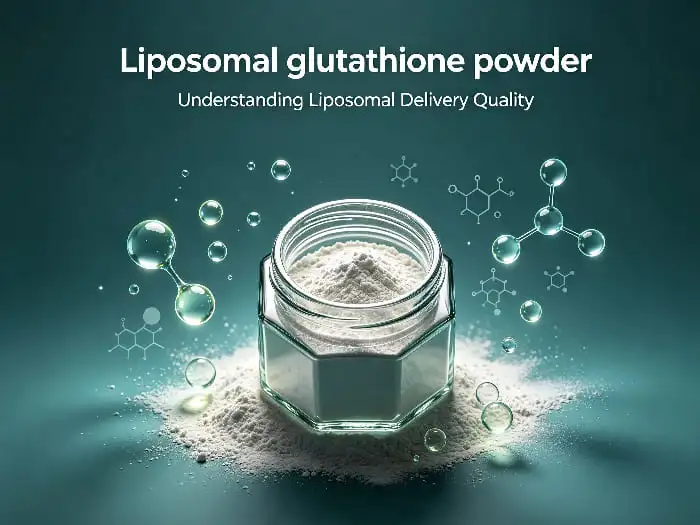

Overview of Glutathione Forms: Standard vs Liposomal
Glutathione is the body's main antioxidant. It is made up of three amino acids: glutamine, cysteine, and glycine. A wide range of product formats want to use this ingredient because it helps with cleansing, immunity function, and skin health. However, the method of delivery has a huge effect on whether or not customers actually feel these benefits.
The Challenge with Standard Glutathione Formulations
Limited absorption remains a significant challenge that traditional glutathione solutions have to deal with. When regular glutathione goes into the digestive system, the peptide links are quickly broken down by the enzyme gamma-glutamyltransferase. Stomach acid then breaks down the molecule even more before it gets to the bloodstream. Studies show that taking non-encapsulated glutathione by mouth only absorbs about 20% of it. This means that most of the active ingredient is lost and customers don't get the health benefits they expect.
This limitation affects more than just how well it works; it also directly affects choices about what to buy. When brands use standard formulations, customers often say that they can't see results. This causes more people to return the product and hurts the brand's image. When the bad absorption rate is taken into account, the cost-per-effective-dose goes up by a lot.
How Liposomal Technology Transforms Glutathione Delivery
Liposomal encapsulation is a big change in the way nutrients are delivered. This technology makes nano-sized vesicles that are usually between 100nm and 250nm in diameter by covering liposomal glutathione molecules with phospholipid bilayers, which are structures that look like the membranes of human cells. These liposomes keep the payload from being broken down by enzymes and help it move outside of cells. This lets the active molecule skip first-pass metabolism and get into cells whole.
EmerWell's EncapsWell™ platform uses special nanotechnology to achieve capsule efficiency of more than 90% and keep the glutathione content at a purity level of at least 95%. As a result, the powder form is more flexible than ever before; it can be put into bags, ready-to-mix drinks, pills, or capsules without losing its stability. Being water-dispersible means that it doesn't clump like regular powders do, which speeds up production and opens up more recipe options.
The advantage of steadiness also applies to how long the food will last. Accelerated stable testing shows that liposomal glutathione powder that is properly made stays effective for 24 months even when the temperature and humidity change, which is an important thing to keep in mind for global supply chains. This is very different from liquid liposomal forms, which usually need to be kept cool and have shorter shelf lives.
Comparative Analysis: Liposomal vs Standard Glutathione
To figure out the difference in performance between these formats, we need to look at certain factors that are important to product makers and procurement pros.
Absorption and Systemic Bioavailability
There is a big shift in bioavailability—it changes everything. Clinical research shows that liposomal delivery methods can make it 10–15 times easier for the body to absorb glutathione than regular oral forms. The phospholipid carrier's ability to join with intestinal cell membranes makes this huge improvement possible. It then releases the active ingredient straight into the cellular environment, where it works as an antioxidant.
Transmission electron microscopy (TEM) and dynamic light scattering (DLS) tests show that liposomal structures are present and intact in high-quality formulas. These methods of checking should be required by any purchase specification because they tell the difference between real liposomal goods and phospholipid blends that aren't really encapsulated.
Product Format Considerations for B2B Buyers
Standard glutathione usually comes as a white powder that smells like sulfur. This makes it hard to mix with other ingredients, especially in functional drinks and beauty-from-within goods where taste and visual experience are very important. Because the powder is hydrophobic, it doesn't mix well with water. This means that extra emulsifiers or solubilizers are needed, which makes clean-label goals harder to meet.
Liposomal glutathione powder takes care of these problems in a planned way. Because the packaging method greatly lowers the sulfurous smell, it can be used in consumer-friendly ways. The phospholipid layer naturally emulsifies, which makes it easy for the powder to mix with both water- and oil-based mixtures. Formulators can make a wide range of products from a single raw material platform, such as fizzing pills, collagen drinks, nutricosmetic shots, and drinks that boost the immune system.
When it comes to operations, powder forms are much better than liquid liposomal preparations. Freight costs go down when the weight of the shipment goes down, and ambient storing needs make it easier to build warehouse infrastructure. For contract makers and OEM/ODM partners who handle multiple SKUs, these business efficiencies directly lead to higher profit margins.
Efficacy Outcomes That Drive Consumer Loyalty
Because liposomal glutathione powder formats are better at absorption, they make a difference in how well people do. As the body's main antioxidant, glutathione neutralizes reactive oxygen species, restores vitamins C and E, and guides Phase II liver cleansing by linking toxins so they can be flushed out of the body. When the right amounts get into the systemic blood and intracellular compartments, people get stronger benefits in a wider range of application areas.
When it comes to skin health, glutathione's ability to stop tyrosinase—the enzyme that makes melanin—from working is only clinically important when it reaches melanocytes in sufficient amounts. This is why liposomal glutathione powder formats have become popular in the oral beauty market, especially among companies that sell their products as alternatives to glutathione injections, which are very popular in Asian markets.
In the same way, promises about immune support become more scientifically valid when the transport system makes sure that lymphocytes get enough glutathione to keep working at their best. The substance controls the growth of immune cells and changes the levels of inflammatory cytokines. This makes it a useful ingredient in health products for people who want to boost their immune systems after a pandemic.
Procurement Considerations for Liposomal Glutathione Powder
To get a steady supply of high-quality liposomal glutathione powder, you need to do more than what is normally done to source supplement ingredients.
Critical Quality Certifications and Testing Protocols
Important Tests and Certifications for Quality: premium suppliers are different from basic suppliers because they have strict quality control. Multiple levels of proof should be required by the procurement requirements. The ratio of reduced glutathione (GSH) to oxidized glutathione (GSSG) must be confirmed using an HPLC test. This is because only the reduced form is an antioxidant. Encapsulation verification using TEM or DLS shows the presence and size distribution of liposomal structures. This is a must-have requirement that stops people from buying phospholipid blends that are sold as liposomal products but don't work.
Over time, lipid breakdown and active ingredient leaks are tracked by stability testing at high temperatures and high humidity (75% relative humidity). This information is very important when making liposomal glutathione powder goods for markets in warm climates or with long distribution lines. Gas chromatography-mass spectrometry (GC-MS) study of solvent residues shows that neither hexane nor ethanol were used to make the liposomes. This meets the requirements for a clean label and follows the rules set by regulators.
Screening for heavy metals must follow the rules set by the FDA and EPA. Microbiological tests should also follow the standards set by the USP and EP pharmacopeia. Because EmerWell works with Wellgreen's cGMP-certified facilities, they make sure that these strict quality controls are applied to every batch. Full documentation, such as Certificates of Analysis, Technical Data Sheets, and Safety Data Sheets, is provided for regulatory applications.
Supplier Vetting and Compliance Infrastructure
Facility certifications like ISO9001, ISO22000, FSSC22000, HACCP, and cGMP show that the best provider is a great manufacturer. These qualifications show that the company uses organized quality control and food safety measures to protect its image and make sure that all of its batches work the same way.
Regulatory knowledge across potential markets is also very important, especially for cutting-edge ingredients like liposomal glutathione. Liposomal formulations have to deal with a lot of different rules and regulations, such as FDA DSHEA standards in the US, EU Novel Food laws, and ASEAN market-specific approvals. Suppliers who provide paperwork and handle market-specific approvals ahead of time speed up the time it takes to get a product on the market, which gives new goods a competitive edge.
Ethical sources and environmental standards are becoming more and more important in purchasing decisions. Traceability to socially audited raw material sources, energy-efficient encapsulation processes, and no solvent residues in finished goods all support the goals of corporate social responsibility and appeal to customers who care about the environment.
Flexible Partnership Models for Diverse Business Needs
Buying tactics are very different for each type of customer. New brands that want to see how the market responds need trial batch choices with low minimum order numbers. EmerWell offers starting volumes at 10 kg to make product development and market validation easier without requiring too much cash. Scaling up popular formulations for well-known names needs production capacity of up to 2,000 kg per month, with sure consistency and supply continuity.
OEM and ODM partners get full recipe help that goes beyond just getting raw materials. Custom solutions include optimizing particle size for certain dosage forms, using flavor masking systems to make drinks taste better, and co-encapsulating with additional nutrients like vitamin C to make products that work better together. White-label services that include compliant labeling, package design, and regulatory paperwork make it possible to start products quickly with little use of internal resources.
Multiple dosage forms, such as powder sachets, tablets, hard capsules, soft gels, and liquid-ready formulations, can be made from a single base of raw materials. This gives buyers more choices and makes managing the supply chain easier.

Making the Right Choice: Standard vs Liposomal for Your Business Needs
Choice of ingredients has a direct effect on how well a product works, how happy customers are, and eventually, how well the product does in the market.
Aligning Product Format with Target Market Segments
The better uptake rate of liposomal technology is most helpful for nutraceutical brands that are making high-end supplement lines. Using bioavailability data to back up claims of effectiveness supports marketing stories about "clinical strength" and "advanced delivery," which is why high prices are acceptable for goods backed by science.
Companies that make functional foods and drinks get design benefits that solve problems that have come up in the past with adding glutathione. Because it dissolves in water and has a mild sulfur smell, it can be used to make tasty wellness drinks and beauty drinks. These are product categories that are growing by double digits as more people choose handy, enjoyable supplement forms over traditional pills.
Beauty-from-within brands can use liposomal glutathione powder as a main ingredient in nutricosmetics, taking advantage of the fact that it has been shown to brighten skin, which is very popular in rich markets. With the encapsulation technology, collagen peptides, hyaluronic acid, and plant extracts can be mixed together to make full beauty treatments that treat many signs of aging with a single product.
Contract makers who work with private-label clients need platforms that can be changed to meet the needs of different brands without having to spend a lot of money on research and development for each project. Being able to clearly differentiate between normal and liposomal glutathione powder choices lets OEM/ODM partners serve both budget and premium market groups at the same time, making the most of building usage and income per production run.
Return on Investment Analysis
Because liposomal glutathione powder forms use more expensive raw materials—usually two to three times as much as regular glutathione—return on investment needs to be carefully looked at. Cost-effectiveness must be calculated in terms of cost-per-absorbed-dose, not cost-per-milligram, by buying pros. Because liposomal transport can absorb 13 times more, it actually offers better value, even though it costs more.
Metrics for keeping customers also support the spending. Products that work well get bought again and again, and good reviews lower the cost of getting new customers over time. A happy customer is worth much more over their lifetime than the small difference in the cost of an ingredient. This is especially true in subscription-based business models that are becoming more popular in the supplement industry.
Brand placement issues are also taken into account when figuring out the costs. Products that are positioned as premium tend to have higher selling prices that can easily cover higher ingredient costs while also increasing margins. Being able to set yourself apart with scientifically better delivery technology gives you a competitive edge in crowded market categories.
Competitive Advantages in B2B Markets
The global glutathione market is expected to reach $415 million by 2027. This is because more people are learning about the health benefits of antioxidants and more people want to improve their skin's health. Liposomal glutathione powder formats are the fastest-growing subsegment, which shows that educated consumers want bioavailable, effective formulas.
Brands that are early adopters of new delivery technologies are seen as stars in innovation. This builds trust with health-conscious customers who are actively researching ingredient quality and absorption processes. This trustworthiness goes beyond individual goods and boosts the general value of the brand across whole product lines.
Regulatory trends are pushing for more proof of health claims, which makes bioavailability data a valuable tool during the product approval process and for verifying marketing claims. Liposomal glutathione powder formulations that are backed by third-party studies on absorption and stability give us the solid evidence we need to safely handle changing compliance landscapes.
Conclusion
Choosing between normal and liposomal glutathione forms has a big impact on how well a product works, how happy customers are with it, and how competitive the market is. Traditional versions have lower prices for their ingredients, but their low bioavailability makes the health benefits that make people buy them less effective. Liposomal glutathione powder, created using phospholipid encapsulation technology, has a 13-fold higher absorption rate, allowing for lower effective amounts and proven benefits in detoxification, immune support, and skin health. We've seen how this improved delivery method solves problems with formulation in beauty-from-within products and functional drinks, while also making them more stable, which is important for global distribution. When making purchasing choices, it's more important to look at the total value, which includes absorption efficiency, consumer results, and brand differentiation, than just the price of the raw material. This is because better bioavailability means better ROI through higher customer retention and premium placement possibilities.
FAQ
1. What makes liposomal glutathione more effective than regular glutathione supplements?
Liposomal glutathione powder technology puts glutathione molecules inside phospholipid vesicles. These vesicles protect the active ingredient from stomach acid and digestive enzymes breaking it down. This encapsulation looks like the shape of a cell membrane, which makes it easier for paracellular transport routes to take it directly into the cell. In the gut, gamma-glutamyltransferase breaks down standard glutathione, which means that less than 20% of it is absorbed. Clinical studies show that liposomal glutathione powder formats are 10 to 15 times more bioavailable in the body than regular oral forms. This means that each dose gives people a lot more of the antioxidant benefits they want.
2. How do I verify that a glutathione product contains genuine liposomal structures?
Reliable sellers provide proof of testing by a third party, such as transmission electron microscopy (TEM) or dynamic light scattering (DLS) analysis, which shows that liposomal vesicles are forming and measures how the particles are distributed in size. The specs should say that the sealing rate is more than 90% and that the median particle size (D50) is between 100nm and 250nm. Ask for Certificates of Analysis that show the HPLC test results for reduced versus oxidized glutathione levels and stable testing results that show how well the substance stays effective over time. Suppliers who can't or won't give you this scientific information probably sell simple phospholipid mixes instead of real liposomal glutathione powder formulations.
3. Can liposomal glutathione powder be used in beverage formulations without clumping?
Good liposomal glutathione powder is specially made to dissolve in water, which fixes the problems that regular glutathione has with dissolving. Natural emulsification qualities in the phospholipid layer make it easy for the powder to mix with water without the need for extra emulsifiers or a lot of stirring. Because of this, it works great in ready-to-mix formulas, health drinks, and functional drinks. The right ways of making it, like keeping the moisture level below 5% and making sure the particles are spread out evenly, keep them from sticking together while they're being stored and make sure the dispersion works the same way every time.
Partner with EmerWell: Your Trusted Liposomal Glutathione Powder Supplier
Your Reliable Liposomal glutathione powder Supplier is EmerWell. Our EncapsWell™ platform is what EmerWell does best when it comes to turning new ideas into high-performance supplement formulas. Our team, led by a PhD, uses cutting-edge liposomal technology along with Wellgreen's cGMP-certified production skills to make pharmaceutical-grade liposomal glutathione powder that is ≥95% pure and 13 times more bioavailable. We are based in San Diego and have local storage and technical support. We offer fast sample delivery and personalized R&D advice to help you get your product to market faster. Our OEM/ODM services are flexible and include custom particle sizing, flavor optimization, and white-label solutions with full regulatory paperwork. You can start with trial runs of 10 kg or go all the way up to full-scale production of 2,000 kg per month. Get in touch with us at info@emerwell-bio.com to talk about how our liposomal glutathione powder can help your formulas and set your brand apart in the nutritional market.
References
1. Schmitt, B., Vicenzi, M., Garrel, C., & Denis, F. M. (2015). Effects of N-acetylcysteine, oral glutathione (GSH) and a novel sublingual form of GSH on oxidative stress markers: A comparative crossover study. Biological Trace Element Research, 166(2), 218-226.
2. Sinha, R., Sinha, I., Calcagnotto, A., Trushin, N., Haley, J. S., Schell, T. D., & Richie, J. P. (2018). Oral supplementation with liposomal glutathione elevates body stores of glutathione and markers of immune function. European Journal of Clinical Nutrition, 72(1), 105-111.
3. Allen, J., & Bradley, R. D. (2011). Effects of oral glutathione supplementation on systemic oxidative stress biomarkers in human volunteers. Journal of Alternative and Complementary Medicine, 17(9), 827-833.
4. Atkuri, K. R., Mantovani, J. J., Herzenberg, L. A., & Herzenberg, L. A. (2007). N-Acetylcysteine—a safe antidote for cysteine/glutathione deficiency. Current Opinion in Pharmacology, 7(4), 355-359.
5. Witschi, A., Reddy, S., Stofer, B., & Lauterburg, B. H. (1992). The systemic availability of oral glutathione. European Journal of Clinical Pharmacology, 43(6), 667-669.
6. Richie, J. P., Nichenametla, S., Neidig, W., Calcagnotto, A., Haley, J. S., Schell, T. D., & Muscat, J. E. (2015). Randomized controlled trial of oral glutathione supplementation on body stores of glutathione. European Journal of Nutrition, 54(2), 251-263.
Online Message
YOU MAY LIKE
High quality furniture manufacturer
_1776234307158.webp)