

Aug 27, 2026
Why Supplement Manufacturers Prefer Liposomal Resveratrol Ingredients
Supplement manufacturers are increasingly using Liposomal Resveratrol powder. It overcomes the three main drawbacks with normal resveratrol, namely limited absorption, rapid degradation and unstable bioactivity. The poor bioavailability of standard resveratrol (<1%) is due to rapid metabolism and low water solubility. The resveratrol molecules are encapsulated in protective phospholipid bilayers of the liposomes, enabling them to be absorbed directly in the gut and avoiding the first-pass metabolism in the liver. The technology offers up to 14x greater absorption than standard forms, allowing companies to develop solutions that really work, while reducing dosage and creating happy customers.
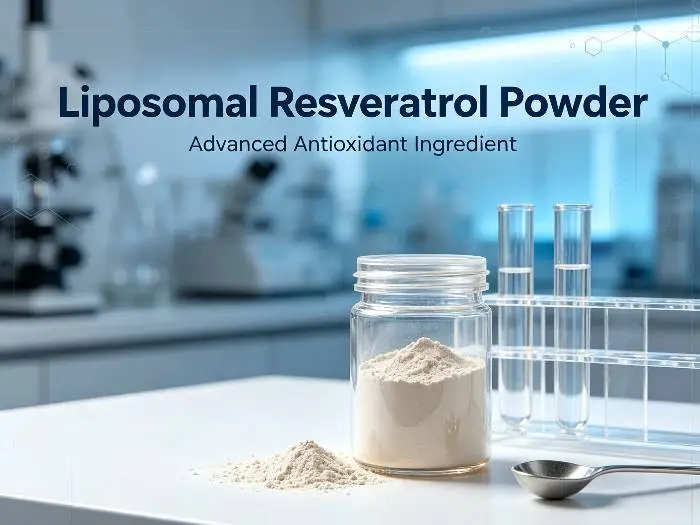
Understanding Liposomal Resveratrol Powder: What Sets It Apart
Resveratrol is a potent antioxidant that may help you live longer, improve your cardiovascular health and maintain the health of your skin. But one frustrating fact has kept it from reaching its full potential: the body has a hard time absorbing it properly. Resveratrol pills usually don't do much good even when they promise to contain high doses because they go through the digestive system largely undamaged.
The Science Behind Liposomal Encapsulation Technology
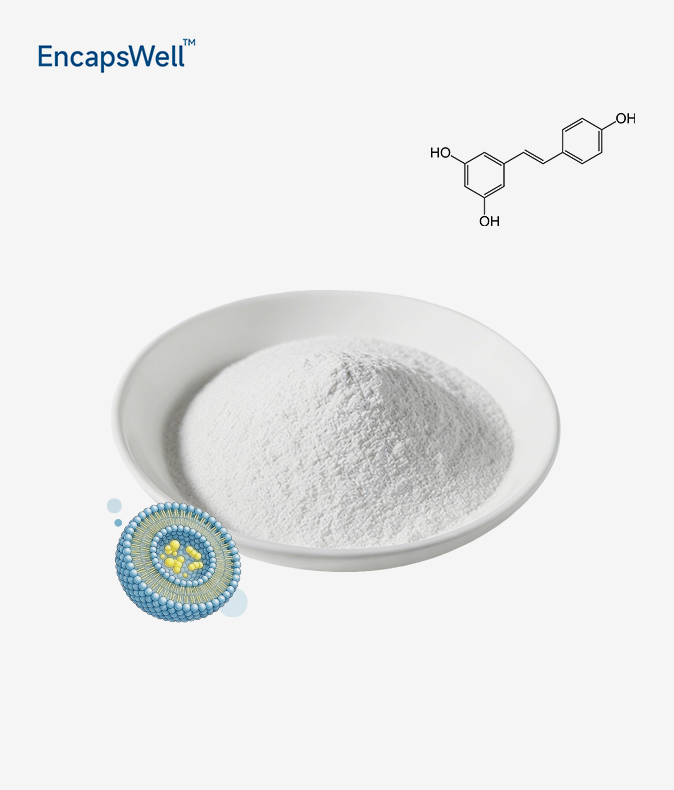
Resveratrol can be turned into a bioavailable powerhouse when delivered as liposomes. During this process, trans-resveratrol, the most effective form, is encased in lipid spheres with a size of 100–300 nanometers. They are composed of phosphatidylcholine from non-GMO sunflower or soy lecithin, similar to the cell walls in human bodies. This structure, inspired by nature, allows the payload to merge with intestinal cells, enabling direct uptake by M-cells and transport to the lymphatic system, bypassing the randomness of digestion.
Good liposomal formulations have encapsulation efficiency >85-90% so that almost all active ingredients are safe inside the lipid shield. The particles are equally distributed with a PDI value of less than 0.3, with constant cell penetration. Premium liposomal resveratrol combines with water to form a milky nano-emulsion that spreads out immediately away. This is considerably different from ordinary resveratrol, which tends to cluster together or sink at the bottom of liquids.
Protection Against Environmental Degradation
Resveratrol is famously unstable; it breaks down quickly in light, oxygen, and acidic conditions. As a molecular cover, the lipid bilayer keeps the antioxidant safe from UV damage and oxidation, which would otherwise change it into cis-isomers that are less effective. This safety lasts through production, storage, and the hard pH conditions of stomach acid, making sure that the drug gets to the right places in the small intestine to be absorbed.
According to ICH guidelines, advanced formulations like EncapsWellTM can stay potent for 36 months after they are made and until they are used by a consumer. This stability gets rid of the concerns about effectiveness that come with regular resveratrol products. This gives manufacturers confidence in the label claims and lowers customer complaints about supplements that don't work.
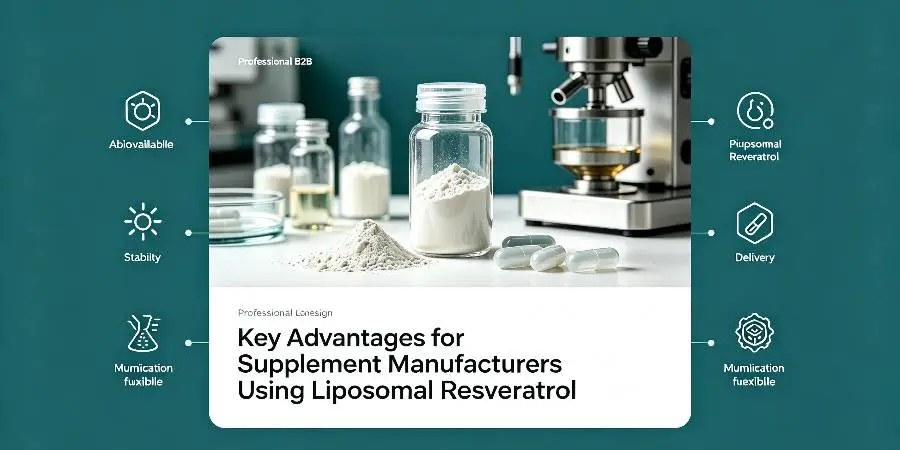
Key Advantages for Supplement Manufacturers Using Liposomal Resveratrol
The move toward liposomal formats isn't just a result of new science discoveries; it's also a response to problems in the market and in industry. In crowded markets, brands that are making nutraceuticals, functional drinks, and nutricosmetics find that improved delivery methods help them stand out.
Superior Absorption Enables Optimized Dosing
Liposomal coating makes resveratrol up to 14 times more bioavailable than regular powders, according to clinical absorption modeling. Because of this huge improvement, formulators can get therapeutic benefits from lower doses, usually 50–100 mg of liposomal resveratrol instead of 500 mg or more of traditional forms. Lowering the dose lowers the cost of the raw materials, reduces the stomach problems that can happen with high doses of phenolic compounds, and makes supplement facts panels that are cleaner, which appeals to people who are careful about what they read.
When resveratrol is combined with NAD+ precursors like NMN or complementary antioxidants like quercetin in stacked longevity formulas, having fewer pills is especially helpful. Manufacturers can make complete anti-aging items that don't require people to take a lot of big pills every day.
Formulation Versatility Across Product Categories
Liposomal resveratrol in powder form is very useful for a wide range of supplement types. It mixes easily into capsules and tablets with common fillers, mixes smoothly into functional drinks with no separation or sediment, and can be reconstituted for liquid shots or sachets aimed at consumers who value convenience.
The lipid encapsulation greatly hides the bitter and chalky taste of raw resveratrol, making it possible to add Liposomal Resveratrol powder to ready-to-drink wellness drinks, collagen-enhanced beauty drinks, and powdered workout recovery blends. This change in taste gets rid of the need for too many sweeteners or flavorings, which hurts the clean-label stance.
Beauty-from-within brands like liposomal delivery because it is amphiphilic, which means it works better for both oral absorption and topical permeability when made into serums. The same base of ingredients is used for both nutricosmetic tablets that improve skin health from the inside out and quality topical treatments that protect against photoaging.
Regulatory Compliance and Quality Assurance
Meeting global legal standards is always hard for companies that make supplements. EncapsWellTM Liposomal Resveratrol comes with a lot of certification paperwork, such as ISO9001, ISO22000, FSSC22000, HACCP, cGMP, HALAL, KOSHER, NOP, and EOS certifications. The product is still Non-GMO and Vegan, and it doesn't have any major allergens or artificial ingredients.
Market entry times are cut by an average of 40% when regulatory dossiers that cover FDA, EU Novel Food, and ASEAN GMP standards are already put together. Blockchain-based batch tracking through Wellgreen's factories makes the whole supply chain clear, which is important for quality checks and regulatory reports.
The ≥98% resveratrol content standard, which was confirmed by independent testing, makes sure that the product's effectiveness stays the same from one production run to the next. Getting resveratrol from both the EU and the US makes the supply chain more stable, which protects producers from running out of raw materials, which could stop production.
Comparing Liposomal Resveratrol Powder Against Other Forms
Knowing how different forms of resveratrol work differently helps purchasing teams make decisions based on facts that are in line with how the brand is positioned and what the target consumer wants.
Bioavailability and Efficacy Benchmarking
Standard resveratrol pills and tablets don't work well in the body because the liver breaks them down quickly in Phase II, which includes sulfation and glucuronidation. Even though trans-resveratrol is the better isomer, it is still hard for the body to absorb when it is given in the usual ways.
Liposomal technology changes pharmacokinetics in a fundamental way, making both Cmax (peak blood concentration) and AUC (area under the curve) measurements better. Bypassing the liver's first-pass metabolism, the lymphatic absorption route gets a lot more active substance to the tissues it's meant for. This better delivery is why liposomal formats are being used more and more in clinical applications and high-end supplements.
Micronized resveratrol is an in-between option. It's a little better than regular powders because the particles are smaller. However, micronization by itself can't fix the problem of not dissolving well in water or stopping metabolism that happens too quickly, so absorption is much lower than what liposomal encapsulation can do.
Manufacturing Complexity and Cost Considerations
However, conventional resveratrol is easy to blend and encapsulate, but it doesn't work very well. Liposomal creation of Liposomal Resveratrol powder needs specialized tools and knowledge, like freeze-drying or spray-drying technologies, exact lipid-to-active ratios, and quality controls to make sure particles are spread out evenly and effectively encapsulated.
Because of this, the cost of each kilogram of ingredients is higher. But because liposomal formats need much smaller amounts, they often have lower effective per-dose costs because they are absorbed 14 times better. The benefits of a 50mg liposomal dose are the same or greater than those of a 500mg normal dose of resveratrol. This makes the cost-per-effective-dose competitive and allows for smaller, easier-to-use product forms.
Large and medium-sized manufacturers can save money by buying in bulk. Prices start at 500 kg per month from reputable suppliers. OEM/ODM customization lets brands change the size of the particles, mix ingredients that work well together, or make their own blends without having to buy expensive equipment for making them.
Market Positioning and Consumer Perception
The word "liposomal" has a lot of market value because it makes health-conscious people think of high-tech science and high-quality products. This way of thinking supports higher retail prices and puts products in the same category as cutting-edge supplements for performance and longevity instead of common vitamins.
Functional beverage brands can really benefit from liposomal formats because they can disperse in water and hide tastes. Clear, steady drinks without chalky sediment make drinking enjoyable and encourage return purchases, which is a key reason why subscription-based business models are becoming more popular in the supplement industry.
Procurement Insights: How to Source High-Quality Liposomal Resveratrol Powder
Choosing the right provider affects how well a product works, how well it follows the rules, and eventually how well the brand is known. When navigating the liposomal resveratrol market, procurement managers should look at potential partners through a number of important lenses.
Quality Certifications and Testing Standards
Verification of thorough certificates makes sure that the quality of the ingredients is good and that they follow the rules. Some of the most important certificates are cGMP for controlling manufacturing, ISO22000 and FSSC22000 for managing food safety, and HACCP for analyzing risks. Products that cater to certain dietary needs need to be certified as HALAL, KOSHER, Non-GMO, or Vegan.
In addition to the certificates that are shown on websites, you should ask for up-to-date Certificate of Analysis (COA) papers that show the real test results for resveratrol content, heavy metals, microbial contamination, and solvent residue. Testing by a third party from a recognized lab adds more authority than the manufacturer's own approval.
Particle size distribution data, encapsulation efficiency rates, and zeta potential readings should all be part of the technical specs. These factors have a direct effect on how well the product works and should be within the acceptable ranges: particle size 100-300nm, capsule efficiency >85%, and zeta potential between -20mV and -40mV.
Supplier Capabilities and Support Services
A full-service provider can do more than just make ingredients. They can also help with formulations, give legal advice, and handle logistics. Technical teams led by PhDs can make recipes work better for certain uses, like making heat-stable drink powders or controlled-release pills that work to raise blood levels over time.
American brands can benefit greatly from working with domestic US providers that have their own labs and storage facilities. EmerWell and other companies based in San Diego offer fast sample delivery, technical consultations that work with different time zones, and streamlined logistics that make imports easier. When compared to working only with foreign manufacturers, these localized services shorten the time it takes to create a product and make ongoing support easier.
Customization options for OEM/ODM make it possible for brands to stand out. It should be possible to change the particle size for different dissolution profiles, mix liposomal resveratrol with ingredients that work well together, such as pterostilbene or coenzyme Q10, and make finished dosage forms like powders or soft capsules. Flexible minimum order amounts help both new brands that are testing the market and established businesses that are increasing production.
Pricing Transparency and Supply Chain Resilience
When setting bulk prices, it's important to be clear about the different levels of quantities, payment terms, and things that cause prices to change. Suppliers who are open about how they get their raw materials, their production capacity, and their transportation affect prices. This lets procurement managers accurately predict costs and negotiate good terms.
In today's volatile global markets, supply chain resilience is becoming more and more important. Getting raw resveratrol from both European and US sources protects against problems with area supplies. Suppliers who keep enough inventory on hand and show consistent lead times reduce production delays that hurt profits and let down customers who were looking forward to getting their products.
Along with instant pricing, the possibility of a long-term relationship should be taken into account. Suppliers who invest in ongoing research and development, get more certifications to meet new regulatory requirements, and show they are financially stable are more valuable than commodity vendors who only want to do business with you, especially when sourcing specialized ingredients like Liposomal Resveratrol powder.
Future Trends and Industry Outlook for Liposomal Resveratrol Ingredients
Liposomal resveratrol is set to continue growing in many supplement categories as people become more health conscious, research into aging continues to progress, and new delivery methods are created.
Rising Consumer Demand for Bioavailability
More and more educated consumers are reading supplement labels carefully and wondering if the products really do provide the benefits they claim to. Bioavailability issues are often brought up in social media conversations and material from influential people, which puts pressure on brands to use formulas that make absorption better. Advanced customers can tell the difference between liposomal forms and other types of products, and they value these differences.
Scientists have confirmed that resveratrol supplements are in high demand. This is because of the pro-aging and longevity optimization movement, which has grown thanks to public interest in NAD+ biology and SIRT1 activation pathways. People in this group are looking for formulas that combine resveratrol with NMN, quercetin, or pterostilbene so that they work better together. This is possible because liposomal delivery makes multiple actives work better at the same time.
Innovation in Delivery Systems and Personalization
Next-generation liposomal platforms are still getting better than the first-generation ones. Targeted vesicles improve transport to specific tissues, pH-sensitive release mechanisms make the best use of absorption time, and combination encapsulation keeps several unstable ingredients safe inside a single liposome. These innovations make it possible to use them in more ways and make it possible to make new products.
Personalized diet is a new area of research that liposomal technology is very important to. Flexible liposomal formulas that mix multiple actives easily are useful for making supplement packs that are tailored to each person's health needs. Direct-to-consumer brands that use genetic and health tests are specifying more and more advanced delivery methods to make sure that personalized advice lead to measurable results.
Strategic Recommendations for Manufacturers
To stay competitive, you need to invest in new recipe technologies before the market changes, rather than after the fact. Brands can quickly take advantage of new possibilities if they build relationships with innovative providers that can support customization and production scaling.
Working with technical partners in the US who can help with formulations and are led by PhDs speeds up product development while navigating the complicated world of regulations. When you only work with makers far away, you can't test prototypes quickly or make changes over and over again like you can in local labs.
Sustainability factors are becoming more important to both customers and business-to-business buyers when they decide what to buy. Suppliers who make real environmental promises, like reducing solvent waste by 30% through energy-efficient encapsulation processes, are in line with corporate responsibility goals and appeal to end users who care about the environment.
Conclusion
Liposomal resveratrol is a big step forward in the technology of nutraceutical ingredients. It solves the problems with bioavailability that have limited resveratrol's therapeutic potential in the past. When manufacturers choose advanced delivery formats like Liposomal Resveratrol powder, their products work better, they can change the way they're made, they follow the rules, and they can better position themselves in the market. There is a strong case for using liposomal formats because people want supplements that work, scientists have proven paths that lead to life, and technology has advanced to the point where complex delivery systems are possible. When reviewing suppliers, procurement teams should put thorough certifications, technical support skills, and supply chain stability at the top of their lists, along with price, so they can build relationships that will help them succeed in the long run.
FAQ
1. Is liposomal resveratrol safe for daily supplementation?
Yes, liposomal resveratrol is very safe as long as it is made according to quality standards. Generally Recognized as Safe (GRAS) phospholipids are used in encapsulation. They are usually made from non-GMO sunflower or soy lecithin and are found in many foods and supplements. The better absorption doesn't raise any safety issues; instead, it lets you get the benefits at lower doses, without the stomach problems that can come with taking big doses of regular resveratrol. Products that meet cGMP and ISO22000 standards are put through a lot of tests to make sure they are safe for daily use.
2. What dosage of liposomal resveratrol should supplements contain?
Doses of 50 to 150 mg of liposomal resveratrol per day usually work well, giving the same benefits as 500 to 1000 mg of regular resveratrol because they are 14 times more bioavailable. Specific suggestions are made based on the purpose—supporting life, heart health, or nutricosmetic benefits—and should take into account how well the ingredient works with other ingredients in the recipe. Working with formulation experts can help you find the best doses for your target customers while still staying within the rules for supplements in your area and saving money.
3. How does bulk purchasing affect product pricing?
When buying liposomal ingredients, volume-based price leads to big savings because of economies of scale. Suppliers usually offer tiered prices, with big savings for monthly orders of 500 kg, 1000 kg, and 2500 kg. In addition to lower prices per kilogram, bigger orders often come with extra services that add value, like help with custom formulations, faster regulatory paperwork, and more flexible payment terms. Because liposomal forms are better at absorption, smaller amounts are needed to get the desired effect. This helps to partially offset the higher cost of the special ingredient by lowering the amount of material needed per dose.
Partner with a US-Based Liposomal Resveratrol Supplier for Your Next Product Launch
EmerWell specializes in making science-backed liposomal vitamin mixes for companies that need real performance gains. Our own EncapsWellTM platform creates Liposomal Resveratrol powder that has been shown to increase absorption by 14 times, stay stable for 36 months, and come with all the legal paperwork needed to enter the FDA, EU, and ASEAN markets. Our main office is in San Diego, California, and we offer localized support through our own laboratory and storage facility. This lets us deliver samples quickly and offer technical consultations with our PhD-led team. We can speed up the creation of your product whether you need bulk ingredients, OEM/ODM finished products, or custom formulations that combine resveratrol with other active ingredients that work well together. We have the production excellence, regulatory knowledge, and partnership approach to make this happen. Get in touch with us at info@emerwell-bio.com to talk about your formulation needs and find out why top nutraceutical companies trust EmerWell as their liposomal resveratrol manufacturer.
References
1. Walle, T., Hsieh, F., DeLegge, M.H., Oatis Jr, J.E., & Walle, U.K. (2004). High absorption but very low bioavailability of oral resveratrol in humans. Drug Metabolism and Disposition, 32(12), 1377-1382.
2. Amiot, M.J., Romier, B., Dao, T.M., Fanciullino, R., Ciccolini, J., Burcelin, R., & Pechere, L. (2013). Optimization of trans-resveratrol bioavailability for human therapy. Biochimie, 95(6), 1233-1238.
3. Fangueiro, J.F., Andreani, T., Fernandes, L., Garcia, M.L., Egea, M.A., Silva, A.M., & Souto, E.B. (2014). Physicochemical characterization of epigallocatechin gallate lipid nanoparticles for ocular instillation. Colloids and Surfaces B: Biointerfaces, 123, 452-460.
4. Sessa, M., Balestrieri, M.L., Ferrari, G., Servillo, L., Castaldo, D., D'Onofrio, N., & Tsao, R. (2014). Bioavailability of encapsulated resveratrol into nanoemulsion-based delivery systems. Food Chemistry, 147, 42-50.
5. Davidov-Pardo, G., & McClements, D.J. (2015). Nutraceutical delivery systems: resveratrol encapsulation in grape seed oil nanoemulsions formed by spontaneous emulsification. Food Chemistry, 167, 205-212.
6. Loureiro, J.A., Andrade, S., Duarte, A., Neves, A.R., Queiroz, J.F., Nunes, C., & Pereira, M.C. (2017). Resveratrol and grape extract-loaded solid lipid nanoparticles for the treatment of Alzheimer's disease. Molecules, 22(2), 277.
Online Message
YOU MAY LIKE
High quality furniture manufacturer
_1776234307158.webp)