Jul 13, 2026
Why Liposomal Technology Is Transforming Omega-3 Supplements?
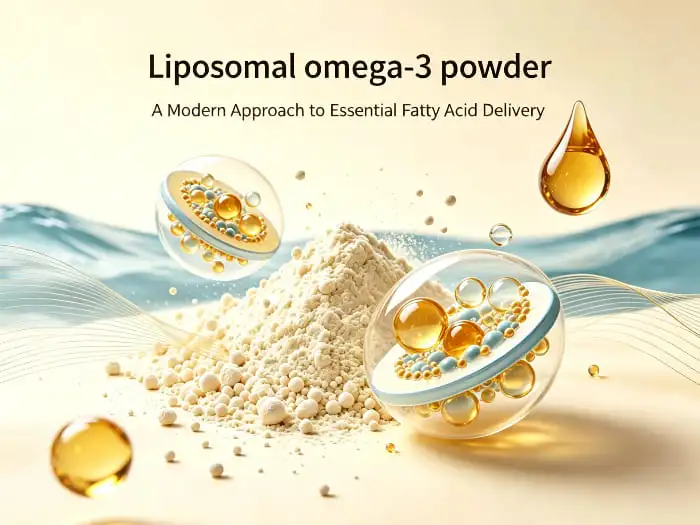
Liposomal technology changes how bioavailable omega-3 supplements are. Traditional fish oil is not easily absorbed and breaks down quickly. EPA and DHA are transported to intestinal cells by liposomal omega-3 powder's phospholipid vesicles, which shield them from stomach acid and digestive enzymes. This technology makes absorption 8–12 times better than fish oil and gets rid of the fishy taste that people don't like. This helps people who buy things for other businesses and people who make things stand out in a competitive field.
Introduction
Omega-3 supplements are now used for more than just health reasons, thanks to functional foods, beauty-from-within products, and specialized nutrition applications. People who are healthy want products that work and don't have any bad effects. We need improved delivery methods that make the ingredients work better and make users happier.
Adding omega-3s can be easier for procurement managers, formulation scientists, and brand makers who use liposome encapsulation. It makes absorption, oxidative stability, shelf life, and product types possible that weren't possible before. Companies that make cosmetics, useful drinks, and nutritional supplements know that liposomal omega-3 powder delivery makes things work better.
Liposomal omega-3 compositions are important for more than just product performance. This technology makes marketing better, makes customers happier, and makes businesses more competitive. In the quickly changing health ingredients industry of today, it's important to understand liposomal omega-3 delivery system technology, how to get it, and how to use it.
Understanding Liposomal Omega-3 Powder: Science and Benefits
The Liposomal Encapsulation Process
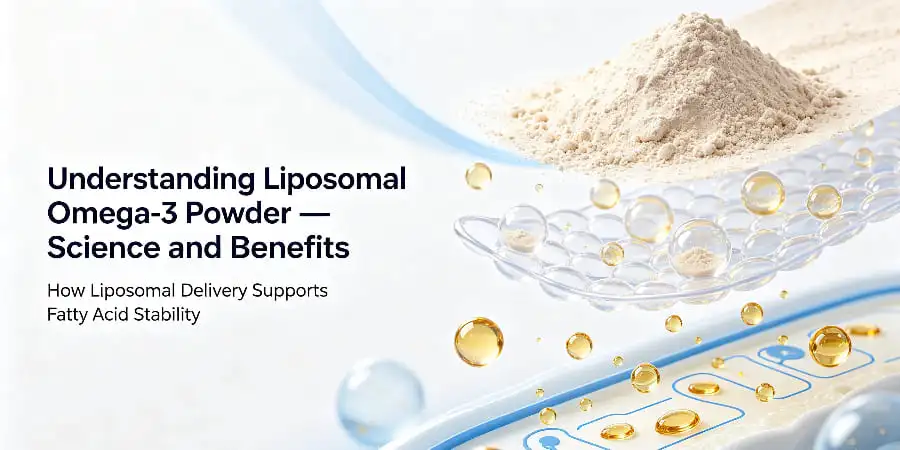
Liposomal omega-3 powders use phospholipid particles that look like the membranes of human cells. It is easy for lipid-soluble compounds like EPA and DHA to be enclosed in bilayer spherical shapes because they have hydrophilic outer surfaces and hydrophobic inner cores. The size of the vesicles is tightly controlled between 100 and 400 nanometers so that they can be absorbed by the intestines and stay stable during production and storage.
Revolutionary Bioavailability Enhancement
Liposomal treatment makes bioavailability better in a number of ways. Liposomal omega-3s stop stomach acid from breaking down fish oil. The phospholipid coating gets EPA and DHA into the bloodstream without being broken down by enzymes because it instantly joins with cell membranes in the gut. Clinical tests show that these capsules are absorbed 8–12 times better than regular ones, so people can get the benefits of higher doses.
Cellular-Level Precision Delivery
Phospholipid liposomes can work with the walls of human cells. Because their structures are similar, encapsulated omega-3 fatty acids can be sent straight to heart cells, brain tissues, and immune system parts with little loss. The exact way that EPA and DHA are taken improves their effects for brain function, heart health, and inflammation more than regular formulations.
Exceptional Oxidative Stability
Because of oxidative degradation, traditional omega-3 supplements lose their taste and effectiveness over time. Oxygen, light, and water can't change omega-3s because of the liposomal bilayer barrier. Peroxide levels in good liposomal solutions stay at 2 meq/kg, which is much lower than the international standard of 5. This keeps more than 95% of the active ingredient and can be stored for 18 to 24 months at room temperature if it is handled correctly.
Clean Formulation for Sensitive Populations
At the moment, the most important things in liposomal omega-3s are pure components and avoiding allergies. Non-GMO soy or sunflower lecithin is used as a phospholipid in gluten-free, lactose-free, and allergen-free foods. This clean-label method helps kids, seniors, and people who have to watch what they eat. Another benefit is that it doesn't smell or taste like fish, which is a big reason why people don't eat omega-3s.
Comparing Liposomal Omega-3 Powder with Traditional Omega-3 Forms
Absorption Efficiency Across Delivery Systems
Omega-3s from regular fish oil capsules go straight to the stomach, but digestion slows down absorption there. Softgel encapsulation keeps the medicine safe, but it doesn't make it more bioavailable. Even though they are easy to add to food, regular omega-3 powders break down quickly and don't absorb well. Premium encapsulated oils are easier to use, but liposomal omega-3 powders are easier to take and absorb better.
Formulation Flexibility and Product Integration
Liposomal omega-3 powders can be used for many things. Liposomal powders mix easily with water, but oils change the taste and shelf life of food. This is good for functional drinks, smoothie mixes, healthy smoothies, and meals that have been supplemented. Powder makes dosing easier during production, lowers shipping weight, and allows for cheaper packing, all of which are important factors in B2B procurement.
Sensory Profile and Consumer Acceptance
Fish oil use and compliance have been hindered for a long time by problems with taste. The fishy taste and smell are hidden by liposome packaging. This enhancement of the senses makes it possible for new goods to be made in taste-sensitive areas like children's nutrition, flavored drinks, and cosmetics. When customers like a brand, they are more likely to buy it again.
Cost-Effectiveness in Different Market Segments
Liposomal formulations are expensive, but the price depends on what you need and how much you buy. Price-per-gram studies show that because liposome delivery is more bioavailable, companies can treat with lower amounts of EPA and DHA. When marketing a high-end product, claims of effectiveness support higher prices, while dose efficiency balances out the cost of the ingredients. Economies of scale help contract makers and OEM partners compete by lowering the cost of making more.
Procurement Insights: Selecting the Right Liposomal Omega-3 Powder Supplier
Essential Quality Certifications and Testing Protocols
Purchasing professionals should choose vendors that focus on quality systems. Look for cGMP facilities to make sure that each batch is the same. ISO gives approval to systems for quality management. Detailled testing methods for phospholipid, omega-3, peroxide, and liposome size distribution are also very important. Quality and brand safety are guaranteed by suppliers who have a certificate of analysis and results from third-party tests that can be seen.
Production Capacity and Supply Chain Reliability
To go from pilot to commercial, suppliers need the right manufacturing infrastructure. Find out if your partners can handle the amount of work you expect them to do without lowering the quality or speed of delivery. When making a lot of liposomes at once, modern facilities can make sure that the particles are all the same size and that the encapsulation works well. Supply disruptions that delay product launches or market supplies can be avoided by understanding lead times, minimum order quantities, and inventory management.
Customization and Private Label Capabilities
When it comes to formulation flexibility, transactional and strategic supplier relationships are different. New companies are coming up with ways to customize EPA:DHA ratios, offer organic approvals, hide flavors, and make products with astaxanthin or vitamin D. Time-to-market can be sped up with private label formulation, stability, and package design that keeps the product's identity. Talk about your application needs early on in the review process to find vendors who can help your innovation plan.
Pricing Structure and Value Analysis
A cost estimate takes into account more than just the price per kilogram. It also looks at the landing cost, payment terms, and volume discounts. Ask for cost breakdowns for different types of raw materials, percentages of encapsulation efficiency, technical support, and regulatory paperwork. Because premium liposomal substances may be more bioavailable, they may be better than cheaper alternatives that need higher doses in terms of cost-per-dose.
How to Use Liposomal Omega-3 Powder Effectively: Dosage and Application
Recommended Dosing Guidelines Across Applications
Omega-3 supplementation works better with EPA/DHA, not weight. Reduced doses are needed to boost blood levels using liposomal fish oil due to its bioavailability. EPA/DHA, 500-1000 mg per serving, improves cardiovascular and cognitive health. Functional meals may provide moderate nutrition with lower daily amounts than cosmetic supplements.
Integration into Different Product Formats
Product development requires understanding liposomal powder behavior in diverse matrices. Disperse powder in water or juice below 40°C to preserve liposomes. Blend smoothie mixes and protein powders with liposomal substances to lessen mechanical stress. Powder flow and moisture sensitivity should be addressed while filling capsules. Quality liposomal omega-3 powders taste neutral; thus, natural flavorings improve oral liquid versions.
Storage and Handling Best Practices
Stable supply chains preserve premium ingredient investments. Keep liposomal omega-3 powders cold, dry, and away from direct light. Sealed containers limit moisture absorption, which disturbs powder flow and increases oxidation. Avoid excessive temperatures and cycle inventory first-in-first-out during production. Properly handled liposomal compositions preserve active chemicals and minimal peroxide.
Real-World Implementation Examples
Functional beverage companies use water-dispersible liposomal powders to make shelf-stable omega-3-enhanced beverages and smoothies without fishy flavors. Liposomal omega-3, phosphatidylserine, and B vitamins boost brain health synergistically. For cosmetic advantages, beauty-from-within companies add these chemicals to collagen drinks and skin health supplements via cellular delivery. These many uses demonstrate liposomal technology's commercial adaptability.
Future Outlook: Why Liposomal Technology Will Lead Omega-3 Supplement Innovation
Emerging Market Trends and Consumer Demands
Consumers increasingly want bioavailability and clinical evidence for supplements. Modern liposomal omega-3 powders are excipient-, artificial ingredient-, and allergen-free. Aging populations in affluent nations emphasize cognitive health and cardiovascular support; thus, premium omega-3 formulations with proven results are in demand.
Regulatory Environment Supporting Innovation
North American and European rules stress quality, claims, and consumer safety. Advanced delivery methods with proven performance and manufacturing traceability are preferred. Compliance limits hamper low-quality suppliers but highlight the strategic value of working with established manufacturers with strong quality systems. For regulatory filings and market clearances, proactive suppliers give documentation and technical support.
Technology Advancement and Manufacturing Efficiency
The continuous liposomal manufacturing process enhances product homogeneity and reduces expenses. Omega-3 liposomal delivery applications grow with phospholipid sources, particle size control, and stability advances. Liposomal formulations become inexpensive as production efficiency rises, reaching non-ultra-premium markets. These findings suggest liposomal delivery of high-quality omega-3s will become mainstream.
Strategic Advantages for Early Adopters
Procurement managers and brand developers employing liposomal omega-3 are ahead. High-bioavailability, consumer-friendly products boost brand loyalty and competitiveness. The liposomal delivery technique promotes premium supplement marketing claims in competitive supplement marketplaces and attracts discriminating customers. Innovative formulation, technological expertise, and supplier ties with competent liposomal producers enable long-term product development.
Conclusion
Liposomal technology revolutionizes omega-3 nutrition by surpassing fish oil formulations. The high bioavailability, oxidative stability, clean formulation, and fishy taste reduction make it ideal for various applications. Product developers, brand managers, and B2B procurement professionals may employ liposomal omega-3 powders to differentiate products, boost consumer delight, and acquire premium market positioning. Consumer demand for effective supplements, regulatory focus on quality, and manufacturing advances suggest liposomal omega-3 supplementation will dominate. Companies who notice this transition early and engage with skilled suppliers will succeed in the burgeoning health ingredients sector.
FAQ
What makes liposomal omega-3 absorption superior to regular fish oil?
Liposomes shield EPA and DHA from stomach acid and enzymes. Absorption without enzymatic processing is possible because the phospholipid coating immediately fuses with intestinal cell membranes. This method increases bioavailability by 8-12 times over regular fish oil, enabling lower dosages to match blood level rises and therapeutic benefits.
Can liposomal omega-3 powder be used in functional beverages?
Liposomal omega-3 powders dissolve well in water, making them ideal for functional drinks, wellness shots, and fortified drinks. The formulation delivers pleasant flavor profiles that increase beverage consumer adoption and product innovation by eliminating fishy taste issues that limit conventional fish oil usage.
How does peroxide value affect omega-3 product quality?
Omega-3 product peroxide values indicate oxidative damage. Lower values indicate fresher, healthier, tastier, and more stable food. Quality liposomal formulations maintain peroxide levels below 2 meq/kg, much below the international standard of 5 meq/kg, assuring stability and shelf life.
Transform Your Product Line with Advanced Liposomal Omega-3 Solutions from EmerWell
EmerWell makes superior liposomal omega-3 powder formulations for bioavailability and product differentiation. The EncapsWell™ platform offers stability, under 2 meq/kg peroxide levels, safe formulas for all ages, and no fishy taste, resulting in greater consumer satisfaction and repeat purchases. We provide flexible minimum order quantities, fast sample delivery, and unique formulation development from our PhD-led San Diego research team. EmerWell provides the technological expertise, quality assurance, and production capacity to enable your nutraceutical brand, functional beverage company, or contract manufacturer to commercialize Liposomal Omega-3 Powder. Contact info@emerwell-bio.com for technical specifications, formulation guidance, or product samples that demonstrate increased liposomal omega-3 delivery's transformative impact.
References
1. Bang HO, Dyerberg J, Hjorne N. "Greenland Eskimos' Plasma Lipid Fatty Acid Composition." In 1975.
2. British Journal of Nutrition, 2015. Harris WS, Kelsey KS, Schwartz TA, Sarter B. Blood Docosahexaenoic Acid and Eicosapentaenoic Acid in Vegans: Age and Gender
3. "Means of Delivering Recommended Levels of Long Chain Omega-3 Polyunsaturated Fatty Acids in Human Diets." Food Science, 2006.
4. "Bioavailability of EPA and DHA from Liposomal and Conventional Omega-3 Supplements." 2018.
5. "Omega-3 Fatty Acids and Cardiovascular Disease: Effects on Risk Factors, Molecular Pathways, and Clinical Events." AACC Journal, 2011.
6. "EPA and DHA: Lifelong Health Benefits." Advances in Nutrition, 2012.
Online Message
YOU MAY LIKE
High quality furniture manufacturer