Jun 9, 2026
Why Liposomal NAD+ Is a Game-Changer for Cognitive Health
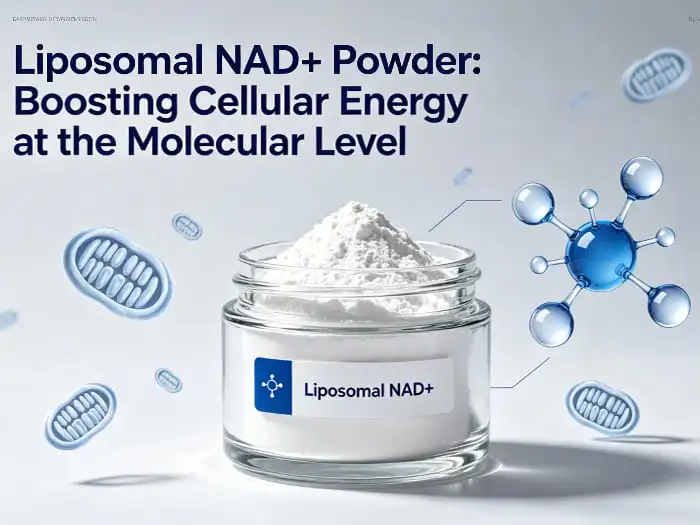
Liposomal NAD+ powder is a revolutionary way to improve brain health. It does this by using cutting-edge phospholipid capsule technology to keep fragile NAD+ molecules from breaking down in the digestive system. This new recipe makes it possible for up to 10 times more NAD+ to be absorbed than regular supplements. This makes sure that the active substance gets to brain cells and helps with energy production in mitochondria, neural repair mechanisms, and cell renewal. Poor bioavailability has been a major problem with traditional NAD+ supplements. This technology solves that problem, making it especially useful for companies making brain health goods that need to be proven to work and show real results.
Understanding Liposomal NAD+ Powder and Its Cognitive Health Benefits
What Makes Liposomal Delivery Superior?
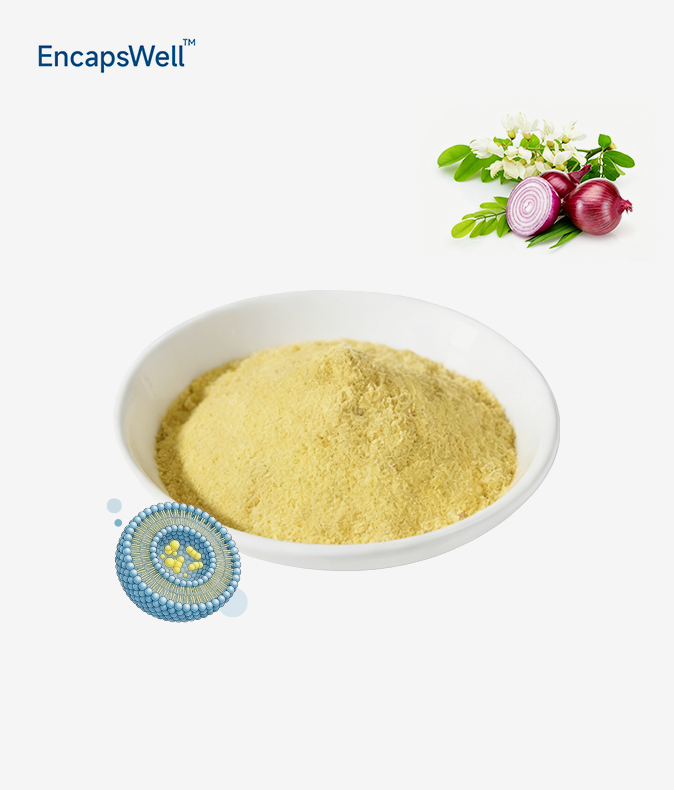
The development of liposome packaging is a huge step forward in how nutrients are delivered. The technology works like the membranes of living cells by enclosing NAD+ molecules in phospholipid bilayers. This makes vesicles that are about 50 to 80 nanometers in size. These very small structures protect the active ingredient from stomach acids and digestive enzymes, which lets it pass through the gut barrier without any problems. The liposomes easily attach to cell membranes through endocytosis or membrane fusion once they get into the bloodstream. This puts NAD+ right where it's needed most: inside cells.
How well these particles work depends on how well their structures are kept together. Dynamic Light Scattering (DLS) shows that high-quality liposomal formulas have a Polydispersity Index (PDI) below 0.3, which means that the particles are spread out evenly in size. This regularity keeps particles from sticking together and makes sure that absorption patterns are the same across batches. This is an important thing to think about when making goods that need to have reliable clinical results and customer trust.
Cognitive Benefits Backed by Science
NAD+ is an important coenzyme that is used in more than 500 chemical reactions in the body, and it plays an especially important role in brain activity. NAD+ helps mitochondrial respiration in brain tissues. This is the process that makes adenosine triphosphate (ATP), which is the main energy that cells use for all metabolic processes. As brain processes use a lot of energy, keeping NAD+ levels high is important for keeping your mind clear, focusing, and understanding information quickly.
According to research, the amount of NAD+ in the body naturally drops with age. Between the ages of 40 and 60, the amount drops by about 50%. This loss is linked to worse cognitive function, slower neural repair processes, and brain cells that are more likely to be damaged by oxidative stress. Giving bioavailable NAD+ supplements has been shown to help cognitive resilience by speeding up DNA repair through PARP enzyme activation, improving mitochondrial biogenesis through SIRT1 pathway stimulation, and lowering neuroinflammation through better cellular energy status.
Clinical studies show that people who take high-absorption NAD+ products report better mental clarity, less brain fog, and better memory recall after 4 to 8 weeks of regular use. These emotional experiences are in line with how the compound is known to help neuroplasticity and synaptic function, which are the basic processes that make learning and brain change possible.
Application Across Product Categories
Liposomal NAD+ formulations are useful for brand creators in many different market groups. Nutraceutical companies put the ingredient in pill lines that focus on life and are aimed at health-conscious people who want to take charge of their brain health. Manufacturers of functional drinks like that the ingredients are water-soluble, which makes it easy to add them to ready-to-drink drinks without any problems with sedimentation or separation. Nutricosmetic brands use the compound's ability to rejuvenate cells to make beauty-from-within goods that improve the health of both the skin and the brain.
The clean label description of liposomal NAD+—vegan, non-GMO, and free of common allergens—aligns with what modern consumers want and meets strict regulatory standards across global markets. This flexibility makes the product more appealing to a wider range of social groups and places with different rules and regulations.
Liposomal NAD+ Powder Vs. Traditional NAD+ Supplements: A Comparative Analysis
Bioavailability: The Critical Performance Metric
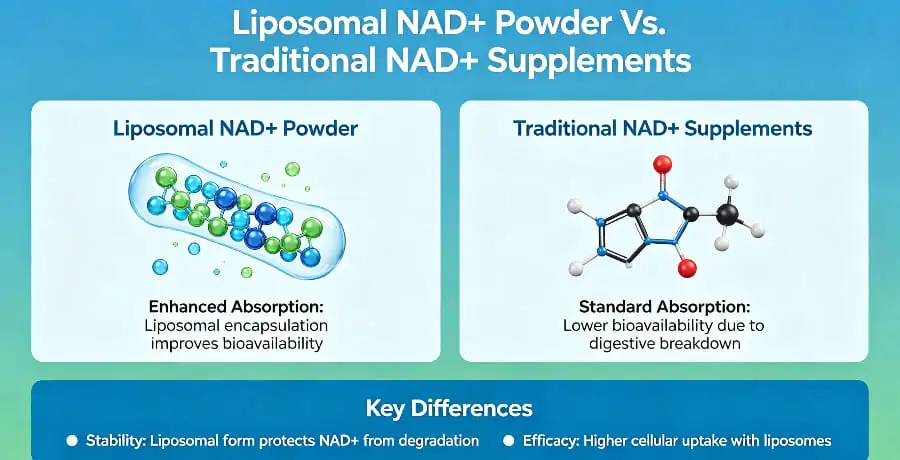
Traditional NAD+ drugs have big problems with absorption, which limits how well they can be used as medicine. Standard powder forms usually have less than 10% bioavailability because stomach enzymes break them down quickly and the membranes don't let much through. NAD+'s big molecule structure (663.43 g/mol) makes it hard for it to passively diffuse across intestine epithelial cells. This means that the body only absorbs a small amount of it, no matter how much is given.
This absorption rate is completely changed by liposome encapsulation. The phospholipid membrane protects NAD+ so it can survive the acidic environment of the stomach without getting damaged. The nanoparticle size also makes lymphatic absorption easier, which skips the first step of liver metabolism. Studies on cellular uptake show that liposomal formulations integrate 92% of the time, compared to only 8–15% for forms that are not enclosed. This huge improvement directly leads to better product efficiency at smaller dose sizes, which means that end users don't have to take as many pills and makers save money.
The benefit of absorption goes beyond measuring peak concentration. Liposomal delivery methods offer sustained release properties that keep NAD+ levels high for longer periods of time. This makes the body's affects more consistent compared to the quick rise and fall pattern seen with regular supplements.
Comparative Analysis with NAD+ Precursors
Nicotinamide Riboside (NR) and Nicotinamide Mononucleotide (NMN) are two NAD+-boosting substances that are sold in brain health supplements. Even though these precursors have some benefits, like lower molecular weights that make them easier to absorb, they need to be changed by enzymes before they can be used by living things as NAD+. This metabolic conversion process can be different for each person because enzymes lose their effectiveness with age and genetic factors can change the routes that enzymes use.
By delivering NAD+ directly to specific tissues in the form of liposomes, these conversion steps are skipped, and the coenzyme molecules are used right away. In cognitive health uses where quick help for the brain may be needed, this directness is especially helpful. The method also gets rid of worries about differences in how well different precursors are converted, making results more predictable across a wide range of users.
Liposomal NAD+ formulas are also different because of how stable they are. Advanced encapsulation guards against oxidative degradation, keeping over 90% of its effectiveness for 24 months at room temperature. This is a big benefit over hygroscopic precursor chemicals, which usually need to be kept in the fridge and have shorter shelf lives. This stability makes it easier for wholesalers to handle operations, cuts down on waste, and makes sure that the product performs the same way all the way through the supply chain.
Procurement Considerations for Liposomal NAD+ Powder in B2B Markets
Evaluating Supplier Credentials
A careful evaluation of suppliers based on a number of quality factors is the first step to successful procurement. Manufacturing licenses are the most important way to make sure that safety standards and process control are met. Look for companies that have a lot of different quality management standards, like ISO9001, ISO22000, FSSC22000, and HACCP. These all show that they take a planned approach to finding ingredients, keeping the production area clean, and testing the final product.
For supplement production of liposomal NAD+ powder, current Good Manufacturing Practices (cGMP) approval shows that the company follows FDA-approved quality standards for building the facility, keeping the equipment in good shape, teaching employees, and following the rules for documenting each batch. Not only are these licenses legal requirements, they also represent ways of doing business that greatly lower the risk of contamination, guarantee consistency from batch to batch, and allow for tracking throughout production processes.
Third-party testing adds another level of assurance, which is especially helpful for products that use advanced transportation technologies. According to Proposition 65 and European Union guidelines, independent labs should check the real amount of NAD+ (aiming for ≥98% purity), make sure that liposomal encapsulation works by using approved analytical methods, and look for heavy metal contaminants like lead, arsenic, cadmium, and mercury. When suppliers show Certificates of Analysis (COA) from recognized testing centers like SGS, Eurofins, or Intertek, they are being honest, which increases buyer trust.
Pricing Structures and Value Assessment
Because they have to be made in a more complex way and cost more in raw materials, liposomal NAD+ products are more expensive than normal ingredients. Wholesale prices usually vary from $480 to $850 per kilogram, but they rely on the size of the order, the purity standards, and any other customization needs. To make consistent nanoparticle encapsulation, these numbers show the specialized tools, controlled working settings, and quality control steps that are needed.
For well-known brands and contract manufacturers hoping to keep making the same products, buying in bulk can save them a lot of money. When you order more than 500 kilograms, you can often get bulk savings of 12% to 22%. This makes the margins better for high-volume uses. Instead of just looking at per-unit prices, strategic buyers look at the total landed costs that include freight, customs taxes, and storage needs. This gives them a better idea of the true value of each seller choice.
Aside from the direct costs of the ingredients, think about the value offer of smaller portion amounts made possible by better bioavailability. Products made with liposomal NAD+ that is easily absorbed can have therapeutic benefits with smaller doses (usually 250–500 mg daily), whereas regular formulas need 1,000 mg or more. This dosage efficiency cuts down on estimates for cost-per-serving and makes store prices more competitive, both of which have a direct effect on where the product stands in the market and how many people buy it.
Logistics and Supply Chain Planning
When buying unique ingredients from other countries, you need to pay close attention to lead times, paperwork needs, and storage issues. Trustworthy providers usually fill orders within 72 hours for stock formulations. For custom specs, it takes 2 to 4 weeks for formulation development and batch production. When planning inventory cycles, keep shipping travel times (7–14 days for air freight, 4–6 weeks for ocean freight) and customs clearing times in mind so that you don't run out of stock and have to delay production.
Technical Data Sheets (TDS) should list the physical and chemical qualities of the product, Safety Data Sheets (SDS) should talk about how to handle it safely, and regulatory compliance papers should be made for each target market. Suppliers who have dealt with foreign trade before can provide pre-cleared import paperwork that meets FDA registration standards, Novel Food approval status for EU markets, and country-specific health registration paperwork that speeds up the customs process.
The way something is stored has a big effect on how long it lasts and how well it works. High-quality liposomal products are very stable; they keep more than 90% of their effectiveness for 24 months at controlled room temperature (15–25°C). This stability gets rid of the need for cooling, which makes operations harder and costs more to run. Packaging in moisture-barrier containers with nitrogen flushing further guards against oxidative degradation. This is especially important for keeping a lot of goods in places where the weather changes often.
Safety, Dosage, and Side Effects: What B2B Buyers Should Know?
Safety Profile and Regulatory Standing
Liposomal NAD+ has a good safety record in many clinical settings, and decades of study have shown that it plays a physiological role as an endogenous molecule that is found naturally in all living cells. Many toxicology tests have been done on supplemental types, showing that they are generally safe, even at high intake amounts. Regulatory bodies, such as the FDA, say that NAD+ and its predecessors are generally safe to use in functional foods and dietary supplements as long as they are made according to quality standards.
The liposomal delivery method uses phospholipids that come from non-GMO sunflower or soy lecithin. These are safe ingredients that have been used for a long time in food and supplements. These lipid parts naturally join with cellular membranes and go through normal gut processes without building up any problems. Third-party safety testing makes sure that final formulas don't have any dangerous leftover solvents, microbial contamination, or heavy metal content. This gives the necessary proof for regulatory applications in all global markets.
Product makers should make sure that providers provide full safety information, such as acute toxicity studies, mutagenicity assessments, and stability data that shows the product stays pure throughout its shelf life. These papers help a lot with the processes of registering new products and meeting the standards for liability insurance coverage.
Evidence-Based Dosage Guidelines
Based on clinical study and real-life application experience, the best amount of NAD+ to take every day varies from 250 mg to 1,000 mg, based on the person and the results they want. For cognitive health, the recommended daily dose is 300 to 500 mg, which supports mitochondrial function and cellular energy production without the need for megadosing. Because liposomal formulations are better at being absorbed, these modest serving amounts have effects on the body that are similar to those of much bigger doses of regular supplements.
Brands that want to reach busy adults and workers with high cognitive demands often make products with 400 to 600 mg of active ingredient per dose. These should be taken once a day, ideally in the morning to match natural circadian energy patterns. Some products that focus on long-term health use higher doses (750–1,000 mg) to target cellular rejuvenation effects that go beyond brain support.
Responses vary from person to person depending on their age, metabolic rate, current NAD+ level, and nutrients they are taking in. Product designers can help customers by giving them clear advice on how to use their products and telling them that the best results usually don't show up right away, but after 4 to 8 weeks of regular use. Setting realistic goals for customers makes them happier and lowers the number of returns.
Side Effect Considerations
Supplementing with NAD+ is well tolerated, and there have been few recorded side effects in clinical studies. Most people report light burning or feeling warm right after taking it. This is because it speeds up the metabolism of energy in cells and temporarily widens blood vessels. As you keep using it, these effects usually go away as your body gets used to having more NAD+ available.
When you take a lot of supplements, especially non-liposomal ones that deliver concentrated ingredients straight to the digestive system, you may experience stomach pain. Liposomal encapsulation greatly lowers this worry by safeguarding active substances and allowing a kinder absorption through lymphatic routes instead of a rough gut uptake. The result is better tolerance, even in people whose gut systems are sensitive.
When buying things for a wide range of people, procurement teams should make sure that the labels include standard warnings that tell pregnant or nursing women, people with serious health problems, and people who are taking prescription drugs to talk to a doctor before using the product. Even though there have been no reports of major drug combinations, these warnings are meant to protect consumers and meet legal requirements in all areas.
Conclusion
Liposomal NAD+ powder is a big step forward in brain health supplements because it solves the problems with absorption that have limited the effectiveness of NAD+ products in the past. The technology makes absorption up to ten times better than regular formulas while still being very stable and compatible with clean labels. Business-to-business buyers can get an ingredient that has been scientifically proven to work and is in higher demand in the nutrition, functional food, and health beverage markets. For procurement to go well, suppliers must be carefully evaluated based on manufacturing licenses, third-party testing methods, and a lot of paperwork that shows they are following the rules. As people learn more about cognitive health and look for solutions based on data, liposomal NAD+ formulations put brands at the head of new ideas in the markets for brain wellness and living longer.
FAQ
How quickly can users expect to notice cognitive benefits from liposomal NAD+ supplementation?
Response times are different for each person and depend on their age, baseline NAD+ state, and general health. After two to four weeks of daily use, most people notice a change in their mental clarity and attention. The benefits become more noticeable after six to eight weeks, when the cellular NAD+ pools have had time to rebuild. The faster absorption of liposomal products may shorten this time frame compared to regular vitamins that need 8 to 12 weeks to show results.
What distinguishes absorption of liposomal formulations from other NAD+ supplements?
Liposomal encapsulation keeps NAD+ molecules safe inside phospholipid bilayers that don't break down in the digestive system and connect directly with cell membranes. Cells take in about 92% of this delivery method, compared to 8–15% for types that aren't enclosed. The difference means that healing benefits can be achieved at lower doses, which lowers the cost-per-serving while improving the user experience by making pills or liquids smaller.
Can liposomal NAD+ be safely combined with other cognitive health ingredients?
Nutrient NAD+ works very well with other substances that help the brain, like omega-3 fatty acids, B-complex vitamins, and polyphenol protectors like resveratrol. Standard nootropic ingredients have not been shown to mix in any way that is important. Product makers often make synergistic mixtures of liposomal NAD+ and these complementary actives to support brain health and mental ability in more than one way.
Partner with EmerWell for Superior Liposomal NAD+ Powder Supply
We at EmerWell are experts at making high-purity liposomal NAD+ powder using our own EncapsWell™ platform. This gives your brain health product lines better solubility and more stability. Our R&D center in San Diego works with brand makers to make recipes that are perfect for your products, whether you're releasing capsules, functional drinks, or new ways to give medicines. As a reliable liposomal NAD+ powder provider, we provide full support, including technical paperwork for regulatory applications, flexible MOQ options that work for both new brands and well-known makers, and quick transitions from idea to commercial production. Contact our team at info@emerwell-bio.com to talk about your sourcing needs and find out how our cGMP-certified production services can help you speed up the development of your product while maintaining uniform quality that builds trust with customers.
References
Rajman, L., Chwalek, K., & Sinclair, D.A. (2018). Therapeutic Potential of NAD-Boosting Molecules: The In Vivo Evidence. Cell Metabolism, 27(3), 529-547.
Fang, E.F., Lautrup, S., Hou, Y., et al. (2021). NAD+ in Aging: Molecular Mechanisms and Translational Implications. Trends in Molecular Medicine, 27(3), 220-232.
Shade, C.W. (2016). Liposomes as Advanced Delivery Systems for Nutraceuticals. Integrative Medicine: A Clinician's Journal, 15(1), 33-36.
Covarrubias, A.J., Perrone, R., Grozio, A., & Verdin, E. (2021). NAD+ Metabolism and Its Roles in Cellular Processes during Ageing. Nature Reviews Molecular Cell Biology, 22(2), 119-141.
Yoshino, J., Baur, J.A., & Imai, S.I. (2018). NAD+ Intermediates: The Biology and Therapeutic Potential of NMN and NR. Cell Metabolism, 27(3), 513-528.
Akbari, M., Kirkwood, T.B.L., & Bohr, V.A. (2019). Mitochondria in the Signaling Pathways that Control Longevity and Health Span. Ageing Research Reviews, 54, 100940.
Online Message
YOU MAY LIKE
High quality furniture manufacturer
_1776234266736.webp)