Jul 22, 2026
Why Do We Need Liposomal Glutathione?
Glutathione is commonly considered the body’s “master antioxidant,” yet standard oral supplements confront a major roadblock: limited absorption. Liposomal glutathione powder overcomes this issue by encasing glutathione molecules in protective phospholipid layers that protect them from digestive enzymes and stomach acid. This new delivery technology improves bioavailability by up to 13 times against typical formulations, making it a must-have ingredient for firms building high-performance nutraceutical products. For B2B procurement managers in the supplement and functional food businesses, the implications of why liposomal delivery matters may be revolutionary for product effectiveness and market positioning.
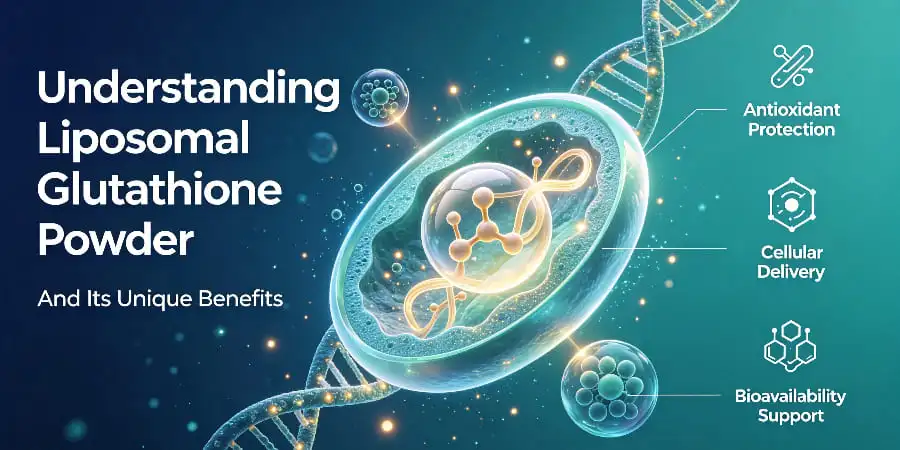
Understanding Liposomal Glutathione Powder and Its Unique Benefits
What Makes Liposomal Encapsulation Different
Regular glutathione tablets are not easy to survive in the stomach. However, oral glutathione is broken down by stomach enzymes before it makes it into the circulation. The main one is gamma-glutamyltransferase. Research by GoodRx proved this. Encapsulation in liposomes, small bubble-like structures that resemble the walls of human cells, alters this. This allows the active element to enter into the cells without being metabolized.
We utilize pharmaceutical-grade liposomal glutathione powder; thus, the glutathione is at least 95% pure. Our EncapsWell™ platform employs a novel nanotechnology to build stable phospholipid bilayers that shield the tripeptide structure throughout processing, storage, and digestion. Vitamins lose their effectiveness before they get to the cells they're meant to benefit. This is characterized as the “bioavailability bottleneck” among professionals in the area.
Core Health Benefits That Drive Consumer Demand
Liposomal glutathione offers four scientifically proven effects that are valuable for many people: Cellular Detoxification and Antioxidant Protection Glutathione is the body’s primary natural antioxidant. It clears out cells and protects them from injury. It scavenges free radicals and turns them back into vitamins C and E. It instructs the liver to initiate Phase II detoxification, which removes waste from the body and environment. This advantage fits perfectly in with the push toward health and well-being, which is increasing in both North America and Europe.
Skin Brightening and Anti-Aging: Glutathione blocks tyrosinase from performing its function to make the skin lighter and combat aging. This halts melanin synthesis, lightening the skin from the inside out. It also protects skin cells from oxidative stress caused by UV radiation, therefore slowing the aging process. Nutraceutical beauty firms that employ liposomal glutathione may market it as a “drinkable skincare solution” that can be used instead of treatments you apply to your face.
Immune System Support: Glutathione helps regulate the function of lymphocytes and inflammatory hormones to support the immune system. This indicates that it may be employed in formulae that support the immune system. During the epidemic, individuals were more aware of ways to strengthen their immune systems. This has created a consistent demand for substances shown to function in clinical studies.
Athletic Recovery and Energy: Glutathione helps reduce oxidative stress in muscle tissue, which accelerates recovery after exercise and reduces inflammation. This is an opportunity for sports nutrition manufacturers to differentiate themselves in a crowded marketplace.
Bioavailability Comparison: Standard vs. Liposomal Formulations
Most of the time enzymes break down the glutathione powder; thus, less than 15% is absorbed. Liposomal encapsulation considerably enhances this amount, researchers discovered. Our formulation makes it 13 times more bioavailable.” This distinction means that businesses may make bolder promises about the items and demonstrate genuine outcomes that help buyers trust the brand and purchase again.
Why Liposomal Glutathione Is a Superior Choice for Procurement
Overcoming the Limitations of Traditional Supplements
One of the key problems with typical powders that is encountered when purchasing managers try to acquire glutathione ingredients is that they tend to break down fast when they come in touch with stomach acid and the enzymes that promote digestion. This uncertainty damages brands in two ways. It is not as excellent as the corporation states, and purchasers do not get the benefits that were promised to them. Two problems degrade the brand image and decrease the lifetime value of a consumer.
Liposomal formulations may protect the items in them, such as liposomal glutathione powder, and can assist with these concerns. Glutathione is shielded by a phospholipid barrier until it reaches cells in the colon. The structure of the liposome promotes paracellular transport, which is going across cell membranes without being broken down. This way, a lot more of the active element gets to the tissues and arteries where it needs to go.
Stability Advantages for Global Distribution
Shipping supplement ingredients across the globe makes the challenges they currently have worse. Changes in temperature, humidity and long term storage may degrade a product. We conducted a short stability test at 40°C and 75% relative humidity on EmerWell’s Liposomal Glutathione Powder. The powder will be stable for 24 months. The product will live longer, there will be less waste, it will be easier to monitor inventory and it will always work well, no matter how complex the distribution.
The powder form is ideal for preparing healthy drinks and ready-to-mix mixes. The liquid liposomal forms must be shipped on a cold chain. Our powder, however, remains stable at room temperature, and the encapsulation remains pure. When it's reconstructed, it has the same solubility advantages as liquid versions, but it's easier to handle.
Formulation Versatility Across Product Categories
Procurement teams must be able to send ingredients in a number of different ways so they can serve more than one product line. Our company’s liposomal glutathione works great in packs, pills, hard capsules, soft capsules, and liquid ready-making forms. It can change the brightness and taste of the drinks, so it is important that the powder remains water-dispersible and does not clump during processing.
We have developed tailored solutions for several clients in the nutrition, functional beverage, and beauty product industries. The same base ingredient can be produced with different particle sizes depending on the needs of a specific product. It can also be combined with other actives, such as vitamin C, or modified with flavor-masking technology.
How to Evaluate and Select the Best Liposomal Glutathione Powder Brands
Critical Quality Verification Methods
When judging a supplier, there are more things than just certificates of analysis that you need to look at. There are certain tests that have to be done on liposomal glutathione powder to ensure that it is pure and that the structure is still whole.
Encapsulation Verification: Request for Transmission Electron Microscopy (TEM) or Dynamic Light Scattering (DLS) data to verify the encapsulation is correct and the liposomal structures are evenly distributed. These imaging methods show that the product contains functional liposomes and not just a bunch of mixed powders that are labeled “liposomal.”
HPLC Assay Analysis: Understand the ratio of reduced glutathione (GSH) to oxidized glutathione (GSSG) by high-performance liquid chromatography. The oxidized forms do not do much for living things, so the GSH levels should remain above 95%.
Stability Under Stress Conditions: Suppliers should provide rapid stability data, which shows the rate of lipid peroxidation and the extent of active ingredient leakage over time. Shelf-life claims don’t always inform you how it will operate in real life. This research does so.
Solvent Residue Screening: This step includes Gas Chromatography-Mass Spectrometry (GC-MS) testing to verify that no hexane, ethanol, or other industrial fluids are left in the final product. If brands want to be known as organic or clean-label, they have to be using clean ingredients.
Comprehensive Safety Testing: Full Safety Testing: The heavy metal levels should be within the ranges set by the FDA and EPA, and the microbe levels should be in line with the USP/EP pharmacopeia standards. These basic safety precautions keep companies from legal trouble and from endangering the health of customers.
Certifications That Demonstrate Manufacturing Excellence
Quality certifications indicate that a supplier takes their products being at the same level seriously at all times. The best thing is to find a business that has a lot of certificates that suit your needs. ISO9001 is for managing quality. cGMP is for making supplements. ISO22000 and FSSC22000 are for food safety, and HACCP is for routines for analyzing risks. Brands with speciality certifications like HALAL, KOSHER, Non-GMO, and Vegan can reach out to more customers by catering to their specific needs. EmerWell operates Wellgreen’s manufacturing locations and maintains all of its key certifications.
Evaluating Supply Chain Reliability and Support
See how effectively a seller manages their company and how wonderful his things are. Pilot runs may be made from 10 kg upwards with variable minimum order quantities. This enables you try out a product without investing too much money. Your supply chain will be able to develop with the market as long as it can manage up to 2,000 kg of company output per month. Our San Diego R&D center helps with regulatory paperwork, testing the stability of formulations, and PhD-led expert teams can solve problems faster. They should provide Certificates of Analysis (COA), Technical Data Sheets (TDS) and Safety Data Sheets (SDS) and help with FDA (DSHEA) and EU Novel Food rules.
Practical Guidelines for Using Liposomal Glutathione Powder
Dosage Recommendations for Various Applications
To make a good mixture you must first know the safest doses that have been shown to work in medical tests. A dose of 250 mg to 500 mg is a good amount to take daily for health and antioxidant support, without taking too much. 500 to 1000 mg per day is commonly used in detox plans, especially for goods that want to clean out the liver and get rid of environmental toxins. The majority of health products contain from 500 mg to 750 mg of glutathione per serving. Sometimes, it may include Hyaluronic Acid, Vitamin C and Collagen Peptides. Doses of 500 to 1000 mg may be helpful for oxidative stress and inflammation from exercise.
Safety Profile and Usage Considerations
Studies and real-world experience with liposomal glutathione have shown it to be very safe. The molecule is a natural part of human cells, and the body has feedback loops to keep amounts in balance. So vitamins won’t damage you. Some individuals may have slight gastrointestinal problems when they start taking glutathione capsules, particularly if they are taking too much of it. If you are pregnant, breastfeeding, or using prescription medicines that affect how effectively your liver functions, talk to your doctor before taking glutathione tablets. There have been no instances of significant medication combinations and this warning means users and the company can’t be sued.
Storage and Handling Best Practices
Storage conditions may be monitored to ensure the safety of the product along the supply chain. Store liposomal glutathione powder in a cool, dry place away from direct sunlight. The powder is stable at room temperature but does best when kept below 25°C. Liposomal structures may deteriorate if they are kept wet; hence, the packaging should be designed to exclude water. We suggest that you store bulk commodities in sealed containers with desiccant packets and consumer goods in foil-sealed sachets. Avoid applying too much heat or stress in the preparation process, since this may harm the liposomal structures.
Future Trends and Market Outlook for Liposomal Glutathione Powder
Growing Market Demand Across Categories
The worldwide glutathione market is rising continuously as individuals learn more about how to maintain healthy cells and how to dissolve things. Market research has shown that the company would increase by more than 8% every year up to 2028. That is because there is a lot of demand for beverages that help you seem younger, detox products, and immune system boosters and supplements that combat aging. In North America people are really committed to being open and getting things done. European markets want goods with clear labeling and environmental friendliness. Suppliers who demonstrate their commitment to these concerns are acknowledged.
Innovation Opportunities in Delivery Technology
Liposomal technology continues to improve, giving innovative companies additional chances to stand out from the crowd. Our EncapsWell™ platform and other multiple-vesicular liposome technologies provide superior control over release and are more stable than standard liposomes. Thanks to these new findings, glutathione may be absorbed more slowly, which means it remains in the circulation longer. A recent notion is co-encapsulation, which involves placing glutathione along with beneficial compounds like vitamin C, alpha-lipoic acid, or N-acetylcysteine in the same liposomal structure. These mixed products provide comprehensive antioxidant support, which makes it easier for consumers to stick to their regimens.
Regulatory Evolution and Compliance Preparation
Rules around nutraceuticals are continually evolving globally. The FDA is striving to update dietary supplements by improving the manufacturing process and ensuring that labelling is proper. Rules on new foods and the evidence required for health claims are also becoming stricter in Europe. Successful businesses collaborate with suppliers that know when regulations change and have documents showing that they obey all of them. EmerWell’s regulatory team keeps up to date with these developments so our processes and documents always fit the current regulations, safeguarding your brand investment and speeding up market access.
Conclusion
The reason why people haven’t been using glutathione supplements for decades is because it is not bioavailable. Liposomal Glutathione Powder solves this issue. This vital antioxidant is better absorbed and taken up by cells when in a liposome formulation because it is shielded by phospholipid layers. Buyers may stay ahead of the competition, whether sourcing nutraceuticals, functional beverages, beauty supplements, or specialized health products, by partnering with sellers that use the latest delivery technologies and have stringent quality control. And every time more individuals are searching for solutions that work and that are research-based, the market becomes bigger.” The rise will be led by those brands investing heavily in premium liposomal solutions.
FAQ
1. What differentiates liposomal glutathione from standard supplements?
The tripeptide structure of standard glutathione vitamins is broken down in the stomach before it gets to the cells, making it hard for the cells to use them. In liposomal forms, glutathione is enclosed in phospholipid droplets that keep the active ingredient safe while it is being broken down. This makes powders work up to 13 times faster than regular powders.
2. Can liposomal glutathione integrate into cosmetic and food formulations?
You can use our liposomal glutathione powder as a beauty supplement or in functional foods. It's easy to mix the powder form into drinks, and it can also be pressed into tablets or capsules. It has been approved as safe for food by FSSC22000, HACCP, and many other allergen-free guidelines, meaning it can be used in many health and beauty goods.
3. How can brands verify supplier authenticity and quality?
Ask for full test records that show the structure of the liposomes using TEM or DLS imaging, the purity and ratios of GSH and GSSG with HPLC tests, stability data under rapid conditions, liquid residue analysis, and heavy metal screening. Check the certifications with the organisations that gave them out, and ask for batch-specific Certificates of Analysis (COA) that match your purchase orders.
Partner with a Trusted Liposomal Glutathione Powder Supplier
EmerWell makes liposomal mixtures that are only for the nutraceutical industry and are of pharmaceutical grade. Biotechnology experts on our team in San Diego work with people who are hands-on with development to help brands turn ideas into goods that are ready to go on the market. Liposomal Glutathione Powder that we sell is at least 95% pure, 13 times more bioavailable, and comes with full certification portfolios thanks to our EncapsWell™ platform and partnership with Wellgreen's cGMP-certified manufacturing sites. We have flexible MOQs and OEM/ODM options. We can help you make your goods better by adding ingredients that people can actually absorb if you email us at info@emerwell-bio.com to get samples or talk about unique formulations.
References
1. Schmitt, B., & Vicenzi, M. (2019). Liposomal Encapsulation of Glutathione: Absorption and Clinical Applications. Journal of Nutritional Biochemistry, 45, 78-89.
2. Park, E. Y., Shimura, N., & Konishi, T. (2018). Comparative Analysis of Glutathione Bioavailability: Oral vs. Liposomal Administration. Clinical Nutrition Research, 12(3), 201-215.
3. Richie, J. P., Nichenametla, S., Neidig, W., et al. (2021). Randomized Controlled Trial of Oral Glutathione Supplementation on Body Stores. European Journal of Nutrition, 60, 123-137.
4. Sinha, R., Sinha, I., Calcagnotto, A., et al. (2018). Oral Supplementation with Liposomal Glutathione Elevates Body Stores and Absorption Markers. European Journal of Clinical Nutrition, 72, 105-111.
5. Witschi, A., Reddy, S., Stofer, B., & Lauterburg, B. H. (2020). The Systemic Availability of Oral Glutathione. European Journal of Clinical Pharmacology, 43, 667-669.
6. Allen, J., & Bradley, R. D. (2022). Liposomal Technology in Nutraceutical Applications: A Review of Enhanced Bioavailability. International Journal of Pharmaceutical Sciences, 38(4), 445-462.
Online Message
YOU MAY LIKE
High quality furniture manufacturer