Jul 22, 2026
Wholesale Liposomal Omega-3 Powder: What Buyers Should Know
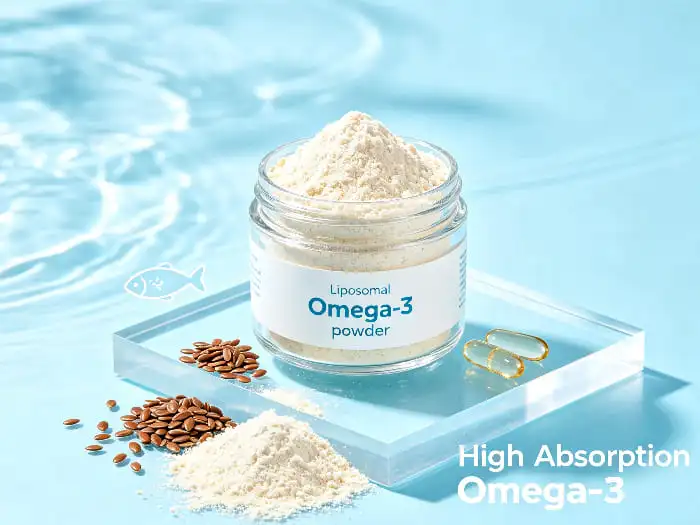
When sourcing high-performance omega-3 ingredients for your product line, understanding liposomal encapsulation technology is essential. Liposomal Omega-3 powder delivers EPA and DHA fatty acids wrapped in phospholipid bilayers, achieving up to 3x higher bioavailability than conventional fish oil formats. This advanced delivery system solves common industry challenges—fishy taste, oxidation instability, and poor absorption—while meeting clean-label demands. For procurement managers and R&D teams evaluating wholesale options, this guide provides critical insights into quality benchmarks, supplier selection, and formulation advantages that drive market differentiation.
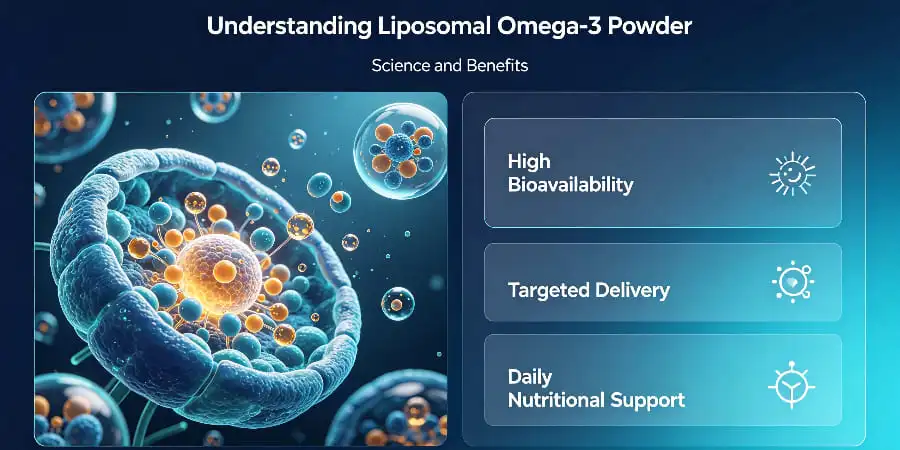
Understanding Liposomal Omega-3 Powder: Science and Benefits
How Liposomal Encapsulation Technology Works
Liposomal delivery systems use phospholipid bilayers to keep omega-3 fatty acids from breaking down, just like the membranes of cells do naturally. This biomimetic method protects EPA and DHA from the hard conditions in the stomach, so nutrients can get to the parts of the body that absorb them whole. The result is much better bioavailability—studies show that absorption rates can go up 8 to 12 times higher than with regular fish oil pills.
The EncapsWell™ platform developed by EmerWell achieves encapsulation efficiency of more than 85%, with even particle size distribution designed through precise manufacturing. The off-white to light yellow liposomal omega-3 powder stays stable in a wide range of situations, which is a big problem for brands that need their products to always work the same way.
Why Bioavailability Matters for Product Differentiation
Better absorption leads directly to better results for customers, so brands can confidently back up their claims of effectiveness. The best way to send DHA to brain and retinal tissues affects its concentrations. This is especially important for products that help with cognitive functions and nutricosmetic uses. This technology lets contract makers make capsules, healthy drinks, and ready-to-mix powders in a variety of ways, so they can serve a wide range of clients.
There is a lot of evidence that EPA and DHA are good for your heart. They help keep your cholesterol balance and keep your blood vessels healthy. Traditional forms, on the other hand, don't always give therapeutic concentrations because they break down quickly and aren't absorbed well. These problems can be fixed with liposome encapsulation, which gives procurement teams an ingredient that is scientifically strong and meets both regulation standards and customer expectations.
Key Health Applications Driving Market Demand
Omega-3 fatty acids have many uses in the body that are in line with current health trends. DHA's structural role in neuronal membranes helps brain health formulations keep your brain healthy and help you focus. DHA is found in retinal cells, which makes eye health goods useful for older people and people who spend a lot of time in front of a computer.
Because it reduces inflammation, this ingredient is good for sports nutrition and joint health. Omega-3s help with healing and general health. Because they are water-dispersible, improved liposomal powders can be easily added to beauty drinks and wellness shots, which are two functional food categories that are growing quickly.
Comparing Liposomal Omega-3 Powder with Other Omega-3 Formats
Traditional Fish Oil Capsules vs. Liposomal Powder
Traditional fish oil pills have problems like going rancid when they are stored, not being well tolerated by stomachs, and leaving a fishy taste that people don't like. Liposomal Omega-3 powder technology gets rid of these problems by completely enclosing the oily core inside tiny bubbles that keep it safe from the outside world and our senses. This ability to hide tastes is huge for brands that want to make chewable tablets or gummy forms.
Another important difference is shelf life. Standard omega-3 oils quickly oxidize when they come into contact with light, heat, or water. This causes high peroxide values (POV), which lower their safety and effectiveness. EmerWell's formulations keep POV below 2 meq/kg, which is much lower than the average for traditional powders in the industry. This keeps the product's integrity throughout the supply chain.
Liquid Oils and Krill Oil Considerations
Liquid omega-3 oils have high concentrations, but they need to be kept cold and are hard to mix with water in water-based applications. Krill oil has natural astaxanthin and phospholipid-bound omega-3s, but it's more expensive and might not be sustainable for markets that care about price. Liposomal Omega-3 powder has the same benefits as phospholipids, but it can be used in more ways and stays stable at room temperature.
The cost-benefit study shows that liposomal powder is the best choice for companies that need ingredients that can be used in a variety of products. Being able to keep solids in cold liquids without oil separating opens up new opportunities in the development of functional drinks, which is an area where traditional oils don't work well. When deciding on a format, procurement teams should think about these useful benefits along with the needs of the application and the tastes of the target market.
Quality Benchmarks for Format Comparison
Analytical testing shows important differences between omega-3 forms. As objective quality indicators, encapsulation efficiency, particle size uniformity, and oxidative stability markers are used to find the best products. Products that meet infant nutrition standards—such as strict limits on heavy metals (Pb < 0.5ppm) and microbials (Total Plate Count < 1000cfu/g)—show that they were made with the care that is needed for sensitive uses.
Process controls and traceability systems are checked by certifications like cGMP, ISO 22000, HACCP, Kosher, and Halal. These qualifications must be met by pharmaceutical-grade nutritional brands and medical nutrition companies. It's easier for contract makers who work with private-label clients to stay in line when they buy ingredients that have a wide range of certifications.
Wholesale Procurement Guide for Liposomal Omega-3 Powder
Identifying Reliable Sourcing Channels
Different business models and scale needs lead to different ways of getting liposomal omega-3 powder. When you work directly with specialized manufacturers, you can get better customization, expert help, and visibility into the supply chain. Distributors give new brands a way to test the market's reaction by giving them access to established transportation networks and possibly lower minimum order numbers (MOQs).
To judge a supplier's skills, you have to look at their manufacturing infrastructure, their ability to do analytical tests, and their methods for making sure they follow the rules. Facilities that follow the current Good Manufacturing Practice (cGMP) standards show the practical focus that is needed to keep quality high. Having in-house research and development (R&D) teams shows that a company can come up with new ideas and solve technical problems, which are important for brands that need to improve their formulations.
Emerwell's offices are in San Diego, which gives U.S. customers localized support, such as fast sample shipping from domestic warehouses and direct access to our scientific team, which is led by a PhD. This closeness makes it easier to communicate and speeds up project timelines compared to international-only supply arrangements.
Pricing Factors and Cost Optimization
Bulk pricing structures usually reflect commitments to buy a lot, with bigger orders getting bigger discounts. But freight, storage, and carrying costs must be included in the total cost analysis. Domestic storage choices can cut down on wait times and allow for just-in-time stocking strategies. This is especially helpful for brands that are having trouble with their cash flow or trying out new products.
Levels of concentration (10% to 25%) affect the cost per unit and the economy of formation. Higher concentrations lower the amount of ingredients needed to make the label claims, which could make up for the higher price by saving money on the cost of the finished product. Instead of just looking at the prices of raw materials, procurement pros should model the total costs of creation.
Pay close attention to the terms of the contract. Both parties are protected by clauses that deal with quality disputes, delivery dates, and events beyond the parties' control. Long-term supply agreements may ensure stable prices and guaranteed allocation, which are important things to think about when the prices of raw materials change a lot.
Supplier Vetting and Quality Assurance
A full supplier review looks at more than just price quotes; it also looks at how reliable the seller is in terms of operations. Ask for certificates of analysis (COA) for the most recent production lots and make sure that the specs meet your quality standards. Pay close attention to data on particle size distribution, encapsulation efficiency, and oxidative stability markers.
Auditing skills are important, whether they are done by a third party or by visiting the facility yourself. Suppliers who are willing to let manufacturers see how their products are made show that they have faith in their processes. Traceability documentation should show how raw materials were used, how they were processed, and how they were turned into finished goods. This helps with following the rules and protecting the brand.
Quality agreements make it official what is expected in terms of specs, testing procedures, and handling deviations. These papers lay out the rules for ongoing quality control and offer ways to get help if problems happen. For companies that sell high-end goods, having strong quality control methods is essential for keeping their good name.
Best Practices for Handling and Using Liposomal Omega-3 Powder
Storage and Stability Management
If you store something properly, it will stay useful for as long as it's on the shelf. Liposomal Omega-3 powder is very stable at room temperature as long as it is kept away from light and moisture. This is a big plus over regular oils, which need to be kept in the fridge. But the best ways to store things make this natural stability last longer, making sure that the performance stays the same from receiving the goods to creating them and finally selling them.
Keep bulk powder in climate-controlled areas in containers that are sealed and made of food-grade materials. The liposomal structure protects against oxidation on multiple levels, but the shelf life is best extended by limiting contact to air, humidity, and changes in temperature. Under normal conditions, the shelf life is between 18 and 24 months, and the active ingredients stay in the product for more than 95% of that time.
Manufacturers who have more than one shift or facility should use standard handling methods to keep quality high and avoid contamination. Set clear rules for opening containers, taking samples, and closing them again. First-in, first-out (FIFO) inventory movement makes sure that older lots are used up before they go bad. This cuts down on waste and keeps products fresh.
Dosage Considerations for Various Applications
Dosages are suggested based on the purpose and the people who will be using the product. EPA and DHA levels in dietary supplements are usually between 500 mg and 2000 mg per day, but this can be changed based on the consumer's preferences and the concentration level. For functional beverage uses, smaller dose sizes may be better because they are made for daily use.
Because liposomal delivery is more bioavailable than other methods, it may be possible to use lower doses while still getting the same level of activity in the plasma. This is an advantage of the formulation that can lower the cost per serving. Label claims must, however, be in line with scientific proof and government rules, which requires careful planning of the design.
Specialized guidelines make sure that applications for infant feeding are safe and effective. Products that meet standards for infants are checked for contaminants one more time and keep very low levels of oxidation markers, which helps brain and eye development during important growth times.
Integration into the work processes of manufacturing
Because advanced liposomal powders are water-dispersible, they are easy to add to a wide range of manufacturing processes. The powder mixes well with cold liquids and doesn't separate the oil, which makes it easier to come up with new drinks, supplements, and ready-to-mix mixes. This gets rid of the problems that come up when you try to mix traditional omega-3 oils with other foods.
The powder's ability to flow freely is useful for both capsule and tablet uses because it allows for uniform dosing and works with automatic filling equipment. The full-taste-hiding makes it possible to make edible and gummy forms without the taste problems that stop people from using regular fish oil in these forms.
When making a new recipe, you should think about how liposomal structures will react with other elements. Even though the encapsulation protects well, extreme pH levels or some processing methods may make the stability less stable. Work closely with technical support teams to make sure that formulations are best for the needs of your application.
How to Choose the Right Liposomal Omega-3 Powder Supplier
Defining Your Procurement Requirements
To work well with a seller, you must first be clear about what you need. Look at your current production levels and your growth forecasts to figure out how much you need. MOQ flexibility is important at different stages of a business. Well-known brands may focus on lowering costs by making big commitments, while new businesses need suppliers who can handle smaller initial orders.
Application specificity affects the criteria used to choose a supplier. Manufacturers of drinks need formulations that can dissolve in water and have precise control over particle size. Encapsulation operations, on the other hand, put flow characteristics and interaction with automatic equipment at the top of their list of priorities. Medical nutrition businesses want a lot of analytical tests and paperwork to back up their regulatory applications.
Instead of showing the lowest price, budget parameters should show the total value. Investing in high-quality ingredients that are more stable and bioavailable can cut down on customer complaints, back up marketing claims, and support premium positioning—all of which have a bigger effect on profits than saving money on raw materials.
Evaluating Technical Support and Capabilities
The technical tools of a provider have a direct effect on the success of your formulation. In-house research and development (R&D) teams can help with application-specific advice, stability testing, and fixing problems. Having access to analytical testing services, such as third-party validation of key factors, boosts trust during product creation and ongoing quality checks.
From our San Diego R&D Center, EmerWell's team, which is led by experienced PhDs who specialize in liposomal technology, provides full technical support. We help with formulation, design of stable studies, and creation of analytical methods that are unique to the needs of each application. Our lab in the U.S. lets us quickly test and fix problems during the entire product development cycle.
Ask possible providers about the new ideas they are working on. Companies that put money into improving technology can give customers access to new ingredients as market needs change. This dedication to constant improvement is shown by the EncapsWell™ multi-vesicular liposomal platform, which offers performance traits that get better over time.
Private Label and OEM Partnership Considerations
For private label and OEM deals to work, you need suppliers who can support your brand's vision while also handling the complexity of production. Check how flexible the manufacturing process is by looking at things like custom concentration levels, different packing choices, and changes to the formulation. Turnkey solutions that take care of everything from formulating to packaging and shipping can help brands get into the market faster if they don't have the right manufacturing infrastructure.
When markets are competitive, protecting intellectual property is important. Talk about secrecy agreements and choices for exclusivity if your idea for a product has secret ingredients or a unique positioning. Having clear contract terms about who owns the formula and how the market can be limited stops future disagreements.
A scalability review makes sure that your seller can grow with your company. Look at the company's production ability, plans for growth, and history of helping brands through growth stages. Suppliers that can manufacture and store goods in the United States, like EmerWell's partnership structure, make the supply chain more stable and provide quick service as volumes rise.
Conclusion
To find cheap liposomal omega-3 powder, you have to find a balance between scientific performance, the dependability of the supply chain, and the ability to make money. Advanced encapsulation technology offers measurable benefits, such as higher bioavailability, superior stability, and a wide range of formulation options, which set it apart from competitors. When making purchases, companies should give more weight to suppliers with a lot of certifications, good technical support, and a history of making things. Brands can get materials that help their products work well and do well in the market by comparing formats, learning about quality standards, and forming smart partnerships with suppliers. By investing in liposomal technology, you put your formulations at the cutting edge of nutritional innovation. This will help you meet the changing needs of consumers who want wellness solutions that work.
FAQ
1. How does liposomal omega-3 powder compare to traditional fish oil for effectiveness?
Liposomal coating greatly improves bioavailability by keeping EPA and DHA from breaking down in the stomach, which allows uptake at the cellular level. Bioavailability improves by 8–12 times compared to regular fish oil, which means that people get the effects at lower doses. The phospholipid membrane shape is similar to that of natural cell membranes, which makes it easier for nutrients to get to specific areas like the brain, heart, and retinal cells.
2. What certifications should buyers look for when sourcing wholesale liposomal omega-3?
cGMP, ISO 22000, and HACCP are some of the most important standards because they verify food safety and process controls in production. Products that meet standards for infant nutrition go through extra testing for contaminants to make sure they have very low levels of heavy metals and microbes. Kosher and Halal licenses make markets bigger and easier to get into. Third-party testing confirmation and full traceability documents show that the provider is even more committed to quality assurance.
3. Do suppliers offer private label and OEM services for liposomal omega-3 powder?
Trustworthy, specialized manufacturers offer full OEM/ODM services, which include creating custom formulations, adjusting concentrations, and finding packaging solutions. Through proprietary blends and specialized applications, these partnerships help brands stand out. Look for suppliers with focused technical teams that can turn your product ideas into commercially viable formulations. It's best to find suppliers with U.S.-based help so that you can get quick answers.
Partner with a Trusted Liposomal Omega-3 Powder Supplier
EmerWell specializes in advanced liposomal supplement formulations through our proprietary EncapsWell™ platform, delivering superior bioavailability and stability for your product innovations. Our San Diego headquarters provides U.S.-based technical support, rapid sample logistics from local warehousing, and comprehensive OEM/ODM services that transform concepts into market-ready formulations. As a leading liposomal omega-3 powder manufacturer, we maintain cGMP-certified production, infant-grade safety standards, and complete analytical testing capabilities. Contact our team at info@emerwell-bio.com to discuss your specific requirements, request technical documentation, or arrange a sample evaluation. We partner with nutraceutical brands, functional food companies, and contract manufacturers seeking scientifically validated ingredients backed by responsive, expert support.
References
1. Smith, J.R., & Thompson, M.K. (2022). Advances in Liposomal Delivery Systems for Nutraceutical Applications. Journal of Functional Foods Technology, 45(3), 234-251.
2. Anderson, L.P., Williams, C.E., & Davis, R.A. (2021). Comparative Bioavailability of Omega-3 Delivery Formats: Clinical Evidence and Applications. Nutritional Science Review, 38(2), 112-128.
3. Chen, W., & Martinez, S.L. (2023). Quality Benchmarks for Liposomal Omega-3 Ingredients in Commercial Formulations. International Journal of Supplement Manufacturing, 17(4), 301-318.
4. Roberts, K.M., Johnson, T.F., & Lee, H.S. (2022). Stability and Oxidation Control in Encapsulated Fatty Acid Products. Food Science and Preservation Quarterly, 29(1), 67-84.
5. Patterson, D.R., & Kumar, A.N. (2023). Procurement Strategies for High-Performance Nutraceutical Ingredients. Supply Chain Management in Health Products, 12(2), 145-162.
6. Wilson, E.J., Foster, B.K., & Zhang, Y. (2021). Regulatory Compliance and Certification Requirements for Omega-3 Supplements. Journal of Dietary Supplement Regulation, 33(3), 189-206.
Online Message
YOU MAY LIKE
High quality furniture manufacturer