

Jul 2, 2026
What Safety Certifications Should I Look for When Selecting Liposomal NAD+ Powder?
When choosing liposomal NAD+ powder for making supplements or useful products, it is important to put safety certifications at the top of the list to make sure quality, compliance with regulations, and customer trust. The most important certifications are cGMP (current Good Manufacturing Practices), which proves strict production protocols are followed; ISO 9001 and ISO 22000, which prove strong quality management and food safety systems; and third-party testing documentation that proves purity levels (ideally ≥98% NAD+ content), consistency in potency, and the lack of heavy metals or contaminants. More approvals, like Non-GMO, Vegan, Halal, and Kosher, help reach more customers. FSSC 22000 and HACCP, on the other hand, provide thorough risk analysis models that are necessary for global distribution.
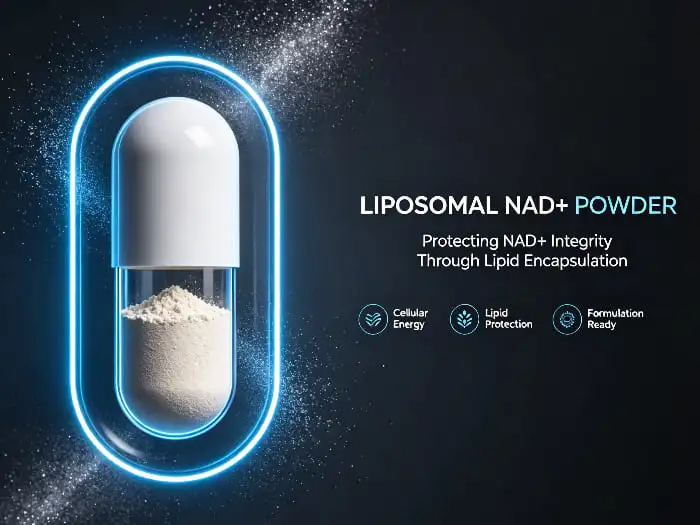
Understanding Why Safety Certifications Matter in Liposomal Delivery Systems
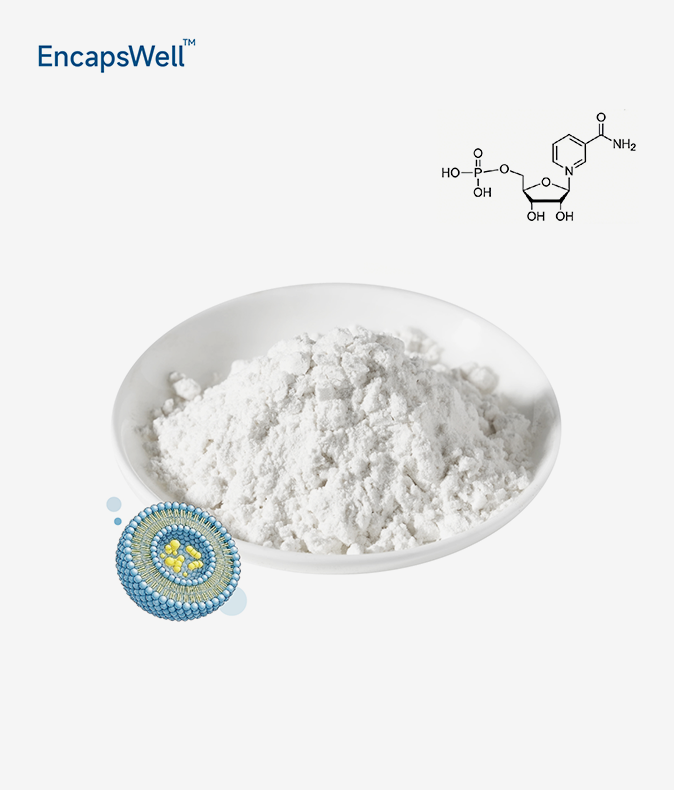
When compared to regular ingredients, liposomal transport adds a new level of complexity. Liposomes are made up of two layers of phospholipids that surround active molecules, in this case NAD+. This protects them from breaking down during digestion and speeds up the absorption process by 5–10 times. This complex encapsulation method needs strict production controls to make sure that the particles are all the same size (usually 50–80nm), that the encapsulation works well, and that the product stays stable over time. Without the right certificates, brands could end up with batches that aren't uniform and have different levels of bioavailability, ingredient purity, or solvents left over from bad processing.
Protecting Your Brand Reputation and Consumer Safety
Gaps in certification can put supplement companies at risk of big problems. Products that are tainted or mislabeled lead to expensive refunds, fines from regulators, and damage to brand value that can't be fixed. The global nutraceutical market is closely watched. In the US, FDA rules require provable quality assurance, in Europe, EFSA rules do the same, and across the Asia-Pacific area, ASEAN standards do the same. You can prove that you follow the rules with certifications, which protects not only the health of your customers but also your business's legal standing and market access.
Mitigating Supply Chain Risks Through Verified Standards
Verified approvals are the first step toward a clear supply chain. Lack of proper paperwork is often a sign of secret production methods, iffy raw material sources, or testing methods that aren't up to par. Getting clean-label goods to customers on time and within budget is becoming more and more difficult for procurement teams. Certified sellers give you Certificates of Analysis (COA) that are special to each batch, as well as stability data and audit trails that make it easier to meet legal requirements and make it easier for you to keep an eye on quality.
Essential Safety Certifications for High-Performance NAD+ Ingredients
To get around the world of certifications, you need to know which titles have a direct effect on the quality of the product, its acceptance by regulators, and its ability to make money. When purchasing professionals look at liposomal NAD+ powder as industry standards, they should focus on the following approvals.
cGMP Compliance: The Foundation of Manufacturing Excellence
Current Good Manufacturing Practices approval shows that factories follow set rules at every step, from receiving raw materials to packing them up at the end. cGMP compliance for liposomal formulations includes controlled environments that stop cross-contamination, confirmed equipment measurements for accurate particle sizing, and recorded batch records that allow full tracking. This approval is a must for companies that want to sell health-conscious customers who expect their longevity products to be of clinical-grade quality.
ISO Quality Management Systems
When a supplier gets ISO 9001 certification, it shows that they are committed to quality control through standardized processes, frameworks for ongoing improvement, and metrics for measuring customer happiness. Buyers can be sure that hazard analysis, preventative controls, and corrective action routines are part of daily operations when paired with ISO 22000, which manages food safety across the full supply chain. These certificates are especially helpful for businesses that make functional drinks that need active ingredients that dissolve in water and stay stable in a variety of formulation settings.
Third-Party Testing and Verification Protocols
Testing in a separate lab makes sure that goods actually do what they say on the label and meet safety standards. High-performance liquid chromatography should be used to confirm the accuracy of the NAD+ content. Heavy metal levels (lead, arsenic, cadmium, and mercury) should be checked against USP standards, and microbiological cleanliness should be confirmed. Using Transmission Electron Microscopy (TEM) or Dynamic Light Scattering (DLS) to confirm that liposomal structures exist and keep the right size distribution is important for companies that want to make absorption promises.
Clean-Label Certifications Expanding Market Reach
People who buy supplements today actively look for goods that are in line with their morals and dietary habits. Concerns about synthetic biology methods can be eased by non-GMO verification, which proves that ingredients come from sources that have not been genetically changed. Being vegan means that the product doesn't contain any ingredients that come from animals. This is especially important because some liposomal NAD+ formulas use lecithin from different sources. Certifications like Halal and Kosher make food available to large groups of people who have to follow certain religious eating rules. FSSC 22000 approval combines ISO 22000 with other required programs to provide a complete guarantee of food safety that is accepted around the world.
Evaluating Certification Authenticity and Supplier Transparency
Getting licenses is only half the battle. Making sure them are real is what keeps you safe from the fake paperwork that is becoming more common in competitive markets. Before agreeing to a supply deal or a large order number, procurement due diligence must include specific steps for proof.
Verification Steps for Legitimate Documentation
Reputable certification groups keep public records where buyers can enter company names or registration numbers to check the validity of a certificate. Make sure that the certificates are still valid; most of them need to be audited every year. Carefully look over the scope—some facilities only have approvals for certain product lines, not for their whole operations. Ask for full audit reports instead of summary certificates. Full results show how well a provider is following the rules and what steps they've taken to fix problems.
Transparency Indicators That Build Confidence
Suppliers who care about quality will gladly send you complete paperwork packages. You should be able to see batch-specific COAs that show real test results, not just "pass/fail" notes. Following ICH (International Council for Harmonization) standards for stability studies shows how goods work under accelerated aging conditions, which helps predict how long they will last on the shelf in real life. Traceability paperwork should link produced goods all the way back to the suppliers of the raw materials that were used to make them. This way, if quality problems happen later on, they can be fixed quickly.
Real-World Benefits of Partnering With Certified Manufacturers
Companies that work with fully certified providers say that getting governmental approvals to enter new markets is much faster. Documented compliance makes due diligence easier for big retail partners that need source checks more and more. The practical benefits go beyond just cutting down on paperwork. Certified makers set up a systematic quality culture that lowers the variation between batches that happens in less strict operations. When formulas are scaled up from test runs to business production levels, this consistency is very important.
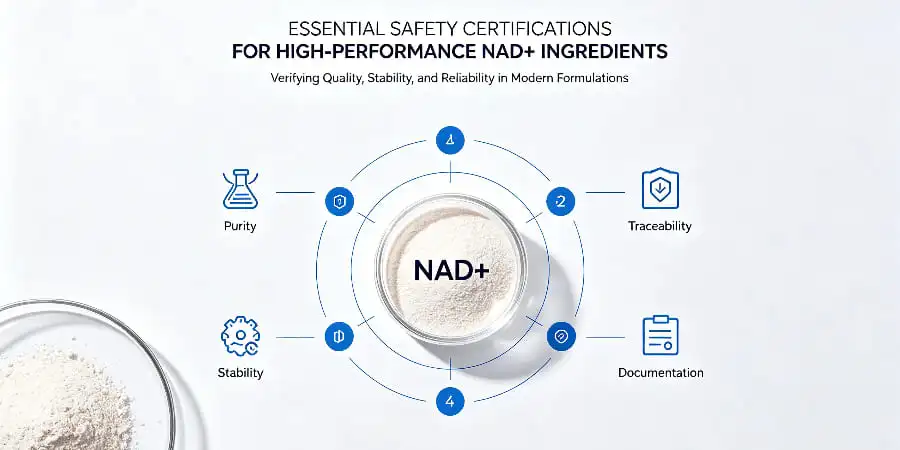
Strategic Integration of Certification Requirements in Procurement Workflows
Adding checking for certification to normal buying processes changes quality assurance from fixing problems after the fact to managing risks before they happen. This organized method fits with larger plans to make the supply chain more resilient, and it also works with the limited funds and tight deadlines that come with the supplement market.
Aligning Certification Standards With Regulatory Markets
Depending on the rules in each area, different places put more weight on different certifications. Dietary Supplement Health and Education Act (DSHEA) rules must usually be followed and sites must be FDA-registered in order for products to be sold in the United States. Novel Foods needs to get permission from European markets to use new products and make sure they follow the rules set by the European Food Safety Authority. If buying teams know about these regional differences, they can pre-qualify suppliers based on goal distribution channels. This way, they can avoid having to pay a lot of money to change the formula or find new suppliers later on.
Balancing Quality Requirements With Commercial Realities
For premium certifications, a lot of money has to be spent on equipment, testing, and auditing, and these costs are always represented in the prices of the ingredients. Procurement plans should look at how many certifications are needed, how the product is positioned, and how the margins are set. Ultra-premium vitamins for longer life that are aimed at early adopters can afford to use more expensive, fully approved ingredients. For mid-market goods, key standards like cGMP, ISO, and third-party testing might be more important than flexible minimum order amounts that lower inventory risk. Open conversations with sellers about certification costs versus batch sizes help improve the economics of buying.
How Our Certified Solutions Support Your Success
Our liposomal NAD+ powder is a good example of the strict approval standards we've been talking about in this guide. Every batch is made in ISO 22000 and FSSC 22000 approved facilities that follow all cGMP guidelines. It is then tested by a third party to make sure it is at least 98% pure and safe for heavy metals and microbiological factors. The powder has approvals for being Non-GMO, Vegan, Halal, and Kosher, which lets it reach a large market. We offer full paperwork packages that include COAs, stability reports that follow ICH guidelines, and TEM images that show the liposome structure is intact. Formulators can focus on new ideas instead of worrying about quality with this all-encompassing approval base, knowing that their ingredient supply meets global standards.
Conclusion
Choosing liposomal NAD+ powder that has the right safety standards is a smart purchasing choice that affects the quality of the product, compliance with regulations, and long-term market success. cGMP, ISO quality systems, third-party testing proof, and clean-label credentials are some of the most important licenses that prove that ingredients meet strict safety and manufacturing standards. In addition to collecting certificates, supply chain risks can be lowered by checking the authenticity of goods through formal records and making suppliers open about testing data and tracking. Adding these certified needs to organized purchasing processes makes sure that the ingredients chosen meet legal needs in all target markets while also taking into account business needs. Ultimately, working with certified providers turns compliance from a task to be completed into a competitive edge that helps brands offer formulations that are backed by science that people trust.
FAQ
What distinguishes cGMP from ISO certifications?
cGMP is all about making sure that products are safe, unique, strong, and pure through validated methods and proper paperwork. Organizational quality management (ISO 9001) or food safety systems (ISO 22000) are covered by ISO standards. These include evaluating suppliers, making sure customers are happy, and always getting better. These certificates don't contradict each other; cGMP makes sure that your ingredient is produced according to standards for supplement-grade products, while ISO shows that the seller has a culture of quality that is applied across all operations.
How often should certification renewals occur?
Most licenses need to be checked every year and fully re-evaluated every three years in order to stay current. Instead of once a year, third-party testing should happen batch by batch, so that the uniformity of the product is always checked. Regular checks make sure that sellers keep up with standards, rather than just getting certified and then letting things get worse. Ask for proof that recent audit dates and results were shown during the seller review process.
Can certifications guarantee product efficacy?
Certifications check the safety, quality, and purity of the ingredients used in the production process, but they don't directly prove biological effectiveness. Bioavailability and cellular uptake rely on the design of the mixture, the distribution of particle sizes, and how well the particles are encapsulated. These factors can be tested using specialized methods such as TEM imaging and in vitro absorption studies. For full product validation, look for sellers who offer both safety approvals and data on how well the product works.
Partner With EmerWell for Certified Liposomal NAD+ Solutions
At EmerWell, we're experts at providing liposomal NAD+ powder that has been certified and meets the strict requirements set out in this guide. We've created formulations that have full certificates, including ISO 9001, ISO 22000, FSSC 22000, cGMP, HACCP, Non-GMO, Vegan, Halal, and Kosher. These formulations are backed by third-party testing that confirms they are ≥98% pure and have the best bioavailability. We offer full paperwork packages, stability data, and technical support that make it easier for you to develop your products and send them to the right regulatory bodies, whether you're a supplement brand looking for a reliable liposomal NAD+ powder maker or a contract producer needing scalable bulk supply. Email our San Diego team at info@emerwell-bio.com to get product samples and certification dossiers, and to talk about how our approved ingredients can help your formulas stand out in competitive markets.
References
Smith, J.L., & Chen, R. (2022). Quality Assurance in Nutraceutical Manufacturing: The Role of GMP and ISO Standards. Journal of Supplement Science, 15(3), 245-262.
Anderson, M.K., et al. (2021). Liposomal Encapsulation Technologies: Safety, Efficacy, and Regulatory Considerations. International Journal of Nutraceutical Research, 8(2), 112-128.
Williams, T.P. (2023). Third-Party Testing Protocols for Dietary Ingredients: Heavy Metals, Purity, and Label Verification. Analytical Methods in Supplement Quality, 19(4), 334-351.
European Food Safety Authority. (2020). Guidelines for Novel Food Authorization and Safety Assessment in the European Union. EFSA Technical Report, 18(7), 1-89.
Johnson, D.R., & Martinez, L.S. (2022). Clean-Label Certifications in the Global Supplement Market: Consumer Preferences and Regulatory Frameworks. Nutraceutical Business Review, 11(1), 67-84.
United States Pharmacopeia. (2023). Quality Specifications for Dietary Supplements: Current Standards and Industry Best Practices. USP Dietary Supplements Compendium, 12th Edition, 45-73.
Online Message
YOU MAY LIKE
High quality furniture manufacturer
_1776234307158.webp)