May 19, 2026
What is the Difference Between NMN and Liposomal NMN?
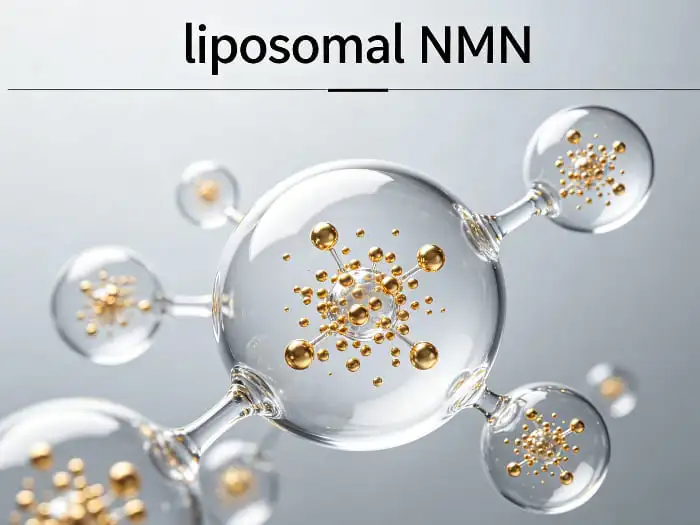
The main difference between regular NMN and liposomal NMN is how they are delivered and how well they work in the body. Traditional Nicotinamide Mononucleotide gives NAD+ intermediates directly, but liposomal NMN powder wraps these molecules in phospholipid bilayers, protecting them from being broken down in the stomach and increasing their uptake by cells by 4–8 times. This advanced encapsulation closely resembles the membranes of human cells. This makes it easier for the body to absorb the supplement through the digestive system and greatly increases the rate at which it is converted to NAD+ in tissues. This makes it especially useful for high-end supplement formulas aimed at the anti-aging and longevity markets.
Understanding NMN and Liposomal NMN: Basic Concepts
What is Standard NMN?
Nicotinamide Mononucleotide is a direct precursor to NAD+, a coenzyme that is needed to make energy in cells, fix DNA, and keep the metabolism in check. Standard NMN usually looks like a powder that is perfectly clear and has a molecular weight of 334.22 Da. When eaten, it has to make its way through the acidic environment of the stomach before it can reach the places in the intestines where it can be absorbed. There, special SLC12A8 transporters help it get into cells. Clinical studies show that taking NMN supplements by mouth can raise the amount of NAD+ in the blood. This helps mitochondria work better and may slow down the cellular decline that comes with getting older. Standard formulas usually have ≥98% purity and are liked because they are easy to make and look good on the label.
What is Liposomal NMN Technology?
Liposomal transportation is a biomimetic way to move nutrients around, which gets around the problems that come with regular NMN uptake. NMN molecules are put inside tiny spheres made of phospholipid bilayers, which are usually made from non-GMO sunflower or soy lecithin. This is done using special production methods like high-pressure homogenization or thin-film hydration. The width of these lipid circles is 50–200 nanometers, and their structure looks like the membranes of human cells. This structural resemblance gives two very important benefits: it protects the active ingredient from being broken down by CD38 glycohydrolase and stomach acid; it also makes it easier for cells to take it in through membrane fusion or endocytosis instead of just using transporter proteins.
Why Delivery Method Matters for B2B Buyers?
The formulation design you choose has a big impact on how flexible downstream production is, how stable the product is on the shelf, and how well it works for end users. Standard NMN works well in situations where simplicity and low cost are important, while liposomal versions are great for premium placement where claims about bioavailability set your brand apart. OEM partners working on drink recipes can benefit from liposomal technology's ability to disperse water and have a bland taste. On the other hand, capsule makers may prefer crystalline NMN's simple tableting qualities. By knowing these details, buying teams can match the requirements for ingredients with the needs of the target market, the rules that apply, and the production facilities that are available. This lowers the risk of having to change the recipe and speeds up the time it takes to get a new product on the market.
Comparing NMN and Liposomal NMN: Key Performance Dimensions
Absorption Rate and Bioavailability
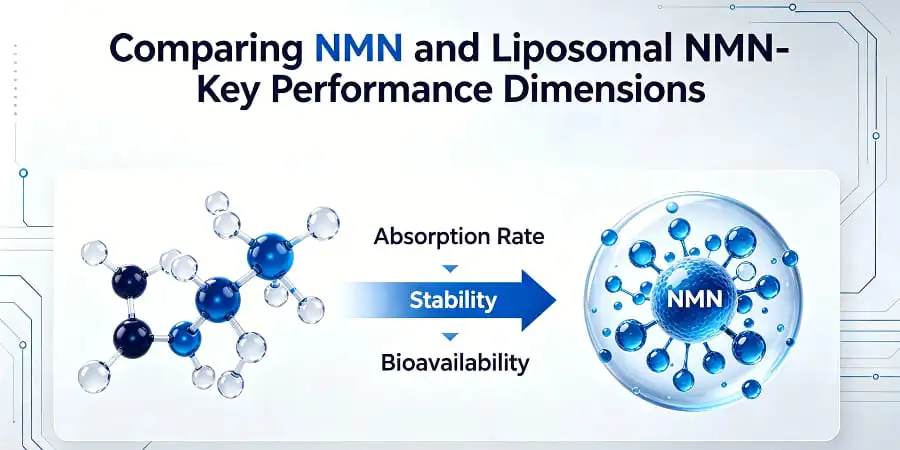
Bioavailability is the amount of NMN that is absorbed by the body and used by cells. It is a direct measure of how well a dose works and how much it costs per serve. Standard NMN has a hard time being absorbed because stomach acid breaks down some of it into nicotinamide before it can be taken up by the intestines, and there aren't enough transporters to handle the high amounts when they happen. According to research, standard formulas have an absorption of about 20 to 30 percent when conditions are perfect.
This metabolic profile is completely changed by liposome packaging. The phospholipid cover keeps NMN safe in the acidic environment of the stomach, getting unbroken molecules to enterocytes in the intestine. Better interaction with membranes allows direct absorption without saturable transporters, which makes the drug 4–8 times more bioavailable than when it is not enclosed. This has real-world benefits: brands can get therapeutic NAD+ increase with lower amounts of NMN per dose, which is better for both cost-effectiveness and label promises. Stability testing shows that liposomal goods that are properly made keep their packaging integrity for 24 months when kept in a controlled environment.
Efficacy in Promoting Cellular Health
Biological results are the best way to judge an ingredient's value. Standard and liposomal NMN both raise the amount of NAD+ inside cells, which helps with sirtuin activation, mitochondrial production, and controlling the circadian cycle. According to clinical comments, liposomal formulations seem to work faster. Users report having more energy within 7–10 days, compared to 2–3 weeks for regular formulas. This faster reaction is probably due to better plasma concentration curves that were made possible by better absorption.
When you buy from a reputable company that follows cGMP standards, the safety ratings of different forms stay the same. Both are put through a lot of tests to look for heavy metals, microbes, and chemicals that are still present. The main difference is in dosage efficiency: liposomal technology lets brands deliver the same biological effect with 200–300 mg per serving instead of the 500–1000 mg needed for standard formulations. This meets consumer preferences for smaller capsule sizes and clearer supplement facts panels.
Storage and Handling Requirements
Supply chain processes have a big effect on the total cost of ownership, which goes beyond the price of the ingredients. To keep from breaking down, standard NMN powder needs to be stored in a way that keeps the relative humidity below 60% and keeps it away from light and heat. Double-sealed aluminum foil bags with nitrogen washing are often used for bulk packing. Transporting doesn't pose many problems, but being exposed to temperatures above 25°C for a long time speeds up the loss of strength.
When freeze-dried the right way, liposomal NMN powder has better stable properties. The encapsulation structure keeps the core molecule safe from oxidative stress and hydrolysis caused by water. When you store powders at room temperature for 24 months, good makers make sure that they stay shelf-stable and keep at least 95% of their effectiveness. This benefit makes managing inventory easier, lowers the cost of cold-chain logistics, and opens up more potential delivery routes. This is especially helpful for foreign buying that involves both North American and European markets. New packaging ideas like unit-dose sachets make things even more stable and help with placement for customer ease.
Market Comparisons and Procurement Considerations
Cost-Value Analysis for Procurement Teams
To get to the real cost, you need to look at more than just the price per kilogram. You also need to look at the cost-per-effective-dose and the total design economics. Standard NMN wholesale prices run from $180 to $350 per kilogram, based on the purity level and the size of the order. This makes it a good choice for brands that want to save money. Liposomal versions cost more than other versions, between $480 and $850 per kilogram. This is because they are harder to make and need more phospholipid raw materials.
When you look at the end product's economics, the value offer changes. Because liposomal forms are 4–8 times more bioavailable, brands can get the same level of effectiveness with a lot less NMN content per dose. It's possible that a 250mg liposomal dose could raise NAD+ levels as much as a 1000mg normal version. When the price difference is broken down by cost-per-effective-dose, it is often only 15–30%, compared to what it seems to be (2–3 times the difference in the cost of the raw materials). Premium placement also supports higher selling prices, which boosts gross margins and gives customers more value for their money. Procurement teams should use these factors to model how much of a product they expect to make, taking into account packaging, stability testing, and strategies for placing the product in the market.
Alternative Format Considerations
In addition to powder specs, delivery method has a big impact on market fit and production needs. The capsule form is convenient and accurate for dosing, and both regular powders and liposomal NMN powders are easily put inside gelatin or veggie shells. Sublingual powders skip the first pass of metabolism, but normal NMN has a bitter taste that needs flavorings that might not be compatible with clean-label goals. There are different problems that come up when using NMN in beverages. For example, standard NMN doesn't dissolve well in water and stays stable in watery environments, which makes it harder to use. On the other hand, liposomal technology's ability to dissolve in water makes it easy to add to functional drinks, beauty drinks, and liquid supplement shots.
When making a tablet, the excipients need to be carefully chosen. This is especially important for liposomal forms, where too much pressing force could break the lipid vesicles. Soft gel packaging works with both forms, but it needs to be processed in a way that doesn't harm the oil for the best results. Each delivery system has its own set of rules about minimum order amounts, required tools, and legal issues that procurement teams have to weigh against the tastes of the target market and the company's manufacturing capabilities.
Selecting Quality Suppliers
Supplier qualification is one of the most important decisions in buying because it has a direct effect on product safety, legal compliance, and brand image. Some important certificates are ISO 9001 for quality management systems, ISO 22000 or FSSC 22000 for food safety management, and HACCP for methods for hazard analysis. If a brand wants to reach a wide range of customers, it should check for Kosher, Halal, Non-GMO, and Vegan approvals.
Buyers who are picky look at providers on more than just basic compliance. Ask for Certificates of Analysis that are unique to each batch and show the NMN content (≥99% for premium formulas), heavy metal screening (lead, arsenic, cadmium, mercury), microbial limits, and residual solvent tests. Stability data that follows ICH standards shows how well an ingredient works in both sped-up and real-time situations. Verification by a third party from a separate lab adds trustworthiness, especially for new delivery technologies that need special analysis methods to figure out how well particles are encapsulated and how they are spread out in size. When possible, site checks give manufacturers important information about how they make things, how they get their raw materials, and their quality culture that can't be fully captured by paper records.
How to Procure Liposomal NMN Powder Efficiently?
Verifying Supplier Authenticity and Compliance
Thoroughly checking out suppliers is the first step in keeping your brand safe from low-quality or fake ingredients. Set up a qualification checklist that includes proof of legal compliance, licenses for the production site, and proof of technical capability. Ask for copies of the cGMP certification, facility registrations with the right authorities (FDA establishment registration for products going to the US), and proof that the company is in good standing with trade groups in the industry.
For technical approval, particle size analysis should be used to make sure that liposomal spheres are in the right size range (50–200nm) for cells to take them up. For good formulations, encapsulation efficiency tests should show that more than 85% of the NMN is properly trapped within lipid bilayers compared to the amount that is free in solution. Images from transmission electron microscopy show that the shape of the vesicle is still whole. Reliable providers are happy to share this information and keep lines of contact open with technical teams so that formulation questions can be answered during the whole product development cycle.
Optimizing Pricing and Order Structure
Making volume agreements can save you a lot of money and keep your supply going. When you buy 100 kg, 500 kg, or 1000 kg from most producers, the prices go down in important ways. When you negotiate yearly supply deals with quarterly delivery schedules, you can balance managing your cash flow with big purchase discounts, which usually get you 8–15% cost savings compared to buying things on the spot.
Look into value-added services that can help you get into new markets faster and lower the costs of internal growth. No need for in-house research and development when pre-made mixes are available that combine NMN with ingredients that work well together, such as resveratrol, quercetin, or trimethylglycine. White-label packaging help, which includes designing custom labels and reviewing legal text, speeds up the process of going from an idea to a finished product. Some sellers keep warehouses in the US and offer sample transportation services. This lets you make prototypes quickly and cuts the time it takes to ship goods internationally from weeks to days. These conveniences often explain small price increases by shortening development times and lowering the amount of operating capital that is needed.
Logistics and Quality Preservation
When you buy things from other countries, there are extra factors that can change the quality of the ingredients if they are not handled properly. You should specify the type of packing that works best for your store space and production plan. For example, nitrogen-flushed double-sealed bags for bulk liposomal NMN powder or moisture-barrier pouches for smaller amounts would be ideal. Request stability data that confirms performance during shipping. This is especially important for packages that will be going through more than one climate zone or taking a long time to clear customs.
The choice of transportation method weighs cost, speed, and temperature control. Air freight has the shortest travel time but costs more; ocean freight is cheaper for big orders that don't need to be delivered right away. Even though it costs 15–25% more, climate-controlled shipping saves liposomal formulations that are sensitive to temperature during the summer or warmer routes. Full insurance protects against loss or damage, and the cost of the ingredients makes it a good investment. Set clear guidelines for what temperature changes are okay and how the package should be when it arrives, along with clear steps for disputing orders that have been tampered with.
Conclusion
The difference between normal NMN and liposomal delivery methods isn't just a matter of formulation; it's a choice about how to place the product, what it claims to do, and who it's meant for. Conventional NMN works well for uses that need to be cost-effective, but liposomal technology offers measurable benefits in bioavailability, dosage efficiency, and customer perceived value that make it worth charging more for. Successful procurement plans don't just look at how much each kilogram costs; they also do a full total-cost-of-ownership study that looks at how well they work, how stable they are, how well they work with other materials, and how they can help the company stand out in the market. As the market for longevity supplements continues to grow quickly, it becomes more important than ever to build trusting relationships with providers who care about quality in order to gain market share and keep customers.
FAQ
Is liposomal NMN safer than standard formulations?
When made according to cGMP standards and checked properly for contaminants, both formats have similar safety ratings. The shape of liposomes doesn't add to safety concerns—phospholipids are natural parts of cell membranes that have been shown to be safe in the past. The main difference is not in the chance of poisoning, but in how well the drugs are absorbed. No matter the method of delivery, quality standards like ISO 22000, HACCP, and third-party testing are still necessary.
What storage conditions preserve potency?
Standard NMN needs to be stored in a way that keeps the relative humidity below 60% and keeps it safe from light and heat. Liposomal NMN powder formulations are very stable; they keep ≥95% of their effectiveness for 24 months at room temperature if they are properly packed. Nitrogen-flushed, sealed storage is good for both types. Once a bottle is opened, it should be quickly covered again and kept somewhere cool and dry, out of direct sunlight.
How can procurement teams authenticate suppliers?
Ask for a lot of paperwork, like cGMP licensing, ISO quality management credentials, and records from facility inspections. For liposomal products in particular, you should ask for particle size analysis, data on how well the product encapsulates things, and transmission electron microscopy pictures that show the structure of the vesicles is still whole. Claimed specs are backed up by tests from third-party, independent labs. When they are possible, site checks give you a unique look into how things are made and how quality is valued.
Partner with EmerWell for Superior Liposomal NMN Solutions
Through our own EncapsWell™ platform, EmerWell turns new ideas into vitamin formulations that are ready for the market. Our liposomal NMN powder is remarkably pure (>99%) and bioavailable (4–8 times better) than normal formulas. It comes with full stability data and certifications for cGMP, ISO 22000, HACCP, Kosher, Halal, Non-GMO, and Vegan use. We provide full OEM/ODM services and can make powders, pills, capsules, and liquid-ready products, among other dosage forms. Our PhD-led R&D team is here to help, and we can turn around unique projects in 8 to 12 weeks. Our headquarters are in San Diego, California. They offer localized US technical help, quick sample logistics, and direct contact lines that make foreign purchasing easier. Email our team at info@emerwell-bio.com to talk about your unique needs, get full technical specs, or set up a free evaluation of our premium liposomal NMN powder for your next product idea.
References
Yoshino J, Baur JA, Imai SI. "NAD+ Intermediates: The Biology and Therapeutic Potential of NMN and Related Molecules." Cell Metabolism, 2018, 27(3): 513-528.
Liu L, Su X, Quinn WJ, et al. "Quantitative Analysis of NAD Synthesis-Breakdown Fluxes." Cell Metabolism, 2018, 27(5): 1067-1080.
Poddar SK, Sifat AE, Haque S, et al. "Nicotinamide Mononucleotide: Exploration of Diverse Therapeutic Applications of a Potential Molecule." Biomolecules, 2019, 9(1): 34.
Akbari M, Kirkwood TBL, Bohr VA. "Mitochondria in the Signaling Pathways that Control Longevity and Health Span." Ageing Research Reviews, 2019, 54: 100940.
Shade CW. "Liposomes as Advanced Delivery Systems for Nutraceuticals." Integrative Medicine: A Clinician's Journal, 2016, 15(1): 33-36.
Fang EF, Lautrup S, Hou Y, et al. "NAD+ in Aging: Molecular Mechanisms and Translational Implications." Trends in Molecular Medicine, 2017, 23(10): 899-916.
Online Message
YOU MAY LIKE
High quality furniture manufacturer