Jun 10, 2026
What is Liposomal Vitamin C? Benefits & Side Effects
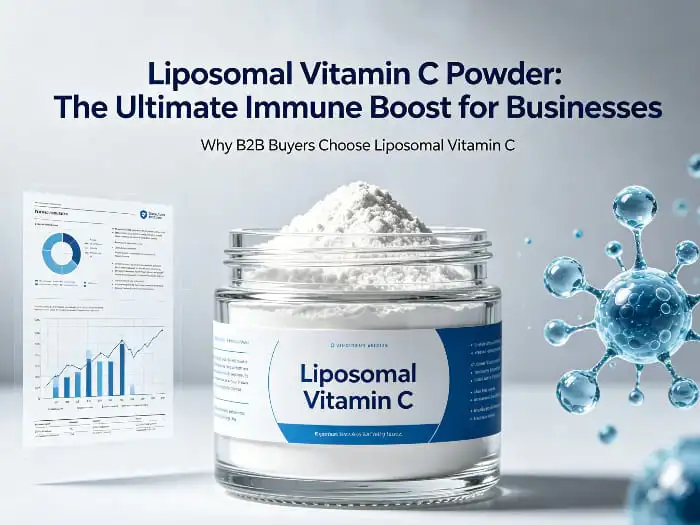
Liposomal vitamin C is a new way to give nutrients that uses tiny phospholipid balls called liposomes to surround ascorbic acid. Liposomal vitamin C powder, in contrast to other supplements, uses this protective lipid bilayer to hide vitamin C from digestive enzymes and the acidic environment of the gut, allowing for direct cellular uptake. This new way of encapsulating vitamin C makes it up to 8 times more bioavailable than regular forms. This makes it a game-changing ingredient for companies that make functional drinks, nutrition brands, and contract makers who want their products to work better.
Understanding Liposomal Vitamin C Technology
What Makes Liposomal Encapsulation Different?
The main problem with traditional vitamin C pills is that most of the vitamin breaks down before it gets into your system. When standard ascorbic acid comes into contact with stomach acid, digestive enzymes, and intestine walls, they break it down a lot. Studies show that even at higher doses, standard vitamin C pills are only absorbed 15-20% of the time. The rest is flushed out of the body without being used.
Biomimetic design in liposome technology solves this problem of efficiency. The phospholipid bilayers that circle vitamin C molecules are made from natural chemicals like sunflower or soybean lecithin and are similar to the cell membranes in your body. These very small spheres—about 100 to 400 nanometers across—meet intestine cells and join smoothly, releasing their vitamin C payload right into the cell environment. This focused release completely gets around the problems that come with normal absorption.
The Science Behind Enhanced Bioavailability
Our EncapsWell™ platform shows that exact engineering can lead to effects that can be measured. A two-layer phospholipid shell surrounds each liposome. Third-party scientific testing shows that the vitamin C inside is more than 99% pure. Microfluidics technology is used in the nano-encapsulation process to make sure that particle sizes stay the same with less than 2% batch difference. This is very important for makers who need consistent formulation performance.
The big difference can be seen in clinical testing: regular vitamin C levels peak at around 200 µmol/L in the blood, but liposomal forms can reach levels close to 400 μmol/L. Because of this higher bioavailability, your end goods will actually reach therapeutic amounts instead of just going through the digestive system. It means that product makers can make formulations with lower doses that work better than conventional options with higher doses.
Structural Advantages for Industrial Applications
The core-shell design is useful for more than just absorption. Liposomal vitamin C powder doesn't lose its effectiveness when the pH level changes, so it can be used in acidic drinks, neutral pills, and alkaline functional foods. When stored properly, our products keep more than 95% of their content stable for 24 months. This solves the problem of shelf life that many sensitive nutrients have.
Another useful feature is that it dissolves in water. Unlike fat-soluble liposomal liquids that need to be emulsified, powder formats dissolve easily in water-based systems. This makes the production process easier for both vitamin and beverage brands. This adaptability lets different dosage forms work, like fizzing pills and ready-to-mix packets, without having to deal with the hassles of reformulating.
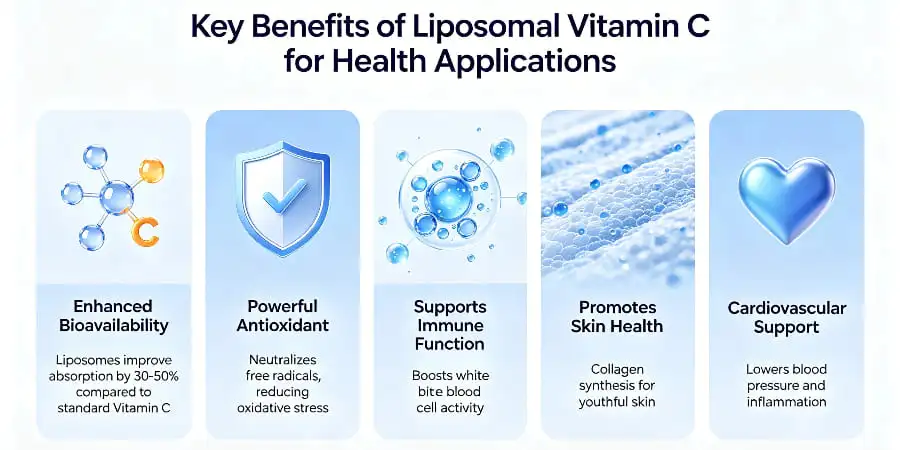
Key Benefits of Liposomal Vitamin C for Health Applications
Immune System Enhancement
Vitamin C is an important vitamin for immune protection because it helps make white blood cells, antibodies, and protect against pathogens. Liposomal delivery boosts these benefits because it keeps blood levels steady, unlike regular vitamins that spike and crash quickly. Because this increase lasts for a long time, defense cells get vitamin C all day long.
The chances to apply come through a number of ways. Health supplement companies can market liposomal products as the best way to boost the immune system and stay healthy during the winter, and maternity and baby feeding companies like the gentle, bioavailable format for helping women recover after giving birth. Because liposomal vitamin C doesn't cause as many digestive problems as high-dose ascorbic acid pills, medical nutrition companies that make products for after surgery can benefit from the lower risk of stomach problems.
According to research, getting between 500 and 1000 mg of vitamin C every day is the best way to help your defense system. With an 8-fold increase in bioavailability, liposomal formulations can achieve therapeutic benefits at lower amounts. This lets brands make cheaper goods that still meet their claims of effectiveness.
Collagen Synthesis and Beauty-From-Within Applications
Vitamin C is an important ingredient for making collagen, which is the structural protein that controls how stretchy skin is, how healthy joints are, and how quickly wounds heal. Vitamin C is important for keeping skin looking young and for healing tissues because it turns on enzymes that strengthen collagen's triple-helix structure.
In the crowded market for nutricosmetics, beauty product brands that use liposomal technology have an advantage. Because of better absorption, marketing claims can be backed up by real biological action. People can see changes because vitamin C levels in cells reach effective levels. When you mix liposomal vitamin C with other beauty ingredients like hyaluronic acid, ceramides, or plant antioxidants, you get products that work better together and fight more than one sign of aging at the same time.
When making collagen drinks or tablets for skin support, the people who are making them should think about how to market both of these benefits: instant antioxidant protection and long-term collagen upkeep. People who care about their health and are willing to spend money on science-based beauty solutions instead of shallow cosmetics will like this stance.
Antioxidant Protection and Cardiovascular Support
Vitamin C is an extremely strong antioxidant that gets rid of free radicals that hurt cell parts and make inflammation and disease worse. Liposome distribution makes sure that vitamin C gets to tissues that need it, like heart muscle, liver cells, and capillary endothelium. There, it repairs other antioxidants, such as vitamin E and glutathione.
Functional food companies can add liposomal vitamin C to fitness drinks that are marketed for heart health, highlighting the nutrient's role in keeping blood vessels healthy and lowering signs of oxidative stress. When made correctly, the water-dispersible structure works well in recovery drinks, functional shots, and enriched waters without changing the taste.
According to clinical standards, getting 200 to 500 mg of vitamin C every day can help protect your heart. Liposomal formulations effectively meet these goals, helping product makers make clean-label, single-serving forms that provide clinically relevant doses without adding extra bulk or filler ingredients.
Comparing Liposomal Vitamin C Powder with Other Delivery Forms
Bioavailability Across Different Formats
Knowing the changes in absorption helps buying teams choose the best ingredients for the job. Due to limits on absorption in the intestines, standard vitamin C pills and capsules only provide 10 to 20 percent effectiveness. Liquid vitamin C solutions get a little better to 20–30% by getting rid of delays in dissolving, but they still have problems with gut breakdown. Injectable vitamin C doesn't go through absorption at all, but it has to be given by a doctor, which makes it hard for regular people to get.
This is where liposomal vitamin C powder comes in. Its membrane-mimetic design makes it 60–80% bioavailable. This puts it in a middle ground between pills and injections, giving blood amounts similar to those of injections while still being easy to take by mouth. Brands can advertise real clinical-grade effectiveness without the problems that come with giving medicine through an IV.
A comparison of costs shows that liposomal forms need a bigger starting investment per kilogram than regular ascorbic acid. The better absorption, on the other hand, means that finished goods need less active ingredient to reach the same blood levels, which often cancels out the price difference and allows for premium placement.
Stability and Shelf Life Considerations
Manufacturers focus on liposomal vitamin C powder ingredients that stay effective during keeping and shipping. Normal vitamin C powder easily oxidizes when it comes in contact with water, light, or high temperatures, which makes it hard to keep the quality high. Even if they are properly packed, tablets that contain basic ascorbic acid often lose 10 to 15 percent of their strength within 12 months.
The stable benefits of liposome packaging are built in. Vitamin C's shelf life can be extended to 24 months or more if it is kept properly because the phospholipid layer keeps oxygen from damaging the vitamin. The rapid stability testing of our EncapsWell™ formulations shows that they lose less than 5% of their potency over six months at 40°C/75% relative humidity, which is higher than the ICH stability standards for nutraceutical ingredients.
This sturdiness is especially helpful for brands that want to sell and ship to tropical markets or don't have cold-chain operations. Using liposomal technology in softgels and liquids keeps stability across a wide range of climates, which cuts down on waste from going bad too soon.
Format Versatility for Product Development
Liposomal vitamin C powder gives you a lot of options for how to use it in your recipes. The dry powder shape lets you:
Capsules and Tablets: Direct packaging, which means no extra work is needed, and it works with both hard gelatin and veggie capsule shells. Standard binding agents are needed to compress tablets, which makes stable goods with known disintegration patterns.
Beverage Applications: Quick distribution in cold or room-temperature liquids makes solutions that are clear to slightly opalescent, perfect for health shots, functional drinks, and morning routines. Any remaining lecithin notes are hidden by natural flavorings that improve taste.
Sachet Formats: Single-serve powder packets let you control your amount and are easy to carry, making them popular with people who are always on the go and wellness items that are good for traveling. Co-packaging with nutrients that work well together makes food systems that are complete.
Softgel Suspensions: Mixing powder with medium-chain lipids or vegetable glycerin makes stable suspensions that can be put inside softgels. These suspensions combine the solubility of liquids with the ease of use of solid dosage forms.
This adaptability cuts down on development times because brands can start multiple product lines with the same raw material instead of having to find different types of vitamin C for each one.
Procurement Insights: Sourcing High-Quality Liposomal Vitamin C Powder
Essential Supplier Qualifications
To find trustworthy partners, you need to look at a lot of different types of credentials. Manufacturing licenses give you basic peace of mind, but they don't promise liposomal-specific knowledge. Look for companies that have a lot of different quality standards, like cGMP, ISO 9001, ISO 22000, FSSC 22000, and HACCP. This shows that they handle quality in a planned way throughout the whole production process.
Testing and verification by a third party tells the difference between advanced makers and repackagers. Ask for Certificates of Analysis that show how well liposomes encapsulate, how the particle sizes are distributed, and how much vitamin C is present, and make sure that they were checked by outside labs. Our production batches are tested to make sure they are at least 99% pure vitamin C and have particles that are between 100 and 400nm in size. We have full paperwork that can be sent to regulatory bodies for approval.
When growing liposomal vitamin C powder goods, it's important to have specialized skills. Suppliers with specific liposomal engineering teams can help with creation in addition to providing ingredients. Our PhD-led research team at EmerWell helps with absorption optimization, stability issues, and creating custom blends. This changes the way we buy things from being transactional to being joint partnerships.
Geographic and Supply Chain Considerations
Finding the right balance between ease of use at home and global production scale affects buying strategy. Technical help and storage in the US make contact easier and speed up sample delivery. For large orders, foreign production sites often offer lower prices. Hybrid methods that combine manufacturing in other countries with delivery hubs in the United States are best in both ways.
After recent problems, supply chain robustness became more important. Look at which sellers keep a variety of raw material sources for phospholipids and vitamin C so that they are always available, even if there are shortfalls in some areas. Our relationships with several lecithin providers in North America, Europe, and Asia protect us from the risks that come from relying on just one source.
Expected lead times depend on the number of orders and the amount of customization. Stock formulations usually ship in two to three weeks, but it can take up to eight weeks for unique mixes or special certifications. By planning stocking rounds around these facts, you can avoid running out of stock, which could delay product launches.
Pricing Structures and Value Assessment
Different factors that affect the price of liposomal vitamin C powder are the quality of the raw materials, the level of complexity of the capsule technology, the scope of the certifications, and the availability of technical support services. Ascorbic acid used in medicine costs between $25 and 40 kg, while regular vitamin C costs between $8 and $15 per kilogram. The process of liposomal packaging costs more, and the finished powder usually costs between $180 and $350/kg, based on how pure it is, what certifications it has, and how much of it is ordered.
Volume-based price levels reward relationships that last a long time. Initial trial orders of 25–50 kg are used to make sure the two are compatible. Prices drop by 15–25% for yearly pledges of 500 kg or more. Contract manufacturers who use Wellgreen's 100+ metric ton yearly capacity can save even more money by combining production runs.
To find the real cost, you need to figure out the active release per dose instead of the price of the raw materials. A normal amount of 500 mg of vitamin C with a 20% bioavailability gives you 100 mg absorbed. Liposomal vitamin C only needs 125 mg to reach the same blood levels because it is absorbed 80% of the time. This lowers the cost of the active ingredient per dose even though it costs more in bulk.
Quality Verification Protocols
Having strict incoming quality control saves the image of the brand. Set requirements that include:
- Identity Testing: HPLC or UV spectrophotometry to make sure the amount of vitamin C in the food matches what the label says, with a margin of error of ±3%.
- Particle Size Analysis: Dynamic light scattering or laser diffraction checks that the liposome's width is between 100nm and 400nm, which guarantees the best absorption properties.
- Encapsulation Efficiency: Using chromatography to find out what percentage of vitamin C was successfully encapsulated compared to free ascorbic acid is called "encapsulation efficiency." For real liposomal effects, the target rate should be higher than 85%.
- Microbial Limits: Checking for yeast, mold, specific pathogens, and overall plate count to make sure it meets USP standards and export rules.
Suppliers of liposomal vitamin C powder with a good reputation will welcome these steps of proof and will offer sample keeping policies and batch traceability to help with regulatory checks or customer investigations. Our paperwork standards keep track of every lot of ingredients from the time we receive the raw materials until we release the finished product. This creates a full record of the chain of custody.
Potential Side Effects and Safety Considerations
Understanding Tolerance and Adverse Reactions
Liposomal vitamin C has great safety ratings across a wide range of people. The liposomal delivery lowers the stomach problems that come with taking a lot of ascorbic acid. Taking more than 2000 mg of vitamin C every day can cause diarrhea, cramps, or feeling sick. Because they interact with the gut more gently, liposomal versions usually only cause these effects at much higher doses.
People who are allergic to soy or sunflower may have rare allergic responses to phospholipid parts, based on the source of the lecithin. Labels on products should make it clear where the lecithin comes from so that customers can make smart decisions. There are other phospholipid sources available for special formulas that need to avoid allergens.
According to clinical guidelines, healthy people can have up to 2000 mg of vitamin C every day. Liposomal goods should come with dosage instructions to keep people from accidentally taking too much. This is especially important since they taste better than sour ascorbic acid pills.
Regulatory Compliance Across Markets
To follow foreign rules, you need to know how to use regional categories. In the US, vitamin C is considered an ingredient in food supplements and is regulated by the FDA. This means that it must be made in accordance with cGMP standards and have correct labeling. Our ISO 9001, ISO 22000, HACCP, and cGMP certifications make sure that our goods meet these basic standards.
Vitamin C pills are regulated as food in European markets, so they have to follow EU Novel Food rules and the rules of each member state. Kosher and Halal approvals help brands that are trying to reach religious groups or people in the Middle East get into more markets. Our wide range of certifications, such as Kosher, Halal, Non-GMO, and Vegan, lets our clients' goods be sold all over the world without having to be reformulated for each market.
Different countries have different requirements for export documents. Our regulatory support team gives export-focused brands Certificates of Analysis, stability reports, and manufacturing affidavits that are ready to go through customs in more than 50 countries. This makes foreign operations easier for those brands.
Storage and Handling Best Practices
Keeping the purity of the ingredients needs the right storage circumstances. Liposomal vitamin C powder should be kept in cases that keep air out and keep it away from direct sunlight, moisture, and high temperatures. Ideal storing temperatures are between 15°C and 25°C, and the relative humidity should be below 60%. This will extend the shelf life to its fullest.
First-in, first-out inventory rotation should be used in manufacturing sites, and the states of storage areas should be constantly checked. Our packaging is made of food-grade cases that block light and air, so the products don't get too exposed to the environment while they're being stored or shipped.
For powder uses, reconstitution procedures should include mixing processes that keep the powder from clumping or not dispersing completely. Instead of high-shear mixing, gentle stirring keeps the structure of liposomes, which keeps the bioavailability benefits in finished drinks or solutions.
Conclusion
Liposomal vitamin C powder is a big step forward in the way nutrients are delivered, and it gives supplement brands a real way to stand out in the supplement market. The 8-fold increase in bioavailability compared to traditional forms makes it possible to make lower-dose versions that work better, which supports clean label positioning and low-cost product development. This flexible ingredient can be used in a wide range of ways to make pills, drinks, and functional foods. It can help the immune system, make you look younger, and protect your cells from damage. For successful procurement, you need to look at more than just price when deciding which providers to work with. You should also look at their level of certification, professional skills, and quality control procedures. When it comes from high-tech companies that follow cGMP guidelines and have real liposomal engineering knowledge, this ingredient turns regular vitamins into high-end health products that give customers measurable benefits.
FAQ
How does liposomal vitamin C differ from regular vitamin C supplements?
The main difference is how well they absorb things. Ascorbic acid in regular vitamin C pills or capsules has to get through stomach acid and intestinal hurdles, so it's only 10–20% bioavailable. Liposomal vitamin C wraps the nutrient in phospholipid spheres that look like cell membranes. This lets cells directly fuse and absorbs 60–80% of the vitamin. Because of this, you can use smaller amounts to get higher blood levels—a 500 mg liposomal dose gives you more vitamin C that is absorbed than a 2000 mg normal supplement.
Is liposomal vitamin C powder suitable for OEM and private label manufacturing?
Of course. Contract makers and private label brands can use liposomal vitamin C powder in a lot of different ways. The powder form can be used to make pills, tablets, drinks, sachets, and softgels, among other dose forms, without the need for special equipment that isn't normally used to make supplements. Our EncapsWell™ platform allows custom formulation development, which lets brands make their own unique mixes of vitamin C and other nutrients that work well together. Flexible minimum order amounts and full legal support make it easier for private label launches in both local and foreign markets.
What shelf life can manufacturers expect from liposomal vitamin C powder?
Liposomal vitamin C powder keeps its potency for at least 24 months if it is made and kept correctly. Our fast stability testing under ICH settings shows that goods lose less than 5% of their potency over this time when they stay in sealed packages away from moisture and high temperatures. This extra time on the shelf is especially helpful for brands that sell in stores with fluctuating sales or that send to hot markets where keeping the right temperature is hard.
Partner with EmerWell for Premium Liposomal Vitamin C Solutions
EmerWell is an expert in creating cutting-edge liposomal delivery methods that turn nutritional ideas into top-selling goods. Clinical tests have shown that our EncapsWell™ liposomal vitamin C powder increases bioavailability by 8 times. It also has full cGMP, ISO 22000, HACCP, Kosher, Halal, and Non-GMO certifications. Our PhD-led team can help you with all stages of preparation, from coming up with an idea to making the product available to the public. This includes making immune-supporting pills, beauty drinks, or functional wellness shots. We are your strategic liposomal vitamin C powder source for scalable, compliant, high-performance formulas. Our customer service is based in the US, we can ship samples quickly, and you can use Wellgreen's production capacity of 100+ metric tons. Email us at info@emerwell-bio.com to talk about unique formulations, get technical specs, or get free samples that show what makes EncapsWell™ different.
References
Carr AC, Maggini S. Vitamin C and immune function. Nutrients. 2017;9(11):1211.
Davis JL, Paris HL, Beals JW, et al. Liposomal-encapsulated ascorbic acid: influence on vitamin C bioavailability and capacity to protect against ischemia-reperfusion injury. Nutrition and Metabolic Insights. 2016;9:25-30.
Padayatty SJ, Sun H, Wang Y, et al. Vitamin C pharmacokinetics: implications for oral and intravenous use. Annals of Internal Medicine. 2004;140(7):533-537.
Pullar JM, Carr AC, Vissers MCM. The roles of vitamin C in skin health. Nutrients. 2017;9(8):866.
Lykkesfeldt J, Tveden-Nyborg P. The pharmacokinetics of vitamin C. Nutrients. 2019;11(10):2412.
Gopi S, Balakrishnan P. Evaluation and clinical comparison studies on liposomal and non-liposomal ascorbic acid formulations. Journal of Liposome Research. 2021;31(4):356-364.
Online Message
YOU MAY LIKE
High quality furniture manufacturer