Jun 12, 2026
What is Liposomal Vitamin C And What Are the Benefits?
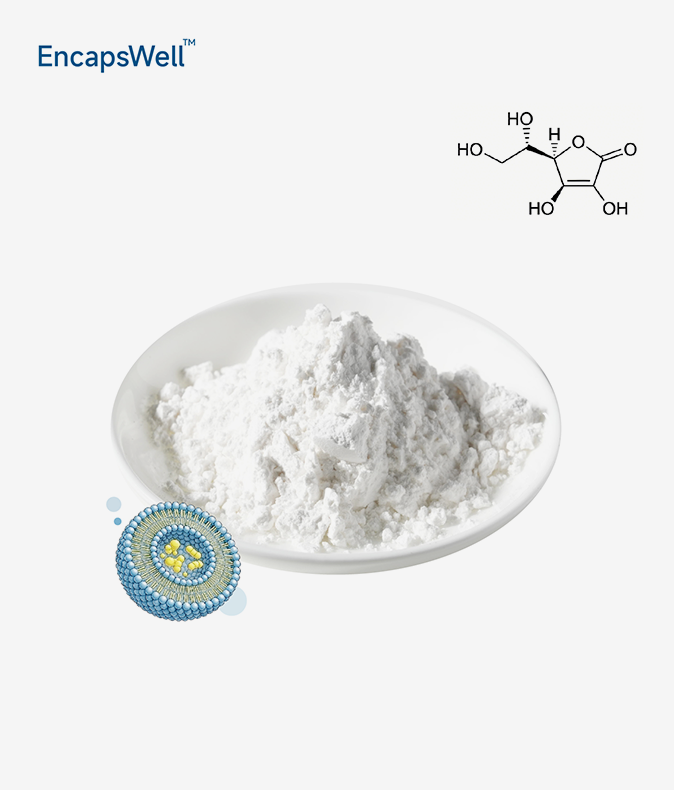
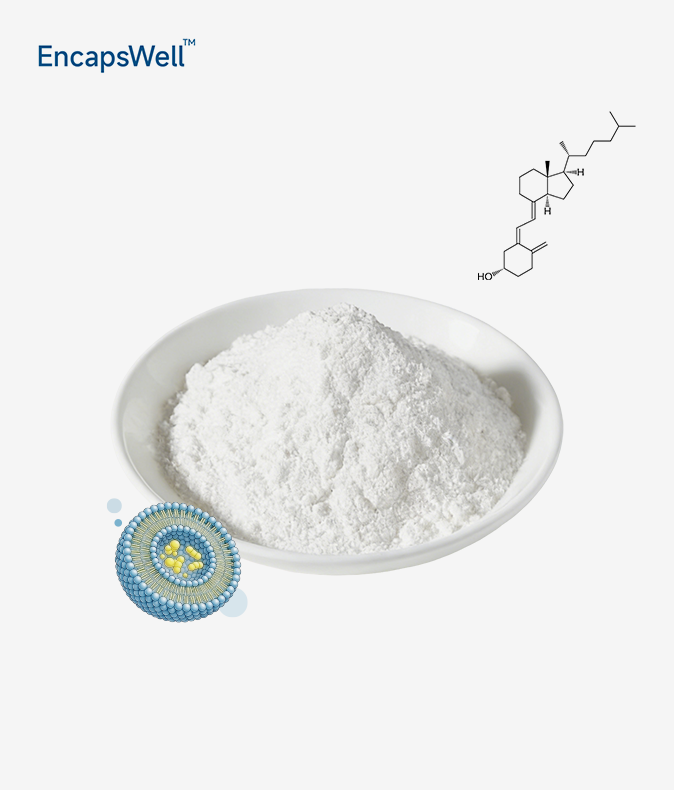
Liposomal vitamin C powder is a big step forward in the way nutrients are delivered, and it solves one of the biggest problems with supplements: absorption. In contrast to regular ascorbic acid, which is not easily absorbed by the body, this improved recipe surrounds vitamin C molecules in very small lipid bubbles known as liposomes. These layers of protected phospholipids keep the nutrient safe during processing and make it easier for cells to absorb directly, which makes the vitamin C powder up to 8 times more bioavailable than regular vitamin C powders. This means that for B2B clients making immune support, beauty-from-within, or functional beverage recipes, smaller effective doses, less stomach pain, and clearly better product performance that appeals to health-conscious customers are all possible.
Understanding Liposomal Vitamin C Powder
The Science Behind Liposomal Encapsulation
The main idea behind the creation is to copy the shape of your body's cells. The phospholipid bilayers that make up liposomes are exactly the same as the membranes of human cells. Liposomes naturally join with intestine cells. When vitamin C is enclosed in these very small spheres, which are usually between 50 and 200 nanometers across, it gets around the problems that come with normal transport methods. Vitamin C receptors in the gut that depend on sodium get full at low doses when using traditional ascorbic acid. Liposomal vitamin C powder transport gets around this problem completely by fusing the membranes directly, which lets ascorbic acid get into cells where it can do its protective work.
Formulation Stability for Commercial Production
Liquid liposomal goods often have problems with stability, but powder forms solve important manufacturing problems. When kept properly, liposomal vitamin C powder stays structurally intact for at least 24 months after being spray-dried or freeze-dried. Our EncapsWell™ technology makes sure that each batch keeps more than 95% of its potency over the course of its shelf life. This is proven by rapid stability testing that follows ICH standards. This benefit of stability gets rid of the need for cold-chain logistics for liquid formulations. This lowers the cost of distribution while keeping dosing accuracy constant, which is very important for contract makers who have to manage production plans for multiple SKUs.
Composition and Quality Parameters
Pharmaceutical-grade ascorbic acid that is more than 99% pure is the starting point for premium liposomal vitamin C powder. The lipid matrix is usually made up of non-GMO soy lecithin or sunflower lecithin that has a phosphatidylcholine level of more than 90%. Following exact molar ratios confirmed by our San Diego R&D Center, cholesterol can be added to make the membrane more stiff. Microbes can't grow when the water activity level is below 0.3, and the particle size distribution stays tightly controlled. Our production methods get a 99% qualification rate within goal ranges when going from small trial runs to full commercial amounts of more than 100 metric tons per year.
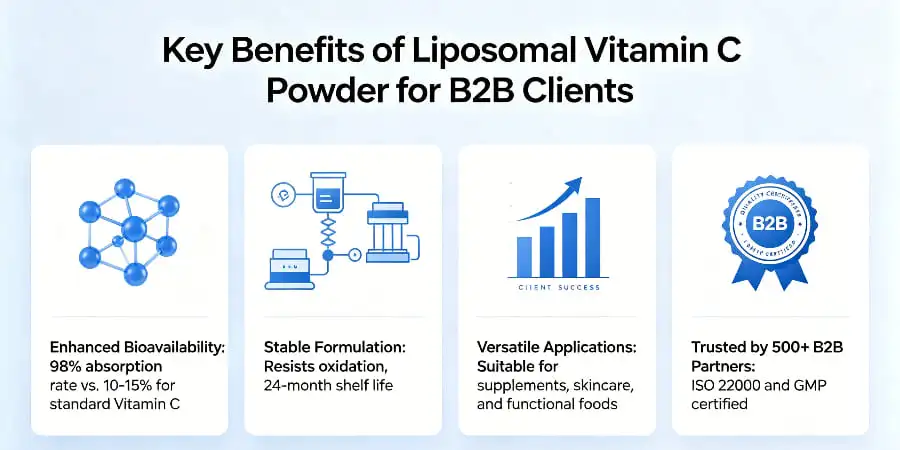
Key Benefits of Liposomal Vitamin C Powder for B2B Clients
Superior Bioavailability Drives Product Differentiation
There is clinical proof that liposomal encapsulation can raise plasma vitamin C levels to the same level as intravenous treatment at doses that are the same when taken by mouth. This difference in performance can help nutraceutical brands stand out in the immunity and health areas, which are very crowded. Brands can back up claims of absorption in immune-support pills or beauty drinks with third-party bioavailability studies. This gives customers trust, which leads to repeat purchases. Our customers in the functional beverage industry tell us that putting "8x better absorption" on the package makes people more willing to pay a higher price and speeds up sales at stores.
Formulation Versatility Across Dosage Forms
Our liposomal vitamin C powder can be easily used in a wide range of situations because it dissolves in water. People who make drinks like that it has a neutral pH profile and doesn't change the taste much, which is important when making ready-to-drink health shots or fizzy pills where flavor balance is important. Manufacturers of tablets like how well it compresses, and teams that make capsules like how well it works with both gelatin and veggie capsule shells. We've helped private-label partners make custom mixes that contain vitamin C, zinc gluconate, elderberry extract, and quercetin. These blends have been kept liposomally stable through strict compatibility testing methods.
Regulatory Compliance and Safety Assurance
Meeting foreign quality standards makes it easier for products to be sold all over the world. Our factory has cGMP certification, as well as ISO 9001, ISO 22000, FSSC 22000, and HACCP verification. These are all qualifications that meet legal standards in North America, the European Union, and the Asia-Pacific area. Third-party testing methods include checking for heavy metals, bacterial tests, and pesticide residue analysis. For each production lot, a Certificate of Analysis is given. The "clean label" version, which is vegan, non-GMO, and free of common allergens, meets the needs of consumers who want to know what's in their food and makes it easier for marketing teams working with natural goods to list the ingredients.
Comparing Liposomal Vitamin C Powder with Other Forms
Bioavailability and Cellular Uptake
Standard ascorbic acid powder is absorbed about 20–30% of the time at amounts below 200 mg, but much less when bigger doses are taken because transporters become full. This metabolic profile is completely changed by liposome technology. Studies that look at plasma concentration graphs show that liposomal vitamin C powder keeps blood levels high for 6–8 hours, while regular forms only do this for 2–4 hours. During cold and flu season, when keeping antioxidant coverage steady is more important than peak concentration spikes, this sustained-release feature helps formulas that aim to boost immune resistance. While capsules are convenient, they make it harder for the body to absorb the medicine. Liquid solutions, on the other hand, often need preservatives that go against the clean-label stance.
Manufacturing and Logistics Considerations
When it comes to buying things, powder forms offer practical benefits that affect the total cost of ownership. Throughout the supply chain, liquid liposomal goods need to be kept in cold storage, which raises the cost of storage and makes foreign shipping more difficult. When filling capsules, special equipment settings and how sensitive the capsules are to moisture must be taken into account. Keeping liposomal powder in packaging that keeps out moisture at room temperature makes keeping track of goods easier and lowers the risk of spoiling. Contract manufacturers like that the format works with their current powder-handling equipment, which speeds up production changes and lowers the minimum order quantity. This is especially helpful when trying new formulations or working with new brands that don't have a lot of initial volume promises.
Natural Versus Synthetic Source Considerations
Ascorbic acid from fermented corn in liposomal vitamin C powder has the same chemical structure as vitamin C from fruit, but how people feel about it depends on the market group they're in. European buyers are increasingly looking for sources that come from fermentation and can prove they are not GMOs. In North America, on the other hand, buyers are more interested in digestibility data regardless of where the source comes from. The liposomal packaging process doesn't care about the source of the ascorbic acid, so brands can choose raw materials that fit with their branding strategy. We keep ties with suppliers for both normal and organic-certified ascorbic acid. This gives brands that are trying to get USDA or EU organic certification options, where being able to track the materials used becomes very important, more options.
Procurement Insights for Liposomal Vitamin C Powder
Identifying Qualified Suppliers and Manufacturers
As part of your due diligence, you should first check the manufacturer's credentials and output ability. Check the most recent inspection reports that say the company is following cGMP guidelines. Pay special attention to the change control paperwork and equipment qualification procedures. Ask for stability data that shows how well liposomal vitamin C powder works in different temperature and humidity conditions. Reliable providers keep at least 12 months of real-time stability data along with rapid studies. Check how well they can do analytical testing. Having in-house HPLC tools for checking potency and particle size testers is a sign of high-quality infrastructure. Our main company, Wellgreen, runs analytical labs that can validate USP methods. These labs give smaller toll manufacturers the scientific support they need.
Minimum Order Quantities and Pricing Dynamics
Liposomal vitamin C powder usually costs between $85 and $150 per kilogram on the market. The price depends on the order number, lecithin source, and packaging efficiency requirements. Entry-level MOQs of 100 to 250 kilograms allow new names to test how the market responds, and volumes above 1,000 kilograms allow for better price. The prices of raw materials change based on the world lecithin market. For example, sunflower lecithin costs more when there are problems with the European crops, while soy alternatives are more stable in terms of price. Negotiating yearly supply deals with delivery plans every three months is a good way to handle cash flow and get big discounts. This is especially important for brands whose sales are heavy in the fall and winter, when people need immune-boosting foods.
Quality Assurance and Supply Chain Reliability
Set up seller scorecards to keep track of delivery rates on time, compliance with specifications, and the accuracy of paperwork. Ask for proof of location and statements that the goods have not been irradiated if you want to work with natural products retailers that have specific sourcing needs. To reduce the risks of being dependent on a single source, build relationships with other suppliers. For example, our facility in San Diego keeps strategic inventory reserves and works with backup lecithin providers on three countries. Think about having regional redundancy; depending only on production in other countries can cause lead-time problems when shipping is interrupted. We invested in localized US storage to solve these problems with procurement. This lets West Coast makers using lean inventory strategies get samples quickly and restock just-in-time.
Choosing the Best Liposomal Vitamin C Powder for Your Business
Evaluating Absorption Efficacy and Purity Standards
Ask the seller for pharmacokinetic study data that compares their liposomal vitamin C powder formulation to regular vitamin C using normal testing methods. Studies that can be trusted test the amount of ascorbic acid in the plasma at different times after a single dose is given. They then figure out the area-under-the-curve numbers that show how much the drug was absorbed. Specifications for purity should ensure that the vitamin C content is at least 99% and that the amount of liquid left over is below the ICH Q3C limits. Heavy metals, like lead, cadmium, and arsenic, need to meet the limits set by California Proposition 65 and USP general chapter standards. As part of our regular tests, we use ICP-MS to keep lead levels below 0.5 ppm, which is well below the legal maximums. This makes sure that our formulations meet the strictest state and foreign standards.
Regulatory Compliance and Market Access
Registration with the FDA and a background of regular inspections give US market entry basic assurance. In order to sell food in Europe, brands must follow Novel Food regulations and the maximum vitamin C levels set out in Directive 2002/46/EC. Brands that want to sell in the Middle East must get Halal certification from a recognized organization like JAKIM or IFANCA. Kosher certification from OK, OU, or Star-K lets them reach Orthodox Jewish customers. We keep our licenses up to date in all of these areas through yearly exams and ongoing changes to the documentation. Regulatory support includes giving technical dossiers for new market applications. These include summaries of the safety of ingredients and details of the production process, which shorten the time it takes to get approval when entering countries with pre-market notice requirements.
OEM Customization and Brand Partnership Opportunities
Besides providing basic powders, key partners also help with formulating new products, which shortens the time it takes to get a product on the market. Our research and development team, which is led by a PhD, works together to make custom mixes that include nutrients that work well together. For example, vitamin C and rose hips work well together to make bioflavonoids, and zinc, selenium, and beta-glucan work together to make immunity complexes. For beverage uses, knowing how to hide flavors is very important. We've come up with our own methods for reducing ascorbic acid's characteristic sourness without affecting its stability. Private-label programs include design consultations for packing and regulatory copy reviews to make sure that label claims are in line with the standards for proof. This all-around support system sets true OEM partners apart from basic toll makers whose only goal is to speed up production.
Conclusion
Liposomal vitamin C powder has gone from being a lab curiosity to a business necessity for companies that want to make the best products possible. The technology is the best choice for immune support, beauty supplements, and functional nutrition because it is stable in production and is approved by regulators. It also has proven absorption benefits. A supplier's technical skills, the growth of their quality system, and the freedom of their relationship are all factors that go into procurement choices, not just unit price. As people learn more about absorption science, brands that use clinically proven delivery methods gain measurable competitive benefits in product effectiveness, customer happiness, and market positioning that make it worth investing in high-end ingredients.
FAQ
Is liposomal vitamin C powder safe for large-scale supplement production?
When it comes from cGMP-certified sources, liposomal vitamin C powder has good safety profiles for use in business manufacturing settings. Food-grade phospholipids are used in the packaging process, and they are widely accepted by regulators around the world. Testing for stability shows that no degradation products are made under normal production conditions, and when it comes to allergens, the main thing to think about is the lecithin source. Options made from sunflowers completely get rid of soy allergy worries. Good industrial practices for handling powder are used, such as dust control measures and regular equipment cleaning procedures that are the same as those used for normal vitamin C processing.
How should liposomal vitamin C powder be stored in production facilities?
The way things are stored has a big effect on how long they last and how well they work. Keep storage temperatures between 15°C and 25°C so that liposomal membranes don't have to deal with temperature changes that are hard on them. Relative humidity below 60% stops powder from absorbing water, which makes it harder to move and speeds up oxidation. Use packaging that keeps wetness out, like triple-layer laminated bags that are flushed with nitrogen, and keep them in sealed cases out of direct sunlight. Our EncapsWell™ formulas stay in line with specifications for 24 months when used in this way. Rotate your goods first-in, first-out, and do eye checks every three months to look for color changes or clumping that could mean your storage isn't working right.
Can liposomal vitamin C powder be combined with other functional ingredients?
Compatibility depends on the chemistry of the ingredients and how they were processed. We've successfully tested mixes with B-complex vitamins, amino acids like L-lysine, and mineral chelates like zinc bisglycinate that dissolve in water. Botanical extracts need to be looked at on an individual basis. For example, polyphenol-rich ingredients like green tea or grape seed may react with ascorbic acid, which means stability studies are needed to make sure the product stays effective over time. Because the lipid matrix likes lipophilic molecules, fat-soluble nutrients like vitamin D3 and omega-3 oils mix well with it. During formulation development, our technical team uses rapid stability procedures and analytical tests to predict how the product will work in the real world before starting full-scale production runs.
Partner with a Trusted Liposomal Vitamin C Powder Supplier
EmerWell provides liposomal vitamin C powder that has been clinically proven to work. It is made using our own EncapsWell™ platform and has 8 times better absorption while also being stable enough for production. Wellgreen's cGMP-certified production capacity of more than 100 metric tons per year backs up our technical advice, quick sample logistics, and regulatory knowledge that come from our offices in San Diego. We help nutraceutical brands, functional beverage makers, and contract producers by offering flexible minimum order quantities, custom formulation development, and a wide range of standards, such as ISO 22000, HACCP, Halal, and Kosher verification. Get in touch with our team at info@emerwell-bio.com to talk about your unique absorption goals and formulation needs. Our scientists are ready to take your product ideas and turn them into the best immune support and wellness options on the market.
References
Carr AC, Maggini S. Vitamin C and Immune Function. Nutrients. 2017;9(11):1211. Published in MDPI Nutrients Journal.
Davis JL, Paris HL, Beals JW, et al. Liposomal-encapsulated Ascorbic Acid: Influence on Vitamin C Bioavailability and Capacity to Protect Against Ischemia-Reperfusion Injury. Nutrition and Metabolic Insights. 2016;9:25-30.
Łukawski M, Dałek P, Borowik T, et al. New oral liposomal vitamin C formulation: properties and bioavailability. Journal of Liposome Research. 2020;30(3):227-234.
Hickey S, Roberts HJ, Miller NJ. Pharmacokinetics of oral vitamin C. Journal of Nutritional & Environmental Medicine. 2008;17(3):169-177.
Padayatty SJ, Levine M. Vitamin C: the known and the unknown and Goldilocks. Oral Diseases. 2016;22(6):463-493.
Gröber U, Holzhauer P, Kisters K. Micronutrients in Oncological Intervention. Nutrients. 2016;8(3):163. Published in MDPI Nutrients Journal.
Online Message
YOU MAY LIKE
High quality furniture manufacturer