Jun 3, 2026
What is Liposomal Vitamin C?
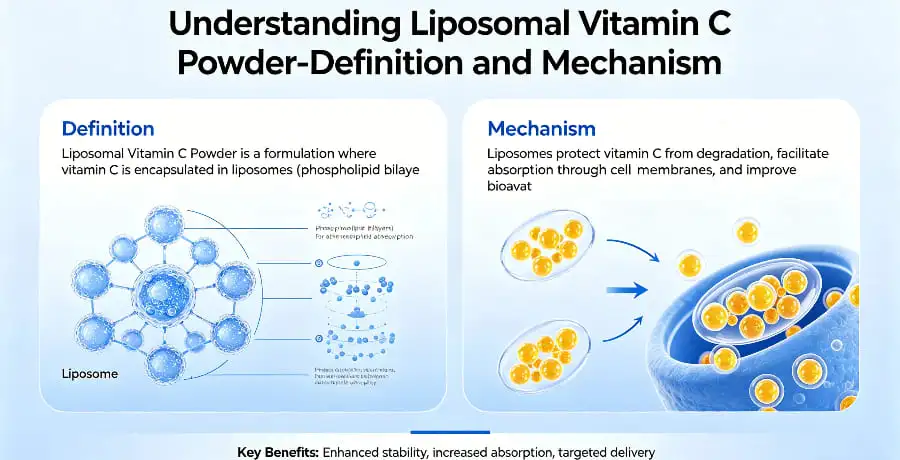
Biotechnological advances like liposomal vitamin C encapsulate ascorbic acid molecules in phospholipid vesicles to shield them from digestion. When hydrated, this liposomal vitamin C powder reconstitutes into nano-sized particles, offering up to 8 times the bioavailability of typical ascorbic acid formulations. The phospholipid bilayer resembles human cell membranes, allowing the nutrient to bypass saturated intestine transporters and endocytose directly with cells, eliminating typical supplement absorption issues.
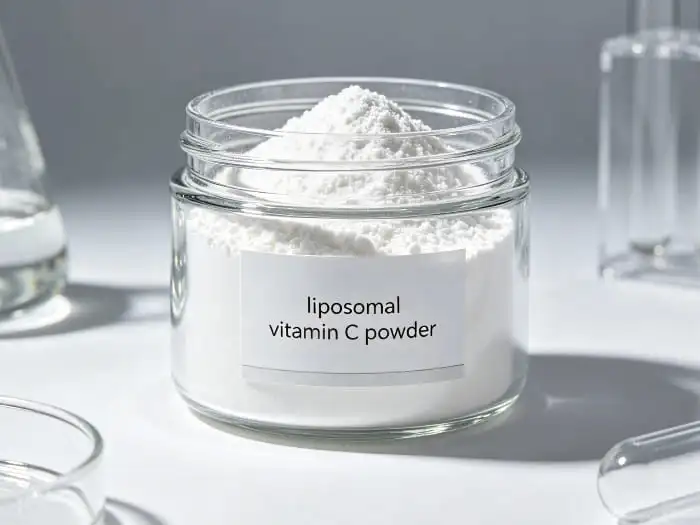
Understanding Liposomal Vitamin C Powder: Definition and Mechanism
The Science Behind Phospholipid Encapsulation
The key innovation is how phospholipids—usually non-GMO sunflower or soy lecithin—protect ascorbic acid molecules. When powdered, these structures remain dormant until they contact moisture in the digestive system and spontaneously produce 100–400 nanometer liposomes. This particle size range maximizes absorption and stability during manufacture and storage. SVCT1 and SVCT2 transporter saturation limits vitamin C absorption to 20% for dosages over 1,000 mg, according to research. Liposomal encapsulation eliminates this biological bottleneck, letting active substances circulate without competing with transporter proteins.
Encapsulation Efficiency and Quality Markers
Premium liposomal formulations encapsulate 50%–70% of vitamin C, protecting it from free ascorbic acid. We quantify this using dynamic light scattering and ultrafiltration to distinguish encapsulated and non-encapsulated fractions. The EncapsWell™ platform ensures ≥99% vitamin C purity and optimal encapsulation. Our freeze-drying approach retains liposomal integrity better than spray-drying, creating a free-flowing powder with neutral flavor that masks ascorbic acid's sourness. This stability allows liquid liposomal compositions to last over 24 months with >95% potency retention, solving quick degradation problems.
Comparative Absorption Kinetics
Standard and liposomal vitamin C have different pharmacokinetic characteristics in clinical trials. Traditional supplements have strong plasma concentration peaks and quick renal elimination within 2-4 hours. Liposomal administration maintains therapeutic plasma levels for 8-12 hours without osmotic diarrhea from large doses of traditional ascorbic acid. Immune modulation and collagen formation, which need continual cellular exposure, benefit from this prolonged bioavailability window. The phospholipid component's membrane repair processes provide synergistic effects beyond vitamin C delivery.
Benefits and Applications of Liposomal Vitamin C Powder in B2B Markets
Immune System Support and Antioxidant Defense
Vitamin C cofactors several immune cell development and antibody generation enzymatic processes. Liposomal formulations' increased bioavailability allows smaller dosages to reach plasma concentrations previously required by mega-dose supplements. Formulations containing 500–1,000 mg of liposomal vitamin C, which stimulate the immune system without causing gastrointestinal distress, are useful for brands focusing on the cold and flu season. Beyond free radical scavenging, vitamin C regenerates vitamin E and glutathione, protecting cellular processes. Liposomal compounds are premium in immune-focused product lines due to these mechanisms.
Nutricosmetics and Beauty-from-Within Applications
The beauty supplement industry wants compounds with skin benefits, and liposomal vitamin C delivers. Vitamin C is needed for prolyl and lysyl hydroxylase enzymes to maintain collagen structure during production. Liposomal phosphatidylcholine strengthens cell membranes and improves epidermal barrier function. Anti-aging drinks, skin radiance pills, and collagen-boosting injections benefit from liposomal technology's ability to prove oral supplement efficacy for topical issues. Longer plasma retention durations expose target tissues like skin to nutrients, turning lab research into consumer-perceivable effects.
Functional Food and Beverage Integration
Liposomal technology neatly incorporates vitamin C into complicated food matrices. In proteins and minerals, free ascorbic acid works as a pro-oxidant, destroying the nutrient and surrounding substances and causing off-flavors and discolouration. Lipid encapsulation avoids these reactions, ensuring shelf life. Water-dispersible liposomal vitamin C powders blend into ready-to-drink drinks, protein shakes, and functional water without cloudiness or sedimentation. This compatibility allows wellness drink makers to design clean-label products with improved nutrition and flavor.
Choosing the Right Liposomal Vitamin C Powder for Procurement
Manufacturing Certifications and Quality Systems
Supplier selection demands careful consideration of production qualifications and quality infrastructure. Our parent firm Wellgreen's accredited facilities provide cGMP compliance with ISO 9001, ISO 22000, FSSC 22000, and HACCP certifications. These certifications certify raw material verification, in-process monitoring, and completed product testing. All production batches are third-party tested for purity and efficacy and documented with Certificates of Analysis, stability reports, and batch traceability records. Supplier evaluation teams should check certificates, scope, and continuous surveillance audit findings, which demonstrate sustainable compliance rather than one-time successes.
Regulatory Compliance Across Global Markets
Ingredients for international distribution must fulfill varied regulations. Our liposomal formulations meet FDA dietary supplement standards, EU Novel Food laws, and Brazilian ANVISA procedures in over 50 countries. Halal, Kosher, Non-GMO Project, and vegan certifications are held for religious dietary restrictions, transparency-focused companies, and plant-based products. This complete compliance portfolio removes regulatory hurdles that might delay market entrance or require reformulation. Suppliers who proactively maintain worldwide certifications rather than reactively pursue them as market possibilities arise reduce international growth time-to-market for procurement experts.
Scalability and Customization Capabilities
Production capacity and flexibility distinguish strategic from transactional suppliers. We produce 100+ metric tons per year of liposomal vitamin C powder for new businesses testing market concepts and established manufacturers needing bulk supplies. Customization differentiates products beyond volume. Our OEM and ODM services range from private labeling to complicated vitamin C mixes with zinc, quercetin, and elderberry. We tailor formulas to target demographics and usage situations for tablets, hard capsules, soft gels, effervescent systems, and liquid-ready powders. This adaptability lets procurement teams combine vendors and diversify product portfolios.
How to Use Liposomal Vitamin C Powder in Product Formulations?
Dosage Form Optimization and Stability Considerations
Understanding liposomal structures across industrial processes is essential to turning raw materials into final goods. Directly encapsulating liposomal vitamin C powder in capsules preserves ingredient integrity without processing stress. To avoid liposomal rupture during tablet compression, we propose lower compression pressures and direct compression grades of microcrystalline cellulose as binders. Our water-dispersible powder hydrates quickly without mechanical agitation and maintains excellent particle size distributions for absorption in beverage applications. Accelerated stability testing predicts shelf life throughout distribution channel temperature and humidity ranges. Our technical staff advises customers on target product formulations to prevent bioavailability and organoleptic issues.
Synergistic Ingredient Combinations
Many effective formulations mix liposomal vitamin C with supplementary actives to boost efficacy or therapeutic positioning. Bioflavonoids like quercetin boost antioxidant networks and vitamin C recycling. Zinc relationships boost immunity independently and synergistically. Nutraceuticals using collagen peptides use vitamin C to support collagen production. Vitamin C boosts iron absorption, making combo solutions useful for anemia support. When creating these mixes, consider possible interactions—liposomal encapsulation protects vitamin C from most ingredient incompatibilities, but excessive mineral concentrations may compromise long-term stability. Our R&D team checks formulations for compatibility, offering stability data and reformulation suggestions.
Packaging and Logistics for Ingredient Integrity
Environmental stresses must be addressed from manufacture to consumption to preserve liposomal structure. Powder formulations' main stability risk is moisture, which can cause liposome production before usage. Laminated foil pouches with desiccants for bulk materials and blister packs or amber glass for finished products are moisture barrier packaging. Retail items must be packaged in opaque or UV-protective packaging since light destroys vitamin C. We offer tested shipping techniques for harsh climatic locations, however temperature fluctuations seldom harm well dried liposomal powders. Our San Diego location provides localized warehousing for US clients, lowering lead times and allowing just-in-time inventory methods that minimize storage and preserve supply continuity.
Conclusion
Liposomal encapsulation overcomes bioavailability issues that have limited liposomal vitamin C powder supplement usefulness. Nutraceutical, functional food, and nutricosmetic companies benefit from liposomal compositions' better absorption, plasma retention, and tolerability. Procurement experts should choose suppliers with technical expertise, quality systems, regulatory foresight, and customization flexibility. Manufacturing certifications, worldwide compliance, and scalable production infrastructure are foundations, while prompt technical assistance and formulation knowledge distinguish strategic suppliers from commodity vendors. As bioavailability science becomes more popular, compounds with verifiable performance benefits will generate brand loyalty and market distinction.
FAQ
How does liposomal vitamin C compare cost-wise to standard ascorbic acid?
Liposomal formulations cost 3-5 times more per kilogram than commercial ascorbic acid due to processing complexity and phospholipid raw material prices. The increased bioavailability allows manufacturers to achieve comparable or better biological benefits with smaller doses—a 500mg liposomal dosing generally outperforms 1,000mg vitamin C. This positions premium products cost-effectively and may lower per-dose ingredient prices compared to mega-dose traditional formulations. Procurement teams should compare suppliers using cost-per-absorbed-milligram rather than raw material price.
What verification criteria confirm legitimate liposomal encapsulation?
Authentic liposomal products have particle size distributions with peaks between 100-400 nanometers, as shown by dynamic light scattering. Quality vitamin C encapsulation efficiency exceeds 50%. Transmission electron microscopy shows intact phospholipid vesicles. Reputable providers give batch certifications for analytical data, whereas items without them may be vitamin C-lecithin physical mixes without encapsulation. When evaluating new providers, seek third-party testing.
Partner with EmerWell: Your Trusted Liposomal Vitamin C Powder Supplier
EmerWell uses its patented EncapsWell™ liposomal technology to develop market-ready supplement formulations from creative ideas. Our PhD-led R&D team optimizes bioavailability, stability, and sensory characteristics across administration modalities with your product developers. We provide the technical competence and supply chain stability your brand needs with cGMP-certified manufacturing through our parent company Wellgreen, extensive worldwide certifications, and various MOQ choices for pilot projects and commercial-scale production. From San Diego, we provide localized communication, fast sample shipping, and North American market-specific technical assistance. Contact info@emerwell-bio.com to discuss your liposomal vitamin C powder needs and how our OEM and ODM skills help speed up product development.
References
Davis, J.L., Paris, H.L., Beals, J.W., et al. "Liposomal-encapsulated Ascorbic Acid: Influence on Vitamin C Bioavailability and Capacity to Protect Against Ischemia-Reperfusion Injury." Nutrition and Metabolic Insights, 2016, 9:25-30.
Hickey, S., Roberts, H.J., Miller, N.J. "Pharmacokinetics of Oral Vitamin C." Journal of Nutritional & Environmental Medicine, 2008, 17(3):169-177.
Carr, A.C., Maggini, S. "Vitamin C and Immune Function." Nutrients, 2017, 9(11):1211.
Pullar, J.M., Carr, A.C., Vissers, M.C.M. "The Roles of Vitamin C in Skin Health." Nutrients, 2017, 9(8):866.
Gruenwald, J. "Novel Delivery Forms of Vitamins—Liposomal Encapsulation." International Journal for Vitamin and Nutrition Research, 2016, 86(1-2):95-102.
Lykkesfeldt, J., Tveden-Nyborg, P. "The Pharmacokinetics of Vitamin C." Nutrients, 2019, 11(10):2412.
Online Message
YOU MAY LIKE
High quality furniture manufacturer
_1776234266736.webp)