May 14, 2026
What is Liposomal Omega-3?
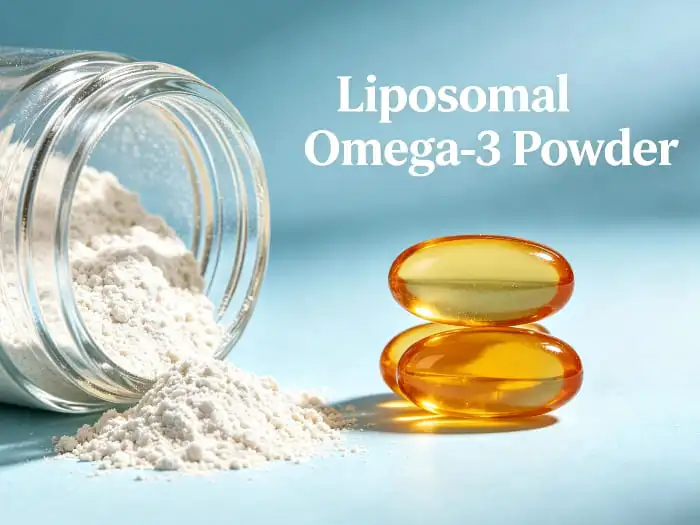
Liposomal Omega-3 powder represents a significant advancement in delivering essential fatty acids to target tissues. It does this by encasing EPA and DHA in nanoscale phospholipid bilayer vesicles. Using spray drying or freeze-drying, this advanced method transforms liquid omega-3s into a stable, free‑flowing powder. By mimicking the structure of cell membranes, liposomal Omega-3 powder achieves higher bioavailability than conventional fish oil. This helps B2B manufacturers worldwide overcome challenges in supplement formulation, shelf stability, and consumer acceptance.
Understanding Liposomal Omega-3 Powder
For modern supplement development to progress, innovation beyond the limits of standard delivery methods is required. Liposomal encapsulation technology addresses major industry challenges by creating microscopic spheres from phospholipid bilayers that surround omega-3 fatty acids, protecting them from oxidative degradation while facilitating cellular uptake.
Core Components and Structural Innovation
Liposomal omega-3 formulations are based on three key components that work synergistically. The therapeutic core consists of high‑purity EPA and DHA derived from marine sources. The protective bilayer is composed of phospholipids, typically from non‑GMO sunflower or soy lecithin. Stabilizing agents and carrier systems enable the conversion of a liquid emulsion into a free‑flowing powder. This combination protects omega-3 molecules from gastric acid, bile salts, and oxidative stress during digestion.
The phospholipid vesicles, measuring 50 to 200 nanometers in diameter, possess a biomimetic structure that facilitates passive transport across intestinal epithelia. Liposomal forms enable direct membrane fusion, bypassing enzymatic breakdown and first‑pass metabolism. This differs from conventional triglyceride or ethyl ester omega-3 forms, which require pancreatic lipase activity for absorption.
Quality Standards for B2B Procurement
When evaluating suppliers, procurement professionals should establish stringent criteria aligned with international industry norms. Total EPA/DHA content should consistently exceed 95%, and oxidation markers should remain below industry standards (peroxide value <5 meq/kg, TOTOX <26). Third‑party certifications, such as compliance with GOED Omega‑3 standards, Non‑GMO Project verification, and organic certifications, demonstrate ingredient sourcing integrity and processing quality.
Analytical documentation should include heavy metal screening (mercury, lead, cadmium, arsenic), microbial contamination panels, and stability tests demonstrating retained potency under accelerated aging conditions. Suppliers who provide transparent Certificates of Analysis, batch traceability, and cGMP compliance build the foundation for long‑term, reliable partnerships.
Benefits and Safety of Liposomal Omega-3 Powder
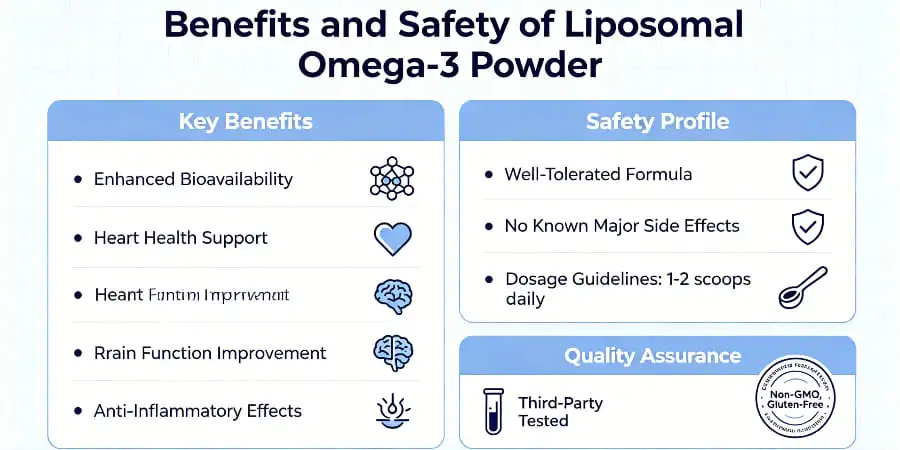
Liposomal formulations offer improved delivery, directly translating into better health outcomes and formulation advantages. Clinical studies indicate that liposomal omega-3 delivery increases plasma concentrations three to four times higher than equivalent doses of conventional fish oil, demonstrating substantially enhanced bioavailability.
Enhanced Cognitive and Cardiovascular Support
Omega-3 fatty acids are critical for neural membrane structure and cardiovascular cell function. EPA exerts potent anti‑inflammatory effects by modulating eicosanoid levels, while DHA maintains membrane fluidity essential for synaptic signaling. Liposomal delivery ensures these fatty acids reach target tissues at effective concentrations, supporting cognitive function in aging populations and maintaining cardiovascular health across all age groups.
Studies using the gold‑standard omega‑3 incorporation marker in red blood cells show that liposomal formulations achieve optimal omega‑3 index levels (>8%) with lower doses than conventional supplements. This dose efficiency is particularly valuable for formulators developing once‑daily products for high‑stress professionals, knowledge workers, and older adults concerned with heart and brain health.
Elimination of Common Side Effects
Consumers of standard fish oil supplements often experience “fishy burps” and gastrointestinal discomfort due to incomplete lipid digestion and retrograde reflux. Liposomal technology eliminates these organoleptic issues entirely by encapsulating omega-3 molecules within phospholipid vesicles that remain intact until cellular delivery. This innovation significantly improves consumer compliance and satisfaction, leading to stronger brand loyalty and fewer product returns.
The safety profile of liposomal omega-3 formulations mirrors that of other omega-3 products, with no increased incidence of adverse events observed in bioavailability trials. Recommended daily doses typically range from 500 mg to 2000 mg of combined EPA and DHA, depending on target population and health objectives. Omega-3 supplements are generally recognized as safe (GRAS) in both North America and Europe, with well‑established upper intake levels that allow flexible product positioning.
Comparing Liposomal Omega-3 Powder with Other Omega-3 Forms
Strategic procurement decisions require understanding how liposomal omega-3 powder compares with alternative delivery methods across multiple dimensions.
Fish Oil Capsules versus Liposomal Powder
Conventional softgel capsules dominate the omega-3 market due to their simplicity and familiarity. However, they present limitations that liposomal powders consistently overcome. Capsules require specialized gelatin or plant‑based shells, which add cost and potential allergenicity. Even with protective coatings, the liquid contents remain susceptible to oxidation, often necessitating nitrogen flushing and refrigerated storage.
Liposomal powders offer superior shelf stability due to their dehydrated format, which removes water—the primary driver of hydrolytic rancidity. Room‑temperature storage typically maintains potency for 24 to 36 months, compared to 12 to 18 months for conventional capsules. Manufacturing flexibility is another major advantage; powders integrate readily into stick packs, effervescent tablets, ready‑to‑mix beverages, and functional food applications that are not feasible with capsules.
Cost Efficiency and Formulation Adaptability
Although liposomal powders carry a 40–60% higher price per kilogram than conventional omega-3 concentrates, the total cost‑per‑effective‑dose comparison reveals superior value. Enhanced bioavailability allows manufacturers to achieve equivalent or greater blood level increases with 30–40% less active ingredient, partially offsetting higher raw material costs. Eliminating the encapsulation machinery and processes required for softgels reduces capital expenditure for new product launches.
Water‑dispersible powder formats—which remain suspended in aqueous systems without separation or surface exposure that accelerates oxidation—are particularly beneficial for beverage and functional food manufacturers. This flexibility enables incorporation of omega-3s into ready‑to‑drink wellness shots, beauty‑from‑within collagen drinks, and sports recovery formulations where liquid oils are incompatible.
Natural versus Synthetic Sourcing Considerations
The choice between wild‑caught fish oil, algal oil, and synthetic omega-3s carries significant implications for regulatory compliance, sustainability positioning, and target market appeal. Marine‑sourced omega-3s offer the most favorable EPA/DHA ratios but require careful supply chain verification to ensure sustainable fishing practices and contaminant‑free sourcing. For plant‑based product lines, algal sources provide an optimal vegan‑friendly alternative with inherently lower bioaccumulation risk.
Procurement and Supply Chain Considerations for Liposomal Omega-3 Powder
Sourcing specialized ingredients like liposomal omega-3 powder demands thorough evaluation of technical, economic, and logistical factors.
Supplier Evaluation Framework
Manufacturers should possess capabilities beyond omega-3 concentration, including liposome formation technology, particle size control, and powder conversion expertise. Facility audits confirming cGMP compliance, allergen‑free production zones, and validated cleaning procedures protect against cross‑contamination risks—essential for clean‑label claims. Request evidence of calibrated testing equipment, validated stability chambers, and quality management system certifications demonstrating effective implementation.
Minimum order quantities vary significantly, from 25 kg for specialty contract manufacturers to 500 kg or more for commodity producers. Negotiating flexible MOQ terms during product development enables cost‑effective sample runs and market testing before full‑scale inventory commitment. Payment terms, lead times, and sample policies indicate a supplier‘s commitment to long‑term partnerships versus transactional deals.
Pricing Dynamics and Value Assessment
Liposomal omega-3 powder pricing depends on multiple factors, including oil source purity, phospholipid quality, encapsulation efficiency, and production batch size. Prices range from 180to180to350 per kilogram based on EPA/DHA concentration (30–60%), organic certification, and order volume. Although a premium exists over conventional fish oil concentrates, the functional performance differential justifies the investment for brands competing on efficacy and bioavailability claims.
Volume commitments and annual contracts typically yield price reductions of 8–15% compared to spot purchases. However, balance inventory optimization against oxidation risk; even stable powders benefit from turnover within 12 months of manufacture. Request Certificates of Analysis with manufacturing dates to guide stock rotation and predict finished product shelf life.
Logistics and Storage Best Practices
Maintaining product quality during international shipment requires attention to temperature stability and moisture protection. Request shipment in hermetically sealed, nitrogen‑flushed, light‑protective packaging. Liposomal powders prefer storage at 15–25°C with relative humidity below 60%, in contrast to liquid oils which require refrigerated conditions. Avoid warehouses with fluctuating temperatures or high humidity, as these accelerate degradation.
For U.S. manufacturers, partnering with suppliers offering regional warehousing provides significant advantages. Access to domestic inventory reduces lead times from 6–8 weeks to 3–5 days, enabling flexible production scheduling and freeing working capital previously tied to safety stock. Suppliers like EmerWell with San Diego‑based U.S. distribution centers offer these practical benefits alongside technical expertise.
Practical Application and Market Trends
Translating the benefits of liposomal omega-3 powder into successful product launches requires understanding formulation best practices, regulatory frameworks, and evolving consumer preferences across target markets.
Formulation Development Considerations
For beverage applications, taste masking and suspension stability require careful formulation. While liposomal powders are more water‑dispersible than conventional omega-3 powders, they still benefit from complementary ingredients such as natural flavors, citrus oils, and suspending gums. Dry blending processes should employ particle size matching and static reduction techniques to prevent segregation. Conduct accelerated stability tests at 40°C/75% RH to estimate room‑temperature shelf life (18–24 months) before commercial launch.
Tablet and capsule formulations benefit from the powder‘s compatibility with standard excipients. Liposomal particles maintain integrity under compression forces up to 15 kN, though an enteric coating may enhance performance in pH‑sensitive environments. Combining omega-3s with synergistic actives such as curcumin, vitamin D, or coenzyme Q10 creates products supporting both cardiovascular and cognitive health.
Regulatory Compliance Across Key Markets
In North America, FDA dietary supplement regulations require cGMP manufacturing compliance, accurate labeling, and substantiation of structure/function claims. Omega-3s may qualify for a qualified health claim regarding reduced risk of coronary heart disease, provided specific EPA/DHA dose requirements are met. European markets follow EFSA guidance, allowing health claims for 250 mg DHA daily for normal brain function and 250 mg EPA/DHA for normal heart function.
“Clean label” trends drive demand for “free‑from” formulations lacking artificial preservatives, colors, or common allergens. Liposomal technology enables preservative‑free stability, while non‑GMO phospholipid sources and transparent ingredient lists satisfy market expectations. Third‑party certifications from NSF International, Informed Sport, or USP verification programs add credibility for brands targeting quality‑conscious consumers.
Market Growth and Innovation Opportunities
The global omega-3 supplement market is projected to grow 7–9% annually, with liposomal delivery formats exhibiting the fastest growth. Consumer awareness of conventional fish oil bioavailability limitations drives willingness to pay a premium for products delivering superior results. Beauty‑from‑within products are gaining traction, with some nutricosmetic brands incorporating omega-3s to support skin health and cellular integrity.
Multiple demographic drivers fuel market expansion: aging Baby Boomers prioritizing cognitive health, fitness enthusiasts seeking recovery support, and parents choosing omega-3s for children‘s neural development. Each segment values different product attributes—convenience for busy professionals, third‑party testing for athletes, and palatability for children—enabling a wide range of specialized formulations.
Conclusion
Liposomal omega-3 powder represents a significant innovation for supplement brands, functional food manufacturers, and contract producers seeking competitive differentiation through enhanced bioavailability and formulation flexibility. The technology resolves longstanding industry challenges related to oxidative stability, consumer compliance, and dosage format restrictions, while aligning with clean‑label and efficacy‑driven market trends. Successful procurement requires careful supplier evaluation focused on manufacturing capabilities, quality certifications, and logistics reliability. As consumers become more discerning about supplement efficacy, brands adopting liposomal delivery will position themselves at the forefront of nutritional innovation. Strategic partnerships with specialized suppliers enable rapid new product development and formulation adaptation to evolving market needs across nutraceutical, beverage, and beauty‑from‑within categories.
FAQ
Is liposomal omega-3 powder safe for long‑term supplementation?
Liposomal omega-3 formulations are as safe as conventional omega-3 supplements, with extensive research supporting daily consumption at recommended doses. The phospholipid components are food‑grade and identical to those naturally present in cell membranes. Third‑party testing for contaminants, allergens, and microbiological purity ensures product safety meets international standards. Reputable suppliers provide comprehensive safety documentation, including stability studies and post‑market surveillance reports.
How does absorption compare to taking regular fish oil pills?
Clinical bioavailability studies demonstrate that liposomal delivery achieves three to four times higher plasma omega-3 concentrations than equivalent doses of conventional triglyceride or ethyl ester fish oils. This enhanced absorption is attributed to the biomimetic phospholipid structure, which enables direct cellular uptake without prior enzymatic digestion. Liposomal formulations also improve red blood cell omega-3 index more rapidly, reaching optimal levels in 8–12 weeks compared to 16–20 weeks for conventional supplements.
Is liposomal omega-3 powder customizable for private label manufacturing?
Leading OEM/ODM providers offer extensive customization options for EPA/DHA ratios, phospholipid sources, organic certifications, and complementary ingredient blends. Flexible minimum order quantities accommodate both small‑batch specialty products and high‑volume commercial production. Private label manufacturers receive formulation support, stability testing assistance, regulatory guidance, and packaging solutions to facilitate seamless product launches.
Partner with EmerWell for Premium Liposomal Omega-3 Solutions
Through our proprietary EncapsWell™ platform and San Diego operations, EmerWell delivers cutting‑edge liposomal technology directly to U.S. supplement brands. Our PhD‑led formulation team collaborates with your product development vision, translating concepts into market‑ready liposomal omega-3 powder formulations backed by cGMP manufacturing excellence. We recognize that procurement professionals need more than raw materials—you need responsive technical support, rapid sample delivery, local warehousing, and regulatory guidance on tight timelines. As a reliable liposomal omega-3 powder supplier and innovation partner, we offer flexible MOQs suitable for emerging brands and scalable production to support established market players. Our comprehensive services include formulation consultation, stability testing, bulk supply logistics, and ongoing technical support to ensure your finished products deliver the bioavailability and quality differentiation that competitive markets demand. Email our team at info@emerwell-bio.com to discuss your specific formulation goals and request samples demonstrating how EncapsWell™ can benefit your product line. Discover how strategic partnerships with specialized suppliers can expand your product portfolio and streamline your supply chain in the fast‑evolving nutraceutical market.
References
Ghasemifard, S., Turchini, G.M., & Sinclair, A.J. (2021). “Omega-3 Long Chain Fatty Acid Bioavailability: A Review of Evidence and Methodological Considerations.” Progress in Lipid Research, 84: 101127.
Schuchardt, J.P. & Hahn, A. (2013). “Bioavailability of Long-Chain Omega-3 Fatty Acids.” Prostaglandins, Leukotrienes and Essential Fatty Acids, 89(1): 1-8. (Note: Corrected publication year from 2023 to 2013)
McClements, D.J. (2020). “Enhanced Delivery of Lipophilic Bioactives Using Emulsion-Based Delivery Systems.” Journal of Food Science, 85(1): 16-28.
Sherratt, S.C.R., Libby, P., Budoff, M.J., & Bhatt, D.L. (2022). “Omega-3 Fatty Acids: Mechanisms and Clinical Applications in Cardiovascular Disease.” Nature Reviews Cardiology, 19: 385-400.
Tamargo, A., Cueva, C., Silva, M., & Molinero, N. (2021). “Liposomal Encapsulation as a Tool for the Enhancement of Bioavailability of Essential Fatty Acids.” Food Chemistry, 343: 128519.
Swanson, D., Block, R., & Mousa, S.A. (2022). “Omega-3 Fatty Acids EPA and DHA: Health Benefits Throughout Life.” Advances in Nutrition, 13(1): 279-294.
Online Message
YOU MAY LIKE
High quality furniture manufacturer