Jul 7, 2026
What are the Common Allergens to Watch Out for in Liposomal Glutathione Powders?
It is very important to be aware of allergens when getting liposomal glutathione powder for nutrition products. Soy-derived lecithin (used in phospholipid encapsulation), manmade preservatives, taste boosters, and possible cross-contaminants from joint production lines are some of the most common allergies. Understanding these risks is important for keeping your brand's image safe, making sure customers are safe, and following the rules in all global markets. This is especially important for procurement workers who are in charge of functional drinks, nutricosmetics, and dietary supplements.
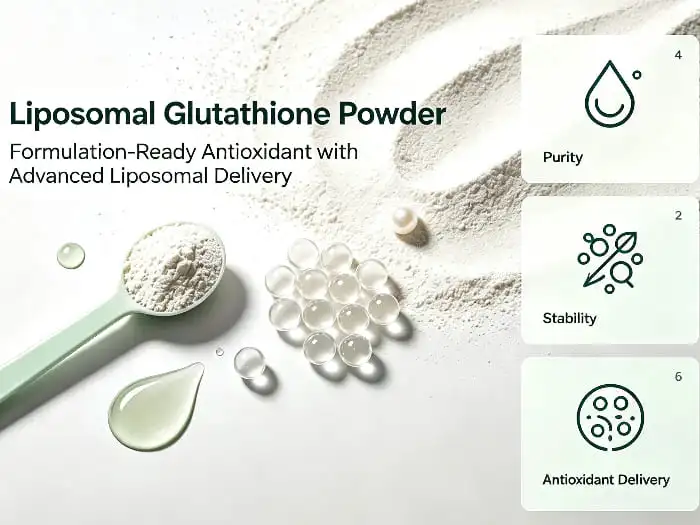
Understanding Liposomal Glutathione Powder and Its Ingredients
Liposomal glutathione powder packaging technology has changed the way antioxidants get into the body. Standard glutathione supplements break down quickly in the digestive system. Liposomal versions, on the other hand, contain the active tripeptide inside phospholipid vesicles, which are tiny spheres that look like the membranes of human cells. This design protects glutathione from stomach acid and enzymes, which makes it up to 13 times more absorbable than regular pills.
This delivery method needs two main parts: phospholipids that make up the protected bilayer and high-purity reduced glutathione (usually ≥95% content). Soy lecithin and sunflower lecithin are the most popular sources of phospholipids. Both work well as emulsifiers, but they have very different allergen profiles, which buying teams must not miss.
Key Structural Components and Their Allergen Potential
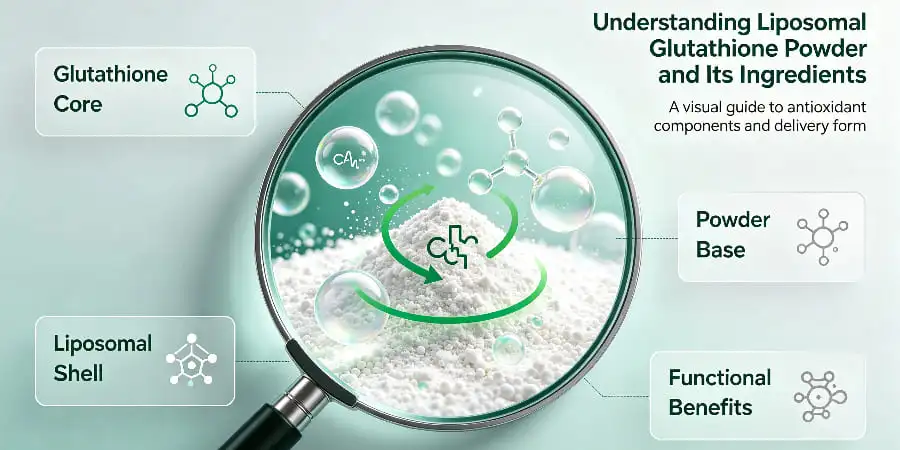
There are different levels in the liposomal transport platform that help keep it stable and make sure the drug is available to the body. The outer shell is made up of phospholipids, and the glutathione molecules are inside the liquid heart. This structure needs extra ingredients like binders to keep lipids from oxidizing and anti-caking agents to keep the powder's flowability while it's being made and while it's being stored. Each addition adds a new possible allergen that needs to be carefully documented and tested by the provider.
Manufacturers often add natural or man-made antioxidants, such as mixed tocopherols or ascorbyl palmitate, to products to make them last longer on the shelf. When formulating with liposomal glutathione powder, however, stability becomes even more critical due to its sensitivity to oxygen and light. Some flavors or sugar can be added to glutathione to cover up its sulfurous taste. This is especially useful when making healthy drinks or ready-to-mix packets. When sourcing managers understand this full ingredient grid, they can find secret allergen sources that might not be obvious from the basic product specs.
Differences Between Liposomal and Standard Formulations
Traditional glutathione powders don't protect the compound, so they only depend on its natural qualities. This means that they aren't very bioavailable when taken by mouth—often less than 10% is absorbed. Biomimetic design in liposome technology gets around this problem, but the better transport comes with a more complicated mix of ingredients. When procurement workers look at liposomal choices, they have to weigh the benefits of better effectiveness against the need for greater allergen awareness throughout the supply chain, from finding raw materials to checking the finished product.
Identifying the Most Common Allergens in Liposomal Glutathione Powders
When it comes to encapsulated glutathione products, the main types of allergens that pose a risk are lecithin sources, synthetic chemicals, and production cross-contaminants. Each one is different in terms of the problems it causes for quality control and user safety for liposomal glutathione powders.
Soy-Based Lecithin: The Leading Allergen Concern
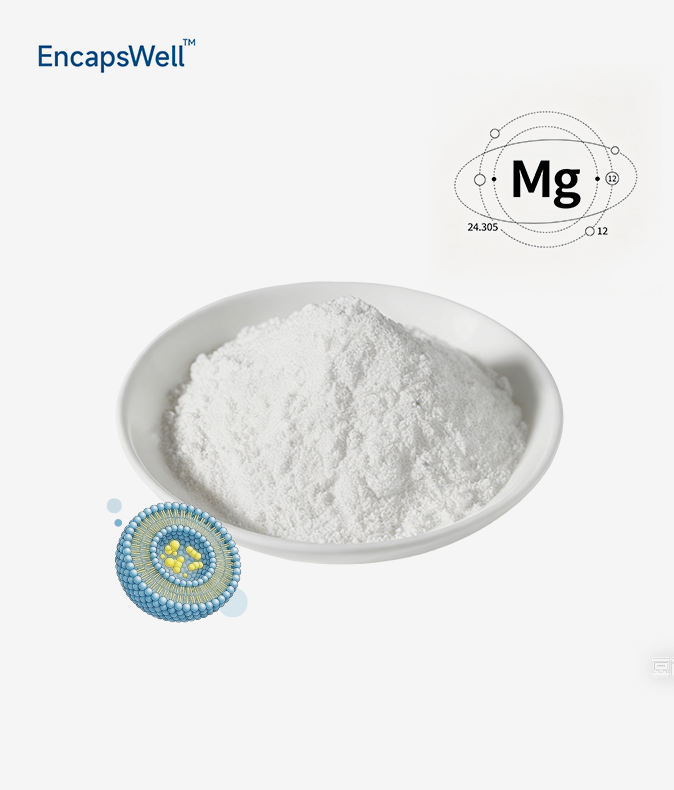
Due to its great emulsification qualities and low cost, soy lecithin is still the standard for making liposomes. But soy is one of the eight most common food allergens identified by the FDA. In the US, about 0.4% of children and a smaller number of adults are allergic to soy. Even soy lecithin that has been refined a lot may still have proteins left over that make sensitive people react. When buying for brands that want to appeal to people who are sensitive to allergens, procurement teams should ask for sunflower lecithin options, which provide similar useful benefits without exposing people to soy allergens. Our EncapsWell™ platform uses phospholipids from non-GMO sunflowers, which give a better allergen profile and keep the 24-month stability that contract makers need for global distribution.
Synthetic Preservatives and Flavor Modifiers
Some companies add fake sweeteners and flavors to foods to make them last longer and taste better. They do this by using synthetic preservatives like sodium benzoate or potassium sorbate. Of course, these additives aren't usually big allergens, but they can make some people sensitive, especially those who are sensitive to histamine or salicylate. Choosing a well-tolerated active ingredient like liposomal glutathione can further mitigate these sensitivity risks, as its enhanced bioavailability allows for lower effective doses, reducing the overall excipient load.As the "clean label" trend among nutraceutical brands grows, more people want formulas that don't contain any artificial chemicals. Certifications like "vegan-friendly" and "non-GMO," which our production sites have, help procurement pros meet these market needs while lowering the risk of bad reactions.
Cross-Contamination from Shared Manufacturing Equipment
Facilities that make bulk supplements often use the same tools to work on more than one product line. Trace amounts of common allergens, like dairy proteins from whey-based products, gluten from supplements made from grains, or tree nut residues from botanical extracts, can get into liposomal glutathione batches if strict cleaning processes and allergy control programs are not in place. This risk goes up a lot when you work with white-label sellers or contract makers who don't have their own allergen-free production lines. To protect customers and avoid expensive recalls or legal issues, it is necessary to demand full allergen testing results and cGMP certification paperwork.
How to Mitigate Allergen Risks in Procurement and Usage
To handle allergens well, you need to use a multi-layered method that includes checking the qualifications of suppliers, analyzing results, and following operating protocols. Procurement workers can't just rely on what vendors say; every sourcing choice needs to be backed up by independent validation.
Rigorous Supplier Verification and Certification Requirements
Full checks of suppliers are the first step in making sure that purchases are safe for people with allergies. In addition to cGMP qualification, you should also look for ISO 22000 and FSSC 22000 credentials, which are more detailed and deal with food safety management systems. Our Wellgreen production partner keeps these certifications up to date along with Halal, Kosher, and organic (NOP/EOS) certifications, which shows that they are compliant in more than one country. Ask for specific pollen control plans that explain how to separate people, make sure that equipment is cleaned properly, and set up programs to keep an eye on the environment. Not just general forms, but batch-specific Certificates of Analysis (COA) that show the results of allergen tests using approved immunoassay methods should be given by suppliers.
Comprehensive Batch Testing Protocols
Set up a testing plan that checks for both the presence of listed allergens and the lack of listed ingredients before taking large orders. ELISA tests find protein-based allergens like soy, cheese, or gluten at parts-per-million levels, while HPLC tests confirm the purity and concentration of glutathione. For liposomal glutathione powder formulations in particular, ask for Transmission Electron Microscopy (TEM) or Dynamic Light Scattering (DLS) data that proves the real liposomal structure. Some sellers sell normal emulsions as "liposomal" when they don't really form vesicles. Heavy metal testing (for example, lead, cadmium, mercury, and arsenic) and microbe testing (for example, total plate count, yeast, mold, and bacteria) complete a quality assurance package that keeps your brand and customers safe.
Proper Storage and Handling to Preserve Allergen Integrity
Managing allergens includes more than just buying things. It also includes storing and distributing them. To keep the capsule intact and stop the lipids from oxidizing, liposomal powders need to be stored in a controlled environment, usually below 25°C with humidity below 60%. If liposomes are damaged, they might lose glutathione or go through molecular changes that change the allergen profile by breaking down or interacting with other ingredients. Set clear handling guidelines for warehouse workers, such as giving them special picking tools and keeping allergen-containing and allergen-free goods in different storage areas. These practical controls reduce the risk of cross-contact during order processing. This is especially important for companies that handle a wide range of products with different allergen claims.
Comparison of Liposomal Glutathione Powder Forms in Terms of Allergens
Different dose forms have different protein profiles and risk of contamination. Knowing about these differences helps buying teams choose forms that meet the needs of the market and the preferences of consumers.
Powder Versus Capsule and Liquid Formulations
Pure liposomal glutathione powder usually has fewer fillers than capsuled or liquid forms, which means that allergens are less likely to be present. But powders need to be handled carefully when they are being made and when they are being used by consumers so that they don't get contaminated in the air. In standard capsules, gelatin (derived from cows or pigs) is added. In veggie choices, plant-based alternatives like HPMC are used instead. These can cause allergies or problems with people who have to follow certain diets. For two-piece capsule systems, anti-caking flow agents and sometimes colorants are also needed, which makes the list of ingredients longer.
Natural Versus Synthetic Ingredient Sources
The picture of allergens in liquid ready-to-drink products is the most complicated. Besides the main liposomal glutathione and other liposomal ingredients, drinks also have flavorings, sweeteners, antioxidants, and stabilizers added to them to make them taste good and keep their shape on the shelf. The labels for "natural flavors" may not make it clear if an ingredient contains allergens like tree nuts or soy products. Our versatile formulation platform supports powder, pill, hard capsule, soft capsule, and liquid-ready forms. This means that procurement professionals can choose the dose format that best controls allergens and meets the needs of the target market.
Where glutathione and phospholipids come from has a big effect on their allergy profiles. Chemical synthesis or microbial fermentation (most often using Saccharomyces cerevisiae yeast) can be used to make glutathione. Fermentation-derived glutathione is less likely to cause allergies and is more in line with customer tastes for natural ingredients. However, people who are sensitive to yeast might react to small amounts of fermentation leftovers. When making high-purity glutathione through chemical synthesis, solvents or catalysts may be used that leave behind substances that can be found using Gas Chromatography-Mass Spectrometry (GC-MS) research.
The most important allergy choice is between soy lecithin and sunflower lecithin in terms of phospholipids. Even though sunflower lecithin is more expensive as a raw material, it completely gets rid of soy allergen worries while still forming liposomes and keeping them stable. Sunflower crops are not commercially GMO-modified, so they don't have the potential for genetic modification. This gives brands that sell their goods as clean and clear even more marketing benefits. Our unique EncapsWell™ nanotechnology platform gets the best particle size distribution (100–250nm median diameter) and encapsulation efficiency of over 90% using only phospholipids derived from sunflowers, meeting the strict needs of allergen-sensitive customer groups.
Ensuring Safe Bulk Procurement: Allergy-Conscious Buying Guide
Cost-effectiveness, licensing qualifications, allergen openness, supply chain control, and scaling are just some of the things that must be taken into account when making liposomal glutathione powder procurement choices. A systematic evaluation method makes it easier to choose a seller while lowering the risk.
Essential Procurement Criteria Checklist
For allergen-safe buying to work, the requirements must be very clear. You should include the following in your technical requirements: a minimum of 95% glutathione in luxury formulas; proven liposomal structure through TEM or DLS; full allergen declaration including processing aids; and full certification paperwork. Ask for stability data that shows how well the formula stays effective under rapid conditions (40°C/75% relative humidity for at least three months) because unstable formulations can go through chemical changes that change allergy profiles.
Supplier Selection Based on Allergen Control Standards
Check more than just the technical details; also look at the manufacturing and quality processes. Providers should show either allergen-free production lines or cleaning methods that have been tested and proven to work, with residue tests done between production runs. Look for allergen control programs that are written down in quality guides and have clear instructions for getting ingredients, keeping an eye on the process, and checking the finished product. Our cGMP-certified production facilities separate allergens from the time they receive raw materials until they are packaged. Environmental swab tests show that there is no cross-contamination between product runs.
Not all makers have the same methods in place to handle allergens. Larger providers spend money on specialized tools, training for their employees, and critical skills that smaller businesses can't match. If you are sourcing a sensitive ingredient like liposomal glutathione powder, this disparity becomes even more critical, as its stability and encapsulation process require rigorous environmental controls. Request audit reports from regulatory agencies or independent third parties to get a more complete picture of the supplier's qualifications than just basic certifications. Ask about their history of food recalls and how they fixed problems. Being open about problems from the past is often a sign of a strong quality culture.
Contract Negotiation and Compliance Assurance
Minimum order numbers (MOQs) that are flexible let buying teams check that suppliers can control allergens before making big purchases. With our 10 kg pilot batch choice, you can fully test allergen profiles, stability, and formulation compatibility before going up to full production amounts of 2,000 kg per month. This step-by-step process keeps your investment safe and builds trust in your supplier's skills and the quality of the products they deliver.
Effective contracts make it clear who is responsible for checking for allergens and how often they need to be done. Make it clear that every batch needs to have a COA with allergy testing results, heavy metal screening results, microbial analysis results, and HPLC results to prove the effectiveness. Set up rules for what to do when results don't meet expectations. These rules should include how to investigate the problem and who is responsible for paying for rejected batches.
Clearly talk about following the rules in supply deals. Liposomal glutathione products need to meet FDA DSHEA rules for dietary supplements in the US, EU Novel Food rules if they apply, and different national standards in ASEAN markets. Our regulatory affairs team handles market-specific paperwork like technical data sheets (TDS), safety data sheets (SDS), and food statements. This makes it easier for companies to get into new markets and makes it easier for sourcing teams to follow the rules. This help is especially helpful for brands that are moving into new areas with legal systems they don't know much about.
Conclusion
Managing allergens when buying liposomal glutathione powder requires close attention in many areas, from choosing the phospholipid source and keeping an eye on the production process to making sure the analysis is correct and following all the rules. Soy-derived lecithin, synthetic chemicals, and cross-contamination are the main allergy risks that need to be dealt with in a planned way. To protect customer health and the brand's image, procurement professionals should give priority to sellers with strong allergen control programs, thorough licenses, and clear paperwork practices. The allergen exposure patterns change a lot depending on whether the supplement is in powder, pill, or liquid form and whether the ingredients are natural or manmade. Businesses can safely find allergen-free formulations that meet both regulatory needs and growing customer standards for clean, effective supplements by carefully checking suppliers, demanding batch-specific testing, and negotiating clear contract terms.
FAQ
1. What is the most common allergen found in liposomal glutathione formulations?
Since soy phospholipids are the usual way to make liposomes, soy-derived lecithin is the allergen that is most often found in encapsulated glutathione products. Soy allergies affect about 0.4% of children and a smaller number of adults. This is a big problem for brands that want to reach sensitive groups. As an allergen-free option to soy lecithin, sunflower lecithin keeps liposomes stable and bioavailable without exposing people to soy.
2. How can I be sure that a provider keeps allergy controls in place?
Ask for all the paperwork, like cGMP certification, ISO 22000/FSSC 22000 credentials, and thorough allergen control plans that explain how to separate products and make sure they are cleaned properly. Ask for Certificates of Analysis that are specific to the batch and include ELISA test results for major allergens as well as TEM or DLS data that proves the liposomal structure is real. Independent audit reports from a third party give you more confidence than what the dealer says themselves.
3. Are capsule or powder forms safer for allergen-sensitive consumers?
Pure powder versions usually have fewer fillers than pills, which means that allergens aren't exposed as much. But pills have a sealed interior that keeps cross-contamination from happening during use by the customer. Using HPMC in vegetarian capsules gets rid of the problems that come with gelatin that come with regular capsule shells. The best choice relies on the needs of the formulation, the tastes of the target consumers, and the limits for allergens in the manufacturing process.
Source Premium Allergen-Controlled Liposomal Glutathione Powder from EmerWell
EmerWell brings peace of mind to your supplement formulation projects through our proprietary EncapsWell™ liposomal platform, engineered specifically for allergen-conscious procurement. Our sunflower-derived phospholipid system delivers ≥95% glutathione content with 13× enhanced absorption compared to standard powders—all while eliminating soy allergen concerns. Manufactured at Wellgreen's cGMP-certified facilities holding ISO 22000, FSSC 22000, Halal, Kosher, and comprehensive organic certifications, every batch undergoes rigorous HPLC potency testing, ELISA allergen screening, and heavy metal analysis. Whether you need pilot runs starting at 10kg or full-scale production reaching 2,000kg monthly, our PhD-led R&D team based in San Diego provides localized technical support alongside flexible OEM/ODM options including powder, tablets, hard capsules, soft capsules, and liquid-ready formulations. As a trusted liposomal glutathione powder supplier to brands featured at CPHI and Vitafoods, we handle complete regulatory documentation (COA, TDS, SDS) for FDA, EU, and ASEAN compliance, accelerating your market entry timeline. Contact our team at info@emerwell-bio.com to discuss your allergen-controlled formulation requirements and request detailed technical specifications that demonstrate our commitment to safety, transparency, and superior bioavailability.
References
1. Schmitt, V., & Marinho, H. S. (2020). Glutathione bioavailability and metabolic role in antioxidant defense: A clinical perspective. Nutrition Research Reviews, 33(2), 226-239.
2. Allen, J., & Bradley, R. D. (2019). Phospholipid sources in liposomal supplement manufacturing: Allergen profiles and functional comparisons. Journal of Functional Foods, 58, 312-321.
3. Taylor, S. L., & Baumert, J. L. (2018). Food allergen management in nutraceutical manufacturing: Cross-contamination risks and control strategies. Comprehensive Reviews in Food Science and Food Safety, 17(4), 1121-1138.
4. Ghyselinck, J., Verstrepen, L., & Moens, E. (2021). Liposomal nutrient delivery systems: Formulation variables affecting bioavailability and stability. Advanced Drug Delivery Reviews, 176, 113-129.
5. Patel, R., & Kumar, S. (2019). Allergen testing methodologies for dietary supplements: ELISA validation and detection limits. Food Analytical Methods, 12(7), 1543-1556.
6. Hammond, K. L., & Sivasankaran, P. (2020). Regulatory frameworks for allergen labeling in nutraceutical products across FDA, EU, and ASEAN jurisdictions. Regulatory Toxicology and Pharmacology, 115, 104-117.
Online Message
YOU MAY LIKE
High quality furniture manufacturer
_1776234266736.webp)