Jun 4, 2026
Vitamin C vs. Liposomal C: Absorption & Efficacy Guide
Understanding the difference in absorption between regular vitamin C and advanced liposomal vitamin C powder is very important when making high-performance formulas. Traditional ascorbic acid has a lot of problems with solubility. At higher doses, absorption rates drop very quickly. Liposomal encapsulation technology gets around this problem by covering vitamin C molecules in phospholipid layers. This makes protective structures that can make it through the digestive system without breaking down and give nutrients straight to cells. This new technology makes powders up to 8 times more bioavailable than regular ones. This makes them a smart choice for companies that make nutraceuticals, functional drinks, and contract goods that need better ingredient performance.
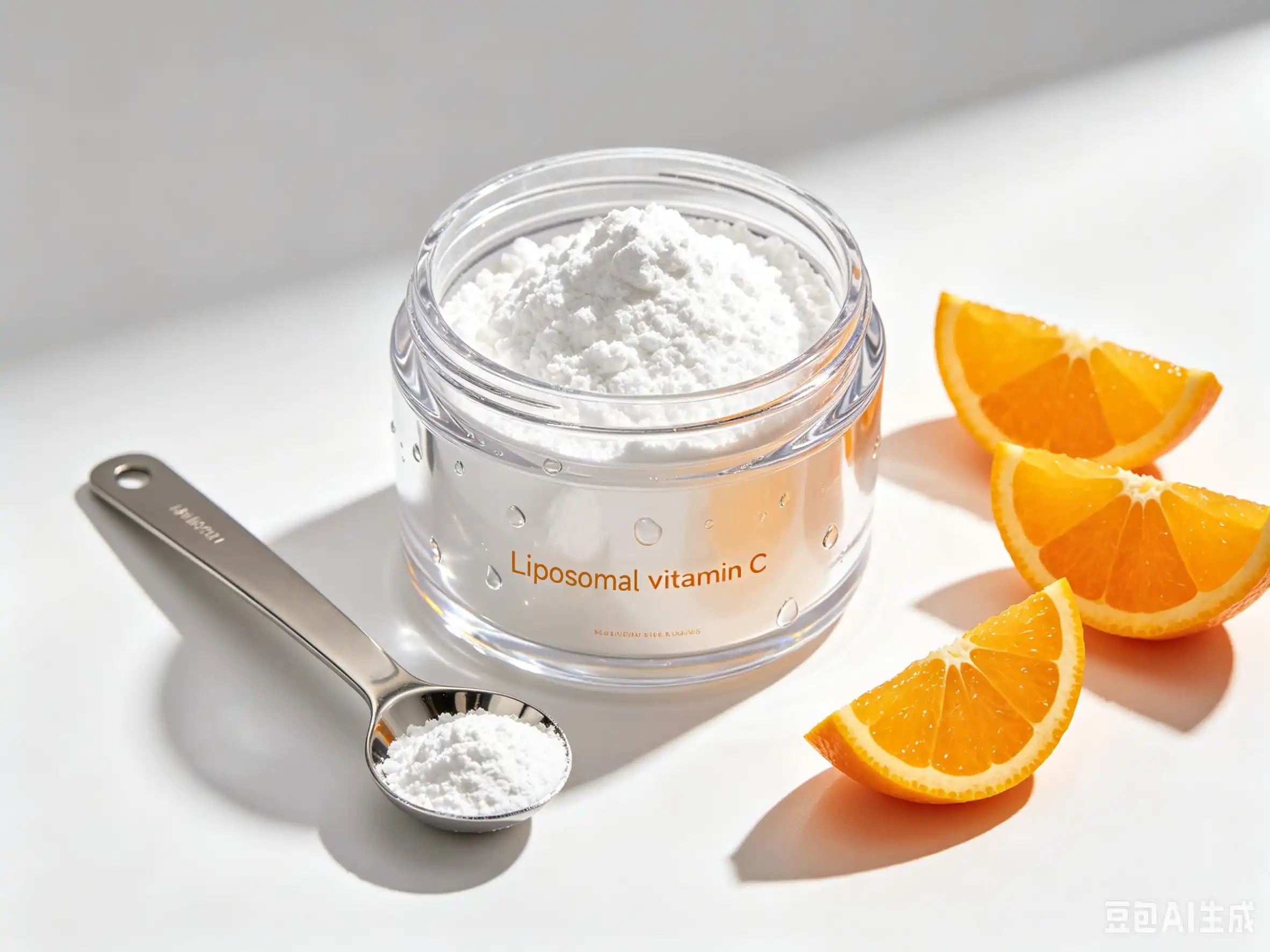
Understanding Vitamin C and Liposomal Vitamin C Powder
Defining the Chemical Difference
Vitamin C can be found in pills, tablets, or capsules as free ascorbic acid or natural ascorbates. Stomach acid, gastric enzymes, and changes in the pH of the intestines can break down these water-soluble forms. Nano-encapsulation technology covers ascorbic acid molecules with a double-layered phospholipid membrane made from soy or wheat lecithin in liposomal vitamin C powder. This shape looks like the membranes of human cells, which lets the nutrient get past normal hurdles to absorption.
How Liposomal Encapsulation Enhances Absorption
The phospholipid bilayer saves vitamin C from the harsh climate of the stomach, stopping it from breaking down too quickly. Liposomes don't use less efficient transporter proteins to get their product into cells. Instead, when they get to the small intestine, they bond directly with enterocyte membranes. Clinical studies show that this process leads to plasma values that are much higher. Particle sizes in high-quality formulations are carefully controlled and are usually between 100 and 300 nanometers. This allows cells to absorb the formula better and keeps the formula stable during processing and storage.
Absorption Rate Comparisons
According to research, the highest amount of standard vitamin C in the blood is reached within two to three hours. However, it is much less effective to absorb more than 200 mg of vitamin C because the transporters become full. Liposomal delivery methods make sure that the rate of absorption stays the same across all dose ranges. Bioavailability tests done by a third party show that liposomal formulations are two times more effective at entering cells than normal forms and staying in tissues for longer. For people who make products, this means that dosing methods will work better and claims of effectiveness will be backed up by science.
Benefits and Efficacy: Why Choose Liposomal Vitamin C Powder?
Superior Bioavailability for Targeted Applications
The better absorption rate of liposomal vitamin C technology solves important manufacturing problems in many fields. Immune support products benefit from stable vitamin C levels that keep white blood cells working at their best all day. Nutricosmetic brands use higher bioavailability to help collagen production routes work better, which allows them to use convincing "beauty-from-within" positioning. The technology proves particularly valuable for functional beverages, where water-dispersible liposomal actives stay stable in liquid formats while delivering clinical-grade absorption.
Safety and Side Effect Considerations
When people take traditional high-dose vitamin C supplements, they often have stomach problems like cramps and osmotic diarrhea because the ascorbic acid that is not taken draws water into the intestines. By making digestion easier before it gets to the lower intestine, liposome packaging greatly reduces these problems. This softer shape opens up more market possibilities for bulk buyers who are making goods for people with sensitive stomachs or digestive problems. Manufacturers of good products do thorough stable tests to make sure the lipid membranes stay intact during processing. This makes sure that the product is safe and effective throughout its shelf life.
Practical Dosage Guidance for Product Development
Because liposomal technology is more efficient, formulation teams can find the best dose plans. For immune support, doses usually run from 500 mg to 1000 mg per meal, which is the same amount of vitamin C that cells would get from much higher doses of regular vitamin C. Liposomal vitamin C powder (250–500 mg) is often found in cosmetic supplements along with other active ingredients like hyaluronic acid or ceramides. Flexible doses is helpful for functional foods in beverage forms, where 100–250 mg per serving gives good antioxidant support without changing the taste. To make sure that products always work the same, procurement teams should give preference to sellers who offer full stability data and batch tracking.
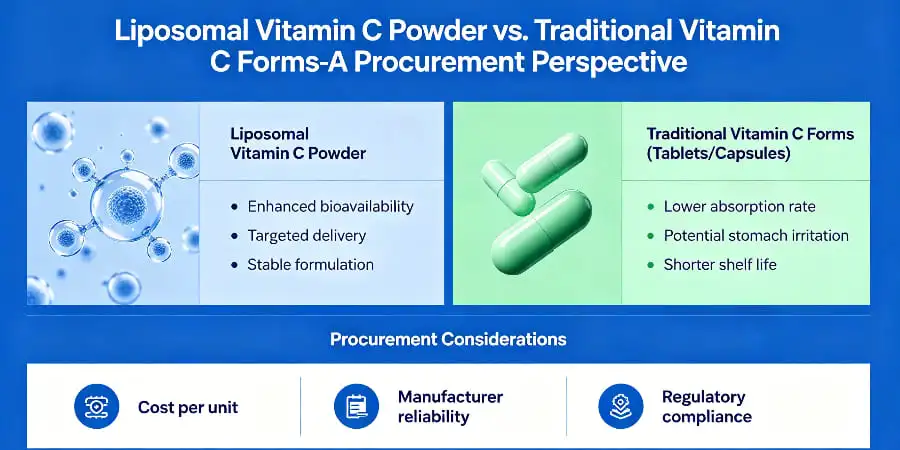
Liposomal Vitamin C Powder vs. Traditional Vitamin C Forms: A Procurement Perspective
Format Comparison: Manufacturing and Logistics
Capsule formats are easy to make, but they suffer from limited dose flexibility and customer unpopularity among groups that prefer non-pill choices. Liquid liposomal products are quickly absorbed, but they need special packaging, cold chain operations, and shorter shelf life times, which can make it harder to plan how to buy them. Powder forms are very flexible because they can be quickly mixed into ready-to-drink drinks, capsules, tablets, or stick packs. They also stay stable at room temperature. This freedom makes it easier to keep track of supplies and makes warehousing simpler. Powder forms make it easy for contract makers to quickly change the formulation without having to switch out equipment.
Cost-Benefit Analysis for Bulk Acquisition
Even though liposomal vitamin C powder chemicals cost more than regular ascorbic acid, the higher bioavailability makes the investment worth it because it leads to smaller effective amounts and a clearer position in the market. In this area, quality standards are very important. Products that follow cGMP guidelines and have ISO 9001/22000 and HACCP certifications make sure that regulations are the same in all foreign markets. Clean label accolades, such as Non-GMO Project proof, vegan certification, and Kosher or Halal approval, let you reach more customers. When considering bulk contracts, procurement teams should look at more than just the price per kilogram. They should also look at the total cost per effective dose given to customers.
Real-World Market Integration
Leading nutraceutical brands have successfully added advanced liposomal versions to immune combinations that contain vitamin C, zinc, elderberry, and quercetin, putting these products at the top of the retail food chain. Companies that make beauty drinks say that people respond well when they put claims about better absorption on the package, which are backed up by third-party testing results. Medical nutrition companies that are making specialized healing formulas like the proven gentleness and steady plasma levels that support clinical practices. These real-life examples show how strategic ingredient selection drives product performance and market acceptance across diverse commercial applications.
How to Source and Purchase Liposomal Vitamin C Powder?
Navigating the Supplier Landscape
To find trustworthy liposomal vitamin C powder providers, you need to carefully check them out in a lot of different ways. When you work directly with specialized makers, you can get better technical support, help with making custom formulations, and clear proof of the supply chain. B2B sites help buyers find suppliers, but they need to carefully check that suppliers have the right certifications and quality systems in place. Procurement professionals should look for partners who have experience with liposomal engineering. This can be shown by PhD-led research and development teams, published stability studies, and thorough batch testing protocols that check for particle size distribution, encapsulation efficiency, and vitamin C purity levels above 99%.
Evaluating Supplier Credentials and Capabilities
Leading sellers set themselves apart with strong quality assurance systems. Look for facilities that follow cGMPs and test for quality in real time. These facilities should also be able to fully trace each batch from the raw materials to the finished goods. Manufacturing capacity is important for scalable partnerships. Suppliers who can make more than 100 metric tons of goods every year make sure there is a steady supply even when demand goes up. Regional customization options, such as tropical-stable formulations for markets with a lot of humidity or special approval needs, show how sophisticated the provider is. Product development times are cut down with the help of technical support resources like formulation scientists who are willing to work together and regulatory paperwork packages that include Certificates of Analysis and stability reports.
Strategic Pricing and Negotiation Approaches
The market price for good liposomal vitamin C powder usually represents the high-tech equipment and strict testing standards that are needed. With a volume promise, you can use tiered pricing, and with a multi-year deal, you can be sure of the costs, which is important for planning your product line. When a new product comes out, procurement teams should discuss terms that cover more than just unit prices. These terms should include access to technical support, the ability to make custom blends, and flexible minimum order amounts. Sample evaluation tools let you test across real systems before committing to the whole thing. Brands that want complete solutions from idea to sale can get more value from suppliers that offer OEM/ODM services with co-branding choices.
Making the Right Decision: Selecting the Best Liposomal Vitamin C for Your Business
Core Evaluation Metrics
The main thing that matters is how well the drug is absorbed; ask a third party for absorption data that shows how cells take in the drug compared to normal forms. The level of purity has a direct effect on how well it works and how well it meets legal requirements. Make sure the vitamin C content is at least 99% and that heavy metals, microbes, and chemicals left over have been tested and found to be absent. Cost-effectiveness analysis needs to look at more than just the prices of the ingredients themselves. It also needs to look at the total costs of making the medicine, since better solubility may mean that lower amounts and fewer supporting ingredients are needed. Customer comments from business apps that are already in use verifies that the supplier is reliable, that technical help is quick to respond, and that batch quality is always the same.
Matching Product Features to Business Applications
For immune support formulas to work well, they need to be well-encapsulated and stable over time. This lets them stand out in competition health categories based on their effectiveness. When making cosmetic supplements, clean labels, veggie approval, and compatibility with other beauty actives are given the most attention. For functional beverage uses, you need forms of liposomal vitamin C powder that can dissolve in water, have neutral tastes, and stay stable in acidic or neutral pH conditions. Medical nutrition products need full sets of paperwork to back up their regulatory applications. This paperwork should include studies of the products' stability under stress and information on how well they work with feeding tube administration routines. Product integration works best when the supplier's skills match the needs of the application.
Future Trends and Strategic Positioning
As people learn more about bioavailability science, the need for more advanced delivery systems in the health and wellness fields continues to grow. Regulatory systems are becoming more aware that better absorption is a useful way to differentiate a product from others that only make strength claims. Leading providers are working on new flavor-masking technologies, improved stability systems, and combination recipes that target multiple health goals. Your product line will stay competitive as long as you have partnerships with suppliers that show they are investing in research and development (R&D). Liposomal vitamin C powder is a key ingredient for brands that want to maintain their position as market winners in the long run because it meets both clean label and clinical performance standards.
Conclusion
Because it uses advanced phospholipid capsule technology, liposomal vitamin C powder is a big step forward from other types of ascorbic acid because it is much more bioavailable. This ingredient helps nutrition brands, functional food makers, and contract manufacturers make their products stand out with scientific proof. It also solves problems with formulation related to absorption and stomach tolerance. Strategic buying choices should give more weight to suppliers who can show they have complete quality systems, clear testing methods, and the technical know-how to help products work together well. It's clear that the market is moving toward more advanced delivery methods that make nutrients work better. This makes liposomal formulations important parts of competitive product lines in the health, beauty, and wellness categories.
FAQ
Is liposomal vitamin C safe for diverse populations?
Clinical proof shows that it is safe for adults to use at the suggested doses. Compared to regular types, this technology has fewer side effects on the digestive system, so it can be used by sensitive people. Women who are pregnant or nursing should talk to their doctors before taking supplements. Manufacturers who care about safety give a lot of information, like allergy statements and test results.
What shelf life can we expect from liposomal formulations?
When kept under suggested conditions, properly made liposomal vitamin C powder keeps its potency over 95% for 24 months. Controlling particle size, making sure the package is waterproof, and making sure the product is sealed well all affect its stability. Ask your providers for stability studies that show how well their products hold up under situations of rapid aging.
How versatile is liposomal vitamin C across product formats?
The powder form works well with pills, hard capsules, soft capsules, stick packs, and formulations that are ready to be mixed with fluids. The ability to dissolve in water makes it possible to use liposomes in beverages while keeping their structure. Custom mixing with active ingredients that work well together, like zinc, quercetin, or collagen peptides, makes formulations more adaptable for specific health uses.
Partner with EmerWell for Advanced Liposomal Vitamin C Solutions
EmerWell is an expert at providing cGMP-certified EncapsWell™ liposomal vitamin C powder that is made to meet the exact needs of global supplement brands, functional drink makers, and contract manufacturers. Our team in San Diego can help you speed up the time it takes to develop your product by providing localized technical support, quick sample shipping, and full regulatory paperwork. We build delivery systems, not just ingredients. Our vitamin C is purer than 99%, its bioavailability has been shown to improve by 8 times, and we offer open OEM/ODM customization across dosage forms. We can help you find liposomal vitamin C powder in bulk or make custom formulations for immune support, nutricosmetics, or functional foods. Our PhD-led research and development team and Wellgreen's 100+ metric ton production capacity ensure scalable solutions without compromising quality. Contact us today at info@emerwell-bio.com to request technical specifications, stability data, and customized pricing for your next formulation project.
References
Davis, J.L., Paris, H.L., Beals, J.W., et al. (2016). "Liposomal-encapsulated Ascorbic Acid: Influence on Vitamin C Bioavailability and Capacity to Protect Against Ischemia-Reperfusion Injury." Nutrition and Metabolic Insights, 9:25-30.
Granger, M., & Eck, P. (2018). "Dietary Vitamin C in Human Health." Advances in Food and Nutrition Research, 83:281-310.
Hickey, S., Highlights, H.J., & Miller, N.J. (2008). "Pharmacokinetics of Oral Vitamin C." Journal of Nutritional & Environmental Medicine, 17(3):169-177.
Liu, Y., & Schubert, D. (2009). "The Specificity of Neuroprotection by Antioxidants." Journal of Biomedical Science, 16:98.
Padayatty, S.J., Sun, A.Y., Chen, Q., et al. (2010). "Vitamin C: Intravenous Use by Complementary and Alternative Medicine Practitioners and Adverse Effects." PLOS ONE, 5(7):e11414.
Vissers, M.C.M., Das, A.B., & Liu, F. (2013). "Potential Mechanisms of Action for Vitamin C in Cancer: Reviewing the Evidence." Frontiers in Physiology, 4:266.
Online Message
YOU MAY LIKE
High quality furniture manufacturer
_1776234307158.webp)