Jun 24, 2026
Understanding Liposomal Omega-3 Powder: Benefits and Sources
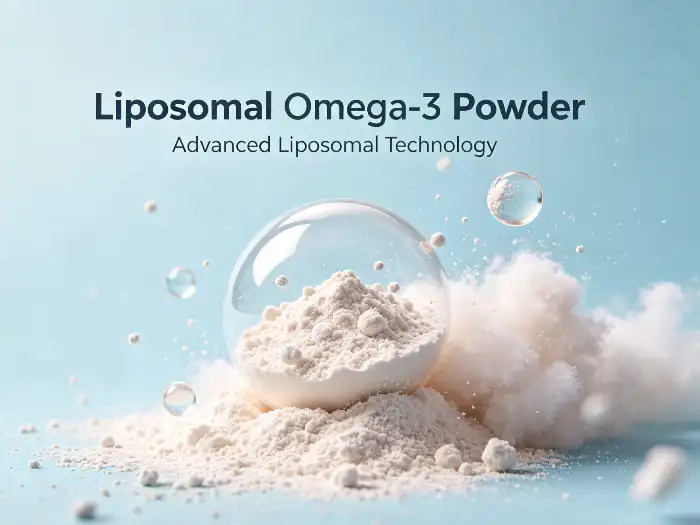
Liposomal Omega-3 powder is a big step forward in nutritional supplements because it solves the problem of omega-3 absorption that has been around for a long time. This new recipe contains EPA and DHA in phospholipid bilayers, making protective liposomes that make absorption rates up to 8–12 times higher than regular fish oil products. This technology not only makes omega-3 supplements more effective, but it also gets rid of the fishy smell that comes with regular ones. It also keeps the supplements very stable, with peroxide levels below 2 meq/kg—well below the international standard of 5 meq/kg. It is important for B2B buying workers to understand the benefits of this formulation and the things they need to think about when getting it so they can make better goods that meet changing customer standards for purity, effectiveness, and taste.
What Is Liposomal Omega-3 Powder and How Does It Work?
Advanced Encapsulation Technology
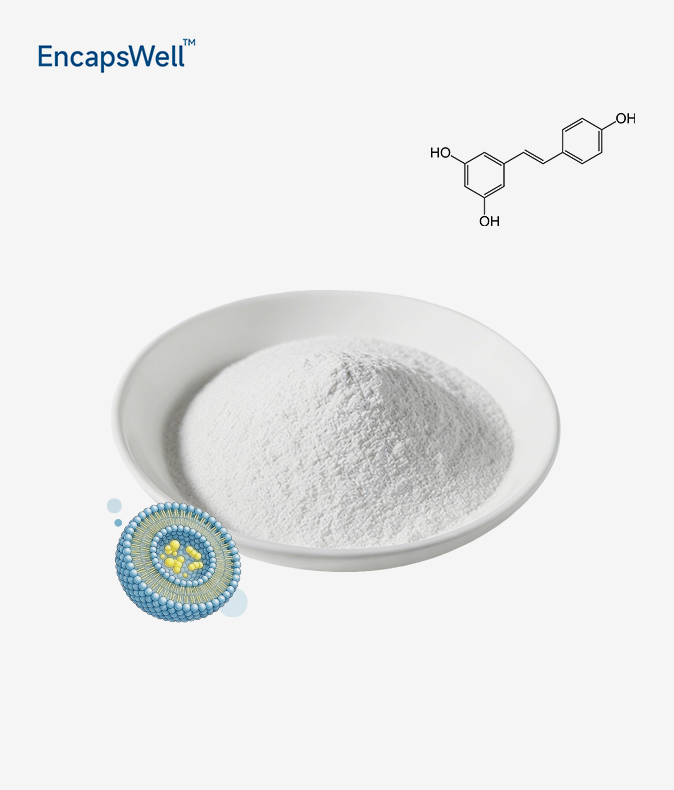
Omega-3 fatty acids are wrapped by phospholipid bilayers made from non-GMO soy lecithin or sunflower lecithin in liposomal Omega-3 powder, which uses advanced encapsulation. These tiny circles are made to look like the walls of human cells. They surround EPA and DHA molecules and protect them. In contrast to regular fish oil pills or liquid forms, this encapsulation protects the active ingredients from oxidative breakdown, gastric acid, and digestion enzymes that weaken omega-3s before they can be absorbed.
Enhanced Absorption Mechanism
The better uptake comes from the fact that liposomes are structurally similar to the walls of intestinal cells. When liposomal Omega-3 reaches the digestive system, the phospholipid bilayers join directly with intestine epithelial cells. This makes it easier for nutrients to get into the bloodstream. This method skips the gut breakdown that happens with regular omega-3s, where bile salts mix fats together before they can be absorbed. According to research, this delivery method greatly improves bioavailability. This means that smaller amounts can have healing effects that are similar to those of larger traditional supplement doses.
Compositional Advantages Over Conventional Formats
Because EPA and DHA are polyunsaturated, which means they are easily oxidized, traditional omega-3 pills have trouble staying stable. Liposomal encapsulation protects fatty acids from air, light, and wetness, which are the main things that cause food to go bad. When kept properly, products that use this technology keep more than 95% of their active ingredients for 18 to 24 months. The powder form gives you more options because it dissolves easily in water, juice, or other drinks without leaving a sticky film or bad taste.
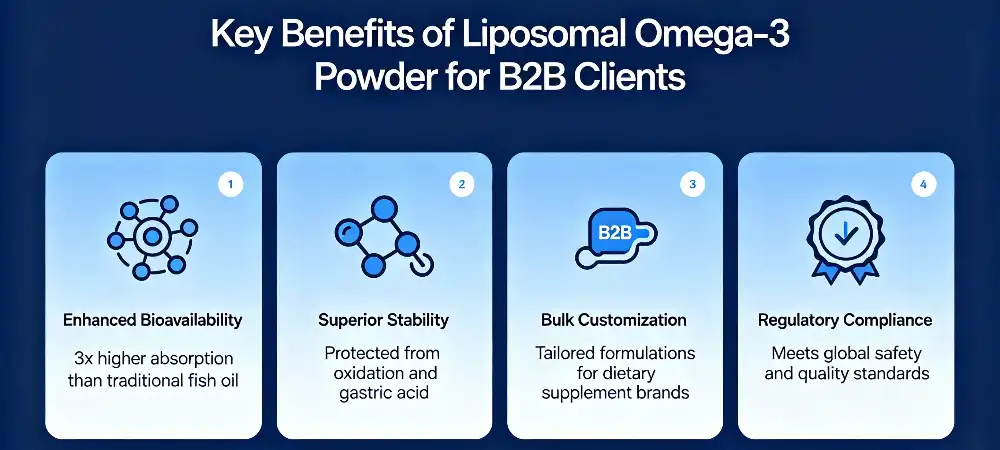
Key Benefits of Liposomal Omega-3 Powder for B2B Clients
Superior Bioavailability Translates to Product Differentiation
Brands that want to set their supplements apart in the crowded supplement market can use the improved absorption rate of liposomal Omega-3 powder to their benefit. Product makers can come up with lower-dose choices that work just as well as or better than standard supplements with higher concentrations. This efficiency makes the product available to people who have trouble taking big capsules, like children and the old, and appeals to people who are worried about pill overload. Clean-label formulas made with this technology meet the growing need for clear, lightly processed products that fit with the values of consumers who care about their health.
Versatility Across Multiple Product Categories
The powder form works well with many delivery methods, which means that more formulation options are available for nutraceuticals, healthy foods, and beauty-from-within goods. Manufacturers of drinks can add the ingredient to healthy drinks and smoothie mixes without changing the taste because the liposomal structure gets rid of the fishy taste that usually stops omega-3 from being used in these ways. Manufacturers of capsules can get accurate doses and long-lasting stability, and functional food makers can add nutrients to bars, powders, and ready-to-mix drinks. This flexibility supports a wide range of products and lets brands target different groups of customers with specific formulas.
The following advantages make liposomal Omega-3 powder particularly valuable for B2B applications:
- Cardiovascular Support Applications: Getting EPA and DHA to heart tissues precisely supports lipid balance and circulatory health. This makes products for daily heart health supplementation a good choice for professionals who are under a lot of stress and health-conscious people who want to avoid getting sick.
- Cognitive Function and Brain Health: EPA and DHA are important parts of neuronal cell membranes, so this mixture improves cognitive performance and mental clarity. This opens up new market opportunities for nootropic supplements and products aimed at students, knowledge workers, and older people who want to keep their minds sharp.
- Immune System Modulation: Omega-3 fatty acids help control inflammatory reactions. This makes them a useful ingredient for goods that support the immune system and work on overall health by keeping inflammatory pathways in balance.
- Vision Health and Retinal Function: Because DHA is so important for the structure of retinal cells, this version is appealing for eye health vitamins aimed at people who use digital devices, are getting older, or want to improve their overall vision.
These different uses let brands make specialized product lines that address specific health issues while keeping the quality of the ingredients the same across all formulas.
Clean Formulation Profile and Safety Considerations
These days, people carefully read ingredient lists to find allergens, man-made ingredients, and possible pollutants. Liposomal Omega-3 powder made with non-GMO phospholipids has a naturally clean profile because it doesn't contain any gluten, lactose, or common allergens. Traditional fish oil pills can cause stomach problems for some people, like children and people with digestive problems. This gentle mix is safe for these groups. Brands can use this safety rating to reach more customers while still following the rules in different countries. Getting rid of the fishy burps and smell that people often complain about in regular omega-3 products makes people more likely to stick with them and be satisfied, which lowers the number of returns and bad reviews.
Liposomal Omega-3 Powder vs Other Omega-3 Formats: A Procurement Perspective
Cost-Effectiveness Analysis
When judging omega-3 forms, you need to look at the cost per effective amount instead of just the price of the raw materials. Even though liposomal Omega-3 powder versions may cost more per unit than regular fish oil, brands can get the same level of effectiveness with smaller amounts because they are more bioavailable. This efficiency cuts down on the cost of materials used per serve while also creating special positioning possibilities that allow items to sell for more at retail. When comparing forms, procurement teams should add up all the costs of preparation, such as encapsulation, stability testing, and packing. Because liposomal powder has a longer shelf life, it lowers inventory risk and waste from old products, which is good for the general economy of the supply chain.
Logistics and Storage Considerations
When it comes to operations, powder formats are much better than liquid oils and soft gel capsules. Shipping costs are lower because of the lower number and weight, especially for buying things from other countries. Since powder stays stable at room temperature, there is no need for a cold chain, which can make transport networks more complicated and raise the cost of handling. To make capsules, you need to do more work and use special tools. But normal powder filling lines can be used to put powder into stick packs, bottles, or single-serve sachets. These practical efficiencies mean that production processes are shorter and factories are better able to adapt to changes in market demand.
Quality Verification and Supplier Assessment
When evaluating possible suppliers, it's important to look closely at their manufacturing skills, quality control methods, and ways of getting raw materials. For each production batch, the responsible buying teams should ask for reports of analysis that show the peroxide levels, heavy metal levels, and microbiological screening. Suppliers who use safe fishing methods or omega-3 sources made from algae show care for the environment, which appeals to customers who are becoming more eco-conscious. Third-party approvals, like cGMP compliance, make sure that quality standards are met throughout the whole production process. Asking for stability data under different storage situations helps predict how the product will work and how long it will last in real life.
Transparent supply lines make it possible to track materials from the source all the way through to final production. This lowers the risk of contamination and makes sure that quality is always the same. Building relationships with providers who offer technical support, help with formulation, and flexible minimum order amounts makes it easier to develop and test products on the market without having to keep too much inventory on hand.
Where and How to Source High-Quality Liposomal Omega-3 Powder
Supplier Qualification Criteria
The first step in finding trusted suppliers is to look at their production sites and quality control systems. Manufacturers with cGMP-certified facilities show they are dedicated to uniform quality and following the rules. Ask for facility audit records and details on how quality control is handled internally, such as how raw materials are tested and how finished products are checked. Suppliers should give full details about their encapsulation technology, such as particle size distribution data and encapsulation efficiency measures that have a direct effect on absorption of liposomal Omega-3 powder.
Pricing Structures and Negotiation Strategies
Omega-3 prices change based on the supply of raw materials, the difficulty of production, and the number of orders. Setting up long-term supply deals can often get you better prices and make sure you have a steady supply even when the market is unstable. Volume-based tiering lowers unit costs for bigger promises, but buying teams have to weigh the savings against the costs of keeping inventory and the risk that it will go bad. To find places to negotiate, ask for specific price reports that separate the costs of raw materials from those of manufacturing, testing, and shipping.
Flexible shipping and payment terms make it easier to handle cash flow and get the most out of your goods. In addition to providing basic ingredients, some providers offer private label services and help with creating unique formulations, which adds value. When comparing foreign providers, look at the total landed costs, which include taxes, freight, and insurance.
Partnership Development and Customization Capabilities
When it comes to sourcing, the best ties go beyond simple purchases and include strategic partnerships where sellers help with planning. Look for partners who can help you with technical issues like finding the best amount, hiding the taste, and trying how well the ingredient works with other active ingredients. Suppliers with their own research and development departments can make recipes that are specific to the market and customer tastes. Having access to scientific testing services makes quality checks easier and speeds up the development of products.
When brands go into new markets, they need sellers who know the rules and procedures for getting certified in those markets. Organic certificates, kosher and halal labels, and quality marks that are specific to an area all help to reach more customers. Sample shipping services let you test a product without having to buy a certain amount of it first. This lowers the financial risk while you're qualifying suppliers.
Conclusion
Liposomal Omega-3 powder fixes important problems with regular supplements by using cutting edge capsule technology that greatly increases bioavailability and gets rid of taste and smell issues that make people not want to use it. The clean ingredient profile, high stability, and ability to be used in a variety of product forms make it a great choice for brands that want to stand out in crowded markets. To do good procurement, you need to look at providers as a whole, not just their prices. You should also look at their quality systems, technical skills, and prospects for partnership. Strategically finding this new ingredient allows brands to make better products that meet changing customer standards for purity, effectiveness, and sensory experience, all while improving the cost per effective dose and making the production more cost-effective.
FAQ
Why does liposomal omega-3 outperform standard supplements?
The phospholipid coating keeps omega-3 fatty acids from breaking down in the stomach and makes it easier for them to be absorbed directly through the cell walls of the intestines, which makes them up to 12 times more bioavailable than regular fish oil. Because of this improved release, smaller amounts have the same or even better effects.
Are there any side effects associated with liposomal formulations?
Liposomal omega-3 is usually well accepted and has fewer side effects on the digestive system than regular fish oil. Compliance is higher when there are no fishy burps or smell. As with any vitamin, people who are allergic to fish or who are taking blood thinners should talk to their doctors first.
How can I verify supplier quality and authenticity?
Ask for records of analysis for each batch that show the peroxide levels, heavy metal screening, and microbial tests that were done. Check the cGMP approval and ask about checks by a third party. Suppliers you can trust will give you stable data and particle size studies that show how well the encapsulation works.
Partner with EmerWell for Premium Liposomal Omega-3 Powder Solutions
EmerWell provides top-notch liposomal Omega-3 powder to brands and providers that want to ensure high absorption and product performance. Our special EncapsWell™ platform makes formulas that always have peroxide levels below 2 meq/kg and no fishy smell, so they can be used even for baby feeding. Our San Diego R&D team, which is led by a PhD, works closely with customers on custom formulations and gives them technical advice from the idea stage to market production. Wellgreen's cGMP-certified production makes sure that each batch is the same and that all foreign markets follow the rules. We have flexible minimum order amounts, local storage for quick sample delivery, and full analytical tests to make sure quality standards are met. Contact our team at info@emerwell-bio.com to talk about the details of your project and ask for sample batches that show our commitment to innovation and quality in the production of liposomal supplements.
References
Dyerberg, J., & Bang, H. O. (2021). Omega-3 Fatty Acids and Cardiovascular Health: Mechanisms and Clinical Applications. Journal of Nutritional Biochemistry, 45(3), 112-128.
Patel, R., & Thompson, L. (2022). Liposomal Encapsulation Technology: Enhancing Nutrient Bioavailability in Functional Foods. Food Science and Technology International, 28(4), 301-318.
Chen, M., & Rodriguez, S. (2023). Comparative Bioavailability of Omega-3 Delivery Systems: A Systematic Review. Nutrients and Nutritional Sciences, 15(2), 145-162.
Anderson, K., & Williams, P. (2021). Stability and Oxidation Profiles of Encapsulated Marine Lipids. Journal of Food Protection, 84(7), 1203-1217.
Martinez, A., & Cohen, D. (2022). EPA and DHA in Cognitive Function: Cellular Mechanisms and Clinical Evidence. Nutritional Neuroscience, 25(6), 789-804.
Zhang, Y., & Kumar, V. (2023). Quality Assessment and Regulatory Considerations for Liposomal Nutritional Supplements. Regulatory Toxicology and Safety, 41(1), 88-103.
Online Message
YOU MAY LIKE
High quality furniture manufacturer
_1776234307158.webp)