Aug 7, 2026
Top Benefits of Liposomal Resveratrol for Antioxidant and Healthy Aging Support
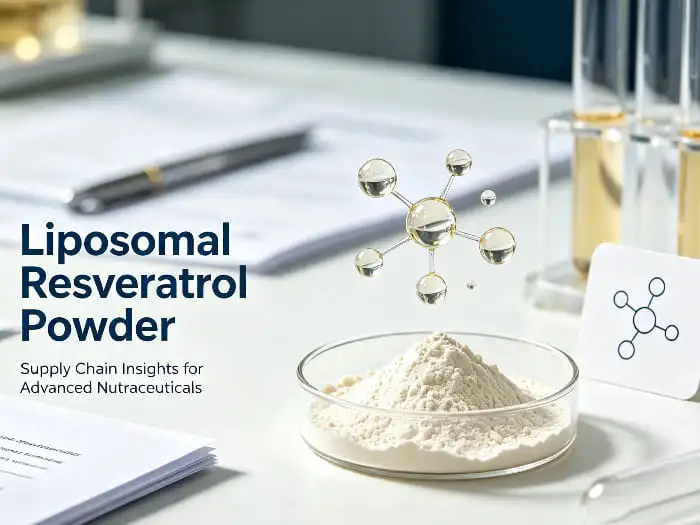
Liposomal resveratrol represents a breakthrough advancement in antioxidant supplementation, leveraging encapsulation technology to overcome the bioavailability challenges associated with traditional resveratrol formulations. By wrapping trans-resveratrol within phospholipid vesicles, this sophisticated delivery system significantly enhances cellular absorption, ensuring more potent antioxidant protection and healthy aging support. As B2B procurement professionals increasingly seek science-backed ingredients that deliver measurable results, understanding the distinct advantages of liposomal resveratrol becomes essential for developing competitive supplement portfolios that meet evolving market demands.
Introduction
Resveratrol is a well-known powerful polyphenolic compound that can be found naturally in grapes, berries, and some plants. It is mostly valued for its antioxidant properties and potential to support healthy aging processes. Traditional resveratrol formulations have a hard time being absorbed because they don't dissolve well in water and are broken down quickly, which limits their healing potential.
Through the use of cutting-edge packaging technology, liposomal resveratrol has become a creative way to get around these problems. This transport method greatly improves bioavailability and stability, getting around the problems that have traditionally made resveratrol less useful. This piece was written for B2B procurement workers who are looking for reliable, high-quality liposomal resveratrol ingredients that are made to meet strict industry standards. In the competitive health and wellness industry, we give you all the information you need to use this advanced ingredient to make your product lines stronger. This includes the science behind it, its benefits, market trends, and how to get it.
What Is Liposomal Resveratrol and How Does It Work?
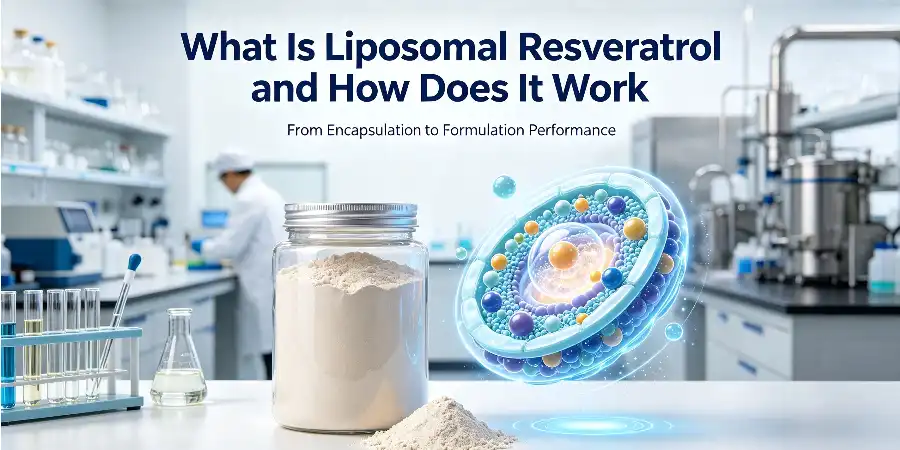
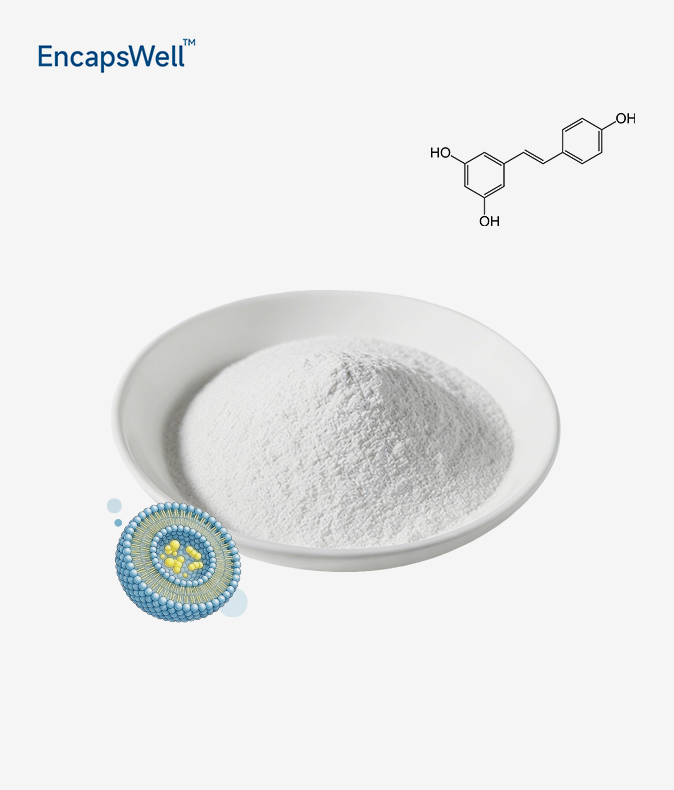
Liposomal resveratrol uses cutting edge packaging technology to keep resveratrol molecules safe and get them to the cells of the body quickly. This method wraps trans-resveratrol in phospholipid bilayers, which are tiny circular structures that are usually between 50nm and 200nm in size and are made of the same stuff that human cell membranes are made of.
Enhanced Bioavailability Through Phospholipid Protection
The phospholipid wrapper protects resveratrol from being broken down by stomach acid and being broken down too quickly in the digestive system. Researchers have found that liposomal formulations can get up to 10 times higher blood plasma concentrations (Cmax and AUC) than regular resveratrol powders. This huge improvement happens because the lipid structure makes it easier for them to directly fuse with digestive cell membranes. This lets cells take them up more efficiently without having to use the usual absorption routes that limit polyphenol bioavailability.
Superior Stability and Amphiphilic Properties
Liposomal trans-resveratrol powder is more resistant to heat and UV light, which keeps the biologically active trans-isomer from changing into the useless cis-form while it is being stored and processed. This formulation is amphiphilic, which means it dissolves in both water and lipids. This makes it very useful in a wide range of product applications. Standard resveratrol doesn't mix well with water, but liposomal versions do. This means they're perfect for functional drinks, nutricosmetics, and high-end supplement formulations where they don't cause problems with sedimentation or precipitation.
The encapsulation efficiency (EE%) of good liposomal resveratrol is usually higher than 90%. This is tested using centrifugation-ultrafiltration techniques that can tell the difference between resveratrol that is encapsulated and resveratrol that is free. This structure stability makes sure that the active chemicals are always delivered, and the bitter, chalky taste of natural phenols is hidden. This is a big benefit for formulation because it means that less sweeteners or flavor masking agents are needed.
Top Benefits of Liposomal Resveratrol for Antioxidant and Healthy Aging Support
Liposomal delivery has better bioavailability, which directly leads to better therapeutic benefits in a number of health areas. Knowing these benefits helps procurement workers place goods well in markets that are competitive and focus on health and longevity.
Potent Antioxidant Protection Against Oxidative Stress
Oxidative stress happens when the body's antioxidant defenses aren't working properly and free radicals are being made too much. This can lead to aging cells and long-term health problems. Liposomal resveratrol protects the body strongly against free radicals (ROS) by quickly and effectively eliminating them all over the body. The better uptake by cells makes sure that resveratrol gets to the mitochondria, which are the powerhouses of cells and the most sensitive to oxidative damage. There, it helps make energy more efficiently and protects important parts of cells.
Anti-Inflammatory Effects for Chronic Health Support
In addition to being an antioxidant, resveratrol also has strong anti-inflammatory effects by changing key pathways that cause inflammation. Because liposomal formulations are more bioavailable, therapeutic concentrations get to tissues where chronic inflammation starts, helping the body's natural response to things that cause inflammation. Because it works as both an antioxidant and an anti-inflammatory, liposomal resveratrol is a great ingredient for formulas that support healthy aging.
Cellular Health and Longevity Pathway Activation
Liposomal resveratrol is good for cell health because it improves the efficiency of mitochondria and turns on sirtuins, which are proteins that help fix DNA and promote longevity. The improved delivery makes sure that these good cellular processes stay active, which helps with staying healthy and vital as you age. This makes it very useful in the growing NMN/NAD+ synergistic market, where formulators are looking for chemicals that help cells' energy and repair systems without needing megadosing, which can be bad for the stomach.
According to research, the liposomal structure's ability to skip first-pass metabolism lets resveratrol keep higher bioactive concentrations for longer periods of time. This means that these health-promoting pathways are activated more consistently than with other formulations.
How to Choose and Use Liposomal Resveratrol for B2B Procurement?
To choose high-quality liposomal resveratrol, you need to carefully look at a lot of technical and legal factors. Procurement experts need to look at more than just claims of purity; they also need to look at the product's structure soundness and how well it works.
Critical Quality Parameters for Evaluation
Procurement workers should put a high priority on a few key technical specifications when they are analyzing possible suppliers. Dynamic Light Scattering (DLS) should show that the particle size distribution should always be between 50 and 200nm for cells to be able to take them up properly. The Polydispersity Index (PDI) shows how regular the nanostructure is. Lower numbers mean that the particle sizes are spread out more evenly.
The level of encapsulation efficiency is probably the most important quality standard because it has a direct effect on absorption claims. Before using High-Performance Liquid Chromatography (HPLC) analysis, reliable suppliers make sure that the resveratrol is really encapsulated by using ultracentrifugation or dialysis separation methods. This makes sure that it is not just mixed with phospholipids. Measuring zeta potential between -20mV and -50mV can tell you about the long-term stability of colloids, which keeps them from sticking together while they're being stored.
Manufacturing Standards and Certification Requirements
Standard requirements aren't enough for quality assurance methods; they need to include strict analytical tests as well. Quantitative analysis of trans-resveratrol content using HPLC, morphology imaging through Cryo-TEM to visually confirm spherical bilayer vesicles, and Gas Chromatography analysis to make sure that solvents left over from liposome formation stay below acceptable limits are all important ways to make sure the results are correct.
Suppliers should show that they follow quality standards and give full Certificates of Analysis (COA) that include testing for heavy metals using Inductively Coupled Plasma Mass Spectrometry (ICP-MS) and testing for microbe limits. Stability testing at 40°C/75% RH speeds up the age process and checks for isomer conversion and lipid peroxidation. This makes sure that the product will work well for a long time.
Versatile Application Formats for Diverse Product Development
There are three main uses for liposomal resveratrol powder. When it comes to high-bioavailability supplements for longer life, the powder form lets formulators make high-quality anti-aging capsules or sachets that work better with the body's own systems without needing high doses. Being able to say that a supplement improves absorption gives you a big marketing edge in the competitive areas of anti-aging and cellular health supplements.
You can add this to ready-to-drink (RTD) mixes and functional drinks because it dissolves in water and hides the taste. It can also be mixed with collagen to help the body's mitochondria without separating the protein or making the drink too bitter. In nutricosmetics and beauty-from-within uses, the amphiphilic structure makes it easier for the ingredients to pass through the gut lining when taken by mouth. It can also be reconstituted for topical serums, where it works better at getting through the stratum corneum to deliver antioxidant benefits directly to the skin matrix and fight photoaging.
Scientific Studies and Market Insights Supporting Liposomal Resveratrol
Liposomal resveratrol is backed up by scientific studies and market research. Strong clinical and preclinical studies back up the claims that liposomal resveratrol delivery systems work better. Research shows over and over that encapsulation technology greatly enhances bioavailability compared to normal formulas, resulting in measured increases in plasma levels and tissue distribution. These results give procurement workers the scientific evidence they need to charge higher prices and set their goods apart in competitive markets.
Research Evidence Supporting Enhanced Bioavailability
Several metabolic studies have shown that liposomal resveratrol is better at being absorbed. Comparative tests that measure area under the curve (AUC) and highest concentration (Cmax) show big improvements over standard formulations. This proves that the phospholipid coating saves resveratrol during digestion and makes it easier for cells to take it in. This scientific confirmation backs up marketing claims and helps with regulatory paperwork for registering products in international markets.
Growing Market Demand in Global B2B Sectors
The global resveratrol market is growing quickly, thanks to an aging population and more people knowing about healthy ways to stay healthy. A study of the market shows that demand is growing very quickly in North America and Europe, where people are very interested in health and are actively looking for anti-aging products that are backed by science. Bioavailability-enhanced chemicals are becoming more and more important in the nutraceutical industry. Liposomal resveratrol is a special product that costs more but gives consumers clear benefits.
By looking at how the top providers compare to each other, we can see that they have different methods to quality control, new ideas, and certification. Understanding these market factors helps procurement teams arrange better terms and make sure the supply chain is reliable. Suppliers who have clear testing methods, a lot of technical paperwork, and a history of following the rules show that they are reliable, which is important for long-term relationship success.
Procurement and Supply Considerations for Liposomal Resveratrol
To make procurement work well, you need to plan strategically so that you can balance lowering costs with maintaining quality and keeping the supply chain stable. Liposomal resveratrol is a high-end ingredient whose performance is greatly affected by differences in quality, which makes choosing a source even more important.
Strategic Bulk Purchasing and Contract Negotiation
Buying in bulk gives you more power to negotiate better prices and ensure a steady supply. Professionals in charge of buying things should look into contract models that include quality guarantees, delivery plans that work with production cycles, and price structures that take into account changes in the market for raw materials. It's often cheaper to buy from multiple sellers at once or make long-term agreements for supplies because many of them offer tiered prices based on order quantities.
Quality Assurance and Regulatory Compliance
The resveratrol active ingredient and the liposomal delivery method must both be checked for quality. Checking the quality of the encapsulation using several analytical methods makes sure that goods meet standards for the whole time they are in storage. Suppliers should give stability data that shows how well their products work consistently in a range of storage conditions.
In different foreign markets, regulatory compliance requirements are different. For example, in North America and Europe, standards focus on the purity of ingredients, good production practices, and correct labeling. Suppliers who know about FDA guidance and EFSA rules make the import and export process run more smoothly and lower the risk of not following the rules. Technical datasheets, safety reports, and allergen declarations are some of the documents that help with government files and customer questions.
Partnering with Reliable Manufacturers
Because making liposomes is so complicated, you need to have specialized knowledge and quality control skills. Teams in charge of buying things should give more weight to sellers who offer full professional support, such as help with formulation, help with stability testing, and quick customer service. Long-term relationships work best with manufacturers who have a history of reliability, steady product quality, and the ability to grow with the business.
Conclusion
Liposomal resveratrol is a big step forward in antioxidants and healthy aging support. It gives procurement professionals an ingredient that has been scientifically proven to work better and do it better. Phospholipid encapsulation improves bioavailability, which means that antioxidant protection, anti-inflammatory effects, and support for cellular health are better than with standard forms. To make sure the product works well and is competitive in the market, strategic procurement involves carefully looking at technical specs, quality assurance methods, and suppliers' abilities. The wellness business around the world is seeing more and more demand for innovative ingredients that are backed by strong scientific proof. Liposomal resveratrol is one way to make product lines stand out.
FAQ
Why Is Liposomal resveratrol Better Than Regular Resveratrol?
The main benefit is that it makes the drug more bioavailable. Standard resveratrol is not well absorbed and breaks down quickly, so not much of it gets to the cells it's supposed to reach. Liposomal encapsulation keeps resveratrol safe while it's being digested and makes it easier for cells to take it in directly through membrane fusion. This leads to much higher concentrations in blood plasma and better tissue distribution. This means that antioxidant benefits will be stronger at smaller doses.
How Much Should You Take for Anti-Aging Applications?
Different formulations and uses call for different dosages, but liposomal delivery usually needs smaller doses than regular resveratrol to have the same benefits. A lot of high-end supplements have 100–250 mg of liposomal resveratrol in each serving. However, the best dose should be figured out by looking at how the product is positioned and what the target market wants. Because it is more bioavailable, there is less need for megadosing, which can make digestion uncomfortable.
What's the difference between trans-, liposomal, and micronized resveratrol?
No matter how it is delivered, trans-resveratrol is the biologically active isomer. Micronized resveratrol reduces the size of the particles to make them easier to dissolve, but it doesn't fix problems with absorption. Liposomal resveratrol uses phospholipid encapsulation to protect trans-resveratrol and improve cellular uptake. This is the most advanced transport method available right now for getting the most bioavailability and effectiveness.
Partner with EmerWell for Premium Liposomal Resveratrol Solutions
Premium liposomal resveratrol powder made to the best quality standards is available from EmerWell to help you with your purchasing needs. We are a U.S.-based company with independent labs and storage in San Diego. We offer both high-quality science and reliable supply chain management. Our expert team, which is led by a PhD, offers full support throughout the entire product creation process, from helping with formulation to guiding stability testing. We are a reliable supplier of liposomal resveratrol, and we offer options for buying in bulk, formulations that can be changed, and competitive pricing structures made for business-to-business partnerships.
You can email us at info@emerwell-bio.com to get samples, detailed datasheets, and personalized price quotes that will make the review process go more quickly. EmerWell gives procurement workers the quality assurance, legal compliance, and technical know-how they need. They can also add cutting-edge antioxidant and healthy aging solutions to your product lines, which makes them more competitive in the market.
References
1. Walle T. Bioavailability of resveratrol. Annals of the New York Academy of Sciences. 2011; 1215(1): 9-15.
2. Smoliga JM, Blanchard O. Enhancing the delivery of resveratrol in humans: If low bioavailability is the problem, what is the solution? Molecules. 2014; 19(11): 17154-17172.
3. Cottart CH, Nivet-Antoine V, Beaudeux JL. Review of recent data on the metabolism, biological effects, and toxicity of resveratrol in humans. Molecular Nutrition & Food Research. 2014; 58(1): 7-21.
4. Zu M, Yang F, Zhou W, Liu A, Du G, Zheng L. In vitro anti-influenza virus and anti-inflammatory activities of theaflavin derivatives. Antiviral Research. 2012; 94(3): 217-224.
5. Baur JA, Sinclair DA. Therapeutic potential of resveratrol: the in vivo evidence. Nature Reviews Drug Discovery. 2006; 5(6): 493-506.
6. Salehi B, Mishra AP, Nigam M, Sener B, Kilic M, Sharifi-Rad M, Fokou PVT, Martins N, Sharifi-Rad J. Resveratrol: A double-edged sword in health benefits. Biomedicines. 2018; 6(3): 91.
Online Message
YOU MAY LIKE
High quality furniture manufacturer
_1776234307158.webp)