Jun 10, 2026
The Ultimate Liposomal Glutathione Guide
When looking for ingredients for the next generation of health goods, it's important to find things that do what they say they will do. Liposomal glutathione powder is a big step forward in antioxidant supplements because it gives product creators and procurement managers an ingredient that is clearly more bioavailable than other kinds. This guide explains the science behind this advanced delivery system and the strategic benefits of adding it to your product line. It doesn't matter if you're making functional drinks, beauty-from-within supplements, or high-performance capsules for health-conscious customers.
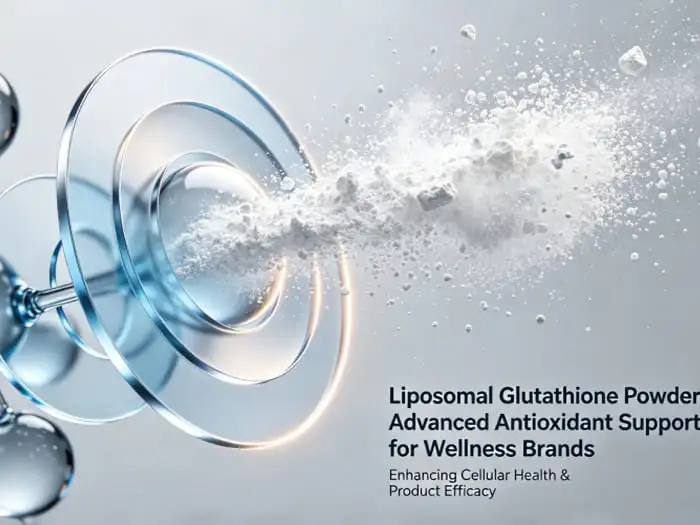
Understanding Liposomal Glutathione Powder
Glutathione has been known for a long time to be an important antioxidant for cell health, but it hasn't always been very useful when taken by mouth because it isn't well absorbed. Traditional glutathione pills often break down quickly in the digestive track before they can get to the rest of the body's systems. This makes them much less useful for healing.
What Makes Liposomal Encapsulation Different?
Liposomal technology solves this problem by encasing glutathione molecules in phospholipids, which cover them with two layers of lipids. These very small bubble-like structures protect the active ingredient from the tough conditions in the stomach and make it easier for cells to take it in by fusing their membranes together. Researchers have found that liposomal glutathione powder delivery can improve glutathione absorption up to 13 times more than regular powders. This means that blood plasma amounts are higher within hours of eating.
Biomimicry is what makes the process work. Liposomes are structured like cell membranes, which lets them attach to intestinal epithelial cells and release their contents straight into the bloodstream. This method skips over a lot of the breakdown processes that make oral glutathione less effective.
Health Applications Driving Market Demand
Glutathione is being studied in the medical field for a number of different health reasons. In nutricosmetics, it helps skin look brighter and be more flexible by reducing the oxidative stress that comes with getting older and being exposed to the environment. Toxins are broken down in the liver during Phase II metabolism, which is where detoxification methods use glutathione's ability to help get rid of toxins. The immune system depends on having enough glutathione for natural killer cells to work and lymphocytes to multiply.
Studies in nutritional biochemistry journals have shown that taking liposomal glutathione powder supplements can help reduce melanin in the skin, normalize liver enzymes, and lower signs of oxidative stress. These benefits that have been proven to work make it very appealing for companies that market their goods based on clear results and scientific reliability.
Comparing Liposomal Glutathione with Other Glutathione Forms
Knowing how well different delivery forms work helps buying teams make decisions that are in line with how the product is positioned and what customers want.
Bioavailability Across Delivery Methods
Standard glutathione pills and tablets don't absorb very well into the body—often less than 10%—because enzymes break them down during digestion. Some mucosal absorption is possible with sublingual pills, but this is still not always the case and depends on the amount. Injectable glutathione is bioavailable right away, but it has to be given by a doctor, which limits its use in hospital situations and makes regulations more complicated.
Liposomal glutathione powder products fill in this gap by making oral bioavailability as good as intravenous transfer while keeping the safety and ease of use of supplements. This is a huge competitive edge for brands that are aimed at retail customers rather than doctors and nurses.
Practical Considerations for Product Development
Formulation teams must also think about longevity, taste profiles, and the ability to make more of the product. Some antioxidant ingredients have problems with going bad after a while, but liposomal tablets that contain at least 95% glutathione stay effective for 24 months if they are stored properly. Water-dispersible forms work well in functional drinks because they don't leave a chemical aftertaste like unencapsulated glutathione does. This makes it easier for customers to follow the directions.
Cost-effectiveness is another thing that should be thought about. Liposomal glutathione powder ingredients are more expensive than regular powders, but because they work better, they need less of them per dose to reach therapeutic levels. This could help cover the higher cost of the raw materials by making the product work better and making customers happier.
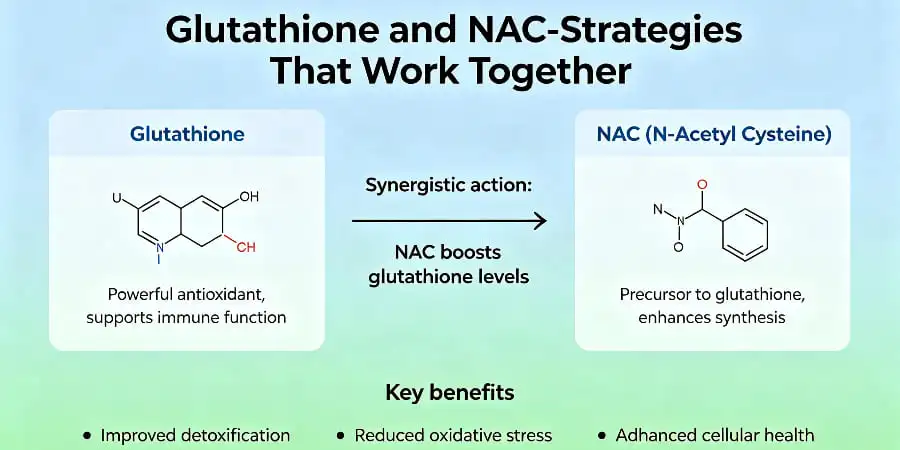
Glutathione and NAC: Strategies That Work Together
NAC is a precursor to glutathione that gives the body the cysteine it needs to make glutathione on its own. Some formulators like NAC because it is more stable and costs less. Direct glutathione supplementation through liposomal glutathione powder transport, on the other hand, works right away, while precursor routes take longer. This is especially helpful for urgent situations or people whose body can't make enough glutathione because of age or genetic differences. Forward-thinking brands are looking into combination products that use both routes in a way that works well together.
Safe Usage and Dosage Guidelines
Responsible ingredient sourcing is based on following the rules and making sure the end user is safe. This is especially true for ingredients that make promises about their effectiveness.
Clinical Safety Profile
Glutathione has a great safety record based on many tests with humans. In healthy people, taking supplements by mouth in amounts up to 500 mg per day has not caused many problems. Occasional slight stomach reactions, like bloating or loose stools, usually go away when the dose is changed or the medicine is taken with a meal. There are still not many reasons not to use it, but people who are sensitive to sulfur should be careful.
Liposomal glutathione powder administration hasn't raised any new safety issues that aren't already there with glutathione. Generally Recognized as Safe (GRAS) food products like sunflower or soy lecithin are used in encapsulation because they are well tolerated.
Application-Specific Dosing Recommendations
Formulations usually give 250 to 500 mg per serving, given once a day, for skin health and beauty uses. Products that focus on detoxification may use bigger doses—up to 1000 mg per day—split up into several meals to keep plasma levels steady. Most immune support plans use a modest amount, usually between 300 and 500 mg per day.
These ways of using things should be taken into account in procurement requirements. For example, products made for beauty drinks might focus on having flavor-neutral profiles and dissolving quickly. On the other hand, detox routines might focus on higher-concentration forms that reduce capsule count or liquid volume.
Storage and Handling in Commercial Settings
Environmental factors need to be taken into account in order to keep food quality throughout the supply chain. Liposomal glutathione powder works best when kept in a cool, dry place (below 25°C) that is out of direct sunshine and away from water. Desiccant packets and moisture protection covers should be in bulk containers. For finished goods, amber or opaque packaging keeps them stable longer by keeping light out as much as possible.
These rules are in line with how nutraceuticals are usually handled, and they avoid the problems that come with the cold chain that some bacterial or enzyme ingredients have.
Procurement Insights: How to Source High-Quality Liposomal Glutathione Powder?
To find providers of liposomal glutathione powder who can meet technical requirements and help the business grow, it's necessary to evaluate them in a planned way across a number of different areas.
Critical Quality Markers
The most important thing is purity—look for papers of analysis that say the glutathione level is at least 95% with few impurities. Metrics that measure encapsulation efficiency show how well the liposomal structure protects the active ingredient. Reliable providers offer third-party confirmation using electron microscopy or dynamic light scattering to check the particle size distribution and membrane integrity.
To make sure of quality, certifications are very important. The ISO 22000 and FSSC 22000 standards show that a company takes food safety very seriously. cGMP compliance means that production standards are followed that keep contamination to a minimum and make sure that accuracy between batches. More approvals, like Halal, Kosher, Non-GMO, and Vegan, make the market more accessible to different groups of people.
Checking the HPLC potency, screening for heavy metals that meet FDA and EPA standards, checking for microbial contamination, and analyzing residual solvents should all be part of analytical testing procedures. Regulatory filings and due diligence processes are sped up when suppliers offer full paperwork packages that include Certificates of Analysis, Technical Data Sheets, and Safety Data Sheets.
Evaluating Supplier Capabilities
Technical skill goes beyond the quality of the current product to include the ability to come up with new ones and understanding of the rules and regulations. Suppliers with research teams run by PhDs know more about liposomal glutathione powder technology and can help you build custom formulations as your product line changes. Manufacturing partnerships with a lot of certifications, like ISO 9001, HACCP, and NOP organic standards, show that they think in terms of processes, which lowers the variation in quality.
Logistics and governing routes are affected by where things are located. Lead times and freight costs can be cut by suppliers with specific delivery networks. Companies with sites in more than one area can adapt to the rules of each market, which is especially helpful when dealing with the changes between the FDA, the EU Novel Food framework, and the ASEAN supplement framework.
Strategic Purchasing Approaches
Working capital needs and inventory risk are directly affected by minimum order amounts. Suppliers with flexible MOQs—from small trial batches of about 10 kg to monthly production amounts of more than 2,000 kg—can help with both the development phase and the marketing phase without making customers make promises they don't want to make right away.
When negotiating prices, it helps to know how the market works. Tiered discounting is usually unlocked by making a volume promise, but procurement managers should weigh the saves on unit costs against the costs of keeping inventory and the risk of items becoming obsolete. When you talk about a contract, you should talk about payment terms, freight responsibilities, and lead time promises all at the same time.
Before placing a large order, sample evaluation programs let you test them out for yourself. Ask for enough samples to test for stability, to see how well they work with other ingredients in the formula, and to have taste review groups look at them. Keeping track of sample lot numbers makes it possible to find out what happened if production scaling shows unexpected differences.
Strategic Benefits of Liposomal Glutathione for B2B Clients
In addition to improving the performance of ingredients, liposomal glutathione powder can help brands stand out and grow their product lines.
Market Growth Trajectories
Wellness media coverage and an older population looking for proactive health solutions are making people more aware of cellular health, antioxidant defense, and bioavailability science. This is reflected in the global glutathione market, which is expected to grow at a rate of more than 8% per year for the next ten years. As this market grows, liposomal glutathione powder forms appeal to more affluent customers who are willing to pay more for better absorption.
Beauty-from-within categories are growing especially quickly because people are realizing that their internal antioxidant state affects how their face looks. When brands add liposomal glutathione powder to collagen drinks or skin supplement formulas, they can use the idea of "dual-mechanism storytelling" (structural support plus oxidative protection) to get special standing.
Product Differentiation Strategies
There is a lot of competition for functional food and drink makers in the health market. Liposomal glutathione powder ingredients make a real difference, which can be used to make marketing messages more convincing: "13× better absorption than standard supplements" gives customers a clear idea of what the product is better for, which helps it stand out on store shelves.
By adding liposomal glutathione powder powers, private label makers and contract producers can offer more services. OEM clients are looking for full solutions that include formulation knowledge, help with regulations, and manufacturing that can be scaled up. Partnerships with providers that can provide a range of dosage forms, such as pills, hard capsules, soft gels, and bases that are ready to be mixed with liquid, allow companies to quickly add new products to their lines without having to buy new equipment.
Real-World Implementation Examples
Mid-sized supplement companies have successfully introduced liposomal glutathione powder SKUs by presenting them as high-end alternatives within established product lines. This has allowed them to charge 30–40% more at retail while keeping strong velocity. Contract makers have signed multi-year deals with new beverage names by showing that they are experts at formulating drinks that taste good even though they contain antioxidants.
Distribution relationships are especially helpful when dealing with different rules in different areas. Suppliers with established FDA compliance paperwork and regional technology support, like EmerWell's San Diego operations, which offer customer service and storage in the US, shorten the time it takes for North American starts and make sure that regulations stay in line.
Innovation Horizons
New study looks into ways to combine liposomal glutathione powder with other active substances, like vitamin C or alpha-lipoic acid, inside a single liposomal structure. This could lead to benefits that work better together. Nano-optimization methods keep improving the spread of particle sizes to make uptake by cells even better. These changes show that innovation is still going on, which will help early users stay ahead of the competition.
Conclusion
Liposomal glutathione powder is a result of scientific proof, excellent production, and high market demand. It opens up important possibilities for people who work in buying and product development. The proven 13-fold bioavailability edge over traditional formats solves a major problem with antioxidant supplements, letting brands show real results that earn customers' trust and encourage them to buy again. To successfully source ingredients, you need to pay attention to pure standards, encapsulation quality, full certifications, and suppliers' skills that go beyond just providing ingredients, like helping with preparation and having regulatory knowledge. As health markets continue to put an emphasis on effectiveness and openness, ingredients backed by strong science and quality systems will become more and more important for placement in the market.
FAQ
What does "liposomal" mean in supplement formulations?
Liposomal glutathione powder delivery is a method of putting active ingredients inside phospholipid bilayers, which are very small objects with a structure that looks like cell membranes. This encapsulation keeps sensitive chemicals from breaking down in the digestive tract and makes absorption easier by fusing cell membranes. This makes the bioavailability much higher than with exposed forms.
Can liposomal formulations replace injectable glutathione in commercial products?
Liposomal oral delivery has the same bioavailability as shots, but it's easier to use and doesn't have to go through the same legal hurdles as parenteral goods. For supplement brands that want to sell to regular people instead of hospitals, liposomal glutathione powder forms are the best option because they offer medical-grade absorption in a way that is easy for regular people to use.
How can procurement teams verify bulk liposomal glutathione authenticity?
Ask for a lot of paperwork, like third-party Certificates of Analysis proving the liposomal glutathione powder content via HPLC, electron microscopy pictures showing the liposomes' intact structure, particle size distribution data, and results from a stability study. Reliable providers give paperwork that is specific to each batch and are open to audits. Another way to be sure is to send samples to independent labs before committing to large amounts of production. This is especially important when working with new suppliers.
Partner with EmerWell for Premium Liposomal Glutathione Powder Supply
EmerWell specializes in making pharmaceutical-grade liposomal glutathione powder formulations that turn ideas for new products into market-leading products. Our unique EncapsWell™ platform provides liposomal glutathione powder that is at least 95% pure and 13 times more bioavailable. It comes with a lot of certificates, such as cGMP, ISO 22000, FSSC 22000, Halal, Kosher, and Non-GMO approval. Our PhD-led R&D team and Wellgreen's approved manufacturing facilities guarantee scientific accuracy from idea to execution, whether you need flexible trial runs starting at 10 kg or large-scale production topping 2,000 kg per month. With our main office in San Diego and localized storage in the US, we offer fast sample delivery, expert advice, and legal paperwork to help you get into the market faster. Contact our team at info@emerwell-bio.com to talk about your unique formulation needs and find out how our liposomal glutathione powder seller can help you make your product line better by giving it better bioavailability and stability than anyone else's in the industry.
References
Richie, J. P., et al. (2015). "Randomized controlled trial of oral glutathione supplementation on body stores of glutathione." European Journal of Nutrition, 54(2), 251-263.
Sinha, R., Sinha, I., Calcagnotto, A., et al. (2018). "Oral supplementation with liposomal glutathione elevates body stores of glutathione and markers of immune function." European Journal of Clinical Nutrition, 72(1), 105-111.
Weschawalit, S., Thongthip, S., Phutrakool, P., & Asawanonda, P. (2017). "Glutathione and its antiaging and antimelanogenic effects." Clinical, Cosmetic and Investigational Dermatology, 10, 147-153.
Allen, J., & Bradley, R. D. (2011). "Effects of oral glutathione supplementation on systemic oxidative stress biomarkers in human volunteers." Journal of Alternative and Complementary Medicine, 17(9), 827-833.
Schmitt, B., Vicenzi, M., Garrel, C., & Denis, F. M. (2015). "Effects of N-acetylcysteine, oral glutathione (GSH) and a novel sublingual form of GSH on oxidative stress markers: A comparative crossover study." Biological Trace Element Research, 159(1-3), 127-135.
Zeevalk, G. D., Razmpour, R., & Bernard, L. P. (2008). "Glutathione and Parkinson's disease: Is this the elephant in the room?" Biomedicine & Pharmacotherapy, 62(4), 236-249.
Online Message
YOU MAY LIKE
High quality furniture manufacturer
_1776234266736.webp)