May 8, 2026
The Ultimate Guide to Liposomal Vitamin C
Liposomal vitamin C powder represents a significant advancement in micronutrient delivery for the supplement industry. This new recipe improves absorption up to eight times more than regular ascorbic acid thanks to phospholipid packaging technology. B2B procurement professionals seeking high-bioavailability ingredients can now source them in a stable, water-soluble format that addresses long-standing challenges in supplement efficacy and consumer satisfaction.
Understanding Liposomal Vitamin C Powder
What Makes Liposomal Encapsulation Different?
Liposomal technology wraps ascorbic acid or sodium ascorbate in phospholipid bilayers to make them look like cells in the body. These very small balls, which are usually made from non-GMO sunflower or soy lecithin, keep the vitamin safe as it moves through the digestive system. Liposomal forms of vitamin C get nutrients into cells directly through membrane fusion and endocytosis, while solid forms depend on active transport processes (SVCT1/SVCT2 transporters). This method gets around the limits of saturation, which lets cells take in more even at higher amounts.
The packaging process turns powder into a pro-liposomal state. The powder reconstitutes into functional liposomes upon hydration in the gastrointestinal tract. Because of this benefit, manufacturers can make goods that will last on store shelves without affecting how quickly they can be delivered. The fact that the technology kept more than 95% of its power for 24 months shows that it can be used in a wide range of products.
Core Health Applications and Dosing Parameters
Vitamin C given through liposomal devices helps the immune system work, makes collagen for healthy skin, and protects against oxidative stress as an antioxidant. Clinical findings show better tolerance compared to regular ascorbic acid, which can make stomach problems worse at doses over 1000 mg. The neutral pH and slow release feature of the liposomal format keep therapeutic amounts in blood plasma while minimizing stomach upset.
The right dose depends on the purpose. Immune support formulas usually contain 500 mg to 1000 mg per day, and beauty-from-within formulas may contain 500 mg to 2000 mg per day, based on ingredients that work well together, such as collagen peptides or hyaluronic acid. The better bioavailability lets formulators get clinical effects with smaller doses, which saves money without lowering the quality of the product. The safety profile is still very good, with no major side effects seen in groups that took up to 2000 mg per day through liposomal delivery.
Technical Specifications for B2B Evaluation
When sourcing teams look at liposomal vitamin C ingredients, they should focus on the specs that have the most direct effect on the success of the mixture. A vitamin C level of 99% or more makes sure that estimates of potency are always accurate. Particle size distribution directly influences formulation stability. Uniform nano-encapsulation (usually 100–400nm) makes liquids more stable and changes the way powders re-form. Water solubility factors show if it can be used with drinks, and a moisture level below 5% keeps it from breaking down while it's being stored.
Bioavailability is directly related to how well the capsules are packed. Third-party tests from reputable sources show that at least 85% of the ascorbic acid stays safe inside liposomal structures. This measure tells the difference between real liposomal goods and simple vitamin C and lecithin mixes that aren't really encapsulated. When buyers understand these technical differences, they can check claims and choose ingredients that give them real benefits.
Liposomal Vitamin C Powder vs Other Vitamin C Forms
Absorption and Bioavailability Comparisons
At 1000 mg amounts, standard ascorbic acid powder is absorbed about 20% of the way because the transporters are full. Tablets containing crystalline vitamin C exhibit the same limitations: as the dose goes up, absorption goes down. Liposomal products get around these problems by using passive membrane transport, which has been shown to increase absorption by 400% to 800% based on plasma concentration measures.
Liquid liposomal goods are bioavailable right away, but they are harder to ship in cold chains and don't last as long. Powder forms give formulators more options because they stay stable when added to tablets, pills, packs, or drinks that have been reconstituted. Powders are very useful for contract makers who have to meet the needs of a wide range of clients because they can be used in many ways. Topical serums help the area where they're applied, but they can't help the immune system as much as food supplements can.
Quality Distinctions in Raw Material Sourcing
The source of the phospholipid has a big effect on both performance and where the product stands in the market. Sunflower lecithin is good for brands that want to avoid soy because it doesn't contain soy and still has good packaging qualities. Verification of non-GMO products is now a must for premium placement, and organic approvals add even more value. Another choice is between synthetic ascorbic acid and vitamin C from plants. The two are chemically similar, but natural sources are often preferred for "clean label" formulas for marketing reasons.
Certificates of Analysis reveal critical quality indicators, including: Heavy metal tests (for example, lead, arsenic, cadmium, and mercury), microbial limits, and leftover solvent levels should all meet or go beyond what the ICH says. Suppliers who offer full testing data show that they care about quality assurance above and beyond what is required by law. When dealing with trade rules in different legal areas, this paperwork becomes very important.
Format Advantages for Different Product Categories
Companies that make dietary supplements in capsule form can benefit from liposomal powder's concentrated form, which lets normal capsule sizes hold more active ingredients. Functional beverage formulators need grades that dissolve in water and keep the clear or add the desired density without separating. Beauty supplement brands focus on flavor-neutral versions that work with flavor systems, especially when mixed with collagen or other active ingredients.
Contract makers like ingredients that can be used in a variety of formats. Multiple dose forms can be made from a single liposomal powder SKU, such as pressed pills, two-piece hard capsules, soft gels, and ready-to-mix sachets. This makes it easier to keep track of inventory. This flexibility shortens the time it takes to make a product and lowers the chance of format-specific reformulation problems when the product is scaled up.
Procurement Insights for Liposomal Vitamin C Powder
Evaluating Supplier Capabilities and Credentials
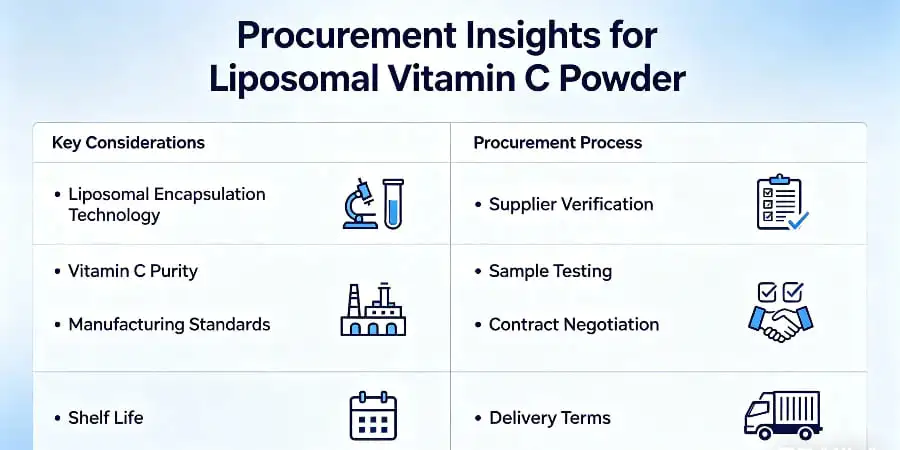
To find a trusted liposomal vitamin C powder provider, you need to look at them from a number of different angles. Certifications for manufacturing, such as cGMP, ISO 9001, ISO 22000, FSSC 22000, and HACCP, give basic guarantee of quality processes. The qualifications show that there are written rules in place to prevent contamination, keep track of batches, and make sure the process is always carried out the same way. Kosher and Halal licenses help brands reach more customers, especially those who are looking for specific types of customers.
In addition to certificates, you should find out how knowledgeable the provider is about liposomal engineering. Does the team have scientists with PhDs who work with lipid chemistry and absorption optimization? Suppliers that provide stability data, particle size analysis, and encapsulation efficiency verification demonstrate scientific rigor and technical competency. Ask for case studies that show how successful formulation help was. This will show you if the supplier is a strategic partner or a transactional seller by showing proof of collaborative problem-solving.
When planning product launches, production ability is important. When annual capacity goes over 100 metric tons, it means that the infrastructure can support growth without slowing down lead times. International marketing is made easier by following the rules of multiple countries, such as the FDA, the EU Novel Food, ANVISA, and Health Canada. Some providers can customize products for specific regions by making batches that are safe in tropical areas for markets with a lot of humidity or changing the profiles of excipients to meet regulatory needs.
Cost Structures and Order Flexibility
The cost of liposomal vitamin C powder is usually reflected in the difficulty of its production. You can expect to pay 30% to 60% more than for regular ascorbic acid. This is because it works better and people are willing to pay more for it. Tiered pricing is often unlocked by making a volume pledge. For example, bulk buys over 500 kg may get 10-15% savings. But minimum order amounts (MOQs) vary a lot. Smaller brands should look for providers with MOQs below 100 kg to keep inventory risk to a minimum while they test the market.
Payment terms affect how much working cash you need. Net 30 or Net 60 terms help with managing cash flow, and buyers who are in a good financial situation can benefit from prepayment savings, which are usually between 2% and 3%. Contract makers can keep private-label customers' supplies steady without taking up too much warehouse room by using subscription or regular delivery models. Check to see if your sellers offer consignment plans for partnerships that deal with a lot of goods. This could help your inventory change rates.
Hidden costs should be looked into. Does the price include records of analysis, or do you have to pay extra for them? What about faster testing for launches that need to happen quickly? Knowing the total landed cost, which includes the price of the ingredients plus the costs of testing, packing, shipping, and customs taxes, helps you figure out your margins correctly and set competitive store prices.
Due Diligence and Risk Mitigation
Verifying the authenticity of suppliers guards against problems with product and regulations. Instead of just looking at certificate pictures, get building audit records from third-party certifying groups. If you can, check business licenses and production permits against government records. Checking with current clients for references, especially those who buy similar products, shows how consistent the service is and how quickly technical help responds.
It is important to test samples before committing to large amounts of production. Test samples should be sent to a separate lab for testing to make sure they meet the stated standards for vitamin C content, encapsulation efficiency, particle size distribution, and contaminant levels. Sensory evaluation finds possible taste or smell problems that could make people not want to buy something, especially in situations where hiding is hard.
After recent world problems, supply chain stability became more important. Find out if your suppliers get their raw materials from a variety of places. Suppliers who have multiple sources for ascorbic acid and lecithin are less likely to have a single point of failure. Inventory policies are also important. For example, suppliers should keep enough backup stock to cover 30 to 60 days of normal customer demand. This way, they can protect against delays in production or problems with transportation.
How to Use Liposomal Vitamin C Powder Effectively?
Integration into Supplement Formulations
When adding liposomal vitamin C powder to capsules, it's important to make sure that the other ingredients don't react badly with each other. When mixed at amounts between 30% and 70% of the total fill weight, the powder has great flow qualities. When mixed with microcrystalline cellulose, rice flour, or tapioca starch, the mixtures become free-flowing and can be used with automatic packaging equipment. Avoid magnesium stearate amounts higher than 1%, as too many oils may make it hard for the product to reconstitute after being used.
Controlling wetness carefully is important for tablet formulas. Because the phospholipid component absorbs water, it needs to be made in low-humidity settings and shipped in packaging that keeps moisture out. For immediate-release pills, direct compression works well. For controlled-release profiles, hydrophilic matrix systems made of HPMC or other cellulose products can be used. To make sure that liposomal structures stay together under compression forces and release properly in simulated stomach and intestine fluids, dissolution tests should be done.
The powder's ability to mix with water makes it useful for beverage uses. Spreading in small amounts of warm water (50–60°C) before adding to the main liquid makes sure that everything is spread out evenly. This makes a solution that stays stable in pH ranges from 3.5 to 7.0, which works for most juice, tea, and functional water recipes. Homogenization at modest pressure improves mouthfeel by stopping particles from sticking together without affecting the structure of liposomes.
Synergistic Ingredient Combinations
Value arguments are improved by combining liposomal vitamin C with nutrients that work well together. At 10-15 mg per dose, zinc (as zinc citrate or gluconate) backs up claims that it helps the immune system that are based on study. Quercetin (100–250 mg) is an extra antioxidant that may help keep your lungs healthy. Elderberry extract (300–500 mg standardized to anthocyanins) is commonly used in immunity products during cold and flu season because it is seasonal.
A lot of beauty supplements have 1000 mg of liposomal vitamin C, 5000 to 10000 mg of collagen peptides, 100 to 200 mg of hyaluronic acid, and 50 to 100 mg of Coenzyme Q10. This mix takes care of many parts of skin health, including making collagen, keeping the skin moist, and using energy in cells. Liposomal delivery makes vitamin C more bioavailable, so it gets to the dermal areas where collagen is made, which makes the recipe work better.
Timing suggestions affect how different products are. Immune vitamins that are taken in the morning work well because they work with the body's natural daily rhythms. A lot of beauty products say to use them in the evening to help fix cells overnight. Plasma amounts stay more stable with split-dosing methods (500 mg twice daily) than with single 1000 mg doses. However, consumers often choose once-daily dosing because it is easier for them.
Application Across Industry Segments
When making unique recipes, nutraceutical brands should think about the needs of people at different stages of life. Supplements for kids (4–12 years old) usually have 250–500 mg in the form of chewables or powders that taste like natural fruit. Products for busy people (ages 25 to 50) focus on reducing oxidative stress and helping the body heal from exercise at 1000 mg to 1500 mg doses. Formulations for seniors (65+) may include 1000 mg of liposomal vitamin C along with vitamin D, calcium, and the B-complex to help with all aspects of health.
Companies that make functional foods and drinks can make money with ready-to-mix sachets, stick packs, and effervescent pills. When you're on the go, single-serve forms are perfect because they make sure you get the right amount. Shelf-stable forms make it possible for supplements to be sold in places like gyms and convenience shops, in addition to regular stores. People who value honesty and the environment will be interested in non-GMO, vegan products because they have clean labels.
Creating platform recipes is good for contract makers who work with private-label clients. To meet the needs of different customers while keeping production costs low, a base liposomal vitamin C formula can be changed by adding different flavors, active ingredients, or dose changes. This method cuts down on setup times, lessens the need for validation, and raises the rate at which equipment is utilized across all production plans.
Conclusion
Liposomal vitamin C powder uses a proven phospholipid encapsulation technique to get around major problems with standard supplements. The eight times better solubility compared to regular ascorbic acid helps the immune system, protects against free radicals, and makes collagen. When B2B procurement workers choose providers with strong technical standards, a wide range of certifications, and flexible manufacturing options, they gain a competitive edge. By checking the encapsulation efficiency, stability data, and regulation compliance documents, you can be sure that the ingredients are of high quality, which leads to better finished goods. As the need for high-performance supplements based on research keeps growing, liposomal delivery is a smart way for brands that care about effectiveness and new ideas to place themselves.
FAQ
What makes liposomal vitamin C different from other vitamin C supplements?
The primary difference between the two lies in the delivery method of the supplement and the resulting disparity in bioavailability. When you take more than 1000 mg of regular vitamin C, your body can only receive about 20% of the solid ascorbic acid that it contains. Liposomal versions put vitamin C inside phospholipid bilayers that join with the cell membranes of intestinal cells, getting around the body's saturation limits. Studies of plasma concentrations have shown that this process can increase uptake by up to 8 times. The liposomal form also lessens the stomach irritation that comes with high doses of ascorbic acid, making it easier for sensitive people to handle.
How can buyers be sure that a supplier's goods are real and of good quality?
Verification needs a lot of due care in many areas. Ask a third-party lab to check the amount of vitamin C, how well the capsules work, and the level of contaminants. Instead of self-issued quality claims, look at factory certificates from well-known groups like cGMP, ISO, and HACCP. Look over academic papers that talk about things like particle size analysis and stability studies. Checking with current customers for references shows that service is consistent and expert help is good. When possible, physical site checks let you see firsthand how things are made and how quality systems are being used.
Is liposomal vitamin C safe? Does it have any side effects?
It has been seen in clinical studies that liposomal vitamin C is very safe. The better uptake doesn't raise the risk of side effects because vitamin C is still water-soluble and the kidneys get rid of any extra. When compared to solid ascorbic acid, the normal pH and slow release make it better for stomach pain. Normal contraindications apply—people with kidney problems should talk to a doctor before taking high-dose supplements. There have been no reports of any major drug interactions with liposomal delivery. However, vitamin C can usually change the results of some lab tests and the time of medicine intake.
Partner with EmerWell for Superior Liposomal Vitamin C Powder Supply
EmerWell provides liposomal vitamin ingredients of the next generation that are designed to work in a way that can be measured. Our EncapsWell™ platform makes liposomal vitamin C powder that is 99% pure, has been shown to improve solubility by 8 times, and stays stable for more than 24 months. We offer full OEM/ODM services from idea to commercial scale. Our headquarters are in San Diego, and our production is cGMP-certified through our relationship with Wellgreen. Our R&D team, which is led by a PhD, works together on special formulations that include vitamin C with zinc, quercetin, or collagen. These formulations are made in powder, pill, capsule, and liquid-ready forms. All batches go through strict testing by a third party, and there is full paperwork to show that they are compliant with FDA, EU, and global market standards. Take advantage of our flexible MOQs, US-based storage for fast sample shipping, and expert support that turns your ideas into goods that are ready for the market. Get in touch with our team at info@emerwell-bio.com to talk about your needs. Find out how working with a specialized liposomal vitamin C powder maker can improve your products and help you reach your goals faster.
References
Carr AC, Vissers MC. Synthetic or food-derived vitamin C—are they equally bioavailable? Nutrients. 2013;5(11):4284-4304.
Davis JL, Paris HL, Beals JW, et al. Liposomal-encapsulated ascorbic acid: influence on vitamin C bioavailability and capacity to protect against ischemia-reperfusion injury. Nutrition and Metabolic Insights. 2016;9:25-30.
Hickey S, Roberts HJ, Miller NJ. Pharmacokinetics of oral vitamin C. Journal of Nutritional & Environmental Medicine. 2008;17(3):169-177.
Padayatty SJ, Sun H, Wang Y, et al. Vitamin C pharmacokinetics: implications for oral and intravenous use. Annals of Internal Medicine. 2004;140(7):533-537.
Prantl L, Eigenberger A, Gehmert S, et al. Enhanced resorption of liposomal packed vitamin C monitored by ultrasound. Journal of Clinical & Aesthetic Dermatology. 2018;11(4):37-40.
Zasowska-Nowak A, Nowak PJ, Ciałkowska-Rysz A. High-dose vitamin C in advanced-stage cancer patients. Nutrients. 2021;13(3):735.
Online Message
YOU MAY LIKE
High quality furniture manufacturer