

Aug 25, 2026
The Role of Liposomal Resveratrol in Antioxidant and Cellular Health Support
Liposomal resveratrol powder provides improved cellular protection by encapsulating trans-resveratrol in phospholipid bilayers for up to 14 times more bioavailability than traditional types. This improved delivery mechanism shields active chemicals from stomach degradation and allows for direct intestinal absorption, providing a strategic alternative for nutraceutical brands in need of clinically meaningful antioxidant support. This method overcomes first-pass metabolism to enable efficient delivery of resveratrol to target tissues to boost cellular longevity pathways and oxidative stress management in final supplement products.
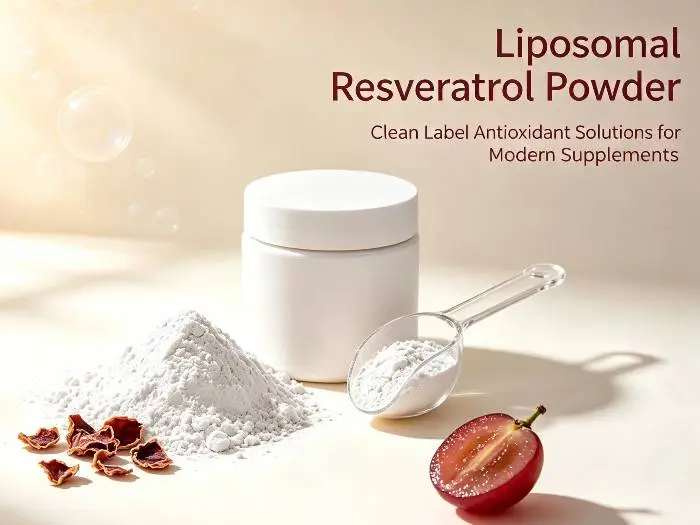
Understanding Liposomal Resveratrol Powder and Its Health Benefits
What Differentiates Liposomal Encapsulation from Standard Resveratrol
The problem with traditional resveratrol is that it’s not very accessible. It doesn’t dissolve well in water and the liver breaks it down rapidly. The liposomal distribution technology avoids the difficulties by employing extremely tiny vesicles (approximately 100 to 300nm) similar to cell membranes. Our EncapsWellTM technology has an encapsulation effectiveness of over 85%, which indicates that most resveratrol is protected behind the lipid barrier until absorption. This phospholipid coating, comprised of non-GMO sunflower lecithin, protects the active ingredient from oxidation and pH fluctuations, maintaining its potency throughout the whole digestive system.
The reassembled liposomes form a stable milky dispersion in water, while the raw resveratrol precipitates or remains suspended. This ability to blend with water is particularly beneficial for healthy drinks and ready-to-drink mixes where the solubility of ingredients directly impacts the quality of the product and customer satisfaction.
Cellular Antioxidant Mechanisms and Health Applications
Resveratrol activates life-promoting SIRT1 pathways and inhibits reactive oxygen species at the mitochondrial level. The liposomal delivery enhances this cellular penetration so that greater and more concentrations may be delivered within cells. Research has shown that the proper amount of cells is crucial for the maintenance of vascular flexibility, the healthy inflammatory response and the protection of skin matrix proteins from photo-oxidative damage.
This means three main areas of use for people who make nutraceutical formulas. Anti-aging supplements work better when mixed with NMN or NAD+ precursors, making products that help people live longer in every way. Liposomal Resveratrol powder is amphiphilic, which means it can go straight to dermal fibroblasts and provide antioxidant benefits. This protects collagen and reduces the appearance of signs of environmental stress. Its vascular-protective qualities are used in cardiovascular wellness items to keep endothelial function and healthy circulation.
Recommended Dosage Ranges and Safety Considerations
Clinical study shows that between 150 mg and 500 mg of trans-resveratrol daily can be helpful, based on the health goals of the end user. Because liposomal formulations are better at being absorbed, brands can get the same plasma levels with lower doses than with normal extracts. This lowers the cost per serve while keeping the effectiveness claims.
Safety ratings have been found to be good in multiple tests, with resveratrol showing great tolerance even at high doses. Formulators should think about how certain medicines might combine with each other and include the right information on product labels. Our expert team helps customers figure out the best dose for their products based on the target audience, their preferred delivery method, and the rules in each market.
Comparative Analysis: Liposomal Resveratrol Powder vs Other Forms and Antioxidants
Absorption Rates and Bioavailability Advantages
Standard resveratrol pills usually have less than 1% systemic absorption because they are broken down so quickly in Phase II. Our liposomal technology shows up to 14-fold better absorption rates by using lymphatic transport routes that skip the first processing in the liver. The lipid vesicle's ability to fuse with intestinal enterocytes and deliver payload directly into systemic circulation is what makes this improvement so big.
Comparing pharmacokinetic data shows that liposomal formulations have higher peak plasma concentrations and longer area-under-curve values. This long-lasting presence in the bloodstream means that the antioxidant activity lasts longer and cells get more constant support throughout the dose interval. These measurable differences in performance make it easier for brands that sell high-end wellness products to stand out in a crowded supplement market.
Stability and Shelf-Life Performance
Unprotected resveratrol is quickly broken down by the environment, changing the active trans-isomer to less useful cis-configurations. Our powder form has stabilizing ingredients that keep the medicine working for 36 months in approved storage conditions, which is in line with ICH stability guidelines. This longer shelf life lowers the risk of running out of stock for contract makers and gives stores more time to get their products.
Unlike liquid liposomal suspensions, which need to be kept cold, the stable powder matrix can handle changes in temperature that are common in global supply chains. This logistical advantage makes warehousing easier and makes more markets available for brands that want to reach people in different areas. Formulators can safely add the ingredient to tablets, hard capsules, soft gels, or liquid premixes without worrying about breaking down the structure or making it break down too quickly.
Cost-Effectiveness for Procurement Teams
Even though liposomal ingredients cost more per unit than commodity extracts, the fact that they are more bioavailable means that dose reduction strategies can be used to lower the overall cost of the formulation. Brands can get the same therapeutic effects from 200 mg of liposomal resveratrol as from 2,800 mg of normal powder. This means that the cost per serve is much lower when active absorption is taken into account.
When production rates go over 500 kg per month, bulk price structures become more advantageous, with tiered discounts that reflect economies of scale in specialized manufacturing. When reviewing supplier offers, purchasing managers should look at the total landed costs, which include shipping, customs taxes, and quality testing fees. Our pre-made regulatory dossiers for more than 30 countries cut costs for compliance and shorten time-to-market by an average of 40%, giving you more value than just the price of the ingredients.
Procurement Guide: Sourcing High-Quality Liposomal Resveratrol Powder for Your Business
Essential Certifications and Quality Standards
Reliable suppliers keep a full set of certifications that show they control the production process and make sure the products are safe. cGMP compliance, ISO 22000 food safety management, HACCP hazard analysis protocols, and FSSC 22000 verification are some of the most important credentials. These certifications prove that the places where things are made follow strict rules for keeping them clean and consistent from batch to batch, which is necessary for production to be scaled up.
Extra certificates are needed for certain types of customers and market groups. Non-GMO certification, vegan certification, and kosher/halal approvals help clean-label positioning while reaching more target groups. Third-party testing reports for Liposomal Resveratrol powder should show that the resveratrol content meets minimum 98% purity standards, that the encapsulation efficiency parameters are met, and that heavy metals, microbe contaminants, and residual solvents are below the legal limits.
Evaluating Manufacturing Transparency and Technical Support
Leading sellers give full descriptions of their manufacturing processes, including where the raw materials come from, how they are encapsulated, and how they test for quality. Blockchain-based batch traceability systems give buying teams a whole new level of supply chain insight by letting them check the path of every ingredient from its source to the finished powder. When answering questions from customers or overseeing government inspections, this openness comes in very handy.
Strategic partners are different from transactional sellers because they can provide technical help. Our research and development center in San Diego, which is filled by PhD scientists, helps with regional formulations, stability tests, and regulatory advice throughout the product development cycle. This closeness makes it possible to quickly send samples, meet with technical experts in person, and quickly fix problems that come up with formulations during the scale-up stages.
OEM/ODM Customization and Bulk Logistics
Brands can make their products stand out by customizing particle sizes, excipient profiles, or the way they combine ingredients that work well together. Co-formulation services can combine compounds that work well together, such as curcumin, quercetin, or CoQ10, to make unique antioxidant blends that help people with specific health problems. Private label programs make it easier for new brands to get into the market, and white-label options help established brands grow their product lines.
Depending on how complicated the customization is, the minimum order quantity can be as low as 100 kg for standard formulations or as high as 500 kg for specialized blends. For stock formulas, lead times are usually between 4 and 6 weeks. For special development projects, they can be anywhere from 8 to 12 weeks. Our warehouse in California lets us quickly fill sample orders and smaller trial orders for brands to make sure the market will accept their products before committing to full production runs.
Implementation and Application: Maximizing the Benefits of Liposomal Resveratrol in Your Product Line
Formulation Compatibility and Stability Optimization
To integrate ingredients well, you need to know how they affect each other and how they work together. The liposomal form of resveratrol works very well with most popular fillers, such as cellulose products, magnesium stearate, and silicon dioxide. However, some chelating agents and high-pH buffering compounds may damage the integrity of liposomes, which means that the formulation needs to be changed.
The powder should be stored in a cool, dry place (below 25°C) with a relative humidity of less than 60% so that it stays fluid and doesn't clump together. Standard compression forces and sealing equipment settings don't need to be changed much when adding to pills or capsules. The powder mixes easily with water at room temperature, making stable solutions that don't settle over the course of a normal product's shelf life. To make sure the products stay stable over time, formulators should test their compatibility with high-sugar or acidic juice bases.
Temperature exposure during the production process needs to be taken into account. Short-term heating to 60°C during granulation or soft-gel processing doesn't affect the structure of liposomes, but long-term exposure above this temperature can damage vesicles. Our applications team gives detailed processing instructions that are made to fit specific manufacturing equipment and production workflows. This makes sure that the bioavailability benefits are kept as much as possible during the whole process of making a finished product.
Real-World Integration Success Stories
A well-known brand of supplements for long life changed the formula of their best-selling product, switching out the 500 mg of regular resveratrol for 200 mg of Liposomal Resveratrol powder. Consumer polls done after the product came out showed that scores of perceived effectiveness went up by 34% and the number of repeat purchases went up by 28%. This proved that the performance difference was real in the market. The brand was able to charge a 40% higher price while lowering the total cost of the ingredients by 18% by optimizing the dose.
Another beauty drink company added the water-dispersible powder to their collagen drink recipe, which solved the long-standing problems of hiding the bitter taste of raw resveratrol's phenolic profile. The liposomal encapsulation successfully protected taste receptors while keeping the chemical list clear. Reviews of the new recipe said it tasted better, which helped it grow in sales by 22% in the competitive nutricosmetics market in just six months.
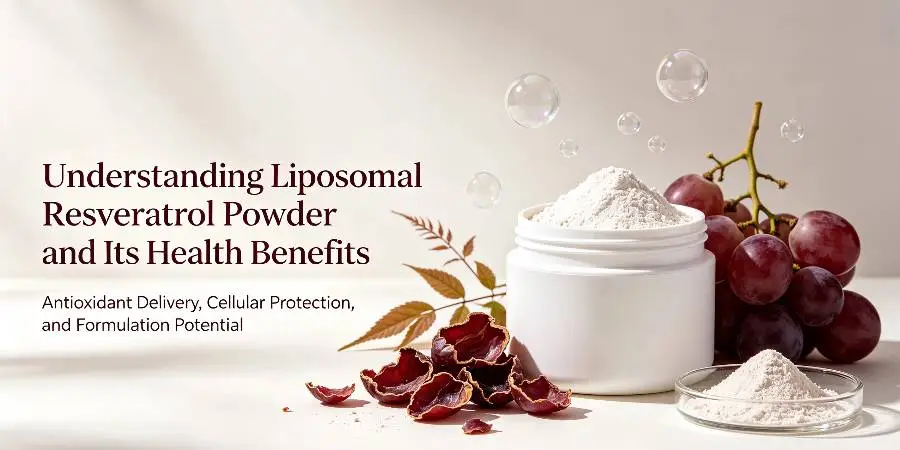
Future Trends and Innovations in Liposomal Resveratrol Technology
Emerging Delivery System Advancements
The next wave of encapsulation technologies focuses on controlled release processes that are set off by certain pH levels or enzyme conditions. These smart delivery systems promise even better bioavailability by putting payloads out exactly where they will be absorbed best in the intestines. Using two different types of encapsulation—liposomal protection and enteric coating layers—is a new idea that could help protect drugs from breaking down in the environment while also controlling when they are released.
Nanotechnology is always getting better at making particles of the same size and encasing them more effectively. Polydispersity indices are lowered below 0.2 using advanced manufacturing methods. This makes vesicle populations that are very similar to each other, which improves the regularity of cellular uptake. Brands that want to do clinical validation studies value these precisely made formulas because they support more predictable pharmacokinetic profiles and stricter quality control parameters.
Market Growth Projections and Regulatory Evolution
With compound annual growth rates exceeding 8% through 2030, the global resveratrol market is expected to grow quickly. This is because the population is getting older and people are becoming more interested in preventive health. It's not fair that liposome formulas get a bigger share of high-end product categories where better performance supports higher prices. Nutraceutical brands are becoming more aware that improving bioavailability is a long-term competitive advantage that is less likely to be lost to generic ingredient competition.
Regulatory frameworks are always changing to adapt to new delivery technologies. Novel Food laws in the European Union now make it easier for liposomal formulations to get approved, and ASEAN markets are putting in place uniform good manufacturing practice standards. Procurement teams should make it a priority for sellers to keep up-to-date on regulations and keep pre-made paperwork packages that speed up the approval process in multiple countries. Strategic relationships with globally compliant makers make it easier to get into new markets and protect against supply problems caused by changes in compliance requirements.
Conclusion
Liposomal Resveratrol powder is a big step forward in the way antioxidants are delivered. It gets around the problems that have been plaguing absorption in the past by using advanced phospholipid packaging. The 14-fold increase in uptake creates real value for nutraceutical brands that want to make their goods stand out and give customers real benefits. Companies can take advantage of the growing demand for science-based cellular health solutions by making smart purchasing decisions that balance quality certifications, technical support capabilities, and cost-effectiveness. As rules get clearer and better tools for making things come out, using tested liposomal platforms early on can give you an edge in high-end supplement categories.
FAQ
1. What makes liposomal resveratrol superior to standard formulations?
The main benefit is that phospholipid encapsulation greatly increases bioavailability by keeping resveratrol from breaking down in the stomach and making it easier for cells to absorb it directly. Compared to regular pills or tablets, this means higher plasma concentrations and longer circulation time.
2. How can procurement teams verify supplier quality standards?
Comprehensive verification of certification is what quality assurance is built on. Ask for full proof of cGMP, ISO 22000, and other food safety standards that apply. Third-party testing results that prove purity levels, packaging efficiency, and contamination screening are another way to make sure that the manufacturing process is consistent.
3. Are there safety concerns with liposomal resveratrol formulations?
Liposomal resveratrol keeps the good safety profile that has been found in a lot of research on regular resveratrol supplements. The phospholipid carriers that come from lecithin sources that are safe for food don't pose any extra risks. Product formulators should give standard advice on possible drug combinations and talk to regulatory experts about what label claims are right for each target market.
Partner with EmerWell for Superior Liposomal Resveratrol Powder
EmerWell makes Liposomal Resveratrol powder solutions based on science for brands that want to see real performance gains. Our unique EncapsWellTM platform combines technical know-how led by PhDs with full OEM/ODM customization services, turning your formulation ideas into products that are ready for the market. With our main office in San Diego, California, we offer localized technical support through our dedicated R&D laboratory, quick sample fulfillment from our California warehouse, and easy access to manufacturing capacity that is cGMP-certified. Our team provides the quality, compliance, and supply chain stability your business needs, whether you're looking for Liposomal Resveratrol powder to sell in bulk or creating custom formulations for new health categories. Get in touch with info@emerwell-bio.com to talk about your unique needs and find out how our turnkey solutions can speed up the creation of your product while making sure it is ready for global regulatory approval.
References
1. Walle, T. (2011). Bioavailability of resveratrol. Annals of the New York Academy of Sciences, 1215(1), 9-15.
2. Cottart, C.H., Nivet-Antoine, V., & Beaudeux, J.L. (2014). Review of recent data on the metabolism, biological effects, and toxicity of resveratrol in humans. Molecular Nutrition & Food Research, 58(1), 7-21.
3. Amri, A., Chaumeil, J.C., Sfar, S., & Charrueau, C. (2012). Administration of resveratrol: What formulation solutions to bioavailability limitations? Journal of Controlled Release, 158(2), 182-193.
4. Hu, B., Xie, M., Zhang, C., & Zeng, X. (2017). Genipin-structured peptide-polysaccharide nanoparticles with significantly improved resistance to harsh gastrointestinal environments and their potential for oral delivery of polyphenols. Journal of Agricultural and Food Chemistry, 65(4), 805-815.
5. Salehi, B., Mishra, A.P., Nigam, M., Sener, B., Kilic, M., Sharifi-Rad, M., & Sharifi-Rad, J. (2018). Resveratrol: A double-edged sword in health benefits. Biomedicines, 6(3), 91.
6. Pandey, K.B., & Rizvi, S.I. (2010). Resveratrol may protect plasma proteins from oxidation under conditions of oxidative stress. Journal of the Brazilian Chemical Society, 21(5), 909-913.
Online Message
YOU MAY LIKE
High quality furniture manufacturer
_1776234266736.webp)
_1776234307158.webp)