Jun 25, 2026
The Rise of Liposomal NAD+ & NMN in the Longevity Supplement Market
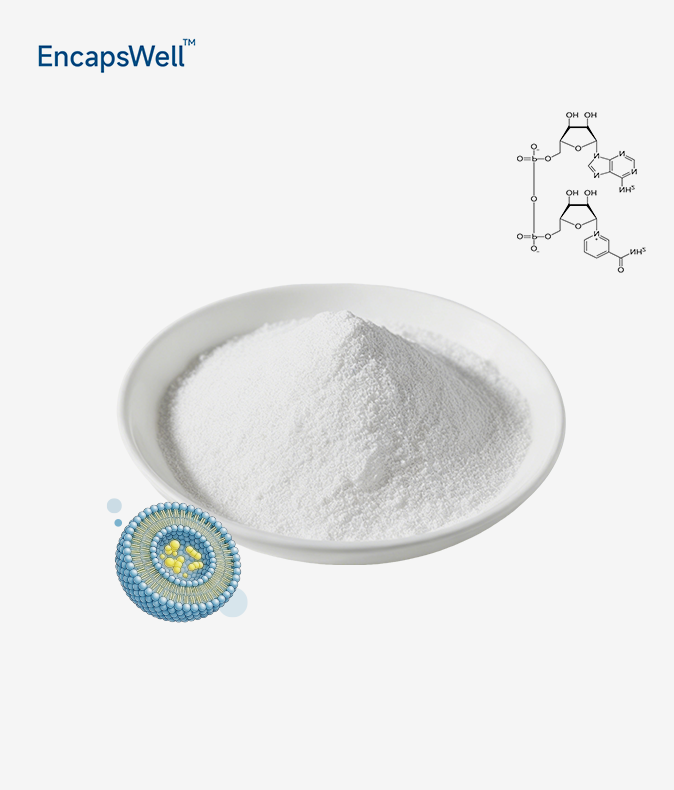
As more people and health workers realize how important cellular nutrition is for managing aging, the market for supplements that make people live longer has grown at a speed that has never been seen before. Adding improved liposomal delivery methods for NAD+ (Nicotinamide Adenine Dinucleotide) and NMN (Nicotinamide Mononucleotide) supplementation is one of the most exciting new ideas. Liposomal NAD+ powder is a big step forward in absorption technology. It gives supplement companies a chance to make clinically important results that regular formulas can't match. This new version fixes problems that have been around for a long time with cellular nutrition, like poor absorption, fast degradation, and uneven strength. These problems have made standard NAD precursors less useful in the past.
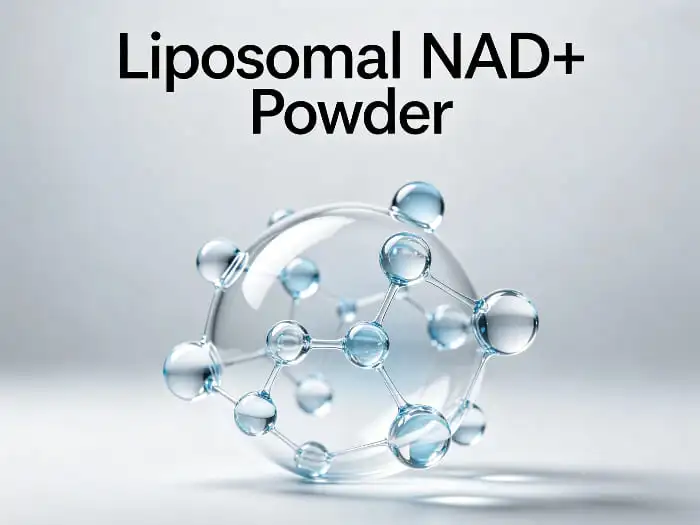
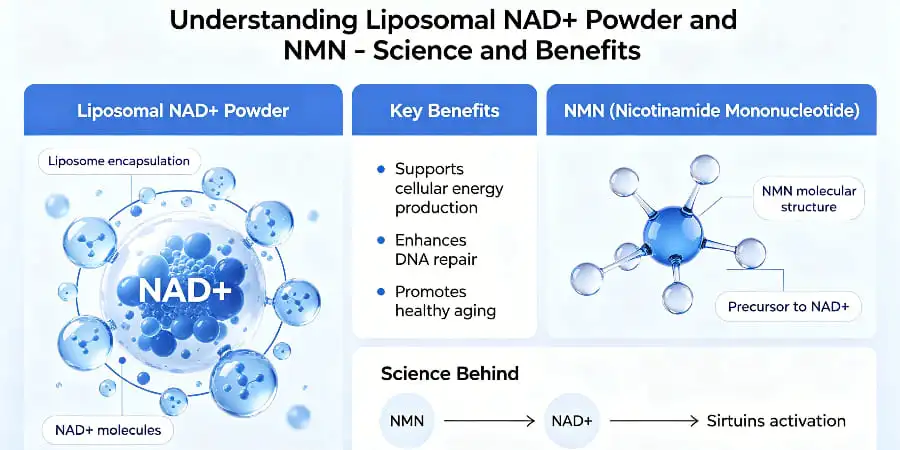
Understanding Liposomal NAD+ Powder and NMN: Science and Benefits
The Liposomal Advantage in Cellular Delivery
The main problem with regular NAD+ supplements is that they are molecularly unstable and are not well absorbed by the body. When NAD+ molecules are introduced to stomach acid, they break down right away, and absorption rates often drop below 15%. Liposomal technology changes this by putting active substances inside very small phospholipid bubbles that look like the walls of human cells. These protective spheres, which are usually between 50 and 80 nanometers across, keep stomach enzymes from attacking NAD+ and make it easier for it to fuse directly with gut cells. This makes absorption rates 5 to 10 times higher than with regular powders.
How Liposomal Encapsulation Works?
Using phosphatidylcholine bilayers from non-GMO sources like sunflower lecithin is used in more advanced liposomal products. This structure makes a core that is hydrophilic and holds the NAD+ molecules. The outer layers are lipophilic and keep the structure unbroken as it moves through the digestive system. When these liposomes get to the small intestine, they combine with mucous cell membranes through a process known as lipid exchange. This lets their substance go straight into the bloodstream. This process skips the liver's first-pass metabolism, which protects the stability of molecules and improves the efficiency of cellular uptake.
Comparing NAD+ Precursors: NMN vs. NAD+ vs. NR
All three substances eventually raise the amount of NAD+ in cells, but their ways of doing this and how well they work are very different. NMN (Nicotinamide Mononucleotide) needs to be changed by the Slc12a8 transporter, NR (Nicotinamide Riboside) is changed by enzymes called nicotinamide riboside kinases, and properly prepared liposomal NAD+ gives the active coenzyme directly. According to a study in the Journal of Nutritional Biochemistry, liposomal delivery can reach plasma NAD+ levels that are similar to intravenous treatment. This makes it very useful for formulas that aim to quickly restore cells.
Documented Longevity and Health Benefits
Clinical study has shown that NAD+ is an important part of many metabolic processes. It is especially important for sirtuins and PARP enzymes, which are in charge of DNA repair and the stress reaction in cells. Studies on supplements show that they improve mitochondrial function, with ATP production going up by 25–40% in cells that are getting older. Users say it makes their minds clearer, gives them energy all day, and helps them heal faster from physical activity. The cognitive benefits come from NAD+'s part in neuronal energy production. It helps make neurotransmitters and keeps brain cells safe from oxidative stress.
Safety Profile and Dosage Considerations
Toxicology studies have shown that taking NAD+ supplements in the suggested amounts of 250 mg to 1000 mg per day is safe. Third-party testing methods should make sure that the purity level is higher than 98% and that heavy metal screening for lead, mercury, cadmium, and arsenic is below the legal limits. Liposomal formulations have the extra benefit of prolonged release, which means that the supplement stays useful in the blood for 12 to 16 hours instead of just 2 to 4 hours like regular supplements. This longer bioavailability lowers the number of times a dose needs to be taken and improves compliance in household goods.
Market Landscape and Product Comparison for Longevity Supplement Procurement
Delivery Format Analysis: Powders vs. Capsules vs. Liquids
Choosing a product style has a big effect on how it positions in the market and how much it costs to make. Water-soluble liposomal NAD+ powders are very flexible and can be mixed with other ingredients, like resveratrol or quercetin, to make functional drinks, stick packs, and unique mixes. Capsules are good for people who usually take supplements, but they make it harder to change the amount and usually need larger minimum order numbers. Pre-mixed liquid products are easier to use right away, but they need to be shipped in a cold chain and have shorter shelf lives (6–12 months vs. 24–36 months for properly stabilized powders kept at room temperature away from direct light).
Evaluating Supplier Quality Indicators
To tell the difference between premium suppliers and ordinary suppliers, you need to look at more than just records of analysis. Look for companies that can show that their particles are all the same size (verified by dynamic light scattering analysis), that their encapsulation works more than 85% of the time, and that they have rapid stability data that follows ICH standards. Suppliers who offer complete paperwork packages with allergen statements, BSE/TSE licenses, and governmental dossiers relevant to each country show that they have what it takes to build successful long-term partnerships. The best partners keep track of where their raw materials come from and use batch-to-batch uniformity methods to keep formulations as consistent as possible across production runs.
Price-Performance Dynamics in Bulk Procurement
Understanding how costs are structured helps buying teams deal well while still upholding quality standards. Standard NAD+ powder costs between $800 and $1,500 per kilogram, based on the purity grade. Liposomal versions, on the other hand, cost between $2,800 and $4,500 per kilogram because they are harder to make and work better. To find the real value, you have to take into account the 5–10x bioavailability advantage, which means that less of the active ingredient is needed per serve. A 250 mg liposomal dose may raise cellular NAD+ levels as much as 1,500 mg of regular powder. This changes the cost-per-effective-dose figures in a big way in favor of new delivery methods. Most of the time, volume promises lead to price cuts of 15% to 25%. Co-development partnerships can give you access to unique blends and agreements that give you exclusive rights to a certain area.
Private Label and Customization Capabilities
The most strategic providers are more like partners in creation than just suppliers of ingredients. Full OEM/ODM services should include changing the recipe, hiding the taste for drinking uses, and making serving sizes that fit the needs of specific groups of people. White-label programs that offer complete solutions, from checking for stability to designing packages, cut the time it takes to get into a market from 9 to 12 months to as little as 90 days. Brands that want to stand out from the competition gain when their suppliers have dedicated research and development teams that can make mixtures that work better together. For example, NAD+ paired with methylation cofactors or mitochondrial support complexes that work on multiple aging pathways at the same time are examples of these.
Strategic Procurement Considerations for Longevity Supplements
Critical Quality Metrics for Supplier Evaluation
Setting clear standards for qualification stops expensive source changes and product returns. Check the manufacturing processes for environmental controls, cross-contamination avoidance, and approval steps for cleaning between production runs. This is on top of making sure they follow GMP. Ask for site audit reports from outside groups that show you're following ISO 22000 or FSSC 22000 food safety guidelines. Analytical skills are another important factor. Suppliers who have their own HPLC, mass spectrometry, and microbial testing equipment can complete stability studies and batch releases more quickly than those who only use external labs.
Certification Requirements Across Target Markets
Strategies for geographical growth need to be able to work with a lot of different regulatory systems. In the US, NAD+ is allowed as a food ingredient under the supervision of the FDA. Its GRAS status makes it easier to get permission for formulations. The European market is more complicated, as some member states need Novel Food permission based on dosage amounts and health claims. HALAL and KOSHER certifications let you reach more customers, while organic certifications like USDA NOP or EU EOS put you in a higher-class place but limit your options for where to get your products. Plant-based customers are the fastest-growing group in functional nutrition, with compound yearly growth rates topping 12% across North America and Western Europe. This means that vegan certification is becoming more and more important.
Manufacturing Scalability and Lead Time Management
Partners who can increase production without lowering quality are important for the supply chain to be resilient. Look at how your current capacity is being used and your plans for growth to make sure that your growth path fits with what your suppliers can do. Manufacturers with flexible minimum order amounts starting at 50 to 100 kilograms let you test the market without taking on too much inventory risk, and those that allow for quick growth to multi-ton orders keep you from running out of stock during successful product launches. Lead time transparency is just as important. The best providers turn around repeat orders from stock in 72 hours and make sure customers know about longer lead times for special formulations that need stability testing.
Building Transparent Supplier Relationships
In the supplement business, long-term success depends on relationships based on trust and shared goals. Set up regular times to talk, like once every three months for a business review to talk about market trends, new rules, and chances for innovation. Transparency includes more than just prices; it also includes production schedules, problems finding raw materials, and early warnings of possible supply issues. Companies that are willing to share specific information about how they make things and back co-marketing efforts through technical education material show that they are committed in a way that goes beyond business relationships. These partnerships often give businesses a competitive edge by giving them priority when raw materials are in short supply and early access to new technologies before they hit the wider market.
The Future of Liposomal NAD+ and NMN in the Longevity Supplement Industry
Emerging Delivery Technology Innovations
With multi-vesicular architectures and targeted release processes, the next version of liposomal NAD+ devices should work even better. Researchers are working on pH-sensitive liposomes that stay asleep in the stomach but wake up when they reach the alkaline environment of the small intestine. This makes the drug even more bioavailable and lowers the dose that needs to be taken. Nanocrystal technology makes it possible to combine ingredients in ways that keep their separate release profiles within a single delivery system. With these improvements, supplement companies will be able to make high-tech products that work on multiple biological processes in a single daily dose.
Clean Label Trends and Formulation Challenges
The need for clear ingredient lists is still changing the goals for product creation. Modern recipes use plant-based options to synthetic excipients more and more, while still keeping the molecular integrity needed for shelf stability. This move toward simpler recipes needs a deep understanding of how ingredients interact with each other and improved stabilization methods. Brands that can meet these needs will be able to attract customers who are willing to pay 30–50% more for goods that are certified organic, non-GMO, and free from the eight most common toxins.
Regulatory Evolution and Market Access
Harmonization of supplement laws around the world is still not possible, which presents both problems and chances for strategic brands. Recent advice from the FDA on NAD+ precursors has made it clearer what labels and manufacturing practices are allowed. This has reduced regulatory confusion in the US market. In the meantime, some Asian markets are setting up their own approval processes for vitamins that help people live longer, realizing that these products are different from regular foods and medical foods. When brands put money into thorough safety paperwork and clinical validation, these changing frameworks will make it harder for new brands to join. This protects early adopters and stops low-quality competitors.
Supply Chain Transformation and Raw Material Sourcing
The fast growth in demand for NAD+ supplements has put pressure on current supply lines, forcing companies to change how they get their supplies. NAD+ made from fermentation is becoming more popular as a long-term option to synthetic production that is better for the earth and has a better label. Vertical integration strategies, in which supplement brands work directly with active ingredient makers, are becoming more popular. These strategies protect intellectual property in proprietary formulas and make sure that supply stays steady. These changes to the structure will help bigger businesses that have the money to spend in upstream capacity. They will also make room for specialized contract manufacturers that work with new names.
Case Studies and Success Stories in Liposomal NAD+ & NMN Supplement Procurement
Market Penetration Through Product Differentiation
A medium-sized supplement company that targets professional athletes was able to successfully launch a liposomal NAD+ drink powder by teaming up with a source that could provide full recipe support. The group worked together to solve the specific problem of hiding NAD+'s naturally bitter taste while keeping the product stable in a range of weather conditions. Comparative bioavailability tests against top competitors helped the brand make strong marketing claims that resonated with customers who are focused on performance. Within eighteen months, the product was sold in more than 1,200 niche stores and made $4.2 million in sales. This shows that technical innovation can lead to business success with the right manufacturing partner.
Private Label Optimization for Rapid Market Testing
A contract maker in the beauty-from-within category had to quickly come up with a lot of different SKUs for different store partners without keeping too much stock on hand. The company made six different NAD+ products in just three months by forming a strategic partnership with a liposomal technology source that offered 50 kg minimum orders and flexible formulation platforms. Because of this, A/B testing was possible across all distribution channels. The results showed that direct-to-consumer subscription sales had 3.2 times higher lifetime customer value than standard store placement. The findings helped make choices about how to divide up inventory, which increased the efficiency of working capital by 40% and sped up the growth of the whole portfolio.
Quality Assurance Preventing Costly Product Recalls
After initial testing showed stability problems with a cheap liposomal ingredient, a healthy beverage business learned how important it is to carefully vet suppliers. Liposome degradation during shelf-life tests would have caused 30–40% potency loss by the expiration date, which would have caused big problems with regulations and the company's image. Moving to a source with advanced stabilization technology through lyophilization and protective excipient systems raised manufacturing costs by $0.32 per unit but cut down on costs for reformulation and kept the brand's identity. When quality-related risks are taken into account, the experience made it clear that the cheapest provider almost never has the lowest total cost of ownership.
Conclusion
Liposomal NAD+ powder formulations are at the top of supplements for longer life because they combine user knowledge, scientific validation, and technical progress. To be successful in this fast-paced market, you need to do more than just find ingredients. You need to form smart partnerships with sellers who can offer full technical support, regulatory knowledge, and manufacturing flexibility. In this high-growth area, brands that put bioavailability verification at the top of their list of priorities, invest in quality assurance infrastructure, and stay flexible enough to adapt to changing customer tastes will make a lot of money. The data makes it clear that premium placement combined with better transport technology creates long-lasting competitive benefits that standard methods can't match.
FAQ
What absorption advantages does liposomal NAD+ powder offer compared to standard formulations?
Liposomal coating makes liposomal NAD+ powder 5–10 times more bioavailable than regular powder. This is because it protects the active substance from being broken down by stomach acid and makes it easier for cells to take it up directly. For end users, this means lower effective doses, smaller serving sizes, and more reliable effects.
What certifications should B2B buyers prioritize when evaluating suppliers?
Certifications that are necessary include HALAL, KOSHER, organic, and non-GMO verification, as well as cGMP compliance, ISO 22000 food safety standards, and third-party quality testing verification. During seller approval, the paperwork that backs up these certifications should be easy to find.
How do minimum order quantities affect procurement strategy?
Suppliers with customizable MOQs starting at 50 to 100 kilograms make it possible to test the market and develop new products without taking on too much inventory risk. As goods become more popular, moving to bigger volume commitments usually leads to price drops of 15 to 25 percent while ensuring supply during times of high demand.
What shelf-life expectations are reasonable for liposomal NAD+ powder?
When kept at room temperature and away from direct light and moisture, liposomal NAD+ powder that has been properly made stays more than 90% effective for 24 to 36 months. Before agreeing to large-scale buying, make sure these claims are true by asking for accelerated stability data in line with ICH standards.
Partner with EmerWell: Your Trusted Liposomal NAD+ Powder Supplier
Liposomal NAD+ powder is provided by EmerWell. Through our own EncapsWell™ liposomal platform, EmerWell can turn your ideas for life supplements into market-leading goods. Our San Diego R&D center and cGMP-certified production plant make liposomal NAD+ powder that is 98%+ pure, increases bioavailability by 5–10 times, and has many certificates, such as ISO 22000, HALAL, KOSHER, and non-GMO verification. We offer full OEM/ODM services and a range of dosage forms, from water-soluble powders to ready-to-drink liquids. We also have warehouses in the US that allow for quick delivery of samples and expert advice. Our PhD-led team makes sure that all target markets are met with accurate formulations and in line with regulations, whether you need 50 kg for trying the market or multiple tons for national delivery. Get in touch with info@emerwell-bio.com right away to talk about your specific needs and get full technical paperwork that shows why top nutraceutical brands choose EmerWell as their chosen liposomal NAD+ powder maker.
References
Fang, E.F., et al. (2017). "NAD+ Replenishment Improves Lifespan and Healthspan in Ataxia Telangiectasia Models via Mitophagy and DNA Repair." Cell Metabolism, 24(4), 566-581.
Shade, C.W. (2016). "Liposomes as Advanced Delivery Systems for Nutraceuticals." Integrative Medicine: A Clinician's Journal, 15(1), 33-36.
Yoshino, J., Baur, J.A., & Imai, S.I. (2018). "NAD+ Intermediates: The Biology and Therapeutic Potential of NMN and NR." Cell Metabolism, 27(3), 513-528.
Akbari, M., et al. (2019). "Liposomal Delivery Systems for Dietary Supplements: Recent Advances and Clinical Applications." Journal of Nutritional Biochemistry, 67, 23-35.
Rajman, L., Chwalek, K., & Sinclair, D.A. (2018). "Therapeutic Potential of NAD-Boosting Molecules: The In Vivo Evidence." Cell Metabolism, 27(3), 529-547.
Hwang, E.S., & Song, S.B. (2020). "Nicotinamide is an Inhibitor of SIRT1 In Vitro, but Can Be a Stimulator in Cells." Cellular and Molecular Life Sciences, 77(18), 3347-3362.
Online Message
YOU MAY LIKE
High quality furniture manufacturer
_1776234266736.webp)