

Jul 29, 2026
The Future of Liposomal Resveratrol in Nutraceutical and Functional Food Markets
The nutraceutical landscape stands at the threshold of transformation, driven by advanced delivery technologies that unlock the full potential of traditionally challenging bioactives. Liposomal resveratrol powder exemplifies this evolution, offering formulation scientists and procurement managers a solution that addresses long-standing bioavailability barriers. By encapsulating trans-resveratrol within phospholipid vesicles and converting them into stable powder form, this innovation achieves absorption rates up to 14 times higher than conventional resveratrol, positioning it as a cornerstone ingredient for high-performance supplements, functional beverages, and nutricosmetic applications. As consumer expectations shift toward efficacy-driven products and clean-label transparency, brands equipped with next-generation delivery platforms gain substantial competitive differentiation in crowded markets.
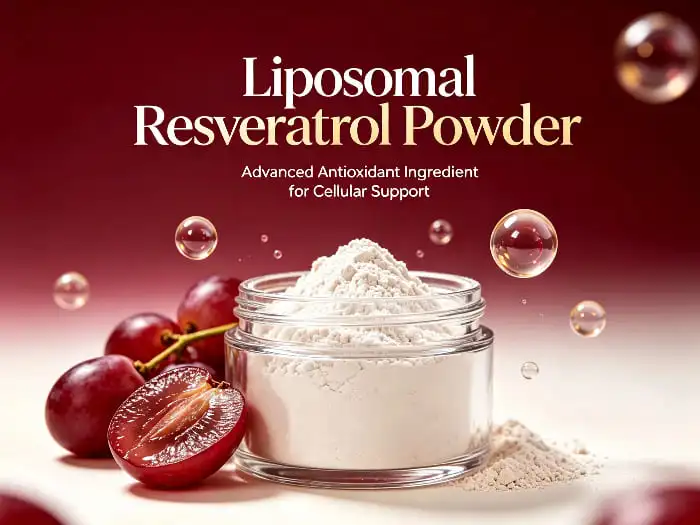
Understanding Liposomal Resveratrol Powder and Its Advantages
Traditional resveratrol has a problem that people in the business call "brick dust": it doesn't dissolve well in water and breaks down quickly in the body, so the body can only use less than 1% of it. The substance breaks down quickly in stomach acid and goes through a lot of first-pass metabolism in the liver, so only a few active molecules make it to the target organs.
What Makes Liposomal Encapsulation Different?
Liposomal transport technology changes this situation in a big way. When non-GMO sunflower or soy lecithin is used to make a protective phospholipid bilayer structure around resveratrol molecules, the vesicles that are made don't go through the normal absorption pathways. This shield protects the active ingredient from the harsh environment of the stomach, letting it be taken in directly by M-cells in the intestines and transported through the lymphatic system without breaking down in the liver.
Premium liposomal formulations have certain technical features that set them apart from simple physical mixtures. Particles in good products are between 100 and 300 nanometres in size and have polydispersity values below 0.3. This makes sure that the particles are spread out evenly, which is important for getting into cells. Over 85–90% encapsulation efficiency means that most of the resveratrol stays safe inside lipid structures instead of moving around loosely, where it could be broken down.
Bioavailability Breakthrough for Product Developers
This means that the improved absorption directly leads to benefits in formulation. Brands can reach therapeutic levels with smaller doses per serving, which cuts down on capsule sizes and production costs while lowering the stomach pain that can happen with high amounts of normal resveratrol. The EncapsWell™ platform was created by research teams led by PhDs. It uses pH-sensitive release profiles and optimised phospholipid binding ratios to make sure that the most payload gets to the absorption site.
Modern liposomal resveratrol powders are vegan and don't contain any GMOs, which helps product makers who want to use "clean label" labels. The powder form is very flexible; it dissolves quickly in water to make stable nano-emulsions that can be used in ready-to-drink drinks, or it can flow freely into capsule and tablet forms without clumping, which is a problem with raw resveratrol. According to ICH guidelines, stability testing confirms shelf lives of 36 months. This gives the supply chain the confidence it needs for global distribution networks.
Application Versatility Across Product Categories
Longevity-focused brands use liposomal resveratrol powder and NAD+ precursors like NMN to activate SIRT1 pathways that are linked to healthy ageing in a way that works better when combined. The better pharmacokinetic profile, shown by higher Cmax and AUC readings, lets formulators back up performance claims without using misleading marketing techniques that make it harder for people to follow the directions.
Researchers who are making functional drinks like how lipid wrapping hides resveratrol's bitter, chalky taste. This makes it possible to add it to collagen beauty shots and drink mixes that support mitochondria without adding too many sweeteners or letting the sediment separate, which makes people doubt the quality. Because it dissolves in water, it supports clean ingredient decks that appeal to buyers who care about openness.
Beauty-from-within brands use the fact that liposomal structures can bind water and oil. When made into packages for oral use or reconstituted for topical serums, the improved permeability helps deliver antioxidant benefits directly to skin matrices, treating photoaging issues through both systemic and dermal paths.
Researchers have known for a long time that resveratrol is safe, and new tests using liposomal technology back this up. This gives regulatory experts trust in many places. Dosage suggestions usually fall between 50 mg and 500 mg per day, depending on the purpose. Higher doses are only recommended for specific health uses and not for general supplementation.
Market Comparison: Liposomal Resveratrol vs. Alternative Forms and Competitors
When deciding where to spend in ingredients, procurement teams have to weigh the benefits in terms of performance against the costs. Standard resveratrol powders have lower unit costs, but they are not as bioavailable, so you may need to take 10–15 times more of them to get the same blood amounts. When you add up the costs of each meal and the bigger capsules needed for megadoses, this choice that seems like a good deal often ends up being too expensive.
Performance Metrics That Matter to Formulators
It can be hard for capsules that contain standard resveratrol to dissolve. Because raw resveratrol is hydrophobic, it may pass through the digestive system mostly unabsorbed, even if the purity percentage on the specification sheet says it is high. It can be measured that liposomal resveratrol powder types dissolve more quickly in artificial intestinal juice. This means that absorption windows can be predicted, which backs up claims of effectiveness.
When you compare liposomal resveratrol powder to other antioxidant delivery systems, you can see that they work together rather than against each other. Curcumin liposomes work in different ways to stop inflammation, and resveratrol turns on genes that make you live longer and helps your heart work better. Brands that are on the cutting edge are putting more and more liposomal actives into single formulations. This makes for more complete health solutions that support charging more.
Sourcing Considerations: Organic vs. Conventional
Trans-resveratrol from Japanese knotweed (Polygonum cuspidatum) usually meets the ≥98% purity standards that brands that care about quality need. Organic certification makes the supply chain more complicated and adds 15–25% to the cost of goods. It's mostly appealing to natural channel retailers, where customers are actively looking for USDA Organic or EU equivalent badges. Regular non-GMO sources offer the same molecular structures at cheaper prices that are better for mass-market uses.
Regulatory paths are very different between countries. Novel Food dossiers are still needed to get into the EU market, but GRAS self-affirmation makes it easier to sell in the US. Established sellers keep pre-compiled paperwork for more than 30 regulatory frameworks. This cuts the time it takes to get into a new market by about 40% compared to making submissions on your own. This infrastructure is especially useful for brands that want to start in more than one area at the same time.
Bioavailability improvements are becoming more and more accepted by the market as a reason for price differences. Brands that teach customers about absorption factors have higher conversion rates and lower returns than brands that only compete on calorie content. When marketing moves from focusing on ingredients to focusing on outcomes, it changes the cost-benefit analysis in a way that favours advanced delivery platforms.
Procurement Insights: Sourcing Liposomal Resveratrol Powder for B2B Clients
Strategic ingredient buying is more than just finding the cheapest price per kilogram. When purchasing managers are building strong supply chains, they look at factors like consistent manufacturing, full legal compliance, technical help, and the dependability of logistics.
Supplier Qualification Essentials
Certified Good Manufacturing Practice (cGMP) is the standard for making liposomal resveratrol powder supplement ingredients. When businesses follow ISO 22000 food safety management systems and FSSC 22000, their quality control systems get better. With HALAL and KOSHER certifications, you can reach more customers, and with organic certifications like NOP and EOS, you can get into premium natural product channels.
Leading sellers use blockchain to allow group tracking, which makes the supply chain more open than ever before. This technology lets brands check where their raw materials come from, how they are processed, and the results of quality tests using permanent digital records. This is something that big stores are starting to expect and that regulators are finding more and more useful.
Independent labs do testing that is done by a third party to confirm what the label says and look for contaminants. Certificates of Analysis should show how much resveratrol is in the sample by using HPLC, as well as heavy metals panels, microbial limits, and residual solvents testing. When suppliers give customers access to full analysis data instead of just brief certificates, they show they are honest, which lowers compliance risks further down the line.
Minimum Order Quantities and Pricing Dynamics
Entry-level MOQs are usually between 25 and 50 kilograms, which is good for new names that are trying the market. Bulk price tiers with 15–30% savings start to apply when monthly commitments of 500 kg are met. This is in line with how well-known supplement brands handle multiple SKUs. Contract manufacturers who work with private-label clients often negotiate yearly volume agreements to get better prices and make sure they always have a supply of goods.
Total landing costs are affected by shipping processes in a big way. When suppliers keep storage in the US, they avoid the 4–6 week delays in ocean freight and the uncertainty of customs clearance that come with direct imports. EmerWell's facility in San Diego offers quick sample fulfilment and just-in-time inventory support, which lowers the company's working capital needs and keeps fresh stock on hand.
OEM and Private Label Customization
In competitive markets, differentiating often means making changes to formulations that aren't included in standard catalogue offerings. Changing the particle size makes the flow work best with certain encapsulation equipment. Substitutions of excipients can be used to meet allergy restrictions or back up certain label statements. When liposomal resveratrol powder is mixed with other active ingredients that work well together, like quercetin or pterostilbene, it makes unique mixes that don't go up in price easily.
Established OEM partners offer help with formulating, methods for testing stability, and regulatory paperwork packages that cut time-to-market by a huge amount. The technical knowledge is especially useful when dealing with Novel Food uses or proving structure-function claims by reading the right clinical literature.
Brands should make sure they have clear intellectual property agreements that protect their secret formulas and give them enough freedom to switch manufacturers if necessary. Quality agreements that include specs, testing methods, and procedures for handling deviations make expectations clear and lower the chance of disagreements.
Market Trends and Future Prospects of Liposomal Resveratrol
Advanced delivery technologies are being used more and more in the nutraceutical and functional food industries. This is due to a number of factors coming together. As wellness-focused consumers learn more about bioavailability limits, they become more sophisticated consumers. This makes premium products that claim to have better absorption more likely to find buyers.
Technology Innovation Reshaping Product Development
Liposomal manufacturing technologies keep getting better than batch processes. Continuous flow reactors let you precisely control the spread of particle sizes and the efficiency of packaging. They also lower production costs by increasing yield rates. Spray-drying innovations that use protected materials like cyclodextrin make products last longer on the shelf without needing to be refrigerated, which limits where they can be placed in stores.
New microfluidic encapsulation platforms from research labs promise even more uniformity and the ability to grow. These next-generation methods should be available to the public in three to five years, setting new performance standards that make liposomal transport even more different from other methods.
The ability to analyse keeps up with the level of complexity in making. Advanced methods for characterising things, like cold transmission electron microscopy and dynamic light scattering, make sure that the structure and stability of liposomes are correct. Formulators who know the link between structure and performance are more likely to trust brands that use these technologies in their quality documents.
Regulatory Evolution and Market Access
Liposomal resveratrol powders are becoming more and more recognised by global regulatory frameworks as being different from their unencapsulated cousins. This recognition opens the door to new ways to back up health claims using better bioavailability data. When brands spend money on pharmacokinetic studies that show better absorption profiles, they set themselves up for differentiated claim approval as the regulatory pathways get better.
There are no signs that the clean-label trend will slow down. Consumers look at ingredient lists with more care than ever before, and they reward brands that use advanced technology to make their products work instead of fake additives or high doses. Liposomal formulations naturally meet these needs because they use phospholipids that come from plants and don't use any solvents or artificial preservatives.
Strategic Positioning for Market Leadership
Business-to-business buyers should look at source ties that go beyond simple transactions. Partners who help with ongoing research and development, gathering information about the market, and improving formulations are valuable strategic assets. As scientists learn more about how to live longer and keep cells healthy, they are always finding new ways to make products, but they need people with a lot of technical knowledge to do them.
Brands that get in early on in the premium liposomal category have an advantage when it comes to educating customers and defining the category. The big marketing budget needed to help people understand the benefits of bioavailability becomes a competitive moat that keeps new companies from entering the market solely on price.
As distribution channels change, ingredients that use new technology are more likely to be sold. Digital marketing is used by direct-to-consumer brands to teach people about absorption science, which helps them explain charging more by showing that the product is worth it. At the same time, traditional stores are allocating shelf space based on velocity and margin contribution rather than just SKU count. This means that they value innovation over copying existing products.
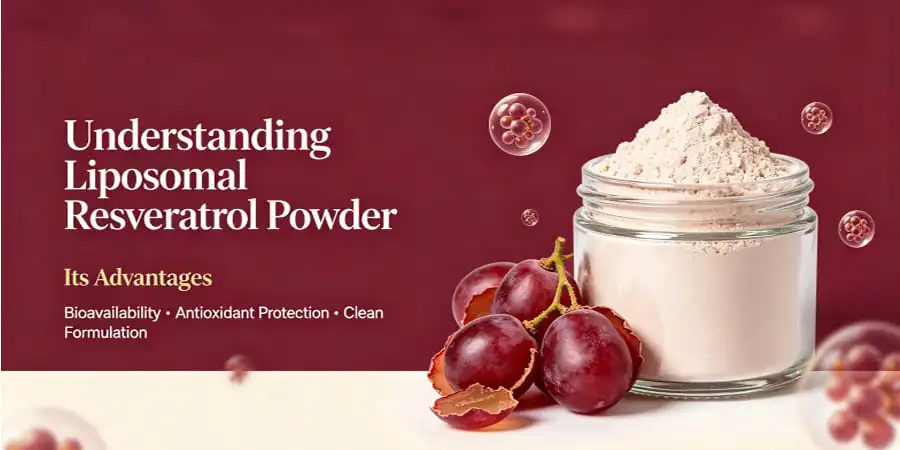
Ensuring Quality and Trust: Selecting Reliable Liposomal Resveratrol Suppliers
When quality assurance fails, it leads to problems with regulations, damage to the brand's image, and a loss of customer trust that takes years to rebuild. Tough methods for qualifying suppliers are necessary investments in risk management.
Certification Verification and Manufacturing Audits
Verifying the accuracy of a document stops false claims about credentials that sometimes show up in global ingredient markets. Instead of taking certificates from a supplier at face value, you should check with the certification groups directly to make sure they are real. The validity periods of current certifications should not expire, and audit schedules should be used to keep an eye on things on a regular basis.
Visits to manufacturing sites give you important information that you can't get from reading paperwork. Keep an eye on how the production floor is organised, how the equipment is maintained, and how employees are trained. Quality control labs should show that they have the right equipment calibration records and take part in programs that check their analytical skills.
Supply Chain Transparency and Traceability
When dealing with possible pollution events or supply problems, it's important to know where your raw materials come from. Suppliers should keep track of where the liposomal resveratrol powder came from, who processed it, and how it was transported throughout the whole chain. Blockchain implementations make this data easy to get to and stop changes that could hide quality problems from being made in the past.
How you handle your inventory affects how fresh and stable your products are. Suppliers who use first-in, first-out rotation and keep storage at a controlled temperature protect the effectiveness of active ingredients. Ask for proof of the storage conditions and data from a stable study that show the standards were kept during the claimed shelf lives.
Technical Support and Collaborative Development
Supplier technical teams led by PhD researchers bring formulation knowledge that speeds up product development and cuts down on the cost of repeating expensive reformulation cycles. Suppliers become strategic partners instead of just vendors when they have access to experienced scientists who understand liposomal chemistry, government rules, and market trends.
Technical support based in the US gets rid of the language and time zone problems that make it hard for people in different countries to work together. EmerWell's R&D center in San Diego offers localised knowledge and a wide range of production capabilities, giving domestic brands the flexibility they need during key development stages.
Production scalability makes sure that ingredient sources can grow as the brand does. Partners who can help with pilot runs while the market is being tested and keep enough capacity for full commercial production get rid of the problems and costs that come with switching suppliers as volumes rise.
Conclusion
The trajectory of liposomal resveratrol within nutraceutical and functional food markets points unequivocally toward expanded adoption driven by demonstrated bioavailability advantages, clean-label alignment, and formulation versatility. Procurement professionals recognizing this shift position their organizations ahead of market evolution rather than reacting to competitive pressures. Strategic supplier partnerships providing comprehensive technical support, regulatory expertise, and scalable manufacturing capabilities become instrumental to success. The brands capturing market leadership will be those investing in advanced delivery technologies today while competitors remain constrained by conventional ingredient approaches offering diminishing differentiation.
FAQ
How does liposomal resveratrol compare to standard resveratrol supplements?
Liposomal resveratrol powder coating makes it 14 times easier for the body to absorb resveratrol than regular powder forms. The phospholipid membrane shields the active ingredient from stomach acid and makes it easier for the body to absorb it directly in the intestines, skipping the first-pass metabolism that lowers the bioavailability of resveratrol to less than 1%. In practice, this means that therapeutic blood concentrations can be reached with much lower doses, resulting in smaller capsules and fewer stomach problems.
What certifications should I look for when sourcing liposomal resveratrol powder?
Priority certifications include cGMP for manufacturing quality systems, ISO 22000 or FSSC 22000 for food safety management, and relevant market-specific credentials like HALAL, KOSHER, or organic certifications depending on target demographics. Third-party testing records that confirm the amount of resveratrol, microbial limits, heavy metals, and solvents that are still present add to the quality assurance. Market entry is sped up by suppliers who offer regulatory dossiers that have already been put together for FDA, EU Novel Food, and ASEAN frameworks.
What are typical minimum order quantities for bulk liposomal resveratrol powder?
Entry-level MOQs generally range from 25-50 kilograms, suitable for trying new products and names. Volume pricing tiers that offer big discounts usually go into effect when you commit to buying 500 kilograms or more every month. Contract makers and well-known names often make annual deals to get better prices and first choice for supplies. If a supplier has storage space in the US, they may be able to offer more open terms for orders and faster fulfilment than direct import arrangements.
Partner with EmerWell for Premium Liposomal Resveratrol Powder Solutions
EmerWell specializes in delivering scientifically validated liposomal resveratrol powder that transforms product performance through our proprietary EncapsWell™ platform. Our San Diego-based R&D center and warehouse in San Diego give local brands the technical know-how and quick logistics reaction they need. As your strategic liposomal resveratrol powder manufacturer, we are dedicated to your market success. Our products have resveratrol contents of at least 98%, 14x better absorption, and full certifications such as cGMP, ISO22000, Non-GMO, and Vegan. We also offer flexible OEM customisation to support a wide range of dosage forms. Our technical team is led by a PhD. You can email them at info@emerwell-bio.com to talk about formulation needs, ask for samples, or find out how our US-based operations can speed up the development of your product.
References
1. Walle, T. (2011). "Bioavailability of resveratrol." Annals of the New York Academy of Sciences, 1215(1), 9-15.
2. Smoliga, J.M., Blanchard, O. (2014). "Enhancing the delivery of resveratrol in humans: If low bioavailability is the problem, what is the solution?" Molecules, 19(11), 17154-17172.
3. Fangueiro, J.F., Andreani, T., Fernandes, L., Garcia, M.L., Egea, M.A., Silva, A.M., Souto, E.B. (2014). "Physicochemical characterization of epigallocatechin gallate lipid nanoparticles for ocular instillation." Colloids and Surfaces B: Biointerfaces, 123, 452-460.
4. Baur, J.A., Sinclair, D.A. (2006). "Therapeutic potential of resveratrol: the in vivo evidence." Nature Reviews Drug Discovery, 5(6), 493-506.
5. Davidov-Pardo, G., McClements, D.J. (2015). "Nutraceutical delivery systems: Resveratrol encapsulation in grape seed oil nanoemulsions formed by spontaneous emulsification." Food Chemistry, 167, 205-212.
6. Li, H., Zhao, X., Ma, Y., Zhai, G., Li, L., Lou, H. (2009). "Enhancement of gastrointestinal absorption of quercetin by solid lipid nanoparticles." Journal of Controlled Release, 133(3), 238-244.
Online Message
YOU MAY LIKE
High quality furniture manufacturer
_1776234307158.webp)
_1776234266736.webp)