May 25, 2026
The Benefits of Liposomal Glutathione
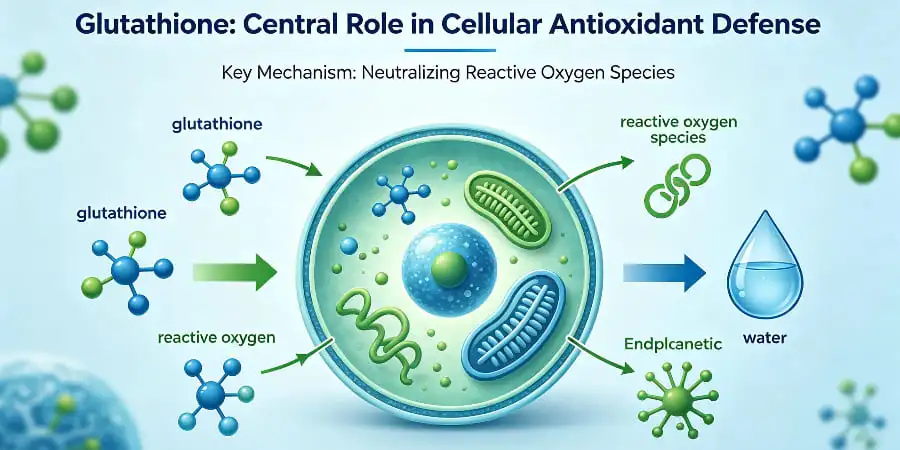
Glutathione plays a central role in cellular antioxidant defense, yet its application in oral supplements has long been constrained by poor stability and limited absorption. Liposomal glutathione powder offers a more structured delivery approach by encapsulating reduced glutathione within phospholipid-based vesicles, designed to protect the active compound throughout processing, storage, and digestion.
For nutraceutical brands and formulation teams, this system provides a more reliable way to incorporate glutathione into products positioned for oxidative balance, skin health support, and daily wellness—while maintaining compatibility with multiple dosage forms including powders, capsules, and functional beverages.
Understanding Liposomal Glutathione Powder
Limitations of Conventional Glutathione
Standard glutathione is highly sensitive to enzymatic degradation, particularly in the gastrointestinal tract. Enzymes such as gamma-glutamyl transferase rapidly break down glutathione before it can be absorbed, resulting in low systemic availability.
This instability limits its effectiveness in traditional oral delivery formats and creates challenges for brands aiming to build consistent, performance-driven formulations.
Liposomal Encapsulation Approach
Liposomal systems encapsulate glutathione within phospholipid bilayers, typically derived from sunflower or soy lecithin. These vesicles are designed to:
- Reduce direct exposure to digestive enzymes
- Improve dispersion in aqueous systems
- Support interaction with intestinal membranes
This structure enables glutathione to remain more intact during digestion and improves the likelihood of effective delivery compared to non-encapsulated formats.
Functional Advantages for Product Development
Improved Delivery Efficiency
Encapsulation provides a protective environment for glutathione, reducing degradation prior to absorption. For product developers, this translates into:
- More predictable formulation performance
- Better alignment between label claim and functional delivery
- Improved consistency across batches
Stability in Powder Format
Compared to liquid liposomal systems, powder formats offer clear operational advantages:
- Room temperature storage
- Reduced oxidation risk
- Easier transportation and handling
- Compatibility with standard manufacturing processes
These characteristics make liposomal glutathione powder suitable for global supply chains and scalable production.
Versatility Across Applications
Liposomal glutathione powder can be integrated into a wide range of finished product formats:
- Stick packs and sachets
- Capsules and tablets
- Functional beverage powders
- Multi-ingredient blends
This flexibility allows brands to expand product lines without changing core ingredients.
Technical Characteristics That Matter
Encapsulation & Processing
Liposomal glutathione powder is typically produced by converting liquid liposomal dispersions into dry form through spray-drying or related technologies. Key parameters include:
- Encapsulation efficiency (commonly >80%)
- Particle size distribution (affecting dispersion and stability)
- Moisture content and hygroscopicity
Maintaining structural integrity during drying is critical to preserving the functional benefits of the liposomal system.
Stability-Oriented Design
Well-designed liposomal systems focus on:
- Minimizing oxidation during processing
- Controlling lipid composition for structural stability
- Maintaining dispersibility after reconstitution
These factors directly impact real-world product performance, particularly in beverage and powder applications.
Quality & Compliance
For B2B buyers, supplier reliability is closely tied to documentation and certifications. Standard requirements include:
- Certificates of Analysis (CoA)
- Microbiological and heavy metal testing
- Stability data under controlled conditions
Common certifications:
- cGMP
- ISO 22000 / FSSC 22000
- HACCP
- Halal / Kosher / Non-GMO
Liposomal Glutathione vs. Alternative Approaches
Standard Glutathione
- Rapid degradation in digestive conditions
- Limited absorption
- Suitable for basic, cost-sensitive formulations
Liposomal Glutathione Powder
- Improved protection and delivery
- Better formulation compatibility
- Suitable for premium and differentiated products
Glutathione Precursors (e.g., NAC)
NAC supports endogenous glutathione synthesis but depends on metabolic conversion and individual variability. Direct liposomal glutathione delivery avoids this variability and provides a more controlled formulation strategy.
Formulation Challenges & Considerations
Even with liposomal technology, formulation still requires careful handling:
pH Sensitivity
Liposomal structures can be affected by extreme pH conditions. In beverage systems:
- Neutral to slightly acidic environments are generally preferred
- Highly acidic formulations may require additional stabilization strategies
Thermal Processing
High temperatures during processing can disrupt lipid bilayers. For applications involving heat:
- Short processing times are recommended
- Post-addition strategies may be considered
Spray Drying Impact
Drying processes must balance:
- Moisture removal
- Structural preservation
Improper conditions may lead to partial liposome disruption, affecting final performance.
Storage Conditions
Exposure to moisture, oxygen, and light can gradually affect stability. Recommended conditions:
- Cool, dry storage
- Sealed, low-oxygen packaging
- Controlled humidity environments
Supporting Brand Positioning
Glutathione is widely used in finished products positioned around:
- Skin appearance support (e.g., brighter skin tone positioning)
- Daily vitality and antioxidant balance
- Recovery and anti-aging concepts
For B2B customers, liposomal delivery provides a more technically robust foundation to support these product narratives, particularly in premium categories such as beauty-from-within and advanced nutraceuticals.
Rather than making direct consumer claims, the focus remains on enabling brands to build credible, performance-oriented formulations.
Procurement Considerations for B2B Buyers
Supplier Evaluation Checklist
- Encapsulation process transparency
- Batch-to-batch consistency
- Availability of technical documentation (TDS, SDS, CoA)
- Stability validation data
MOQ & Supply Flexibility
Typical supply ranges:
- Pilot scale: 10–50 kg
- Commercial scale: 100–500 kg+
Flexible MOQ supports both emerging and established brands.
OEM / ODM Capabilities
Advanced suppliers can support:
- Custom blends
- Flavor and format development
- Private label solutions
Practical Usage & Formulation Insights
Dosage Strategy
Typical formulation range:
- 250–500 mg per serving
- Higher dosages depending on positioning
Improved delivery efficiency allows optimization of dosage without increasing total input.
Ingredient Synergies
Common combinations include:
- Vitamin C (glutathione recycling)
- Alpha-lipoic acid
- Polyphenols (e.g., curcumin, resveratrol)
Storage & Handling
To maintain product integrity:
- Store in cool, dry conditions
- Avoid prolonged exposure to air
- Use sealed, light-protected packaging
Conclusion
Liposomal glutathione powder provides a more structured approach to overcoming the limitations of conventional glutathione supplementation. By combining improved stability with formulation flexibility, it supports the development of more reliable antioxidant products across multiple categories.
For B2B buyers, the key value lies in consistency, technical transparency, and the ability to scale formulations effectively in global markets.
FAQ
Can liposomal glutathione be used in acidic beverages?
Yes, but formulation pH should be carefully evaluated to maintain liposome stability.
What is the difference between reduced and oxidized glutathione?
Reduced glutathione (GSH) is the biologically active form, while oxidized glutathione (GSSG) is formed after antioxidant activity.
Does spray drying affect liposome integrity?
It can. Proper process control is required to preserve encapsulation efficiency and structural stability.
How can encapsulation efficiency be verified?
Typically through HPLC or similar analytical methods comparing free vs encapsulated glutathione.
Is liposomal glutathione suitable for global markets?
Yes, provided it meets regional regulatory and certification requirements.
How does it compare to liquid liposomal glutathione?
Powder offers better stability and easier handling, while maintaining delivery advantages.
Partner with EmerWell for Premium Liposomal Glutathione Powder Supplier Solutions
EmerWell develops liposomal ingredient solutions based on the EncapsWell™ platform, supporting brands with stable, scalable, and formulation-ready actives.
- Liposomal Glutathione Powder ≥95%
- Encapsulation-focused processing
- OEM / ODM support
- Global compliance documentation
For samples or technical discussion:
info@emerwell-bio.com
References
Schmitt B, Vicenzi M, Garrel C, Denis FM. Effects of N-acetylcysteine, oral glutathione (GSH) and a novel sublingual form of GSH on oxidative stress markers: A comparative crossover study. Redox Biology. 2015;6:198-205.
Richie JP, Nichenametla S, Neidig W, et al. Randomized controlled trial of oral glutathione supplementation on body stores of glutathione. European Journal of Nutrition. 2015;54(2):251-263.
Weschawalit S, Thongthip S, Phutrakool P, Asawanonda P. Glutathione and its antiaging and antimelanogenic effects. Clinical, Cosmetic and Investigational Dermatology. 2017;10:147-153.
Sinha R, Sinha I, Calcagnotto A, et al. Oral supplementation with liposomal glutathione elevates body stores of glutathione and markers of immune function. European Journal of Clinical Nutrition. 2018;72(1):105-111.
Flagg EW, Coates RJ, Greenberg RS. Epidemiologic studies of antioxidants and cancer in humans. Journal of the American College of Nutrition. 1995;14(5):419-427.
Allen J, Bradley RD. Effects of oral glutathione supplementation on systemic oxidative stress biomarkers in human volunteers. Journal of Alternative and Complementary Medicine. 2011;17(9):827-833.
Online Message
YOU MAY LIKE
High quality furniture manufacturer