Aug 19, 2026
Stability Challenges in Liposomal Omega-3 powder Formulations
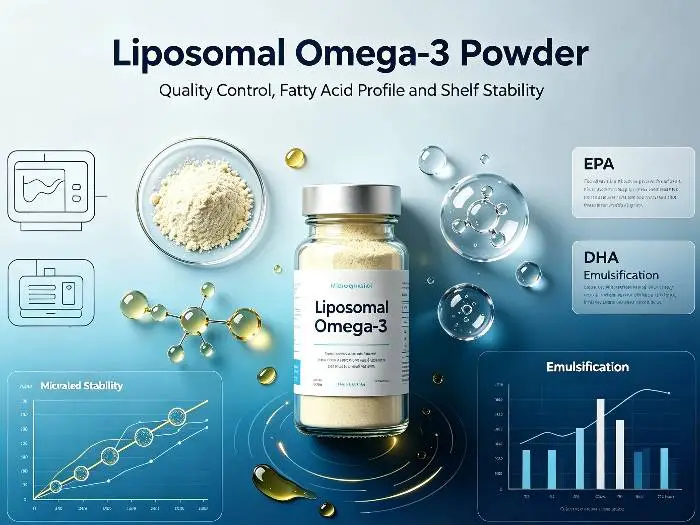
Stability challenges in Liposomal Omega-3 powder formulations revolve around preventing oxidative degradation, maintaining phospholipid membrane integrity, and controlling physical changes during storage. Omega-3 fatty acids, particularly EPA and DHA, are highly susceptible to oxidation when exposed to light, heat, and moisture. Encapsulating these sensitive nutrients within liposomal structures adds complexity, requiring precise control over encapsulation efficiency, particle size uniformity, and protective barrier properties to ensure consistent bioavailability and extended shelf life.
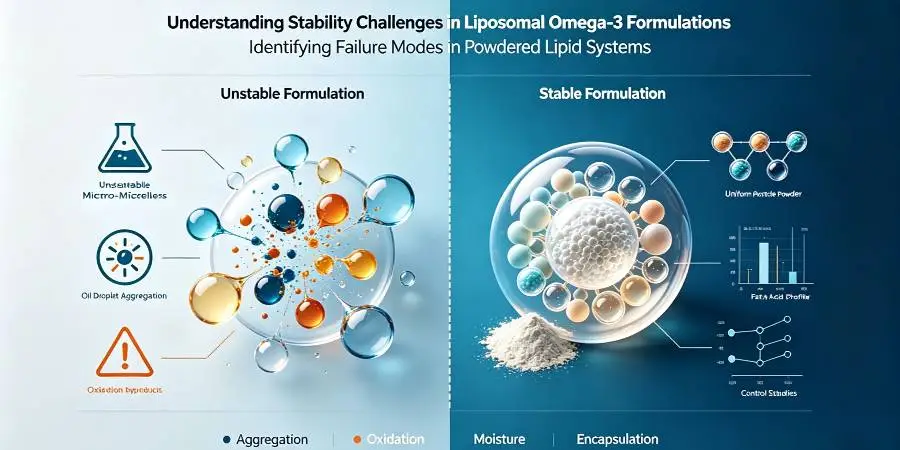
Understanding Stability Challenges in Liposomal Omega-3 Formulations
Stability is one of the most important quality factors for any omega-3 preparation. It determines whether your product offers the benefits you promised or breaks down before it gets to customers. Stability in liposomal systems includes three aspects that are all linked: maintaining the structure, keeping chemicals safe, and keeping microbes safe.
Physical Stability Concerns
Physical instability shows up as liposomes sticking together, particle size changes, and powder clumps. The whole delivery system stops working when the phospholipid vesicles that hold EPA and DHA stop being structurally uniform. Temperature changes during storage or transport can speed up this process, turning powders that used to be able to flow easily into cakes or lumps that are hard to mix back into drinks or functional foods.
Chemical Degradation Pathways
Because omega-3 fatty acids have a lot of double bonds, they are very easily turned rancid by oxidation. This chemical breakdown makes peroxides, aldehydes, and ketones, which not only give off fishy smells but also make food less nutritious. Standard omega-3 products can reach unsafe levels of peroxide within weeks, even if they are kept cool. This can happen if they don't have the right liposomal protection.
Microbiological and Moisture Considerations
Moisture entry makes a place where microbes can grow and also speeds up the breakdown of phospholipids through hydrolysis. To keep germs and enzymes from getting into the water and breaking it down, the activity levels must stay below critical limits. The problem is worse for water-dispersible products because surfaces that are exposed to air humidity are more likely to break.
Core Causes Behind Stability Issues and Their Scientific Explanation
Formulation scientists and procurement managers can find key control points during source review and product development by figuring out what causes instability in the first place.
Liposome Composition Variables
The source of phospholipids has a big effect on how stable the membrane is. Marine phospholipids, soy lecithin, and sunflower lecithin all have different levels of antioxidant protection. The amount of phosphatidylcholine, the saturation of the acyl chain, and the addition of cholesterol all affect how fluid and permeable the membrane is. Omega-3 sources that are purer and have fewer free fatty acids are much more stable against oxidation over longer periods of time.
Our EncapsWell™ platform takes these factors into account by creating phospholipid bilayers that look and work like natural cell membranes, and when combined with Liposomal Omega-3 powder, the high encapsulation efficiency (above 85%) guarantees the best protection for EPA and DHA while keeping the particle sizes uniform, which is necessary for stable performance across production runs.
Manufacturing Process Impact
The levels of security that are reached with spray drying and freeze drying are very different. Spray drying puts delicate lipids in short periods of high temperature, which could start oxidation chains if protections aren't enough. Freeze-drying uses lower temperatures but makes structures that are porous so they may be better at absorbing water. The solubility, dispersibility, and oxidative surface area are all directly affected by the particle size distribution that comes from these processes.
At our San Diego R&D Center, we've adjusted the thermal settings to get the best mix between removing moisture quickly and keeping the lipids. This makes powders that are off-white to light yellow, float freely, and mix well with cold liquids without oil separating. These are important qualities for useful beverage uses.
Packaging and Storage Environmental Factors
Barrier qualities of packing materials control how much air can pass through, how much moisture vapor can pass through, and how much light can pass through. Normal layered films might look like they're enough, but they can let enough oxygen in to cause breakdown in highly unsaturated fatty acids. Changes in storage temperature make this problem worse by speeding up the movement of molecules and the rate of reactions.
Our mixtures stay stable against oxidation with POV values below 2 meq/kg, which is much lower than regular powders, even when the environment is moderately stressed. This performance comes from full protection, including liposomal shielding on the inside and improved packing suggestions made for specific delivery channels.
Strategies and Principles to Enhance Stability in Omega-3 Liposomal Systems
To get commercial-grade stability, you need to use a number of different protection methods over the course of the product's existence. When looking at possible suppliers or formulation partners, product developers and procurement specialists can do a better job if they understand how these approaches work together.
Improvements in stability are based on advanced packaging methods. Multi-vesicular liposome structures make extra layers of protection around omega-3 cores. This biomimetic method doesn't just slow down oxidation; it changes the rate of breakdown by blocking oxygen and keeping metal ions that are good for oxidation away from fatty acid double bonds that are easily broken.
Adding stabilizers and antioxidants makes protection go beyond physical barriers. Tocopherols, ascorbyl palmitate, and rosemary oils from plants work together with liposomal membranes to stop free radicals before they start oxidation chains. Putting these chemicals in the right place within lipid bilayers makes them safer while still following clean label rules, which is important for nutraceutical brands that want to attract health-conscious customers.
Environmental controls in manufacturing are another important factor. To meet Infant Nutrition Standards, our cGMP, ISO 22000, and HACCP-certified plant keeps strict temperature and humidity levels during production and checks for contaminants. By paying close attention to the conditions of handling, stability is built in from the very beginning, rather than being added on top of things during packing.
During production, moisture level and water action are looked at very closely. Finding the right balance of moisture levels to stop microbes from growing while also keeping the material from becoming too rigid is not easy. Our formulas produce very uniform results, with total plate counts below 1000 cfu/g and heavy metal levels well below strict limits (Pb < 0.5 ppm), which addresses both safety and stability concerns at the same time.
New ideas in packaging finish off the safety plan, and for formulations like Liposomal Omega-3 powder, longer shelf life is achieved by using barrier films with aluminum layers, changed atmosphere packaging with nitrogen cleaning, and desiccant integration. These options are especially helpful for brands that sell through e-commerce, where temperature-controlled shipping may not always work.
Comparative Analysis: Liposomal Stability Advantages Over Traditional Omega-3 Forms
When procurement workers are looking at omega-3 ingredient choices, it's helpful to know how performance varies by delivery format. This side-by-side look at the differences shows why liposomal technology is so highly valued in the supplement market.
When traditional fish oil products are bottled, they start to go bad right away. Even though they have amber glass and nitrogen blanketing, these formulations usually show POV increases within a few months of being made. The gelatin layer inside soft gel tablets makes things a little better, but the oily matrix inside is still open to damage. Standard omega-3 powders made by spray drying without liposomal encapsulation go bad quickly and often develop bad smells that consumers don't like during shelf life tests.
This stability equation is completely changed by liposome encapsulation. The phospholipid bilayer works as a selective barrier, letting targeted release happen in the gut while blocking oxidants in the environment during storage. Our advanced water-dispersible mixture stays strong in light, heat, and moisture conditions that would quickly break down other options.
These stable benefits are made better by bioavailability benefits. Protected EPA and DHA get to the places where they can be absorbed in the intestines without breaking down in the stomach, which happens with regular vitamins. Clinical findings show that Liposomal Omega-3 powder delivery can increase bioavailability up to three times compared to regular fish oil. This means that the product is more stable, which leads to measurable improvements in effectiveness that support its premium standing.
Leading brands are using liposomal technology more and more to make their products stand out. Certifications like Kosher, Halal, and meeting baby feeding standards are more signs of quality that appeal to a wide range of customers. These credentials, along with proof of oxidative stability, help brands charge higher prices while lowering the number of returns due to quality issues.
Procurement Considerations: Sourcing Stable Liposomal Formulations
When evaluating Liposomal Omega-3 powder ingredients, procurement managers face unique problems when they are trying to choose a supplier. To tell the difference between real technological capabilities and marketing claims, technical documentation and manufacturing credentials need to be carefully looked over.
Oxidative stability testing represents the most critical documentation to request. Stability studies that are complete should include data on rapid aging, POV growth curves, and sensory evaluation results from different times. Suppliers who can't give you this information probably don't have the analytical tools they need to ensure quality all the time. Our formulations go through strict testing procedures, and we offer stability data packages to back up quality claims and regulatory submissions.
Certifications cover more than just following GMP guidelines. Comprehensive quality systems are shown by ISO 22000 food safety management, HACCP danger analysis, and specialty contaminant screening. These aren't just legal boxes to be checked; they're practical rules that have a direct effect on consistency from batch to batch and long-term supply reliability.
A lot of thought should go into the mix between price and effectiveness. Cheaper options might not encapsulate as well, use lower-quality phospholipid sources, or skip important steps for improving stability, and when you choose a liposomal omega 3 manufacturer, the total cost of ownership can be much higher than the initial savings on ingredients because it includes costs for reformulating, customer complaints, and damage to the brand's reputation.
Custom formulation and OEM partnerships offer strategic benefits above and beyond buying goods. Suppliers who can customize omega-3 concentrations (from 10% to 25% in our standard offerings), particle size distributions for specific uses, and come up with their own ways to improve stability are good for brands that want to stand out. Our San Diego-based R&D team, which is led by a PhD, offers regional technical support throughout product development. They bridge the gap between nutritional ideas and the realities of commercial manufacturing.
Quality-conscious brands can't budge on being open about where their omega-3s come from and how they can be tracked through the supply chain. Sustainable fishing certifications, molecular distillation paperwork, and heavy metal test records help protect against problems with the supply chain and problems with the law. Building relationships with suppliers who value openness is the key to long-term success in the nutraceutical market, which is always changing.
Conclusion
In conclusion, Liposomal Omega-3 powder formulations have stability problems that need complex solutions combining cutting-edge encapsulation technology, improved manufacturing methods, and smart packaging methods. The levels of physical, chemical, and microbiological safety are all connected, so we need complete protection plans instead of separate actions. Liposomal delivery systems are much better than traditional omega-3 forms because they protect against oxidation better, are more bioavailable, and last longer.
When evaluating suppliers, people in charge of buying things should put stability tests, full certifications, and proof of technical know-how at the top of their lists, and they must also carefully verify the omega 3 powder supplier bulk capabilities to ensure consistent raw material quality and scalable production. When you invest in high-quality liposomal ingredients, you get rewards in the form of fewer quality complaints, greater claims of effectiveness, and long-term differentiation in competitive nutraceutical markets.
FAQ
What causes omega-3 powders to become unstable during storage?
Liposomal Omega-3 powders become unstable when they are exposed to air, light, heat, and water, which causes oxidative breakdown. The many double bonds in EPA and DHA molecules easily react with oxygen in the air, making peroxides and rancid byproducts. This weakness is lessened by liposome encapsulation, which creates protective phospholipid walls that keep oxidative stresses away from sensitive fatty acids.
How does liposomal technology improve omega-3 shelf life?
Liposomal membranes stop oxygen from getting to omega-3 cores that are enclosed while still letting them be released in gut environments. When compared to traditional formulations where fatty acids are exposed to oxygen, this multi-layer protection greatly lowers oxidation rates. This means that the product can last for months to years if stored properly.
What certifications should I look for in liposomal omega-3 suppliers?
cGMP manufacturing compliance, ISO 22000 food safety management, HACCP routines, and specialty contaminant screening for heavy metals and microbiological safety are some of the most important licenses. Kosher and Halal licenses make markets bigger and easier to get into. Suppliers who meet standards for baby feeding show the best level of quality control that can be used for all customer groups.
Partner with EmerWell for Superior Liposomal Omega-3 Solutions
Through our own EncapsWell™ platform, EmerWell transforms omega-3 formulation challenges into market opportunities. As a company based in San Diego, California that sells Liposomal Omega-3 powder, we offer regional technical help from our research team, which is led by a PhD and has on-site lab facilities and storage for quick sample delivery. Our facility is cGMP-certified and makes formulations that meet the strictest stability requirements for a wide range of uses, from sports nutrition to infant nutrition.
We offer flexible OEM/ODM partnerships that work well from pilot runs to mass production. These partnerships are backed by a lot of stability data and safety certifications for babies. Get in touch with our team at info@emerwell-bio.com to talk about how our cutting-edge liposomal technology can help your products stand out and give health-conscious customers real bioavailability benefits.
References
1. Mozafari, M.R., Johnson, C., Hatziantoniou, S., & Demetzos, C. (2008). Nanoliposomes and their applications in food nanotechnology. Journal of Liposome Research, 18(4), 309-327.
2. Ghasemiyeh, P., & Mohammadi-Samani, S. (2018). Solid lipid nanoparticles and nanostructured lipid carriers as novel drug delivery systems: Applications, advantages, and disadvantages. Research in Pharmaceutical Sciences, 13(4), 288-303.
3. Arab-Tehrany, E., Jacquot, M., Gaiani, C., Imran, M., Desobry, S., & Linder, M. (2012). Beneficial effects and oxidative stability of omega-3 long-chain polyunsaturated fatty acids. Trends in Food Science & Technology, 25(1), 24-33.
4. Gómez-Mascaraque, L.G., Lagarón, J.M., & López-Rubio, A. (2015). Electrosprayed gelatin submicroparticles as edible carriers for the encapsulation of polyphenols of interest in functional foods. Food Hydrocolloids, 49, 42-52.
5. Shin, G.H., Kim, J.T., & Park, H.J. (2016). Recent developments in nanoformulations of lipophilic functional foods. Trends in Food Science & Technology, 46(2), 144-157.
6. McClements, D.J., Decker, E.A., & Park, Y. (2009). Controlling lipid bioavailability through physicochemical and structural approaches. Critical Reviews in Food Science and Nutrition, 49(1), 48-67.
Online Message
YOU MAY LIKE
High quality furniture manufacturer