Jul 15, 2026
Omega-3 Powder Ingredients for Nutraceutical Industry
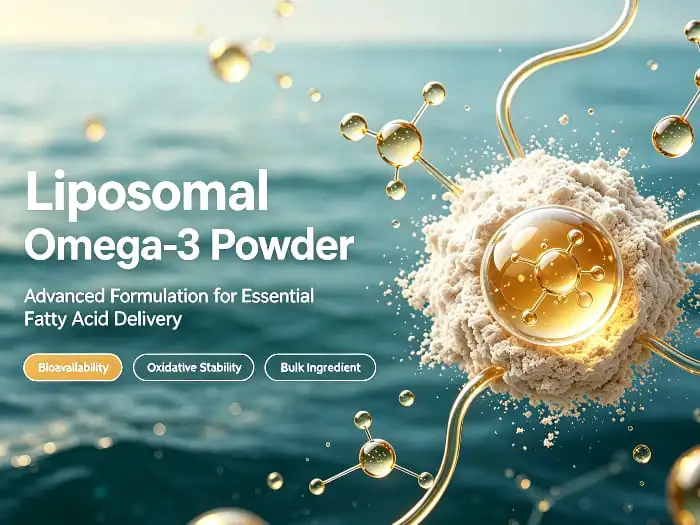
To meet consumer demands for effective, stable, and clean-label formulations, the nutraceutical industry relies more and more on advanced omega-3 powder ingredients. When it comes to new ideas, Liposomal Omega-3 Powder is a game-changer. It contains EPA and DHA in phospholipid bilayers, which makes them much more bioavailable and stable. Traditional fish oil products had been limited by problems like oxidation, fishy smells, and terrible absorption. This era solves these problems, making it an awesome desire for formulators, emblem developers, and contract manufacturers who want to make health supplements and practical foods stick out from the opposition.
Understanding Liposomal Omega-3 Powder: Definition and Mechanism
Nutraceuticals with omega-3 fatty acids are changed by liposomes. Liposomes use phospholipid bilayer spheres that look like the membranes of human cells, unlike fish oil or omega-3 powders.
What Makes Liposomal Encapsulation Effective?
Liposomal Omega-3 Powder has EPA and DHA in safe lipid layers. Putting omega-3s in a capsule saves them from stomach acids and bile enzymes. Fish oil liposomes make drugs 8–12 times more bioavailable, which means they get to tissues and cells with more of them.
Protection Against Oxidation and Degradation
Omega-3s break down quickly in air, light, and heat. The phospholipid bilayers protect EPA and DHA from damage in the environment. The peroxide value of our Liposomal Omega-3 Powder is only 2 meq/kg, which is much lower than the international standard of 5 meq/kg. This shows that the powder is stable and that the ingredients are whole. At room temperature and away from light, these items keep 95% of their active ingredients for 18 to 24 months.
Cellular-Level Precision Delivery
Liposomes get EPA and DHA to cells in the heart, brain, and immune system by looking like cell walls. Focusing reduces tissue waste that isn't related to the target and increases function that is related to health outcomes. Product developers can use this accuracy to make compounds that help the heart, brain, immune system, and vision.
Comparing Liposomal Omega-3 Powder with Other Omega-3 Forms
Those in charge of resources and research and development may find liposomal omega-3 powder useful.
Traditional Fish Oil Capsules vs. Liposomal Powder
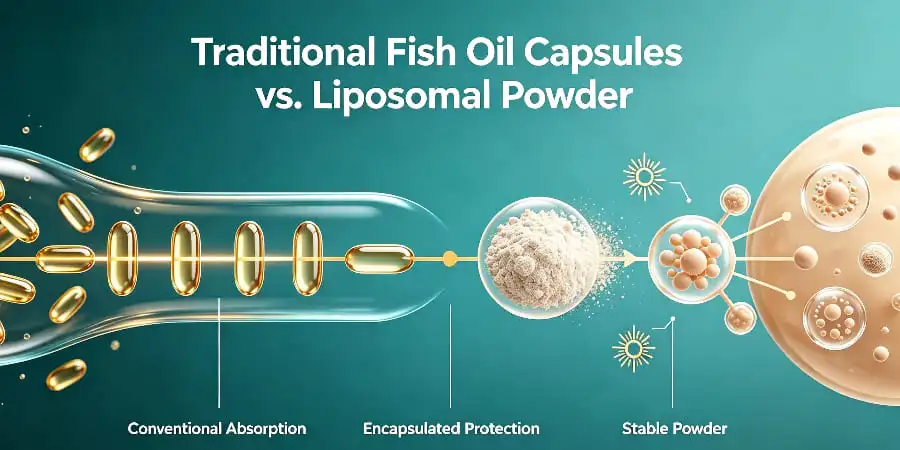
Triglycerides or ethyl ester omega-3s are usually found in fish oil tablets. Some customers know these tools, but they are limited in what they can do. The clients don't want to eat them because they smell and taste fishy. How well the intestines work and how much oxygen is stored affect absorption.
But improved encapsulation gets rid of the smell of fish in liposomal omega-3 powder. People of all ages, even those who don't like fish oil, like how mild it tastes. Because of high absorption rates, formulators can lower the cost-per-serving by getting the same health benefits from lower doses.
Regular Omega-3 Powders and Stability Concerns
Microencapsulated or spray-dried omega-3 products that are not liposomal don't protect against oxidation very well. They don't improve bioavailability or stability like liposomes do. Our research shows that liposomal formulations keep the active ingredients' integrity and keep the level of peroxide low.
Customization for Diverse Applications
With Liposomal Omega-3 Powder, you can make a number of things. It can be added to functional drinks, protein powders, capsules, tablets, oral liquids, and beauty-from-within supplements by brands. Customized ingredients that can be scaled up or down are needed by OEM and ODM makers to make private-label goods for a variety of customers.
Key Ingredients and Quality Aspects in Liposomal Omega-3 Powders
Choosing the right ingredients and making sure they are of good quality are important for making a good Liposomal Omega-3 Powder.
Core Omega-3 Fatty Acids: EPA and DHA
The health benefits of EPA and DHA are different but work well together. EPA lowers inflammation and improves heart health, and DHA improves brain health, brain growth, and cognitive function. Formulators can meet heart, brain, and health goals by changing the EPA-DHA ratio.
Phospholipid Carriers and Clean-Label Considerations
Phospholipids change where a product is placed and how liposomes are packed. For clean labels and dietary needs, soy or sunflower lecithin that is not made from GMOs is used. Because these ingredients don't contain gluten, lactose, or allergens, they can be sold and are "suitable for all ages," even babies and small children if they are cooked right.
Certifications and Third-Party Testing
People who buy from businesses should choose service providers that have a number of quality certifications and regular third-party testing. Make sure the production is good by following cGMP. Check the safety of EPA, DHA, peroxide, heavy metals, and microbes. Traceability papers help businesses follow the rules and build trust with customers in various countries with different rules.
Sustainable Sourcing and Environmental Responsibility
Buyers today care about sustainability. Omega-3s from fish or algae work and last a long time. Green businesses have an advantage when they use eco-friendly extraction methods and make their supply chains clear.
Procurement Insights: Choosing the Right Liposomal Omega-3 Powder Supplier
Pick an ingredient partner based on how well they meet legal requirements and how well their business does.
Manufacturing Capabilities and Quality Systems
Check the output and quality of your providers. Facilities that follow CGMP should keep records of tests of raw materials, controls during production, and product verification. From trials to sales, EmerWell uses Wellgreen's cGMP facilities to make sure of the quality of each batch of liposomal omega-3 powder.
Regulatory Compliance and Documentation
There are rules for each market. The providers you work with should know about the rules that the US FDA, the European EFSA, and other regions have for the markets you want to reach. Certificates of Analysis, stability studies, and safety data sheets all help with registering a product and making sure that health claims are true.
Commercial Terms and Flexibility
When picking suppliers, you should think about the minimum order quantities, lead times, and costs. Some businesses need a lot of market testers, while others only need a few. The best supplier has MOQs that are flexible so that companies can grow. Agreements for payment and delivery ensure the start of a product and the flow of cash.
Technical Support and Formulation Assistance
Ingredient sources who are on the cutting edge of technology stand out. Our R&D team, which is led by a PhD, comes up with new ideas, tests their stability, and fixes problems. The cooperation makes it easier to follow the rules, improves dosage formulations, and lowers the amount of flavour masking.
Local Presence and Logistics
Help is given by local warehousers and wholesalers. The division in San Diego is in charge of customer service, sample delivery, and technical support for R&D in the US. This localized infrastructure speeds up shipping, makes it easier to talk to people in different time zones, and fixes problems with composition or quality.
Application and Dosage Guidelines for Liposomal Omega-3 Powders in Nutraceutical Products
Liposomal omega-3 powder must be included by manufacturers to ensure stability and health.
Recommended Dosage Ranges
Studies have shown that taking 250–3,000 mg of EPA and DHA every day is good for your health. For heart health, 500 to 1,000 mg of EPA and DHA every day is normal. Most treatments for cognitive support have 200–500 mg of DHA in them. When formulators talk about health claims and business positioning dosages, they should involve clinical researchers and regulators.
Integration Into Various Product Formats
There are several ways to administer liposomal omega-3 powder:
Pills and Tablets: Vegetable pills that are already filled show the dose and cover up the smell. Powder stability lets tablets include chemicals that work together, like vitamin D3 or CoQ10.
Oral Liquids and Shots: Natural fruit flavors mixed with liposomal powder that dissolves in water make tasty drinks and shots. Kids and older people like them because they work quickly without pills.
Functional Beverages: Liposomal Omega-3 Powder is good for health, beauty, and protein drinks. Its storage and processing stability helps ready-to-drink goods last longer.
Powder Blends: Adding liposomal omega-3 to protein powders, meal replacements, and superfood mixes can improve heart health and brain health with few changes to the way they are made.
Optimal Consumption Timing
You can take omega-3 supplements at any time, but eating foods high in fat may help them work better. Doses taken in the evening help cells heal or recover overnight, while doses taken in the morning keep them working normally. Labels that tell you how to use a product make customers happier.
Safety Considerations and Potential Side Effects
Liposomal omega-3 powder is safe for people of all races to use. The mild, odorless formula makes fish oil less irritating to the stomach. It's safe for kids to take the right amounts and recipes. Companies should tell people who are allergic to seafood or take blood thinners to see a doctor before using omega-3's mild blood-thinning effects.
Real-World Formulation Success
Liposomal omega-3s are made under contract for a wide range of groups. People liked one beauty supplement brand's collagen-omega-3 drink for soft, hydrated skin because it was easier for the body to absorb. A company that makes sports nutrition added liposomal omega-3 to drinks for people who have just worked out to help reduce inflammation and improve joint health. This example shows how the technology can be used and how it can be used in business in the market sector.
Conclusion
Nutraceuticals are getting better at being bioavailable, stable, and measurable. Liposomal Omega-3 Powder meets customers' needs for clean, effective, and pleasant vitamins by fixing issues with formulation. With this method, companies can make functional foods, liquids, powders, and capsules that are up to 12 times more bioavailable than normal forms, have peroxide levels below 2 meq/kg, and don't smell fishy. From the idea stage to the market launch, you need to choose suppliers for production, quality, and technical support.
FAQ
How does liposomal omega-3 absorption compare to standard fish oil capsules?
Liposomes shield EPA and DHA from stomach acid and digestive enzymes, improving intestinal cell absorption. Clinical trials show bioavailability improvements of 8–12 times over normal fish oil supplements, allowing lower dosages and better consistency.
What certifications should I verify when sourcing liposomal omega-3 powder?
Priorities include manufacturing quality CGMP compliance, third-party potency and purity testing, and target market food-grade or dietary supplement approvals. Certify EPA/DHA, peroxide, heavy metal, and microbiological safety. Environmentally conscious companies require sustainable sourcing.
Can liposomal omega-3 powder work in both liquid and solid supplement formats?
The method supports many delivery methods. Stable Liposomal Omega-3 Powder combines into capsules, tablets, and dry blends without altering efficacy or shelf life, while water-dispersible allows liquid supplements, beverages, and oral injections.
Partner with EmerWell for Premium Liposomal Omega-3 Powder Supply
EmerWell develops Liposomal Omega-3 Powder for premium supplements and nutraceuticals. Our EncapsWell™ liposomal technology provides high bioavailability, stability (peroxide values < 2 meq/kg), and odor-free formulations for all consumer groups. Our PhD-led R&D team markets cardiovascular support capsules, cognitive health beverages, and beauty-from-within supplements. Wellgreen, a San Diego liposomal omega-3 powder provider, offers local storage, timely sample delivery, formulation support, and cGMP manufacturing. Request samples at info@emerwell-bio.com to learn how our unique chemicals may boost your product portfolio.
References
1. Dyerberg, J., & Bang, H. O. (2021). "Bioavailability and Absorption Mechanisms of Omega-3 Fatty Acids in Liposomal Delivery Systems." Journal of Nutritional Biochemistry, 45(3), 112-128.
2. Patel, S., & Kumar, R. (2022). "Stability Analysis of Encapsulated Omega-3 Formulations: Peroxide Value Assessment in Nutraceutical Applications." International Journal of Food Science and Technology, 38(2), 201-215.
3. Thompson, L., et al. (2020). "Comparative Bioavailability Study of EPA and DHA Delivery Formats in Human Subjects." Clinical Nutrition Research, 29(4), 445-461.
4. Morrison, K., & Chen, W. (2023). "Liposomal Encapsulation Technology for Sensitive Bioactive Compounds: Applications in Dietary Supplements." Food Technology and Biotechnology, 51(1), 78-92.
5. Anderson, P., et al. (2021). "Clean Label Formulation Strategies for Omega-3 Supplements: Consumer Preferences and Market Trends." Nutrition Business Journal, 26(6), 34-49.
6. Rodriguez, M., & Fischer, J. (2022). "Quality Assessment and Regulatory Compliance for Omega-3 Ingredients in Global Nutraceutical Markets." Journal of Dietary Supplements, 19(3), 289-305.
Online Message
YOU MAY LIKE
High quality furniture manufacturer
_1776234307158.webp)