Aug 11, 2026
NAD+ vs NMN: What’s the Real Difference?
When discussing cellular health and longevity, two molecules dominate the conversation: NAD+ and NMN. While both support energy metabolism and healthy aging, they work through different pathways and offer distinct advantages for product developers. NAD+ (Nicotinamide Adenine Dinucleotide) functions as an essential coenzyme inside cells, while NMN (Nicotinamide Mononucleotide) acts as its biosynthetic precursor. Liposomal NAD+ powder adds a third, formulation-forward dimension to this picture: by encapsulating NAD+ in liposomes, it enhances bioavailability and cellular uptake, making it a practical ingredient for supplements aimed at sustained NAD+ restoration—complementing NMN’s precursor role with a direct, stabilized coenzyme delivery option that fits seamlessly into advanced longevity product lines.
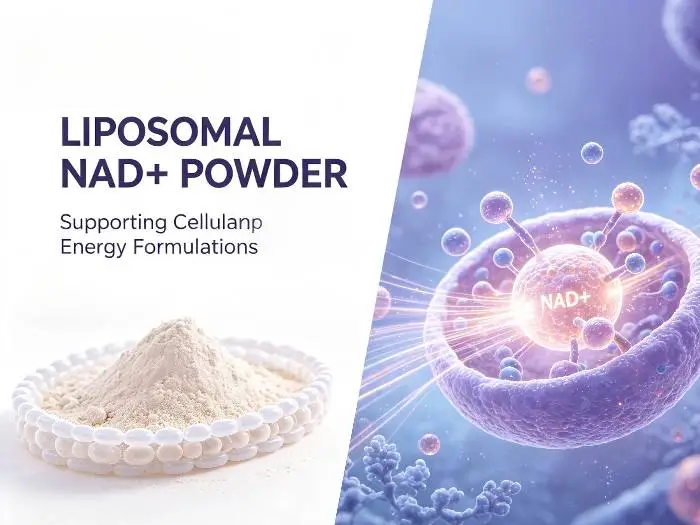
The game-changer? Advanced liposomal NAD+ powder technology now delivers NAD+ directly to cells with absorption rates 5-10 times higher than standard formulations, transforming how we approach supplementation for brands targeting premium wellness markets. Understanding this difference matters for procurement professionals seeking formulations that translate scientific promise into measurable consumer results.
Understanding NAD+ and NMN: Foundations and Functionalities
The Biochemical Role of NAD+
NAD+ is an important coenzyme that is found in all living cells and helps over 500 enzyme processes happen. This molecule helps the mitochondria make ATP, which is the energy that makes everything work, from muscles contracting to neurotransmitters being made. In addition to giving you energy, NAD+ turns on sirtuins, a group of proteins that help fix DNA, control inflammation, and keep your metabolism in check. Between the ages of 40 and 60, NAD+ levels drop by about 50%, which is linked to cells becoming less resilient and signs of aging happening faster.
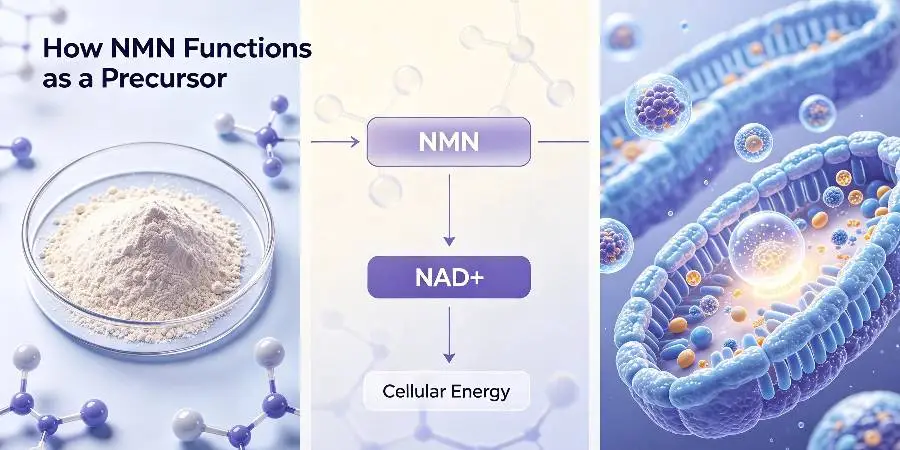
How NMN Functions as a Precursor
NMN fills the gap between what you eat and how much NAD+ your cells have available. NMN enters cells through specific transporters (Slc12a8) after being eaten and changes into NAD+ through the salvage route. Enzymatic activity is needed for this conversion process, which adds steps between intake and cell benefit. NMN supplements can raise NAD+ levels, but how well they are absorbed depends a lot on the quality of the product and how they are delivered.
Liposomal Technology: The Bioavailability Revolution
Standard NAD+ powders have a big problem: the molecule's large size and negative charge make it hard for it to cross digestive walls. Unprotected NAD+ is broken down even more by stomach juice and gastric enzymes before it gets to the bloodstream. Liposomal encapsulation solves this issue by covering NAD+ molecules in phospholipid bilayers, which are very small spheres (50–80nm) that look like cell membranes.
This shield protects against breakdown in the stomach and allows cells to fuse directly, sending whole NAD+ to where it's needed most. Our water-soluble Liposomal NAD+ powder encapsulates more than 85% of the drug, which was proven by particle size analysis (DLS) and confirmed by testing by a third party to be ≥98% pure.
This new technology is a big change for formulators who need to back up claims about bioavailability in order to make their goods stand out in the health market.
Key Differences Between NAD+ and NMN: Implications for B2B Buyers
Molecular Structure and Stability Considerations
The molecular weight of NAD+ is higher than that of NMN (663.4 g/mol), which usually makes it harder for it to pass through cellular barriers. Modern liposomal engineering, on the other hand, fixes this problem. NMN is stable as a powder, but it needs to be changed in the body, which means that reaction rates can vary from person to person. When properly encapsulated, direct NAD+ delivery gets rid of this conversion bottleneck, making results more predictable across a wide range of consumer groups.
Another important difference is shelf stability. Normal NAD+ breaks down quickly when it comes in contact with water and changes in temperature. Our Liposomal NAD+ powder formula stays more than 90% effective for 24 months at room temperature, so it doesn't need to be kept cold. This advantage of steadiness lowers supply chain costs and keeps product losses to a minimum during foreign shipping, both of which are important for brands that want to grow into more markets.
Comparative Efficacy in Target Applications
Both chemicals support health results that are similar, but their ways of working are different. NMN needs tools inside cells to change things, so it depends on each person's enzyme abilities. This variety can make it harder for customers to have consistent experiences. When advanced delivery systems are used to give NAD+ supplements directly, metabolic conversion is skipped. This may lead to more consistent results across age groups and metabolic profiles.
Both compounds show promise in studies that look at brain function, workout recovery, and metabolic health. Bioavailability, or how much of the active ingredient actually gets to the target tissues, is often what makes the difference. In vitro tests of cellular uptake show that liposomal NAD+ absorbs 92% of its form, while normal crystalline forms only absorb 15% to 20%. This difference directly relates to claims about how well the product works.
Safety Profiles and Regulatory Alignment
In studies with humans, both NAD+ and NMN were found to be very safe at the recommended doses (250 to 1000 mg daily for NAD+ formulations). We follow cGMP guidelines when we make things, and we have many certifications to show that we do so, such as ISO22000, FSSC22000, HACCP, Non-GMO, Vegan, HALAL, and KOSHER. Third-party testing is done on each batch to check for heavy metals, microbial contamination, and effectiveness. This paperwork makes regulatory applications easier for the FDA, EFSA, and ASEAN.
Transparency in tests and buying gives procurement teams the traceability they need for "clean label" branding and to meet foreign standards that are getting stricter all the time.
Market Comparison: Liposomal NAD+ Powder vs. Other NAD+ & NMN Products
Formulation Performance Analysis
NAD+ and NMN can be bought as supplements in a number of different forms, such as normal powders, capsules, sublingual tablets, and IV treatments. There are pros and cons to each transportation method. Standard powders are not well absorbed (10–15% bioavailability), so bigger amounts are needed to reach appropriate levels. Sublingual forms slightly improve uptake, but they have problems with taste and absorption that change depending on the pH of the mouth and the length of time the medicine stays there.
Liposomal powder formulations have the stability benefits of dry forms and bioavailability that is close to that of IV administration. They don't have the cost, hassle, or regulatory complexity of injectable products, though. Formulators have a lot of options with this style because it works well in drinks, pills, soft gels, and functional foods. Because it dissolves in water, brands can make ready-to-mix drink packets or add the ingredient to existing products without having to worry about changing the recipe.
ROI Considerations for Product Developers
Higher bioavailability gives you a direct edge over your competitors. Brands that use expensive liposomal formulations can back up claims of better effectiveness, which can help them charge more and keep customers coming back by showing results. The stability over 24 months on the shelf lowers the risk of running out of stock and lets you make more with more confidence in the expiration dates, both of which increase profits and make operations run more smoothly.
Strategic assets include manufacturing partners that can handle production runs of several tons while still maintaining pharmaceutical-grade quality control for 50 kg pilot batches. Quick turnaround times (≤72 hours for standard orders) let you react quickly to changes in the market, which is very important when releasing seasonal goods or following new wellness trends.
Supplier Evaluation Framework
Manufacturers of liposomal supplements that you can trust set themselves apart by providing clear quality documentation. Look for sources who can give you accelerated stability data that follows ICH standards and includes chromatographic purity proof (HPLC). Particle size distribution reports (DLS analysis) show that liposomes really have a structure and not just simple emulsions. When zeta potential readings show numbers above ±20 mV, it means that the particles are colloidally stable and won't stick together while they're being stored.
At EmerWell's R&D center in San Diego, they use the EncapsWell™ platform and have a technical team led by a PhD who has worked in botanical and nutraceutical encapsulation science for over 12 years. Liposomal NAD+ powder is one of the key raw materials we regularly formulate with, leveraging our encapsulation expertise to maximize its stability and absorption. We keep warehouses in the US so that samples can be sent quickly for recipe trials. Our technical support staff knows both the science and the market factors that North American brands face.
How to Effectively Procure Liposomal NAD+ Powder and NMN for Your Business
Defining Product Specifications for Your Application
Clear end-use standards are the first step to successful buying. When it comes to anti-aging products, brands may focus on effective mixes that combine NAD+ with resveratrol or quercetin. Products that focus on energy may mix NAD+ with CoQ10 or B-complex vitamins. For beverage uses, you need certain solubility profiles and neutral taste matrices. For capsule products, you need exact flow characteristics for automated encapsulation lines.
Make sure you know what approvals are needed right away. For example, "organic," "vegan," or "allergen-free" labels affect how ingredients are sourced and how they are tested. Different target markets have different regulatory paperwork needs. Make sure that the suppliers you work with give you dossiers, certificates of analysis, technical data sheets, and stability studies that are organized the way you need them for submission.
Supplier Vetting and Partnership Criteria
Check out possible partners' technical skills and how open they are about how they make things. Ask for building audit records that show GMP compliance, allergen control programs, and systems that watch the environment. Check the traceability of the raw materials. Ethical sourcing and batch testing procedures protect against risks of contamination in the supply chain that can lead to expensive refunds.
As important as production capacity is technical support. Partners who offer help with formulation, stability consulting, and regulatory guidance shorten the time it takes to get a product to market and lower the risk of development. As part of EmerWell's collaborative approach, there are times when our research and development team works directly with your innovation teams to make formulations better for target performance metrics and market positioning.
Pricing Structures and Value Optimization
The high cost of liposomal ingredients is due to the complicated process of making them. You can expect to pay more for this than regular NAD+ or NMN, which is backed up by evidence of better bioavailability and stability. Tiered pricing is usually unlocked by making volume commitments; involve suppliers early in product planning to negotiate good terms that are in line with expected growth paths.
Look at the total cost of purchase as well as the single price. There are secret costs that come with ingredients that need to be shipped in a cold chain or that fail often because they aren't stable. Our formulations stay effective at room temperature for 24 months, which means you don't have to pay for shipping items that need to be kept cold and throw away old stock. MOQ structures that are flexible can work for both new brands that are trying the market to see if they fit and established companies that need container-load numbers.
Logistics and Quality Assurance Management
When you buy something from another country, you have to pay close attention to the shipping paperwork, government rules, and quality control procedures. Setting clear sampling and testing methods is important for keeping the purity of your products throughout the whole supply chain. Specifications for arrival testing, storage conditions, and handling procedures will help you do this. Logistics are easier to manage when suppliers offer local US warehousing. Just-in-time inventory strategies also help with cash flow management.
When problems happen, after-sales help is very important. Partners who promise quick expert support and open problem-solving build trust for long-term working together, and this trust extends to every link in the supply chain, including your choice of a liposomal NAD+ manufacturer. Our San Diego office at EmerWell offers time-zone-aligned contact and quick response times for formulating questions or changing specs as your product changes.
Future Trends and Innovations in NAD+ and NMN Supplementation
Next-Generation Delivery Technologies
Liposomal science keeps getting better than the first generation of formulations. Multi-vesicular liposome structures make sustained-release profiles that make NAD+ available for 12 to 16 hours longer, which lowers the number of times a person needs to take the drug and increases compliance. Tissue-selective NAD+ administration may soon be possible with targeted delivery methods that use cell-specific ligands. This is especially exciting for cognitive health and athletic recovery, where localized bioavailability is key to results.
Researchers are currently working on hybrid systems that combine liposome packaging with nano-emulsion technologies or cyclodextrin complexation. These new ideas are meant to make things even more stable and smaller so that cells can take them in better and be able to hold more in formulas.
Market Growth Projections and Demographic Drivers
The global NAD+ supplement market is expected to grow at a rate of more than 12% per year until 2030. This is because people in developed markets are living longer, and millennials are becoming more health aware. The shift from academic research to consumer awareness in longevity science opens up more opportunities for science-based products that provide measurable benefits.
Cognitive health is one area that is growing quickly, with professionals and students looking for safe, effective alternatives to stimulants to improve their mental performance. The athletic rehab and metabolic health areas are both growing quickly as more people choose proactive health management over reactive treatment methods.
Sustainability and Clean-Label Expectations
Today's customers pay more attention than ever before to how products are made and how they affect the earth. Differentiating their products by using clear ingredient sources, shipping that doesn't use carbon, and reusable packaging gives them a competitive edge. This is especially true in high-end markets where values alignment is just as important as effectiveness when it comes to buying choices.
Our dedication to non-GMO phospholipid sources, formulations that are safe for vegans, and agreements with suppliers who use sustainable farming methods puts partner brands in a good place in markets where caring about the environment is a big part of brand loyalty. Full supply chain traceability lets marketers make claims that appeal to customers who care about doing the right thing, and it also meets the needs of retailers who are asking for more green proof.
When strategic procurement teams know about these trends ahead of time, they can secure relationships with chosen suppliers, lock in good terms, and make sure that their product lines are ready to take advantage of new possibilities before their competitors do.
Conclusion
NAD+ and NMN are two different ways to support cellular health, but when it comes to bioavailability, stability, and formulation flexibility, direct NAD+ release through modern liposomal technology is far superior. The differences in these compounds' molecules have real-world effects on how well they work, how well they follow regulations, and how they position themselves in the market.
Liposomal encapsulation changes NAD+ from a molecule that isn't easily absorbed into an active ingredient that is readily available in the body and can support claims of effectiveness. As the health industry moves toward openness, scientific proof, and measured results, brands that choose to buy formulations that are up-to-date—and that source their raw materials from a reliable NAD+ powder bulk supplier—will be able to stay successful in the global market.
FAQ
What makes liposomal NAD+ powder more effective than standard NAD+ supplements?
Through phospholipid bilayer shielding, liposome encapsulation keeps NAD+ molecules from being broken down by stomach acid and digestive enzymes. This transport method looks like the structure of a cell membrane, which lets it directly fuse with intestinal cells and achieve 5–10 times better absorption than crystalline forms. Bioavailability of standard NAD+ is low (10–15%) because of the size and charge of the molecules, which make it hard for the body to absorb. In vitro tests have shown that our formulation effectively uptakes 92% of cells. This means that lower effective doses are needed and more reliable results for consumers.
How do I choose between NAD+ and NMN for my product line?
Choices depend on your positioning strategy and the people you want to reach. Because it changes into NAD+ inside cells, NMN is good for brands that focus on natural metabolic routes. This is appealing to people who like taking precursor supplements. Direct NAD+ supplementation through liposomal delivery works well for brands that want to get results quickly and with maximum efficiency, especially for high-end anti-aging and performance goods. Think about the form you want to use for your formulation. Liposomal powder is more flexible for drinks and custom blends than NMN's usual capsules.
What certifications should I require from suppliers?
As a minimum, you should demand cGMP compliance. For food safety management, you can also add ISO22000 or FSSC22000. Verification by a third party of purity, potency, and contaminants defends the brand's image. Market-specific certifications are important. For example, Halal and KOSHER labels help you reach more customers, and Non-GMO and Vegan labels follow the trend toward clean labels. Ask for stability data that follows ICH standards and analytical reports (HPLC, DLS) that prove the quality of the liposome structure. More and more retailers and customers want clear paperwork that shows where the raw materials come from and that they are sourced in a decent way.
Partner with EmerWell for Superior Liposomal NAD+ Solutions
Through our own EncapsWellTM platform, EmerWell turns cutting-edge research on aging into products that are ready for the market. Our R&D center and local warehouse in San Diego offer quick technical help, free samples, and smooth operations to brands in the US. Our PhD-led team can help you with unique solutions and pharmaceutical-grade manufacturing, whether you're starting a high-end anti-aging line or adding proven bioavailability to current goods.
As a reliable Liposomal NAD+ powder provider, we provide flexible OEM/ODM services, full regulatory paperwork, and formulation knowledge for everything from drinks to capsules. You can talk to our team about your project needs and ask for samples that show the EmerWell difference by emailing info@emerwell-bio.com or visiting emerwelllabs.com.
References
1. Yoshino, J., Baur, J. A., & Imai, S. I. (2018). NAD+ Intermediates: The Biology and Therapeutic Potential of NMN and Related Molecules. Cell Metabolism, 27(3), 513-528.
2. Shade, C. W. (2016). Liposomes as Advanced Delivery Systems for Nutraceuticals. Integrative Medicine: A Clinician's Journal, 15(1), 33-36.
3. Rajman, L., Chwalek, K., & Sinclair, D. A. (2018). Therapeutic Potential of NAD-Boosting Molecules: The In Vivo Evidence. Cell Metabolism, 27(3), 529-547.
4. Akbarzadeh, A., Rezaei-Sadabady, R., Davaran, S., et al. (2013). Liposome: Classification, Preparation, and Applications. Nanoscale Research Letters, 8(1), 102.
5. Cantó, C., Menzies, K. J., & Auwerx, J. (2015). NAD+ Metabolism and the Control of Energy Homeostasis: A Balancing Act Between Mitochondria and the Nucleus. Cell Metabolism, 22(1), 31-53.
6. Poddar, S. K., Sifat, A. E., Haque, S., Nahid, N. A., Chowdhury, S., & Mehedi, I. (2019). Nicotinamide Mononucleotide: Exploration of Diverse Therapeutic Applications of a Potential Molecule. Biomolecules, 9(1), 34.
Online Message
YOU MAY LIKE
High quality furniture manufacturer
_1776234307158.webp)