Aug 3, 2026
NAD+ Powder vs Capsules: Which Should You Choose?
When evaluating NAD+ supplementation formats for your product line, the decision between powder and capsule forms hinges on bioavailability, formulation flexibility, and target market positioning. Liposomal NAD+ powder represents an advanced delivery system that addresses many traditional absorption challenges through phospholipid encapsulation, offering 5–10× enhanced cellular uptake compared to standard forms. This technological evolution matters significantly for brands seeking differentiation in longevity, energy metabolism, and cellular health categories. Understanding each format's manufacturing implications, stability profiles, and consumer applications enables procurement teams to align ingredient selection with both commercial objectives and end-user expectations.
Understanding NAD+ Supplements: Powder and Capsules Explained
Nicotinamide adenine dinucleotide (NAD+) is a basic coenzyme that helps cells make energy and fix DNA. As people age, their levels naturally decrease. The goal of supplements is to bring levels back to where they should be, which helps the metabolism work and makes cells stronger. There are two main types of NAD+ available in the supplement industry: free-flowing powders and capsules. Each has its own benefits for product creation.
The Biological Foundation of NAD+ Supplementation
Through oxidative phosphorylation, cellular mitochondria need NAD+ to turn food into energy that cells can use. Research shows that keeping the right amount of NAD+ in the body helps proteins that are linked to processes for aging and PARP enzymes that are important for keeping DNA in good shape. Because of this, people are becoming more interested in anti-aging and wellness products, which means there are lots of possibilities for brands that can come up with good delivery methods.
Distinguishing Standard Powders from Capsule Formats
Traditional NAD+ powders are a flexible raw material that lets formulators make their own blends, figure out exact serving sizes, and add the ingredient to drinks or functional foods. Capsules are convenient because they come in pre-measured doses and are easy to carry. They are appealing to people who want a simple way to supplement their diet without having to prepare anything. Different manufacturing factors are needed for powder and encapsulation. For powder production, particle consistency and moisture control are important, while for encapsulation, flowability optimization and fill weight precision are needed.
The Liposomal Technology Advantage
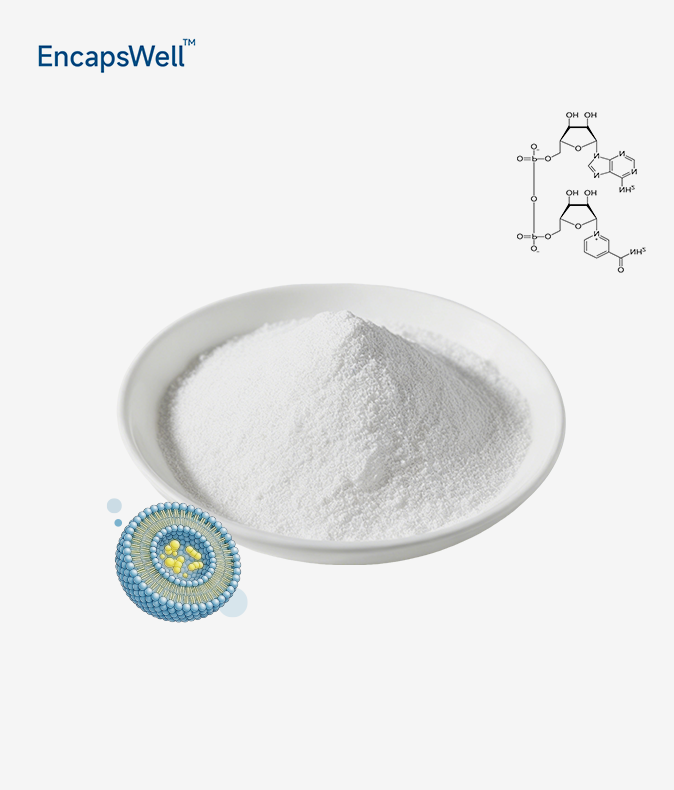
Liposomal NAD+ powder packaging is a big step forward in getting NAD+ to where it needs to go. This process wraps NAD+ molecules in phospholipid bilayers (50–80 nm particles), which makes the structure look like a cell membrane. The coating protects the active ingredient from the harsh conditions in the stomach and makes it easier for cells to absorb it directly by fusing membranes. Validated in vitro studies show that 92% of cells can take them up, which is a lot more than forms that aren't protected. This technology changes compounds that don't dissolve in water into solutions that do. This lets you make more types of products, like ready-to-drink drinks and tablets that fizz, while keeping the ingredients stable over time.
Key Comparison: NAD+ Powder vs. Capsules for Procurement Decisions
To choose between NAD+ powder and capsules, you need to look at a number of practical and performance factors that have a direct effect on the success of the product and the speed of the supply chain.
Bioavailability and Absorption Rates
How well a vitamin works is largely determined by how well it is absorbed. Standard NAD+ has trouble breaking down in the digestive tract, which lowers the amount that gets to the rest of the body's circulation. Most capsules that use regular NAD+ have slow absorption rates, so you need to take bigger doses to get the benefits you want. The active ingredient is protected by phospholipids in liposomal NAD+ powder technology, allowing it to avoid digestion. Studies that compare different formulations show that liposomal ones are absorbed 5–10 times better than regular powders. This means that smaller serving sizes can have the same or even better biological activity. This efficiency means that fewer raw materials are used, which saves money and gives consumers more value.
Dosing Flexibility and Formulation Versatility
Powder forms give product developers more freedom than any other file. Formulators can change serving sizes from 250 mg to 1000 mg depending on the people they want to reach. They can also mix NAD+ with compounds that work well together, like resveratrol or quercetin, and make multi-ingredient protocols that address a wide range of wellness goals. Water-soluble liposomal NAD+ powder works well in functional drinks, fizzy tablets, and powder sachets, which means they can be used in more places than just supplement bottles. Dosing is standardized with capsules, which makes manufacturing and using them easier for consumers but limits the ability to make changes. Powder's adaptability is very helpful for brands that want to reach a wide range of customers, such as athletes who need higher doses and people who just use it for maintenance.
Stability and Shelf Life Considerations
Integrity of the product throughout all of its marketing routes has a direct effect on quality control and following the rules. NAD+ is hygroscopic, which means it can absorb water, which speeds up degradation. Standard powders usually need special storing conditions, like being packed in special containers with desiccants and keeping the humidity very low. Individual dose safety is provided by capsules, which also reduces external exposure to some extent. Advanced Liposomal NAD+ powder made with pharmaceutical precision keeps over 90% of its potency for 24 months at room temperature, so it doesn't need to be kept in the fridge. This advantage of stability makes logistics easier, lowers cold chain costs, and expands the range of markets where the product can be sold. This is especially helpful for foreign shipping and stores with changing temperature control.
Procurement and Supply Chain Insights for NAD+ Powders and Capsules
Cost management, quality assurance, legal compliance, and supply dependability are all important parts of effective sourcing strategies that make sure products are always available.
Pricing Structures and Bulk Purchase Economics
The price of NAD+ raw materials depends on how pure they are (≥98% pharmaceutical grade costs more), how much is made, and how advanced the technology is. Liposomal NAD+ powder processing makes manufacturing more difficult, but the better performance is worth the higher unit costs. You can usually get better deals when you buy in bulk. For example, orders over 50 kg often get 12–18% off compared to smaller amounts, and commitments of more than 10 tonnes can get better terms. Depending on how complicated the format is, veggie capsules, production time, and machine allocation add an extra $0.15 to $0.35 per unit to the cost of encapsulation. A full cost analysis should look at all landed costs, like shipping, customs duties, and the cost of keeping inventory, not just the prices of the ingredients.
Evaluating Manufacturers and Supplier Credentials
How you choose your suppliers affects the standard of your products and your ability to defend yourself in court. Criteria for critical review include:
Certifications and Compliance: A verified cGMP facility registration shows that the facility is following the rules for making pharmaceutical-grade products. Food safety management systems that have been certified by ISO 22000 and FSSC 22000 are reliable. More certifications, like HALAL, KOSHER, Non-GMO Project Verified, and organic approvals (NOP, EOS), make it easier to get into new markets and build trust with customers. Suppliers should give you up-to-date certification documents that can be tracked back to the source.
Quality Control Protocols: Reputable makers test their products thoroughly at many steps of production. The HPLC test confirms the presence of NAD+ (≥98% purity standard), and the ICP-MS test shows that the heavy metal levels are within the limits set by California Prop 65 and USP standards (Lead <0.5 ppm, Arsenic <0.5 ppm, Mercury <0.1 ppm). Microbial testing makes sure that the total plate counts are less than 1,000 CFU/g and that there are no harmful organisms present. Third-party laboratory verification adds independent validation, which makes regulatory submissions stronger.
Supply Chain Transparency: Manufacturers should give full raw material tracking records, such as the country of origin, harvest/synthesis dates, and records of batch tests. Following ICH standards for accelerated stability data backs up shelf-life claims and regulatory files. You can quickly enter the foreign market with turnkey paperwork packages that include Certificates of Analysis, Technical Data Sheets, and safety dossiers for more than 50 countries.
Logistics and Regulatory Compliance Across Markets
Successful procurement includes more than just getting the ingredients. It also includes making sure that the goods are delivered quickly and legally. To keep the nanoparticles' purity, liposomal NAD+ powder needs to be handled carefully. Shipping instructions should include temperature ranges and vibration limits. U.S. suppliers with local storage facilities can cut lead times by a huge amount, get rid of the problems that come with international shipping, and give you access to samples quickly. Regulatory environments are very different. In the US, the FDA regulates claims about dietary supplements and GMP compliance, while in Europe, the EFSA is in charge of novel food approvals. Experienced sellers keep regulatory dossiers that have already been cleared. This speeds up the process of getting approval to sell and makes it easier for procurement teams to stay in compliance.
Application and Industry Use Cases: Who Benefits From Which Form
Product-market fit and competitive positioning are improved by adapting the NAD+ style to specific business uses.
Premium Anti-Aging and Longevity Formulations
Cellular rejuvenation products need to be very effective in order to justify their high prices. Liposomal NAD+ powder is the best in this category because it is better absorbed, which lets brands back up their anti-aging claims with solubility data. These products are usually aimed at health-conscious people who are willing to spend money on solutions that are backed by science. They often contain ingredients that work well together, such as pterostilbene or astaxanthin. The powder form makes it easier to use complex multi-compound methods while still meeting clean label requirements (vegan, non-GMO, allergen-free). Beauty-from-within brands that make collagen drinks or skin health shots can really benefit from liposomal NAD+ powder technology that dissolves easily in liquids and doesn't cause sedimentation.
Functional Beverages and Food Integration
Makers of drinks and functional foods need ingredients that spread out evenly, stay stable in a range of pH conditions, and don't change the way foods taste. Because it is water-soluble, liposomal NAD+ powder can be easily added to ready-to-drink energy shots, fizzy tablets, and health drinks with added nutrients. This makes it possible for supplements to be sold in places other than standard supplement stores, like convenience stores, coffee shops, and regular food stores. Even though capsules are portable, they don't have the formulation flexibility needed for liquid applications. This makes it harder for the market to grow into new functional food categories.
Mass-Market Convenience and Private Label Brands
Most of the time, production speed, consistent dosing, and customer ease are more important to contract makers that work with private label names than maximum bioavailability. Capsule forms meet these needs because they make making easier, keep products stable for longer, and are easy to use. Retailers looking for entry-level NAD+ products for general health customers find that capsules have reasonable prices and clear directions on how to use them. In return for operating simplicity and wide market appeal, you have to be willing to accept low absorption rates.
OEM/ODM Custom Formulation Projects
Original equipment manufacturers and design partners who work with a wide range of clients need flexible ingredient formats that allow for quick product changes. Powder forms allow for a lot of customization, such as changing serving sizes, making custom blends, changing flavoring systems, and coming up with new ways to deliver the product. Companies that can turn bulk liposomal NAD+ powder into tablets, hard capsules, soft gels, or liquid-ready formulas offer complete options that cut down on time to market. This flexibility is very helpful for companies that are testing out different product ideas or changing recipes for markets around the world that have different rules about what they can and can't do.
Making the Right Choice: Decision Framework for B2B Buyers
Strategically choosing a NAD+ format makes sure that the product specs match the company's goals, its target audience, and its position in the market.
Categorizing Procurement Scenarios by Business Model
Different business models put more weight on different types of performance. Supplement brands that focus on clinical effectiveness and upscale branding gain a lot from liposomal NAD+ powder technology, which improves absorption in a way that can be measured. This allows them to charge higher prices and make more specific marketing claims. Distributors who work with a variety of retail channels may keep both types of products in stock: pills for the mass market and advanced liposomal NAD+ powder for health shops and practitioner channels. Because OEM/ODM partners need to be able to make formulations that are as flexible as possible to meet the needs of a wide range of clients, powder is the best starting material for custom development projects.
Balancing Performance, Cost, and Market Positioning
Cost structures that are acceptable depend on how the product is positioned. Premium longevity brands that target wealthy people aged 40 to 65 can justify liposomal NAD+ powder technology's higher unit costs by saying that it has better bioavailability, which can be backed up by absorption data. This gives them a competitive edge that they can defend. Value-oriented brands that compete mainly on price in crowded markets may find that standard pills are enough to meet basic customer needs and keep their profits healthy. A full analysis should look at different retail pricing scenarios and figure out how absorption efficiency affects serving sizes and cost-per-effective-dose, not just the costs of the ingredients.
Supplier Partnership and Long-Term Innovation Access
Supplier relationships offer long-term strategic value beyond the instant purchase deal. When manufacturers put money into ongoing research and development, they give their partners early access to new technologies, better formulations, and a wider range of certifications. Suppliers based in the U.S. with research and development departments in San Diego and other innovation hubs offer localized technical support, quick prototype development, and collaborative formulation optimization. With these relationships, brands can keep their competitive edges even as consumer tastes change and rules change. Getting to know suppliers who offer full services, from coming up with ideas to making things on a large scale, speeds up the innovation process and makes operations run more smoothly.
Conclusion
When deciding between NAD+ powder and capsules, you need to think about cost, bioavailability, formulation freedom, and the tastes of your target market. Liposomal NAD+ powder technology has big benefits for absorption because it uses phospholipid encapsulation. This means that dose sizes can be smaller, claims of greater effectiveness can be made, and there are more ways to make functional drinks and unique blends. Capsules are easy to make and give out in large quantities, so they are good for mass marketing. Choosing which ingredients to buy should be based on how the brand is positioned, what the law says, and what the supply chain can do. Brands can be successful in the supplement market for a long time if they work with manufacturers that offer full certifications, strict quality control, and flexible OEM/ODM services.
FAQ
1. What is the recommended daily serving size for NAD+ supplements?
Serving sizes are usually between 250 mg and 500 mg per day, but the best dose for each person depends on their health goals and how bioavailable the product is. Liposomal NAD+ powder formulations that are better at absorption may have the same benefits at smaller amounts than standard forms. Higher amounts are sometimes used in clinical applications with the help of a professional.
2. How does liposomal NAD+ compare to NMN or nicotinamide riboside?
NMN (nicotinamide mononucleotide) and NR (nicotinamide riboside) are precursors that need to be changed by enzymes. NAD+ is the direct co-enzyme form. Liposomal NAD+ powder transport technology can improve the absorption of direct NAD+ supplementation, which could make cell renewal more effective than precursor routes. When choosing a product, you should think about the quality of the formulation, the bioavailability data, and the health uses you want it to have.
3. Are there safety concerns with NAD+ supplementation?
In clinical studies, NAD+ has been shown to be safe at the recommended serving sizes. Third-party tests should be done on goods to check for purity, heavy metal content, and microbial contamination. Quality control is still very important. People with certain health problems or who are taking medicines should talk to a doctor or nurse before starting supplementation programs.
Partner With EmerWell for Advanced Liposomal NAD+ Solutions
EmerWell creates cutting-edge Liposomal NAD+ powder formulas using our own EncapsWell™ platform. This allows us to deliver pharmaceutical-grade Liposomal NAD+ powder that is guaranteed to be ≥98% pure and absorb up to 10 times better than other forms. Our R&D team is based in San Diego, and our production facilities are cGMP-certified. We offer full OEM/ODM services, including custom formulation development, white-label partnerships, and manufacturing that can be scaled up from pilot batches to commercial production. We are a major provider of Liposomal NAD+ powder with ISO 22000, FSSC 22000, and multi-market certifications, and we provide quick U.S. warehousing, technical advice, and full regulatory documentation to facilitate a quick market entry. Get in touch with us at info@emerwell-bio.com to talk about how our cutting-edge delivery methods can help your products stand out.
References
1. Covarrubias, A.J., Perrone, R., Grozio, A., and Verdin, E. (2021). NAD+ metabolism and its roles in cellular processes during aging. Nature Reviews Molecular Cell Biology, 22(2), 119-141.
2. Fang, E.F., Lautrup, S., Hou, Y., Demarest, T.G., Croteau, D.L., Mattson, M.P., and Bohr, V.A. (2017). NAD+ in Aging: Molecular Mechanisms and Translational Implications. Trends in Molecular Medicine, 23(10), 899-916.
3. Shade, C.W. (2016). Liposomes as Advanced Delivery Systems for Nutraceuticals. Integrative Medicine: A Clinician's Journal, 15(1), 33-36.
4. Bogan, K.L. and Brenner, C. (2008). Nicotinic acid, nicotinamide, and nicotinamide riboside: a molecular evaluation of NAD+-precursor vitamins in human nutrition. Annual Review of Nutrition, 28, 115-130.
5. Akbarzadeh, A., Rezaei-Sadabady, R., Davaran, S., Joo, S.W., Zarghami, N., Hanifehpour, Y., Samiei, M., Kouhi, M., and Nejati-Koshki, K. (2013). Liposome: classification, preparation, and applications. Nanoscale Research Letters, 8(1), 102.
6. Yoshino, J., Baur, J.A., and Imai, S.I. (2018). NAD+ Intermediates: The Biology and Therapeutic Potential of NMN and NR. Cell Metabolism, 27(3), 513-528.
Online Message
YOU MAY LIKE
High quality furniture manufacturer