Jul 1, 2026
Liposomal vs. Standard Vitamin C Powder: Bioavailability Study
The absorption difference between liposomal vitamin C powder and regular ascorbic acid forms is very clear. Standard vitamin C is not well absorbed—usually only 20 to 30 percent at low doses—because the intestines are already full. Liposomal packaging technology changes this situation in a big way. Liposomal delivery methods get around normal absorption problems by wrapping ascorbic acid molecules in phospholipid bilayers. This makes it possible for cells to take in up to 8 times more of the drug. This huge improvement comes from the liposome's structure being similar to cell walls, which lets it directly fuse with cells and release nutrients inside them. Researchers have confirmed that liposomal forms keep plasma concentration levels high for a much longer time. This means that they are more effective at supporting the immune system, making collagen, and protecting cells from free radicals.
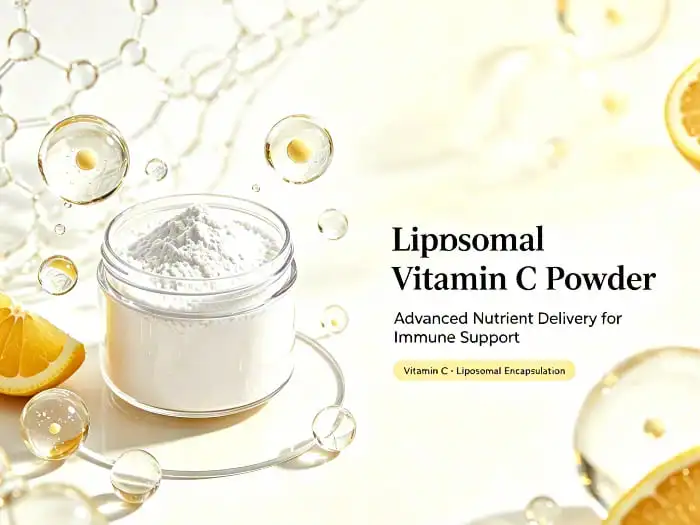
Understanding Vitamin C Powders: Liposomal vs. Standard
The Fundamental Structural Difference
Pure ascorbic acid crystals that dissolve in water make up standard vitamin C powder. This traditional form is widely used and cheap, but it has a lot of problems being absorbed in the digestive system. The body controls how much vitamin C it takes in through active transport systems that get full quickly. This creates a ceiling effect, where bigger amounts don't work as well.
With liposome technology, a more advanced option is now available. During the encapsulation process, tiny spheres about 100 to 300 nanometers in diameter are made. These spheres contain vitamin C that is covered by a double-layer phospholipid barrier. Using phosphatidylcholine from non-GMO sunflower or soybean lecithin, this structure is made up of the same parts as human cell membranes. The nano-level accuracy makes sure that the particles are spread out evenly, which is important for making sure that the dosage is the same from batch to batch.
How Absorption Mechanisms Differ?
Vitamin C transporters that rely on salt (SVCTs) are needed for traditional ascorbic acid to work in the lining of the intestine. In ideal conditions, these transporters become saturated at low amounts, which means that only about 200 mg of a dose can be absorbed. Any extra usually goes through the digestive system without being used, which can sometimes cause stomach pain.
Liposomal delivery gets around these problems in three ways: the phospholipid shell keeps vitamin C from breaking down in stomach acid; liposomes pass through intestinal walls without active transporting; and the structure of the lipids makes it easier for cell membranes to fuse directly. Plasma ascorbate levels studies show that liposomal versions keep therapeutic amounts for longer periods of time—often 6–8 hours compared to 2–3 hours for standard forms.
Performance Metrics That Matter to Formulators
For product makers, the success of a recipe depends on a number of factors. Third-party HPLC testing shows that our EncapsWell™ platform gets vitamin C purity levels above 99%. The encapsulation efficiency, or the amount of vitamin C that is successfully trapped inside liposomes, stays between 92 and 96% throughout all production runs. Stability tests show that liposomal powders that are made correctly keep more than 95% of their effectiveness for 24 months when stored in a controlled environment.
Bioavailability and formulation flexibility are both directly affected by the size range of particles. Microfluidic processing technology allows for exact control, and during large-scale production, clearance rates are over 99%. This level of uniformity stops differences between batches, which is a big problem for businesses that make nutraceuticals or functional drinks that want to go from pilot tests to full-scale production.
Key Factors Affecting Purchase Decisions in B2B Procurement
Quality Certifications That Build Trust
When purchasing professionals look at vitamin C ingredients, they look for quality qualifications that can be checked. Our production partner Wellgreen runs cGMP-certified factories that are regularly checked to make sure they meet ISO 9001, ISO 22000, FSSC22000, and HACCP standards. These certificates show that quality control was done at every stage of production, from checking the raw materials to releasing the finished product.
Testing by a third party is an important extra step of proof. Each batch of output is checked by a different company for cleanliness, heavy metals, microbes, and solvents that are still present. Every shipment comes with a Certificate of Analysis, which is the proof of traceability needed for government applications in more than 50 countries. Specialized certifications, like Halal, Kosher, Non-GMO Project Verified, and Vegan, let you reach new customers in certain market groups and meet buyer demands for clean-label products.
The legal environment requires detailed records. We offer full stability studies that show how well the product works in a range of temperature and humidity levels, which is important information for figuring out shelf life claims. Analytical method validation reports explain in detail the tests that were done to make sure the product was pure and effective. This meets the high standards of quality control teams at beauty supplement brands, functional food companies, and contract makers.
Formulation Flexibility and Supply Chain Considerations
Choosing the right packaging style has a big effect on how quickly products are made and how efficiently operations run. It is very flexible because liposomal vitamin C powder can be directly put into veggie capsules, pressed into tablets, or mixed into liquid formulas. Being able to dissolve in water makes it easy to use in drinks, like immunity shots and beauty drinks, without changing the taste or making the drink cloudy.
Buying choices are affected by minimum order quantities, especially for new brands that are trying out new product ideas. We set our MOQ standards so that they can be met by businesses of all sizes, from small development batches for the first stages of formulation work to large orders of more than 500 kilograms for production lines that are already up and running. This flexibility helps both R&D teams that are focused on new ideas and buying managers who are in charge of long-term supply deals.
Storage and transportation issues go beyond the things that need to be handled right away. Liposomal powders are more stable than liquid liposomal goods, so they don't need to be shipped in a cold chain and storage costs are lower. The concentrated powder format cuts down on freight costs, which is especially important for sending goods across foreign borders. Our operations in San Diego offer regional storage and fast sample logistics across North America, which makes the evaluation process easier for formulators in the U.S.
Dosage Optimization for Different Applications
Dosage is based on the needs of the application. Immune-support formulas usually have 500 to 1000 mg of liposomal vitamin C per dose. This is because liposomal vitamin C is more bioavailable, so it can reach appropriate plasma levels without causing stomach problems. Beauty-from-within goods that focus on collagen synthesis usually use 250–500 mg amounts, with an emphasis on the sustained release profile that helps the body keep making collagen all day.
It can be hard for people who make functional drinks to find the right balance between how they taste and how well they work. Liposomal coating lessens the sour taste of ascorbic acid, which lets higher amounts be used without overpowering flavor profiles. Most ready-to-drink drinks have 200–500 mg of antioxidants per dose, which is enough to protect against free radicals while still tasting good.
Synergistic arrangements make it possible to use more things. When you mix liposomal vitamin C with quercetin, the immune-modulating benefits are stronger. When you mix it with iron tablets, the iron is absorbed better, which helps with anemia more than iron alone. These smart formulations help brands set their goods apart in crowded markets while giving customers real, measured benefits that back up what they say in their ads.
Market Comparison and Supplier Insights
Technology Platforms and Manufacturing Capabilities
In the market for liposomal supplements, there are different ways to make them, and each has its own benefits. Although high-pressure blending can be scaled up to make a lot of products, the heat it creates may damage ingredients that are sensitive to it. Microfluidic processing is great for controlling particle size better with little degradation. It's perfect for high-end formulas where consistent absorption is worth the extra cost of production.
Our EncapsWell™ platform uses cutting edge microfluidic technology along with carefully managed blending settings. This mixed method strikes a balance between manufacturing efficiency and quality stability, allowing yearly production capacity to go over 100 metric tons while still meeting the exacting standards needed by picky B2B customers. The process makes very little waste and follows energy-saving rules, which is in line with brand partners' growing interest in green promises.
Supplier dependability goes beyond their professional skills. Manufacturers that have been around for a while have a history of delivering on time, providing good customer service, and being open about their production plans. Resilience in the supply chain is more important than ever—getting raw materials from a variety of sources and keeping enough safety stock on hand protect against problems that could delay the launch of your product or affect the market's ongoing supply.
Pricing Structures and Bulk Purchasing Strategies
To figure out how much liposomal products cost, you need to do more than just compare prices per kilogram. Although liposomal vitamin C powder usually costs three to five times more than regular ascorbic acid, its increased bioavailability makes it possible to use smaller amounts to achieve the same biological benefits. This balance helps to close some of the cost gap, especially when marketing claims stress better absorption as a high-end product feature.
Making a volume promise opens up better price levels. Annual supply deals with set minimums every three months usually cut costs by 15 to 25 percent compared to buying things on the spot. They also make inventory more predictable, which helps with planning production. Payment terms are also an important part of managing costs well. Net-30 or net-60 terms are better for cash flow than prepayment requirements, which are common with foreign sellers who don't have established buyer relationships.
The total cost of ownership includes more than just the price of the ingredients. International shipping delays can be avoided and inventory carrying costs can be lowered by storing goods in our San Diego location. Technical support that comes with supply deals, like help with formulation, advice on stability, and regulatory paperwork, is worth more than generic suppliers can offer, especially when coming up with new product ideas or joining new markets in different areas.
Natural vs. Synthetic Considerations
The material that vitamin C comes from affects both how it is classified by regulators and how it is marketed. A lot of the ascorbic acid that is sold in stores comes from multiple steps of making it, which usually begin with fermenting glucose. These man-made methods make molecules that are chemically similar to vitamin C molecules that appear naturally. They are cheaper and more consistent, which makes it easier to follow the rules set by regulators.
It costs more to get natural vitamin C from acerola cherries, camu camu, or rose hips, but natural products stores and health-conscious customers like it because it lets them make marketing claims about "whole food" or "plant-derived" goods. When natural and manufactured ascorbic acid are both liposomally encapsulated, there isn't much of a difference in their bioavailability. This is because the delivery method is so good that it cancels out any differences in how the vitamin C source is absorbed.
In this case, market placement leads the choice. Most mainstream nutraceutical brands focus on how cheap and pure manmade vitamin C is, while premium natural goods lines value plant sources even though they are more expensive. We can do both OEM and ODM work, which means we can find the right raw materials for your brand's positioning and the store outlets you want to reach.
Practical Applications and Formulation Tips for Industrial Clients
Integration into Nutraceutical Product Lines
Formulations that help the immune system make up the biggest application group. Seasonal health goods can use liposomal delivery's fast absorption profile to make claims about "fast-acting" immune support. Combination products that include vitamin C with zinc, elderberry, or echinacea work on multiple immunity pathways. This creates a wide range of protective traits that are highly sought after in health stores and online.
Post-recovery nutrition is a new area that is important for brands that make products to help women after giving birth. Liposomal vitamin C is good for sensitive people because it is easy on the stomach, and the collagen production support helps tissues heal. Medical nutrition businesses that make products to help people heal from surgery get similar benefits, though they have to be careful when going through regulatory pathways so they don't get labeled as drugs.
Exercise recovery supplements market to people with busy lifestyles who are worried about oxidative stress from intense training by using antioxidants to help the body heal. The prolonged plasma concentration profile protects against free radicals during recovery times, which backs up claims that it reduces muscle pain and speeds up adaptation. Liposomal vitamin C is often combined with anti-inflammatory plants like turmeric or tart cherry by sports nutrition makers to make full healing matrices.
Beauty-from-Within Formulation Strategies
People have become very interested in collagen drinks since they learned that vitamin C is an important part of making collagen. Direct addition of collagen peptides and support for vitamin C cofactors make for engaging product stories. Liposomal delivery adds to this story, making goods seem like high-end choices with better bioavailability than regular beauty supplements.
Vitamin C's antioxidant and melanin-regulating qualities are used in skin-brightening and anti-aging goods. Oral beauty pills with liposomal vitamin C and hyaluronic acid, ceramides, or astaxanthin work on a number of ways that skin ages. Clinical testing that shows real changes in skin hydration, flexibility, or brightness backs up marketing claims and allows higher prices to cover the costs of more expensive ingredients.
New ideas in packaging make the customer experience better. Single-serve sachets with ready-to-mix powders are convenient for people who are always on the go and make sure that doses are always the same. Effervescent tablet forms create interesting physical experiences—consumers see the fizzing as proof that the product is working and is strong. Our formulation team helps make these forms work better while keeping the liposomes stable during production and storage.
Functional Food and Beverage Development
It can be hard for people who make drinks to find the right balance between absorption, taste, clarity, and security. Liposomal packaging hides the naturally acidic nature of vitamin C, so higher amounts can be used without making the food too sour. Also, the phospholipid layer stops oxidative reactions that change the color or taste of juices or plant-based milk substitutes.
To be stable in liquid settings, the mixture needs to be carefully thought out. The pH level affects the stability of liposomes; the best pH levels to keep the shape of phospholipid bilayers are between 6.5 and 7.5. Compounds that damage liposome membranes should not be used in preservative systems. However, natural alternatives like rosemary extract or citric acid buffer usually work well. To keep liposomes from breaking down, thermal processing temperatures should stay below 75°C. This means that cold-fill or tunnel pasteurization methods are needed.
There are some great possibilities with ready-to-drink protection shots. Small portion sizes (50–100ml) allow for concentrated nutrient delivery, and higher prices cover the costs of the ingredients. The ease of use encourages repeat purchases, which creates long-term income lines. Brands that do well stress recipes that are backed by science and benefits that can be measured. Our technical documentation and absorption data directly support these marketing strategies.
Conclusion
The absorption benefit of liposomal encapsulation completely changes the costs of taking vitamin C supplements. Better uptake by cells means better effectiveness at lower doses, which makes up for higher chemical costs by making the product work better. Total formulation costs should be weighed against market placement chances when making procurement choices. Premium bioavailability claims support pricing that keeps margins safe while giving real value to customers.
Infrastructure for quality assurance tells the difference between serious suppliers and cheap vendors. Comprehensive licenses, testing by a third party, and clear documents are the building blocks for long-term relationships that work. Technical support services like formulating help, making sure the product is stable, and helping with regulations add strategic value above and beyond just supplying ingredients. This is especially important when dealing with complicated product development cycles.
FAQ
What makes liposomal vitamin C more bioavailable than standard powder?
Liposomal technology encases vitamin C molecules in phospholipid layers that keep them from breaking down in the digestive system and let cells absorb them directly. Standard vitamin C relies on gut carriers that get full very quickly. Liposomal forms get around these problems by fusing membranes together. Clinical tests show that liposomal administration can raise plasma concentration levels by up to 8 times.
How do I select between different liposomal vitamin C suppliers?
Check the particle size accuracy data, third-party testing procedures, and production certificates such as cGMP, ISO, and HACCP. Look over studies that show the strength stays the same during the stated shelf life. Check to see if the technical help and minimum order size are right for the size of your production. Before agreeing to a supply deal, ask for samples to check the solubility, taste, and compatibility with your particular formulation matrix.
Can liposomal vitamin C powder work in both capsules and beverages?
Yes, liposomal powders that are properly made can be used in a variety of dose types. Direct encapsulation in veggie capsules protects the structure of liposomes, and water-dispersible versions make it possible to mix them with drinks. To keep the liposomes' stability during thermal processing and pH optimization, beverage uses that work well need to be carefully managed. The formulation team at our company gives you advice that is specific to your goal format and manufacturing conditions.
Partner with a Trusted Liposomal Vitamin C Powder Supplier
EmerWell does more than just sell ingredients. We also offer full preparation services that turn your product ideas into vitamins that are ready to go on the market. Our EncapsWell™ platform blends our own microfluidic technology with cGMP production standards. This makes sure that every batch of liposomal vitamin C powder meets strict bioavailability requirements. Our PhD-led research and development team works with your formulation scientists to make sure that stability, dose, and regulatory compliance are all met when you're making immunity shots, beauty drinks, or high-end nutraceuticals. Email our San Diego team at info@emerwell-bio.com to talk about your project needs and get technical specs that are perfect for your application.
References
Davis, J.L., Paris, H.L., Beals, J.W., et al. "Liposomal-encapsulated Ascorbic Acid: Influence on Vitamin C Bioavailability and Capacity to Protect Against Ischemia-Reperfusion Injury." Nutrition and Metabolic Insights, 2016, 9:25-30.
Gopi, S., Balakrishnan, P. "Evaluation and Clinical Comparison Studies on Liposomal and Non-Liposomal Ascorbic Acid (Vitamin C) and Their Enhanced Bioavailability." Journal of Liposome Research, 2021, 31(4):356-364.
Hickey, D.S., Roberts, H.J., Cathcart, R.F. "Dynamic Flow: A New Model for Ascorbate." Journal of Orthomolecular Medicine, 2005, 20(4):237-244.
Padayatty, S.J., Sun, H., Wang, Y., et al. "Vitamin C Pharmacokinetics: Implications for Oral and Intravenous Use." Annals of Internal Medicine, 2004, 140(7):533-537.
Zhong, Q., Tian, J., Wang, B. "Recent Advances in Liposomal Nanoparticle-Based Formulations for Oral Delivery of Bioactive Ingredients." Current Opinion in Food Science, 2020, 39:165-172.
Carr, A.C., Vissers, M.C. "Synthetic or Food-Derived Vitamin C—Are They Equally Bioavailable?" Nutrients, 2013, 5(11):4284-4304.
Online Message
YOU MAY LIKE
High quality furniture manufacturer
_1776234266736.webp)