Jul 30, 2026
Liposomal vs Standard Glutathione: Which Form Is Preferred by Supplement Brands?
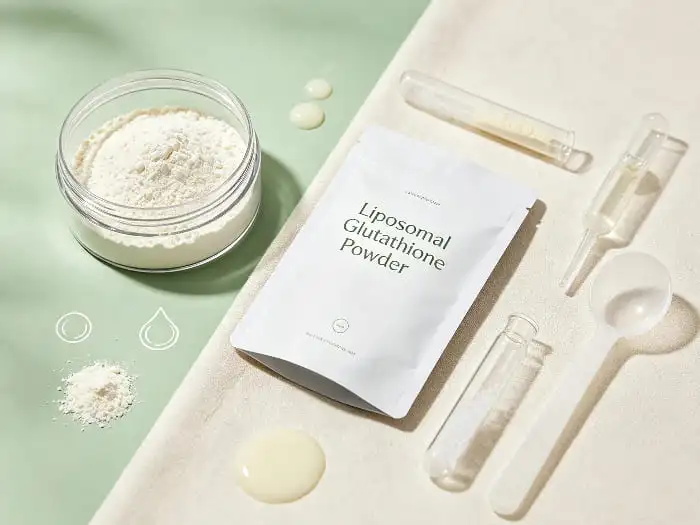
When evaluating glutathione delivery systems, supplement brands increasingly favor liposomal glutathione powder due to its superior absorption profile—delivering up to 13 times better bioavailability compared to standard formulations. This preference stems from the phospholipid encapsulation technology that protects the tripeptide through harsh gastrointestinal conditions, ensuring intact delivery to systemic circulation. As consumer demand escalates for efficacious antioxidant supplements across detoxification, skin brightening, and immune support categories, procurement teams recognize that liposomal variants justify premium positioning through measurable performance advantages that drive repeat purchases and brand differentiation.
Introduction
Glutathione is one of the most important antioxidants that your body makes itself. It helps clean out cells, keep your immune system in check, and keep your skin healthy. B2B buyers in the competitive nutraceutical market have to make a smart choice: they have to choose between regular glutathione powders and improved liposomal delivery systems. This choice has a direct effect on how well the product works, how happy customers are, and how competitive the market is. As brands work to make formulas that meet growing customer expectations for performance and transparency, it's important to know the technical differences between these forms. Oral glutathione supplements haven't always worked well because of problems with bioavailability. But new developments in lipid-based packaging technology offer promising answers. To make smart sourcing decisions that fit their brand's positioning and target audience, procurement managers, R&D directors, and contract manufacturers must look at both types through a number of lenses, including scientific validity, manufacturing scalability, regulatory compliance, and cost-effectiveness.
Understanding Glutathione Forms: Liposomal vs. Standard
The Bioavailability Challenge of Standard Glutathione
Standard 98–99% pure reduced glutathione powder is used to consume supplements orally. Buy this crystalline form cheaply and add it to pills, tablets, and powder blends. Research demonstrates a serious issue: gastrointestinal enzymes, notably gamma-glutamyltransferase, swiftly break down the tripeptide link before full absorption. Digestive gastric acid further degrades the molecule. Clinical trials demonstrate that most oral glutathione never reaches target organs. Even with pure substances, this concerns the therapeutic impact. Formulators have considered greater dosages due to this bioavailability bottleneck; however, if absorption processes are unreliable, additional milligrams won't assist. In addition to dissolving, conventional forms lack digestive protection. It's tougher for glutathione to reach cells to cleanse and act as an antioxidant.
Liposomal Encapsulation Technology Explained
Liposomal distribution technologies shift the usage of liposomal glutathione powder supplements by mimicking natural cell membranes. In phospholipid bilayers, 50–200 nanovesicles retain reduced glutathione molecules. In the stomach and small intestine, this structure shields the active component from enzymes and pH changes. Cells may immediately absorb them without sacrificing metabolism because the lipophilic top layer simplifies paracellular transfer and membrane fusion. High-pressure homogenization or ultrasonic cavitation in advanced manufacturing provides stable, homogenous liposomal structures that may be examined by transmission electron microscopy and DLS. We use EncapsWell™ to optimize particle size distribution and encapsulation efficiency, resulting in over 95% glutathione content and a 13-fold increase in bioavailability compared to unencapsulated powders. Pharmacokinetic studies reveal that liposomal dosage dramatically elevates plasma glutathione levels, with stable concentration curves indicating extended drug availability. This novel method solves the major issue with conventional transport, changing glutathione from a barely absorbed drug into a bioavailable, therapeutic supplement.
Clinical Evidence Supporting Enhanced Absorption
Recent research supports the performance disparity between delivery techniques. During controlled research, liposomal formulations increased plasma glutathione levels within 60 to 90 minutes and maintained them for 4 to 6 hours. Even with the same dosages, standard powder formulations didn't elevate plasma levels substantially, indicating they broke down before reaching the systemic level. Tests on cells demonstrate liposomal glutathione enters lymphocytes and erythrocytes more readily. This improves immunological function and cellular oxidative stress. Procurement teams should use high-quality ingredients when manufacturing items for choosy clients that value health results above pricing.
Key Benefits and Drawbacks of Liposomal and Standard Glutathione
Comparative Health Benefits for Product Positioning
Both types of glutathione have the basic antioxidant, cleansing, and skin health benefits that come with this master antioxidant. However, how well they are delivered affects how the customer actually feels. Liposomal versions work best when rapid systemic action is needed, like when people need help detoxing after being exposed to certain substances, when their immune systems are under a lot of stress, or when they want to brighten their skin quickly—they want to see results in weeks, not months. Better delivery to cells means that smaller doses are needed to get better results, which is a great value offer for brands that want to attract health-savvy customers. Standard glutathione can still be used as a maintenance supplement, in synergistic formulas where other chemicals help the body absorb it better, or in low-cost product lines for groups of people who are concerned about costs. Liposomal technology is especially helpful for beauty-from-within brands because tyrosinase inhibition and melanin reduction need stable intracellular glutathione present, which is hard to achieve with normal forms that aren't well absorbed. Sports nutrition uses the higher absorption to help muscles heal quickly after a workout by delivering nutrients quickly to the muscles and reducing inflammation. Formulators can match delivery technology with specific product claims and target consumer expectations when they understand these benefit profiles.
Format Versatility and Manufacturing Considerations
Liposomal Glutathione Powder exhibits exceptional recipe flexibility, blending easily into functional drinks, ready-to-mix packs, liquid shots, and capsules. Because it dissolves in water, it doesn't clump like regular powders do, and the taste-masking properties of the lipid layers get rid of the sulphur notes that can be unpleasant in drinking uses. Shelf-life stability testing shows that the drug's effectiveness is maintained for 24 months in controlled storage conditions. This eases worries about distribution for global supply lines. Standard glutathione powder makes it easy to package tablets and hard capsules, but because it is sensitive to moisture, care needs to be taken when packaging them. OEM and contract makers like liposomal forms because they are easier to process because they don't oxidise as much during production, perform the same from batch to batch, and can be used with both water-based and powder-based delivery methods without a lot of work. Our R&D center in San Diego often works with brand partners to find the best dosage forms. For example, they might change the particle size for certain uses or combine nutrients that work well together, like vitamin C or alpha-lipoic acid, to make formulations that work better together. This technical adaptability allows for quick product development cycles, which lets brands react quickly to new market trends while keeping quality consistent across all production levels, from small test batches to large commercial amounts.
Safety Profiles and Regulatory Compliance
Glutathione is generally thought to be safe (GRAS), and there is a lot of safety information supporting different ways to deliver it. Liposomal formulations that use food-grade phospholipids, which are usually derived from sunflower or soy lecithin, are in line with consumers' preferences for clean labels and meet the requirements for Non-GMO and vegan certification, which are becoming more and more important to North American consumers when making purchase decisions. For liposomal goods, strict quality control methods are needed to make sure they work properly, and normal HPLC potency tests aren't enough. Manufacturers who are responsible use dynamic light scattering to make sure the structure of the liposomes is intact, gas chromatography-mass spectrometry to make sure there are no solvent leftovers left over from the production process, and rapid stability testing that mimics the stresses that happen in the real world. Our manufacturing partner's cGMP-certified facilities follow all FDA rules for dietary supplements and also have several international certifications, such as ISO 22000, FSSC 22000, HACCP, Halal, and Kosher. This makes it easier for brands that sell in many different markets to get regulatory approval. This certification portfolio is especially helpful for OEM clients who are making products to sell because it gets rid of the need for extra paperwork and speeds up the time it takes to get the product to market. Standard glutathione providers have very different levels of quality control, so it's important to do a lot of research to make sure there aren't any heavy metals, microbes, or purity differences that could hurt the brand's image or put customers at risk.
Procurement Factors: Price, Suppliers, and Bulk Purchase Considerations
Cost Analysis and Pricing Dynamics
The difference in how advanced the technology is between versions is reflected in the current selling prices. Standard reduced glutathione powder costs between $80 and $150 per kilogram, depending on the purity grade, the location of the supplier, and the amount of the order. This makes it easy for brands to start making product lines that aren't too expensive. Liposomal Glutathione Powder is very expensive—usually between $180 and $350 per kilogram—because it is hard to make and needs special tools to do so. This is because it gives customers more value. When comparing options, procurement teams should look at cost-per-effective-dose instead of just the price of the ingredient. Because liposomes are 13 times more bioavailable than powder, 100 mg of them may give the same amount of systemic glutathione as 1,300 mg of powder. This can completely change how much something costs when it is made to specific therapeutic levels. Manufacturers usually offer 10-15% savings for orders over 500 kilograms and set up preferential pricing relationships with key partners who agree to quarterly minimums. Volume promises have a big effect on pricing structures. Our MOQ policy is open enough to let new brands try out liposomal technology with pilot batches starting at 10 kilograms. They can then easily scale up to full production runs of 2,000 kilograms per month without having to change the price or the recipe. This scalability is very important for brands going through growth phases because it keeps supplies steady as market demand rises without causing brands to make big inventory purchases too early, which hurts their working capital.
Supplier Evaluation Criteria for Quality Assurance
When choosing glutathione suppliers, you have to do a lot of research that goes beyond negotiating prices. Some important things to look at when judging a product are its manufacturing facility certifications, its analytical testing abilities, how well it documents batches, and how quickly it responds to technical support requests. Leading suppliers give full certificates of analysis that show HPLC-verified glutathione levels, ratios of reduced to oxidized substances, heavy metal screening results, microbiological testing, and residual solvent analysis. For liposomal products, you should ask for more proof that they are encapsulated well, like TEM images or data on particle size distribution from dynamic light scattering instruments. Being clear about where phospholipids come from helps with worries about allergens, and non-GMO verification standards are becoming more and more important for markets in the U.S. and Europe. Production capacity and scalability should be carefully looked at—suppliers must show that they can consistently meet rising demand while keeping quality standards high across all batch sizes. Lead times and logistics costs are affected by where the goods are shipped, but U.S. suppliers or companies with American distribution centers can be more responsive and keep the supply chain simpler. Because EmerWell has a strategic location in San Diego, we are able to support North American brands through localized inventory, fast sample delivery, and direct technical consultation with our PhD-led team. This eliminates the communication delays and time zone issues that make international sourcing relationships more difficult. Because the sites are close to each other, buyers can visit them, look at the production processes, and make sure they trust the quality of the products before committing to large-scale relationships.
Logistics and Storage Optimization
Paying attention to weather controls is needed to keep glutathione stable throughout the supply chain. Standard powder needs to be kept away from water, light, and high temperatures, so it is usually sent in double-sealed aluminum bags with desiccant packets inside. Liposomal powder is more stable because it is surrounded by protective lipids, but it still needs to be kept cool and dry to keep its integrity during storage and shipping. Our facility in San Diego has climate-controlled storage for goods and real-time temperature tracking to make sure the quality of the products from the time they are made until they are delivered. When compared to sending from overseas, this localized warehousing cuts transit times to U.S. names by a huge amount. It also supports just-in-time stocking strategies that improve cash flow and lower storage costs at buyer facilities. When planning transportation, it's important to choose carriers that have experience handling nutraceuticals, keep track of paperwork for the chain of custody so that it can be tracked, and make plans for what to do if there are problems with the operations. Strategies for buying in bulk should weigh the benefits of big prices against the costs of keeping inventory and keeping track of expiration dates. This is especially important for smaller brands that don't have a lot of storage space. Setting up quarterly deliveries instead of big yearly purchases can make the most of these trade-offs, getting better prices while keeping goods more regularly, which supports quality claims and cuts down on waste from old stock.

Which Glutathione Form Do Supplement Brands Prefer and Why?
Market research and distributor comments reveal that premium supplement companies in North America and Europe are increasingly embracing liposomal delivery technologies. Consumer awareness of bioavailability issues, social media discussions about absorption differences, and competitive pressure as early adopters use customer testimonials to prove their products work better influenced the change. The only way to obtain consistent cellular delivery for apparent skin lightening outcomes that lead to social proof and repeat sales is using liposomal technology; thus, beauty supplement firms have led this revolution. Functional beverage companies are using liposomal actives to overcome taste, stability, and dosing issues in liquid forms that are portable as well. Some contract manufacturers claim increasing specification requirements need liposomal encapsulation. In the crowded cleaning and immune support segments, new businesses must stand out. Budget-conscious consumers and mass-market merchants use normal glutathione, considering decreased bioavailability as a reasonable trade-off for cost per unit rather than efficacy. However, this market segmentation illustrates that both capsule forms may find niches. Consumer awareness and production economies of scale will cut liposomal pricing, favoring improved delivery technologies.
Making the Informed Decision: A Buyer's Guide for B2B Clients
Supply managers choose glutathione sources using structured assessment methods that balance several aspects. Before placing your merchandise, select how. Liposomes are effective for high-performance compositions. However, conventional forms may be employed in multi-ingredient matrices where synergistic absorption increase improves value. Determine your target's sophistication. Liposomal delivery is growing increasingly popular among online health and wellness lovers, making it vital for marketers targeting this segment. Evaluate manufacturing skills and tools. Adding liposomes seldom alters the process. Makers of beverages should evaluate their stability using pH, preservative, and packaging combinations. Obtain and review the supplier's validation data. Stability tests under accelerated settings that mirror real-world distribution constraints, bioavailability data from human pharmacokinetic trials, and third-party authorization for quality claims are needed. Cooperate with manufacturers that provide technical help beyond ingredients. Partnering may assist with dose, format, regulatory paperwork, and formulation issues when goods evolve. Double-sourcing or planned inventory gaps may strengthen your supply chain. It will prevent disruptions that might interrupt manufacturing and disappoint retail partners. For your brand's development and changing formulation demands in a complicated nutraceutical industry, the optimum supplier alliance offers competitive costs, dependable quality, rapid communication, scalable capacity, and true technical understanding.
Conclusion
When you look at liposomal and normal glutathione forms side by side, you can see that they work very differently. This is because they are bioavailable in different ways. Standard powder is still useful for cost-effective uses and formulations that work well together, but liposomal encapsulation technology solves the main absorption problem that has historically made oral glutathione supplements less useful. Liposomal glutathione powder is a prime example of this advancement. Brands that care about customer satisfaction, premium positioning, and measurable results choose more and more advanced delivery systems, even though they cost more because they know that better effectiveness justifies higher prices and keeps customers coming back. Instead of just looking at how much an ingredient costs, purchasing decisions should be based on a full analysis of the product's goals, its target audience, its position in the market, and the supplier's skills. The nutraceutical industry is moving toward more evidence-based manufacturing methods, and choosing the right transport technology is becoming just as important as choosing the right active ingredient for a product's success and brand differentiation.
FAQ
1. How quickly does liposomal glutathione show effects compared to standard forms?
Liposomal glutathione usually reaches its highest level in the blood within 60 to 90 minutes of being taken. Some users report feeling more energetic within days. After 4 to 8 weeks of regular use, you should be able to see that your skin is brighter. Standard glutathione doesn't raise plasma levels very much, and it takes longer (often 8–12 weeks) of supplementation to see results, providing that the right dose is taken to get around digestion problems.
2. Can liposomal glutathione support detoxification more effectively?
Liposomal versions improve cellular delivery, which directly benefits Phase II liver detoxifying pathways. This is where glutathione binds to toxins to get rid of them. Higher intracellular concentrations achieved through liposomal transport should help with detoxification more than normal forms that are badly absorbed, but both can do this as long as the body gets enough of them.
3. What administration methods maximize liposomal glutathione effectiveness?
Liposomal glutathione works well in a number of different types. Powders that are mixed with water on an empty stomach or in liquid forms work best for absorption. If they are made correctly, capsule forms work well. Some people may benefit from sublingual dosing because it allows for direct mucosal absorption, but good liposomal encapsulation already makes oral methods the most bioavailable.
Partner with EmerWell for Superior Liposomal Glutathione Supply
EmerWell creates advanced liposomal supplements using our own EncapsWell™ platform. These supplements deliver pharmaceutical-grade glutathione products that are proven to increase bioavailability by 13 times. Our offices in San Diego helps U.S. brands in a variety of ways, such as by quickly sending samples, letting customers talk to our PhD-led R&D team directly about technical issues, and storing ingredients in a way that keeps them fresh. We are a top Liposomal Glutathione Powder manufacturer, and our MOQs range from 10 kg for pilot batches to 2,000 kg per month. We also offer full OEM/ODM services and a wide range of certifications, such as cGMP, ISO 22000, Non-GMO, and Vegan. You can email our team at info@emerwell-bio.com to talk about customised formulation solutions, get technical documentation, or set up a meeting to talk about how we can make our manufacturing capabilities fit with your brand's needs and market goals.
References
1. Richie, J.P., Nichenametla, S., Neidig, W., et al. (2015). "Randomized controlled trial of oral glutathione supplementation on body stores of glutathione." European Journal of Nutrition, 54(2), 251-263.
2. Sinha, R., Sinha, I., Calcagnotto, A., et al. (2018). "Oral supplementation with liposomal glutathione elevates body stores of glutathione and markers of immune function." European Journal of Clinical Nutrition, 72(1), 105-111.
3. Anderson, M.E. (1998). "Glutathione: an overview of biosynthesis and modulation." Chemico-Biological Interactions, 111-112, 1-14.
4. Schmitt, B., Vicenzi, M., Garrel, C., Denis, F.M. (2015). "Effects of N-acetylcysteine, oral glutathione (GSH), and a novel sublingual form of GSH on oxidative stress markers. " PLoS ONE, 10(6), e0128788.
5. Witschi, A., Reddy, S., Stofer, B., Lauterburg, B.H. (1992). "The systemic availability of oral glutathione." European Journal of Clinical Pharmacology, 43(6), 667-669.
6. Bounous, G., Batist, G., Gold, P. (1991). "Whey proteins in cancer prevention." Cancer Letters, 57(2), 91-94.
Online Message
YOU MAY LIKE
High quality furniture manufacturer