Jul 28, 2026
Liposomal Vitamin C vs Ascorbic Acid: Which Is Better?
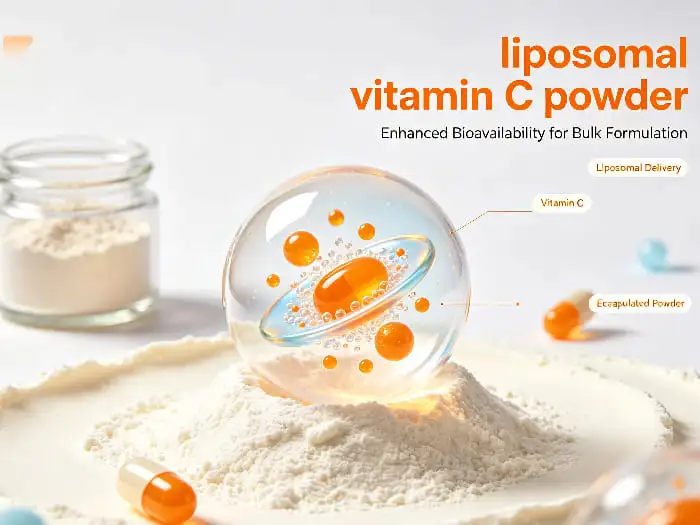
It is important to know the difference between liposomal vitamin C and regular ascorbic acid when making high-end drinks or pills that help the immune system. The goods don't work as well or as well in the market because of this difference. Because it is wrapped in phospholipids, liposomal vitamin C powder is 8 times more likely to be taken than regular ascorbic acid. So there will be less stomach upset, less need for a dose, and better uptake by cells. These are all important for brands that want to get people who care about how well their goods work to buy them. Traditional ascorbic acid can still be used for low-cost, high-volume jobs. However, when procurement teams know about these differences, they can choose ingredients that help formulation goals and strategies for standing out from the competition.
Understanding Liposomal Vitamin C and Ascorbic Acid
How these different types of vitamin C are given to the body is what makes them different. ASC is the pure chemical form of vitamin C. It can be made by mixing water with it. A very basic molecule that is often used to give drinks, pills, and tablets extra vitamins. It's easy to make, which keeps the cost down, but it has some problems. Passive diffusion through the intestinal walls, for example, makes it harder to take in, especially when the dose is high enough to cause saturation.
What Makes Liposomal Encapsulation Different?
It is covered by two very thin layers of phospholipids, which are chemically the same as the membranes of human cells. Since the design is based on biology, the nutrient can get past the acids in the stomach and be taken in straight through the enterocytes. Because of this? There is a lot of vitamin C in the blood, but it can't be absorbed as easily as normal vitamin C.
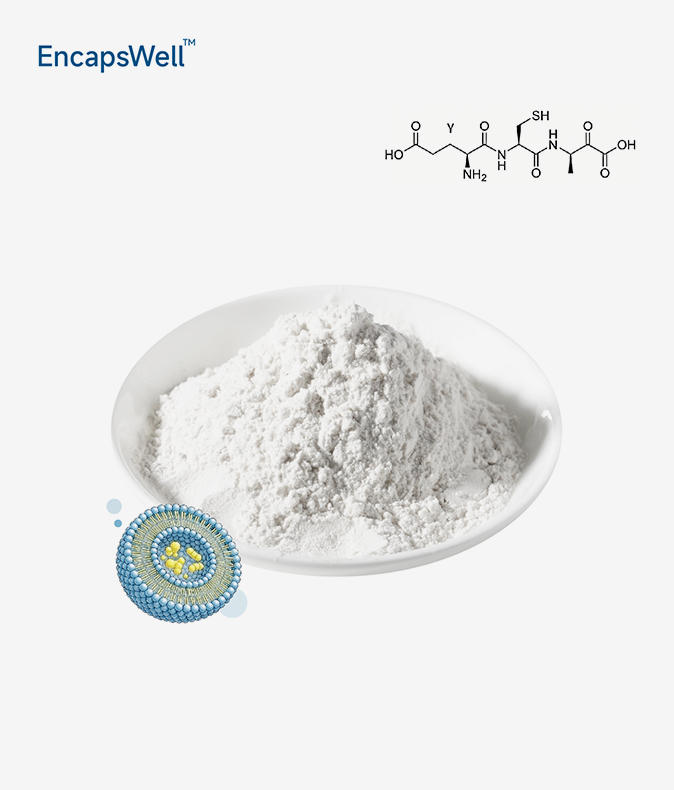
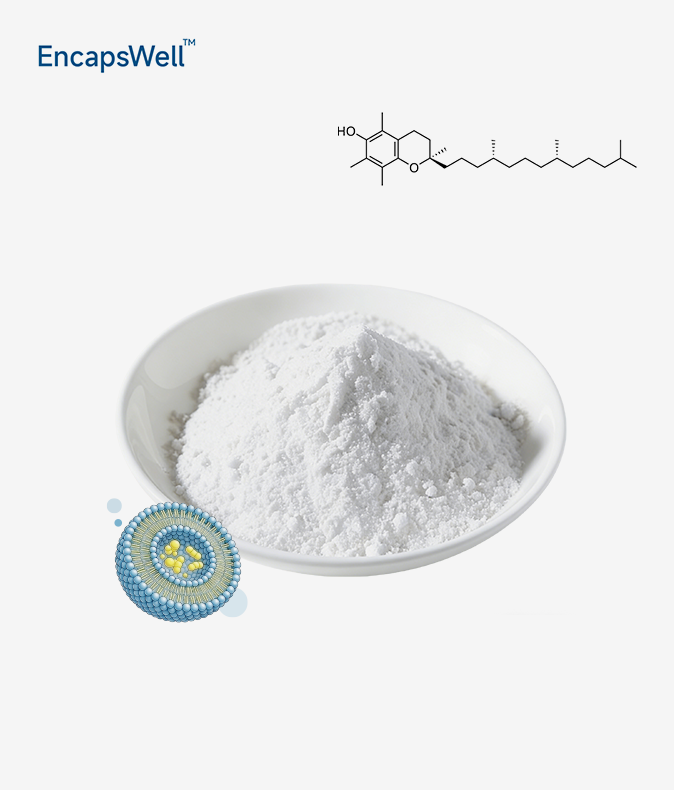
EmerWell's Encaps WellTM device uses nano-encapsulation to get particles smaller than 200nm. The goods are mixed with water to make sure they are safe. So, they can be used in both pills and drinks that are good for you. The phospholipid shell keeps ascorbic acid from breaking down when it is exposed to oxygen. It also helps with prolonged release, which means that the drug stays active for longer than with other forms.
Stability and Formulation Considerations
Water, heat, and light all break down regular ascorbic acid very fast. Companies that send drinks to warm places have a lot of trouble with this. After 24 months, our liposomal items are still more than 95% as strong as the day they were made. It meets the strict needs of world markets for a long shelf life. The covering of lipids keeps the vitamin C core safe from things that could damage it while it is being moved or stored.
Scientific Comparison: Effectiveness, Dosage, and Safety
Bioavailability tests show that these mixtures work very differently. It has been found that liposomal delivery systems can reach peak plasma concentrations (Cmax) that are 1.8–2.3 times higher than the same doses of ascorbic acid. The nutrients can be used for a long time, as shown by the area-under-the-curve (AUC) values.
Absorption Efficiency and Cellular Uptake
The sodium-dependent transporters in your body (SVCT1/SVCT2) get full when you eat more than 500 mg of vitamin C. It means that only 10 to 20% of the vitamin C you eat gets into your body. There is a way around this problem with liposome encapsulation: endocytosis and membrane fusion send nutrients straight into the cytoplasm without the need for transporters.
Our EncapsWellTM Liposomal Vitamin C powder keeps at least 99% of its ascorbic acid content while encasing it better than the norm in the business. This exact engineering makes sure that all production batches of supplements made by supplement brands and contract manufacturers work the same way and can be measured. This needs to be done to keep label claims true and customer trust high.
Dosage Optimization for Product Development
Traditional ascorbic acid forms need 1,000–2,000 mg per serving to reach therapeutic plasma levels. This makes it hard to choose how many to put in a pill or how many tablets to make. With 500–1,000 mg doses, liposome shapes work just as well or better. This saves money on materials and makes it easier for people to take their medicine because the delivery forms are smaller and easier to swallow.
We can still say that both versions are very safe. Some people can get mild gut problems like cramps and diarrhea from taking in too much ascorbic acid. This is especially true for people who are sensitive. Liposomal forms are better tolerated because they have a lipid layer that protects the nutrients from the mucosa and slows their release.
Market Analysis and Procurement Insights
More and more, bioavailability-adjusted cost projections are being used instead of just the price per kilogram when deciding what to buy. Liposomal chemicals generally cost 2.5–4 times more per unit than ascorbic acid. However, because they are better absorbed, they can be dosed at 40–50% lower amounts, which lowers the real cost difference for finished goods.
Supplier Ecosystem and Quality Benchmarks
A lot of the companies that make liposomal vitamin C are specialized and have high-tech facilities for encapsulation. Some important things to look over are:
To make sure the particles are properly encapsulated, reliable providers offer laser diffraction reports that show uniform distribution below 300 nm. This is the smallest size needed for optimal absorption in the intestines. EmerWell tracks quality in real time at our R&D center in San Diego. We use dynamic light scattering and transmission electron microscopy to check each batch of output by a team led by a PhD.
Our products have been checked for ISO9001, ISO22000, FSSC22000, HACCP, cGMP, Kosher, Halal, and non-GMO standards, which lets them be sold all over the world. You need to fill out this important paperwork to meet FDA rules, EU Novel Food rules, and registration requirements for markets that are growing. There is more to these credentials than just paper. They prove that the systems for tracking and controlling production are real and will protect your brand from problems in the supply chain.
OEM and Private Label Opportunities
Customizable liposomal mixes give contract makers and supplement brands an edge over their competitors. EmerWell provides full OEM/ODM services that help with:
- Synergistic formulations: Combining vitamin C with zinc, quercetin, elderberry, or bioflavonoids can help the immune system in specific ways.
- Format flexibility: You can choose from ready-to-fill powders for capsules, effervescent bases, liquid-stable emulsions, or granulations that are ready to be put in a sachet.
- Branding integration: White-labeled solutions and made to your exact specs, backed by full legal support packages that include certificates of analysis, stability studies, and export paperwork.
Our partnership with Wellgreen's cGMP-certified factories means that we can produce more than 100 metric tonnes of food every year, and we can tailor our products to different regulatory environments by making them more stable in humid climates or more specialised to meet kosher supervision standards.
Application Scenarios and Solution Recommendations
To choose the best Liposomal Vitamin C powder format, you need to make sure that the characteristics of the ingredients fit with the product's positioning and the people you want to sell it to. We've seen clear application trends across a range of client groups that help us with strategic sourcing.
Premium Immune-Support and Longevity Formulations
Liposomal forms are clearly better for brands that make high-efficacy supplements, especially those that are aimed at biohacker groups or combine vitamin C with NAD+ precursors and resveratrol. The better bioavailability backs up strong claims of "clinically effective dose" without needing multi-gram servings that are hard for people to follow.
A client in the nutrition industry recently changed the recipe for their best-selling immunity blend. Instead of 2,000 mg of ascorbic acid, they used 750 mg of our EncapsWell™ liposomal powder. According to customer comments, the product seemed to work better and cause fewer stomach problems, which led to 23% more return purchases in six months. The formulation's smaller capsule size also helped it stand out on the shelf compared to competitors that stuck to big tablets.
Functional Beverages and Beauty-from-Within Products
Water-dispersible liposomal ingredients solve two problems that drink makers have had for a long time: masking tastes and keeping the ingredients stable in suspension. Standard ascorbic acid adds sharp acidity and rusty notes, which means that too much sweetness is needed, which goes against the clean-label stance. Phospholipid coating lessens these effects on flavour and stops colour changes caused by oxidation during storage.
Beauty drink companies particularly value the collagen-synergy story—vitamin C's role in hydroxyproline formation naturally pairs with hydrolyzed collagen peptides, and our liposomal delivery ensures sufficient systemic availability to support dermal matrix synthesis. One cosmeceutical partner incorporated our ingredient into a ready-to-drink collagen shot, achieving a 14-month ambient stability profile that eliminated cold-chain distribution costs.
Cost-Conscious Bulk Applications
Traditional ascorbic acid is still good for mass-market multivitamins that don't cost too much, fortifying factory foods, and other uses where fast breakdown is more important than good absorption. The procurement teams in charge of these categories put a high priority on regular crystalline grades that meet USP or EP monographs, as well as supply lines that are stable and don't change much when raw materials do.
How to Procure Liposomal Vitamin C Powder and Ascorbic Acid Effectively?
Strategic procurement takes into account technical requirements, supplier dependability, and the total cost of ownership. Clear definitions of requirements and strict evaluation methods for suppliers are necessary for agreements to work.
Defining Technical Requirements
Start by giving clear details about the vitamin C test (we promise ≥99% for both liposomal and normal grades), the particle size distribution, the moisture content, the microbiological limits, and the encapsulation efficiency (we aim for >90% for liposomal forms). Ask for test data that proves the stability under the storage settings you want, such as room temperature, refrigeration, or rapid aging.
Regulatory coordination is just as important. Make sure the paperwork from the supplier meets the needs of the market it's going to. For example, kosher or halal certification for Middle Eastern distribution, non-GMO verification for natural channels in North America, and specific heavy metal limits that meet California Prop 65 thresholds.
Evaluating Supplier Capabilities
Look beyond price quotes to assess operational maturity. Key due diligence areas include:
Manufacturing infrastructure: Separated liposomal production lines stop cross-contamination and make sure that each batch is the same. Our Wellgreen partner facilities keep separate encapsulation suites with controlled temperature and humidity. This is important for making sure that phospholipids are hydrated and vesicles form consistently.
Technical support depth: Complex formulations require responsive R&D collaboration. EmerWell's San Diego-based laboratory team provides localized support for U.S. customers, including compatibility testing, custom blend development, and rapid sample turnaround—advantages that offshore-only suppliers struggle to match. Our scientists hold advanced degrees in lipid biochemistry and pharmaceutical sciences, bringing genuine expertise to formulation troubleshooting.
Supply chain transparency: Request batch traceability documentation, third-party testing reports, and backup plans for when raw materials run out for Liposomal Vitamin C powder. We keep strategic stockpiles of phospholipids and relationships with multiple sources of ascorbic acid to protect our clients from single-point supply failures.
Negotiating Terms and Logistics
Minimum order quantities for liposomal ingredients typically range from 25 kg and 100 kg, which is because of how they are made and how much they cost. Balance MOQ against the costs of keeping supplies and the time it takes to create a new product. EmerWell allows for flexible pilot-scale runs (as little as 5 kg) for testing reasons. Once formulations are stable, they can be scaled up to market amounts.
Lead times are usually between 4 and 6 weeks for standard specifications and between 8 and 10 weeks for custom blends that need to be tested for stability. Our U.S. warehouse operations in San Diego allow us to quickly send out samples and complete smaller reorders for customers who would rather not deal with the logistics of foreign shipping.
Conclusion
The choice between liposomal vitamin C and ascorbic acid ultimately hinges on your product strategy and customer value proposition. Liposomal formats command premium positioning through demonstrably superior bioavailability, enhanced tolerability, and formulation flexibility—attributes that justify higher ingredient costs for brands emphasizing efficacy and innovation. Traditional ascorbic acid remains efficient for applications prioritizing affordability and simplicity. Rigorous supplier evaluation, specification clarity, and long-term partnership orientation ensure procurement decisions support both immediate production needs and evolving market opportunities across nutraceutical, functional food, and cosmeceutical categories.
FAQ
Can liposomal vitamin C completely replace ascorbic acid in existing formulations?
Substitution is based on the style of supply and the need for stability. Liposomal forms work well in pills, sachets, and drinks that are meant to help with absorption. Standard pills that depend on certain compression properties or immediate-release features might need to be reformulated. To make sure that your production conditions don't affect the dissolution rates, interactions between excipients, or shelf stability, we suggest that you test for compatibility.
What quality control measures differentiate premium liposomal suppliers?
Advanced providers offer particle size distribution analysis, measurement of encapsulation efficiency using spectrophotometry or chromatography, and accelerated stability data for 36 months in line with ICH standards. Ask for Certificates of Analysis that show the presence of heavy metals (such as lead, arsenic, cadmium, and mercury), the absence of microbes, and the assaying of vitamin C by HPLC instead of simple titration—methods that confirm both identity and potency without interference from other reducing agents.
How do liposomal formulations affect product shelf life compared to standard ascorbic acid?
If Liposomal Vitamin C powder is made correctly, it stays more stable than unprotected ascorbic acid, keeping more than 95% of its potency for 24 months at room temperature. The phospholipid covering protects the nutrient from oxygen, water, and light, which are the main things that break down nutrients. This longer shelf life cuts down on waste, allows for longer distribution channels, and makes it cheaper for both manufacturers and retailers to keep inventory on hand.
Partner with a Trusted Liposomal Vitamin C Powder Supplier
EmerWell delivers science-backed liposomal vitamin C powder formulations engineered for market success. Our EncapsWell™ platform, developed within our San Diego R&D Center, combines proprietary encapsulation technology with the manufacturing scale of our strategic partner Wellgreen's cGMP-certified facilities. Whether you're developing premium immune supplements, functional beverages, or beauty-from-within products, we provide complete OEM/ODM support—from concept through commercialization. Our U.S.-based team offers localized technical consultation, rapid sample logistics, and warehousing services that simplify procurement workflows. Contact our specialists at info@emerwell-bio.com to discuss custom formulations, request detailed product specifications, or arrange feasibility testing for your next innovation.
References
1. Davis, J.L., Paris, H.L., Beals, J.W., et al. (2016). "Liposomal-encapsulated Ascorbic Acid: Influence on Vitamin C Bioavailability and Capacity to Protect Against Ischemia-Reperfusion Injury." Nutrition and Metabolic Insights, 9:25-30.
2. Hickey, S., Roberts, H.J., Miller, N.J. (2008). "Pharmacokinetics of Oral Vitamin C." Journal of Nutritional & Environmental Medicine, 17(3):169-177.
3. Padayatty, S.J., Sun, H., Wang, Y., et al. (2004). "Vitamin C Pharmacokinetics: Implications for Oral and Intravenous Use." Annals of Internal Medicine, 140(7):533-537.
4. Łukawski, M., Dałek, P., Borowik, T., et al. (2020). "New Oral Liposomal Vitamin C Formulation: Properties and Bioavailability." Journal of Liposome Research, 30(3):227-234.
5. Carr, A.C., Maggini, S. (2017). "Vitamin C and Immune Function." Nutrients, 9(11):1211.
6. Gopi, S., Balakrishnan, P. (2021). "Evaluation and Clinical Comparison Studies on Liposomal and Non-Liposomal Ascorbic Acid in Human Volunteers." Journal of Liposome Research, 31(4):356-364.
Online Message
YOU MAY LIKE
High quality furniture manufacturer
_1776234266736.webp)