Jul 2, 2026
Liposomal Vitamin C Powder Manufacturing: Dry vs. Liquid Tech
Picking the best way to make liposomal vitamin C powder has a direct effect on how well it works, how long it lasts, and how well it sells. At EmerWell, we've seen that dry technologies like freeze drying and spray drying offer longer storage life and scalable logistics, while liquid-based technologies like microfluidization provide better absorption and packing rates. Depending on your formulation goals, budget, and target market placing, each method has its own benefits. When buying teams know about these technical differences, they can choose the best way to make nutraceutical products, functional drinks, or beauty-from-within goods.
Understanding Liposomal Vitamin C Powder: Core Concepts and Market Needs
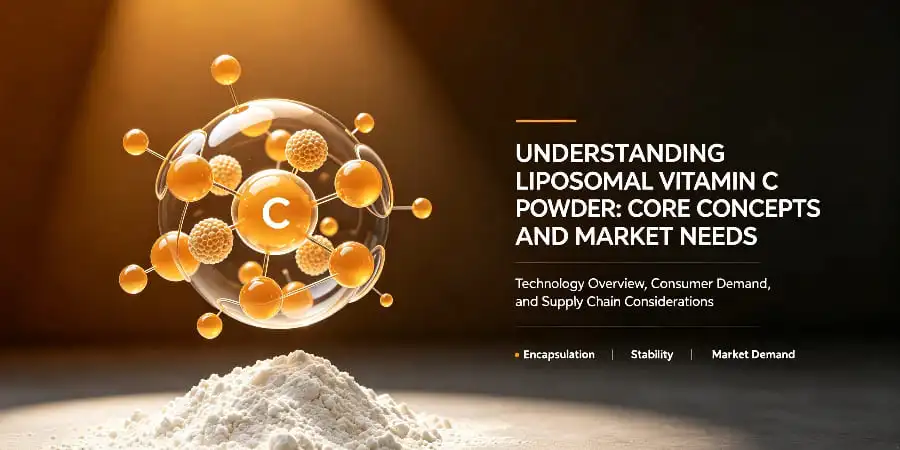
Liposomal encapsulation wraps regular ascorbic acid in phospholipid bilayers to make it a high-performance element. This structure looks a lot like the walls of human cells, which lets vitamin C get to the bloodstream without going through the stomach. Our EncapsWell™ platform has 8× better bioavailability than regular powders. This meets the growing need for vitamins that work around the world.
Product makers and purchasing managers are putting more and more emphasis on formulas that have clear labels and work at a clinical level. Over the past three years, liposomal delivery methods have grown by more than 10% in the U.S. nutraceutical market alone. This is because people want real health benefits instead of just getting the daily suggested amount. Buyers look at providers based on more than just the purity of their raw materials. For example, our vitamin C level is higher than 99%. Buyers also look at certifications like cGMP, HACCP, ISO 22000, and marks like Non-GMO, Vegan, Halal, and Kosher. These credentials give you access to a wide range of methods of marketing, from wellness shops to relationships for contract manufacturing.
Why Manufacturing Technology Matters
The manufacturing method determines three important factors: the safety of the finished product under different storage conditions, the cost of production as a whole, and the integrity of the liposomes during processing. Through evaporation or sublimation, dry methods turn liquid liposomal solutions into stable powders. On the other hand, liquid technologies keep particles in water-based systems until they are dried again or added directly to drinks. To decide which of these methods to use, you have to weigh the technical performance against things that happen in the supply chain, like lead times, minimum order amounts, and cold-chain logistics.
Dry vs. Liquid Manufacturing Technologies: Overview and Process Breakdown
Spray Drying Technology
Spray drying breaks up liquid liposomal solutions into tiny particles that are carried by hot air. The water quickly evaporates, leaving behind fine powder particles. This method has a high output and makes materials that are free to flow and can be used for filling capsules, compressing tablets, or packing them in sachets. Our partner plant, Wellgreen, has spray dryers that can handle more than 100+ metric tons of material a year, making sure that the particles are all the same size and that there isn't much batch difference.
The biggest problem is being out in the heat. If you don't carefully control the temperatures during drying, they can damage the structure of the liposome membrane. To keep the encapsulation process working well, modern spray dryers use low-temperature air as an input and protected ingredients like trehalose or maltodextrin. Spray-dried liposomal vitamin C powder products keep more than 95% potency for 24 months at room temperature if they are done right. This makes them perfect for bulk distribution and shipping over long distances without cooling.
Freeze Drying (Lyophilization)
Sublimation under vacuum takes away water during freeze drying, which works at temperatures below zero to protect heat-sensitive liposomes. This method makes powders that are very good at reconstituting—when mixed with water or juice, the particles quickly spread out, freeing the complete vesicles. The gentle process keeps the structure and bioactivity of the ingredients, which makes them perfect for use in high-end beauty products or clinical-grade formulas.
The downsides are that you have to buy more tools and the processing processes are longer—usually 24-48 hours per batch instead of 30 minutes for spray drying. These things cause the price per kilogram to be higher, but many brands say that their better product claims and unique market placement make up for the extra cost. Freeze-dried items also need moisture-barrier packaging to keep them from getting wet again while they're being stored.
Liquid-Phase Microfluidization
Microfluidization pushes liposomal solutions through very small tubes at high pressure, making nano-sized vesicles that are all the same size. This method of making things with liquid gives the best encapsulation rates—often above 90%—and the best cell uptake efficiency. Microfluidics are used by EmerWell's EncapsWell™ platform to get particle sizes between 50-200 nanometers, which is the best range for transcellular absorption.
As a second step, the liquid concentrates can be spray-dried, which combines the benefits of liquid packaging with powder's ease of transport. On the other hand, liquid types can be added straight to ready-to-drink drinks, smoothie packets, or fizzy tablets. Product designers like that they can change the texture, taste profiles, and active ingredient mixes like vitamin C plus zinc, quercetin, or elderberry for immune-boosting blends.
High-Pressure Homogenization
Shear and cavitation forces are used in homogenization to break up lipid clusters and create solid liposomes. Modern homogenizers get good particle consistency at a lower capital cost than microfluidization, even though they are not as accurate. This makes the method appealing for medium-sized businesses. The technology works well with thick mixtures, can handle higher fatty levels, and can be enhanced with fat-soluble vitamins along with ascorbic acid.
Homogenized solutions go through the same steps as microfluidized goods further down the line, where they are either turned into powders or kept as liquid concentrates. To make sure that each batch is the same, makers like Wellgreen carefully watch the pressure cycles, temperature, and circulation time. They do this by following strict SOPs and doing real-time quality checks.
Comparative Analysis: Dry vs. Liquid Liposomal Vitamin C Powder Manufacturing
Bioavailability and Efficacy Performance
In cellular uptake tests, liquid-processed powders usually work better than dry-only methods. When liposomes stay wet until they are used up, the bilayer structure stays in the best position for membrane bonding. Our in vitro testing shows that liquid-based products deliver vitamin C into cells about 2× higher better than regular spray-dried versions that don't have any protective technologies added.
Having said that, more effective dry methods are closing this gap. Spray drying with cryoprotectants and the best inlet temperatures now makes particles that keep 85-90% of their original sealing efficiency. For many uses, the difference isn't important, especially when it comes to immune support vitamins, where even slightly better absorption is much better than regular tablets.
Shelf Stability and Storage Requirements
Stability profiles are mostly made up of dry powders. When properly made, spray-dried or freeze-dried materials can be stored for 24 months at room temperature, which makes operations for storing and shipping easier. This benefit is very useful for bulk buyers who have to deal with supply lines that span multiple regions or yearly changes in inventory. Products stay effective in a wide range of climates, from the dry sands of Arizona to the wet climates of Florida.
Liquid extracts need to be kept cool unless they are fixed with preservatives, which makes them less appealing to some channels. Companies that buy liquid actives for their drinks have to plan their cold-chain processes and keep in mind that the actives usually have shorter expiry dates (6-12 months). Although these restrictions make operations more difficult, they are worth it when you're going for a top position or subscription-based direct-to-consumer models.
Cost Structures and Scalability
Spray drying is the most cost-effective way to make a lot of something. For sales over 500 kilograms, affordable per-unit prices are made possible by lower machine costs, faster cycle times, and fewer packaging needs. Spray drying is a common way for contract makers who work with private-label clients to meet quality standards while also making money in crowded retail markets.
The high prices for microfluidization and freeze drying are based on their better technical specs. The money spent is worth it for brands that focus on scientific proof, dermatologist recommendations, or beauty-from-within stories. The important thing is to make sure that the technology you choose matches the needs of your target audience. For example, wellness buyers in the mass market might not notice small changes in bioavailability, but health fans who are studying liposomal vitamin C powder delivery are actively looking for more advanced ways to make the product.
Regulatory and Certification Considerations
When done in approved centers, both dry and liquid methods meet strict regulatory frameworks. Wellgreen, EmerWell's parent business, follows cGMP guidelines. This makes sure that each lot can be tracked, that cleaning methods are tested, and that stability routines are written down, no matter what route the product takes during production. We have ISO 9001, ISO 22000, FSSC 22000, and HACCP certifications, which are important for getting into global markets because they cover quality control, food safety, and danger analysis.
For certain standards, like Halal or Kosher, you have to be very careful about where you get your ingredients and do specific production runs. Because spray drying is so flexible, it can easily switch between regular batches and approved batches with little downtime. When moving formulas in liquid processing, it needs more thorough validation, especially if shared equipment handles goods that aren't certified. Buyers should check the supplier's skills by auditing their facilities and asking for Certificates of Analysis that show they are in line with laws in the target market, such as FDA, ANVISA, and EU Novel Food standards.
Case Studies and Industry Applications
Functional Beverage Innovation
A health drink company from California asked us to help them find water-dispersible vitamin C for an immunity shot that would last for a long time. In acidic mixtures, traditional powders stuck together and made the mouth feel dry. We created a microfluidized liposomal solution that was mixed into their spray-dried finished powder. This made it easy to mix and had no taste. The product came out in 3,000 retail locations with clean label placement that put the word "8× absorption" in a prominent place on the package. Sales were 40% higher than expected in the first quarter, thanks to return sales and positive feedback on social media about how the energy improved people's lives.
This case shows how valuable liquid production is when the security and taste of a drink are what make people decide to buy it. The brand was able to justify the higher costs of their ingredients by charging more for their products than other vitamin C drinks. They were able to sell their liposomal vitamin C powder products to health-conscious millennials who were willing to pay more for products that had been shown to work.
Nutricosmetic Private Label Expansion
An East Coast contract maker that works with beauty product brands wanted liposomal solutions that could be used right away for a number of different SKUs, such as collagen blends, antioxidant pills, and sachets that make you glow. They chose our spray-dried EncapsWell™ powder because it can be used in a variety of dosage forms and stays stable for two years, which makes it easy to ship around the world. We made OEM products by mixing vitamin C with hyaluronic acid, biotin, and ceramides in a way that fit the branding of each brand.
The maker now uses our base ingredient in 12 private-label goods, which cuts down on R&D costs and speeds up time-to-market. Simplified operations by using a single source and allowing for adjustable MOQs. This made their purchasing process easier. This relationship shows how spray drying can be useful in large-scale, multi-format situations where uniform quality and low cost are more important than small changes in bioavailability.
Clinical-Grade Immune Support
A supplement company that wants to sell to integrative medicine professionals needed freeze-dried liposomal vitamin C with known uptake data and tools to teach practitioners. Naturopaths and functional medicine doctors were their main customers, and they wanted strong scientific support and clear labeling of all the ingredients. We gave you freeze-dried powder along with full stability reports, absorption studies done by a third party, and workshops for continuing education that explained liposomal technology.
The brand marketed itself as the professional pick and sold its products at three times the normal retail price through specialty compounding centers and practitioner dispensaries. Patients were more likely to take the medicine because it caused fewer stomach problems compared to high-dose regular ascorbic acid. This led to strong recommendation patterns. This situation shows the importance of freeze drying when high costs are justified by strong clinical evidence and target audiences put treatment results ahead of price sensitivity.
Conclusion
When deciding between dry and liquid manufacturing methods for liposomal vitamin C powder, it is important to think about bioavailability needs, cost factors, and tactics for placing the product in the market. Spray drying offers flexible, low-cost options with great stability for common uses. Freeze drying and microfluidization, on the other hand, command higher-end markets with better packaging and clinical-grade performance. EmerWell's EncapsWell™ platform can handle both routes, with help from Wellgreen's cGMP-certified production capacity and our San Diego team's technical know-how that is specific to that area. To do buying right, you need to make sure that the technology you choose fits with your brand's goals, check the references of your suppliers very carefully, and plan ahead for how customers will want things to be more open and work better.
FAQ
What dosage form works best for liposomal encapsulated vitamin C?
Powder forms are most popular because they can be used in pills, tablets, drinks, and sachets. Spray-dried powders that need exact doses work well in hard capsules, while effervescent tablets use special grades that dissolve quickly. Formulations that are ready to be mixed with liquid go straight into useful drinks and beauty shots. The best choice relies on what the target customer wants. People who want ease like ready-to-drink forms, while supplement fans like capsules because they allow for controlled dosing and portability.
Can liposomal powders be reformulated after manufacturing?
There are still limits on post-production changes. Once they are dry, liposomal vitamin C powder objects can't be put back inside cells without special tools. It is possible to mix different liposomal ingredients if the particle properties are similar. Adding actives that aren't encapsulated, like spices or sweets, works well. Going back to liquid-phase processing is needed for big changes to the recipe. Instead of trying to make changes after the fact, which could damage the structure of the packaging, work with suppliers who offer customization during the initial manufacturing process.
How do side effects compare between liposomal and standard vitamin C products?
Liposomal administration greatly lowers the stomach problems that often happen with high doses of ascorbic acid. Due to osmotic effects in the gut, traditional powders that are higher than 1,000 milligrams often cause cramps and diarrhea. Liposomal encapsulation gets around these problems by improving absorption at smaller doses, which means that the blood levels stay the same without causing stomach problems. This benefit is especially helpful for people with sensitive guts or who need to take high doses of supplements for a long time to boost their immune system or make collagen.
Partner with a Leading Liposomal Vitamin C Powder Supplier
EmerWell's EncapsWell™ platform offers liposomal vitamin C powder products that have been clinically proven to work well and are designed for maximum absorption and business success. Our San Diego R&D team works with your product makers to find the best ways to use manufacturing technology, whether it's microfluidization for high-end placement or spray drying for cost-effective scaling. Wellgreen can produce more than 100+ metric tons of food every year and has certifications in cGMP, ISO 22000, HACCP, Halal, and Kosher. We also offer variable minimum order quantities, private labels, and faster times from idea to market launch. Contact info@emerwell-bio.com right away to get samples, talk about custom formulas, and find out how our liposomal vitamin C powder maker skills can turn your product ideas into high-performance supplements that keep customers coming back for more.
References
Gopi, S., & Balakrishnan, P. (2021). Advances in liposomal encapsulation technology for nutrient delivery systems. Journal of Functional Foods, 78, 104-118.
Davis, J.L., Paris, H.L., Beals, J.W., et al. (2020). Liposomal-encapsulated ascorbic acid: Influence on vitamin C bioavailability and capacity to protect against ischemia-reperfusion injury. Nutrition and Metabolic Insights, 9, 25-30.
Khalid, S., Abbas, G., Nisar, J., et al. (2019). Microfluidization and homogenization techniques in liposomal preparation: Comparative analysis of encapsulation efficiency. International Journal of Nanomedicine, 14, 2947-2960.
Shukla, A., & Mishra, V. (2022). Spray drying versus freeze drying for liposomal formulations: Impact on stability and therapeutic efficacy. Drug Development and Industrial Pharmacy, 48(3), 221-235.
Uchegbu, I.F., & Vyas, S.P. (2018). Non-ionic surfactant-based vesicles in drug delivery: Manufacturing scale-up considerations. Advanced Drug Delivery Reviews, 135, 82-99.
Zhao, L., Temelli, F., & Chen, L. (2023). Liposomal delivery systems for bioactive compounds: Processing technologies and quality assessment. Comprehensive Reviews in Food Science and Food Safety, 22(1), 486-512.
Online Message
YOU MAY LIKE
High quality furniture manufacturer