May 20, 2026
Liposomal Vitamin C: Benefits and Frequently Asked Questions
Ascorbic acid administration has been improved with liposomal vitamin C powder, which contains vitamin C molecules inside phospholipid bilayers that mimic natural cell membranes. This encapsulation technology addresses the primary bioavailability limitation that comes with regular vitamin C supplements: absorption plateaus at approximately 20% for doses exceeding 1 gram. This lipid-encapsulated structure allows the nutrient to bypass gastric degradation, achieving up to 8‑fold higher bioavailability than regular ascorbic acid powders. In the nutraceutical and functional food industries, purchasing managers, formulators, and distributors recognize that this ingredient is essential for making high-performance immune support, antioxidant, and beauty-from-within products that meet consumer expectations for rapid efficacy.
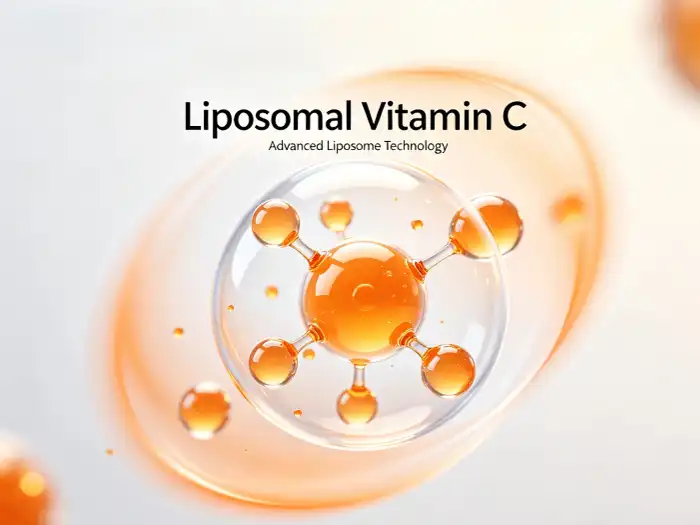
What is Liposomal Vitamin C Powder?
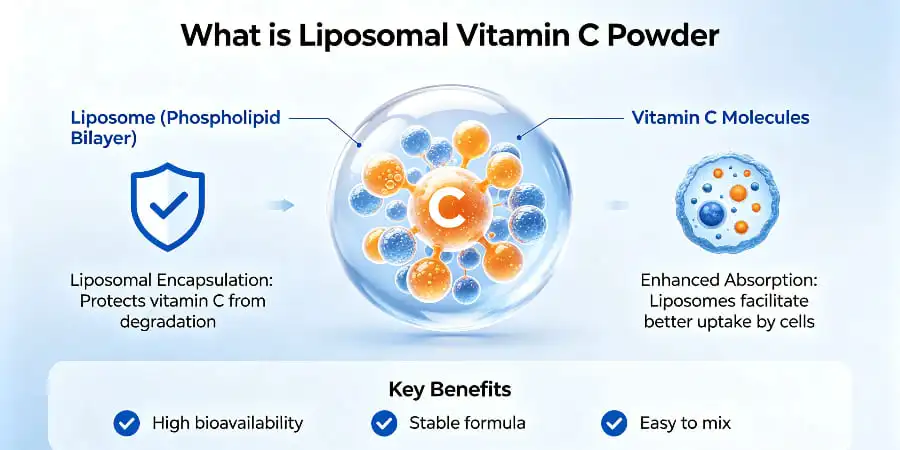
Liposomal vitamin C powder is different because it uses a more advanced encapsulation method. Ascorbic acid or sodium ascorbate is wrapped up in tiny phospholipid droplets that are 100 to 400 nanometers across. These fatty structures, which are usually made from non-GMO soy or sunflower lecithin, surround the vitamin C molecule and protect it. When the powder is mixed with water, like in drinks, capsules, or liquid vitamins, it changes into stable liposomes that can pass through the intestinal wall without using active transport pathways that are already full. This system lets the cell membranes fuse directly, sending the substance right where metabolic processes need it.
Core Molecular Composition
The theory is based on phosphatidylcholine molecules grouped in two layers, with vitamin C stuck in the watery middle and hydrophobic lipid ends making up the outside. EncapsWell™ technology ensures that the vitamin C content is at least 99%, and HPLC analysis proves that the technology meets strict quality standards. Our formulation keeps the water solubility that's important for liquid supplements and drinks, while also ensuring stability at high temperatures during all kinds of industrial steps, from hot-filling to cold-chain distribution.
Functional Mechanism vs Traditional Forms
Liposomal delivery gets around these problems better than crystalline vitamin C pills, which use SVCT1/SVCT2 transporters that are saturated at modest amounts. The lipid coating protects ascorbic acid from pH‑dependent gastric degradation, prevents gastric irritation commonly associated with high-dose conventional supplements, and prolongs plasma retention time. Research has shown that liposomal formulations keep blood levels high for 8–12 hours after consumption, compared to 2–4 hours for regular formulations. This means that they provide antioxidant defense and immune support all day long.
Comparing Liposomal Vitamin C Powder with Other Forms
When looking at different ways to buy something, knowing how liposomal and conventional vitamin C forms work differently affects the formulation strategy and how the product is positioned in the market. The bioavailability gap is the most important difference: normal ascorbic acid quickly hits its highest level in the blood but is quickly flushed out of the body by the kidneys, whereas liposomal systems have longer bioavailability curves that keep therapeutic levels steady.
Absorption Rates and Dosage Efficiency
Clinical tests show that 1,000 mg of liposomal vitamin C powder has plasma values that are the same as or higher than 8,000 mg of regular oral vitamin C. This efficiency lets brand makers make lower-dose goods that are more appealing to customers, which lowers the number of pills people have to take while still claiming to work. Product designers who are making immune shots or daily wellness drinks can use this concentration edge to make strong single-serving forms that don't have the bulk or bad taste that come with high-dose ascorbic acid.
Source Quality and Certification Considerations
Natural versus manufactured sources affects how well regulations are followed and how consumers feel about the product. EncapsWell™ liposomal vitamin C powder uses ascorbic acid that is pharmaceutical-grade and meets USP standards. It also has organic-certified lecithin choices for a clean label. Our formulation has been certified as vegan, HALAL, KOSHER, cGMP, ISO22000, FSSC22000, HACCP, and Non-GMO Project Verified. It meets the needs of a wide range of markets, from those in the Middle East that need to follow Halal rules to those in Europe that need strict Novel Food documentation.
Synergistic Additive Formulations
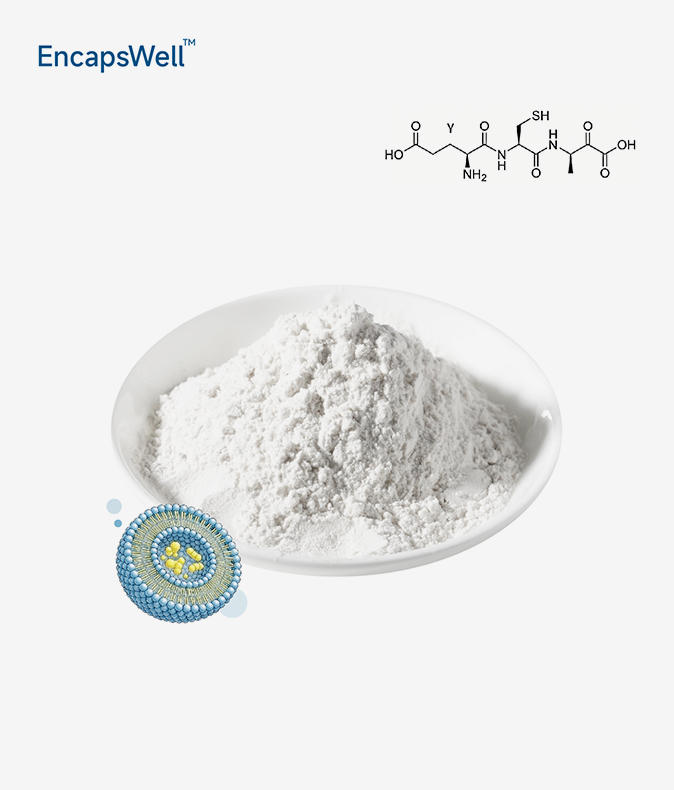
More and more, high-end liposomal products include bioactives that work well with liposomes. Zinc picolinate makes the immune system work better, quercetin helps reduce inflammation, and glutathione makes antioxidant networks stronger. These mixes affect buying choices based on things like cost, the need to prove security, and the way regulations work. Our research and development team offers stability data and compatibility testing for custom blend creation. This ensures that multi-ingredient formulas stay effective for 24 months under accelerated stability methods.
Procurement and Sourcing Guide for Liposomal Vitamin C Powder
To find your way around the global supply market, you need to look at things like technical skills, legal compliance, and the ability to make more products. The market for liposomal vitamin C powder ingredients is dominated by specialized suppliers in North America, Europe, and Asia. Each of these regions has its own benefits when it comes to certifications, production capacity, and expert support.
Supplier Evaluation Criteria
We suggest looking at possible partners through the eyes of six important factors. Certificates of Analysis showing vitamin C content, liposome size distribution, encapsulation efficiency (at least 85%), and microbe testing should be part of the analytical paperwork. Certifications for manufacturing must include cGMP compliance, which can be checked by third parties, ISO 22000 food safety management, and HACCP implementation. To make the supply chain clear, you need systems that can track batches, records of where the raw materials come from, and stable data that shows how the goods should be stored.
Our San Diego R&D Center and our strategic relationship with Wellgreen's cGMP-certified facilities help EmerWell's EncapsWell™ platform meet these needs. Our quality control process includes checking for purity in real time, keeping records for each batch, and sending regulatory support packages with Certificates of Analysis, stability reports, and export paperwork ready for FDA, EFSA, and ANVISA applications. This all-around method lowers the risk of buying and speeds up the time it takes to market for brand partners joining regulated foreign markets.
Bulk Purchase Considerations
Most volume price structures offer the best value at order numbers of 100 kg, 500 kg, and 1,000 kg or more. Lead times range from two to four weeks for stock formulas to six to eight weeks for unique blends that need to be tested for stability. Shipping needs that depend on temperature should be taken into account during logistics planning. For example, our recipe is safe at room temperature, but it works better when it's transported in a climate-controlled environment during the summer or on a tropical route. Flexible minimum order amounts help both new brands that are trying ideas in the market and established companies that are increasing production across many SKUs.
OEM/ODM Customization Pathways
Differentiating a brand requires custom recipes more and more instead of off-the-shelf solutions. Our OEM/ODM services include powder mixes for filling capsules, ready-to-mix sachet formulas, effervescent pill matrices, and liquid concentrates for use in drinks. Co-branding choices include private labeling with unique names, custom dosage forms made for specific groups of people, and a variety of package options, from large pharmaceutical drums to consumer-ready stick packs. Because of this, cosmeceutical brands can make beauty shots, nutraceutical companies can make immune support lines, and contract makers can use the same ingredient systems to serve a wide range of clients.
Usage Guidelines and Safety Profile
To add liposomal vitamin C powder to finished goods, you need to know how to make the best dosages, how to give the powder, and the rules that guide label claims and safety information.
Recommended Dosing Protocols
There are different dosage suggestions based on the end use and target group. Immune support formulas usually have between 500 mg and 1,000 mg per dose, and they use improved bioavailability to get optimal plasma amounts. Beauty-from-within items that aim to make collagen and brighten the skin often use daily amounts of 750 mg to 1,500 mg. Some athletic healing supplements may say to take 1,000 to 2,000 mg after working out to help fight oxidative stress and mend tissues. Because our technology is so good at encapsulation, these high doses are possible without the stomach problems that come with taking the same amount of regular ascorbic acid.
Administration Methods Across Formats
Our powder is very versatile when it comes to preparation. It is mixed straight into functional waters, fruit juices, and protein shakes by beverage makers. There it stays steady and keeps its liposomal structure. The powder is put into veggie or gelatin capsule shells, and each size 0 capsule usually has 500 mg of powder in it. To keep the purity of liposomes during tablet compression, special ingredients are needed. Our expert team helps with formulation for both direct compression and wet granulation methods. Liquid supplement makers mix the powder with glycerin or oil to make ready-to-use shots that are famous in the health markets of Europe and Asia.
Safety Considerations and Contraindications
Liposomal vitamin C powder has good safety ratings and is better tolerated by the digestive system than normal forms. Some rare side effects that may happen at high amounts (>3,000 mg daily) are slight diarrhea or nausea. These effects are caused by vitamin C, not liposomal delivery. Due to the fact that vitamin C makes iron intake better, people with hemochromatosis or iron overload conditions need extra care. Standard vitamin C top limits should be followed by women who are pregnant or breastfeeding. Our formulation doesn't have any common allergens in it besides lecithin derivatives, and sensitive groups can choose soy-free choices.
Regulatory Compliance Frameworks
International rules control how things are made, what they say on the label, and how they are documented for quality. The FDA says that vitamin C is Generally Recognized As Safe (GRAS), which means that there are no specific rules about liposomal technology. However, claims about structure-function need to be backed up. Novel Food Regulations and EFSA nutritional standard values must be followed by food sold in European markets. Our production partner Wellgreen keeps track of registrations in more than 50 countries, such as the CFDA, ANVISA, and TGA routes in Australia and Brazil. With pre-prepared regulatory dossiers, this global compliance infrastructure makes it easy to enter new markets. Compared to non-certified providers, this cuts approval times by 60 to 90 days.
Conclusion
Liposomal vitamin C powder has changed the way supplements are made by getting around the problems with absorption that plagued older ascorbic acid mixes. Manufacturers can now make goods with 8 times better absorption thanks to phospholipid encapsulation technology. This makes it possible for strong single-dose forms that meet customer needs for effectiveness and ease of use. When making strategic choices about what to buy, it's important to look at the certifications, analytical paperwork, and customization options of each provider to make sure they match the brand's image and regulatory needs. As the immune support and beauty-from-within categories grow around the world, it's important for companies in the nutraceutical and functional food markets to work with highly skilled providers who can offer full legal support and scalable production.
FAQ
What makes liposomal vitamin C powder superior for immune support formulations?
Because it is up to 8 times more bioavailable than regular forms, vitamin C gets to immunity cells at levels that have been shown to support the function of white blood cells and the production of antibodies. This speed lets immune support work at lower doses, which cuts down on pill size and makes it easier for people to take their medicine as directed.Because it is up to 8 times more bioavailable than regular forms, vitamin C gets to immunity cells at levels that have been shown to support the function of white blood cells and the production of antibodies. This speed lets immune support work at lower doses, which cuts down on pill size and makes it easier for people to take their medicine as directed.
How do I select a reliable liposomal vitamin C powder supplier?
Give more weight to providers who can show that they have cGMP approval, third-party analytical tests, a lot of stability data, and legal paperwork for your target markets. To get Certificates of Analysis for each batch that show vitamin C content of at least 99%, encapsulation efficiency of at least 85%, and liposome size distribution, please ask for them. Check out the expert help options for formula optimization and creating custom blends.
Can liposomal formulations replace standard vitamin C in existing product lines?
Yes, with some changes to the composition. Because liposomal vitamin C powder is better absorbed, it is possible to use 1,000 mg instead of 3,000 to 5,000 mg of regular vitamin C. Stability testing shows that it works with current excipients, and when acidity is lowered, taste profiles often get better. Our scientific team helps with reformulation so that label claims are kept while transport technology is improved.
Partner with EmerWell for Premium Liposomal Vitamin C Powder Supply
EmerWell specializes in providing scientifically proven liposomal vitamin C powder to companies that make functional drinks, nutrition brands, and contract makers who want to stand out from the competition by offering better bioavailability. Our EncapsWell™ platform combines Wellgreen's cGMP-certified manufacturing with PhD-led research and development. This ensures that each batch is consistent, that we follow the rules, and that we can make more from test runs to commercial amounts that exceed 100 metric tons per year. Our main office is in San Diego, and we offer expert help, customized formulation development, and full paperwork packages all from within the US. This speeds up the time it takes for your product to hit the market. Get in touch with our team at info@emerwell-bio.com to talk about your project needs, get analytical specs, or look into OEM/ODM relationship opportunities with a reliable liposomal vitamin C powder maker who wants your brand to succeed.
References
Davis, J.L., Paris, H.L., Beals, J.W., et al. (2016). "Liposomal-encapsulated Ascorbic Acid: Influence on Vitamin C Bioavailability and Capacity to Protect Against Ischemia-Reperfusion Injury." Nutrition and Metabolic Insights, 9, 25-30.
Hickey, S., Roberts, H.J., and Miller, N.J. (2008). "Pharmacokinetics of Oral Vitamin C." Journal of Nutritional & Environmental Medicine, 17(3), 169-177.
Padayatty, S.J., Sun, H., Wang, Y., et al. (2004). "Vitamin C Pharmacokinetics: Implications for Oral and Intravenous Use." Annals of Internal Medicine, 140(7), 533-537.
Łukawski, M., Dałek, P., Borowik, T., et al. (2020). "New Oral Liposomal Vitamin C Formulation: Properties and Bioavailability." Journal of Liposome Research, 30(3), 227-234.
Carr, A.C., and Maggini, S. (2017). "Vitamin C and Immune Function." Nutrients, 9(11), 1211.
Buathong, S., Chamchumrus, S., and Watcharachaisoponsiri, T. (2018). "Development and Stability Evaluation of Liposomal Vitamin C in Functional Beverage Applications." International Food Research Journal, 25(4), 1456-1463.
Online Message
YOU MAY LIKE
High quality furniture manufacturer