Jul 3, 2026
Liposomal Resveratrol Powder vs Liquid Form: Which is Better?
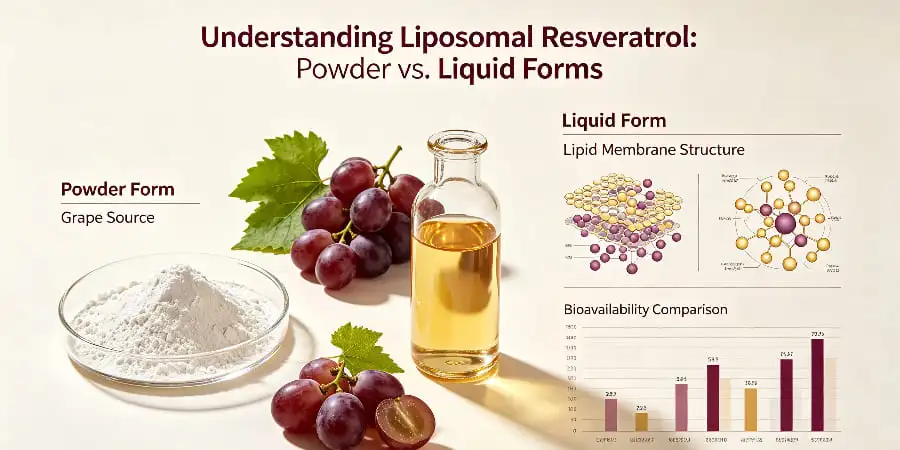
When it comes to liposomal resveratrol powder and liquid types, powder is better for B2B makers because it is more stable, easier to ship, and can be used in more ways. Liposomal resveratrol powder offers flexible, cost-effective options thanks to its 36-month shelf life, reduced shipping weight, and easy incorporation into capsules, tablets, or functional drinks. While liquid forms are better for ready-to-drink drinks that need to be mixed right away, they are harder to store and handle, which is why most nutritional brands choose powder when they want uniform quality and reliable procurement.
Why Your Formulation Choice Matters More Than Ever
A lot of people are interested in resveratrol because it is an antioxidant and helps with good aging processes, such as activating SIRT1. However, standard resveratrol is famously poorly bioavailable—often less than 1% is absorbed by the body because it is broken down quickly and doesn't mix well with other substances. Liposomal technology changes this by enclosing resveratrol in phospholipid bilayers. This protects the active substance from breaking down and lets it be taken up directly by the intestines through lymphatic transfer.
Choosing the right delivery method (powder vs. liquid) has a direct effect on how well your product works, how much it costs, and how competitive it is in the market. Bioavailability, stability, legal compliance, and manufacturing scalability are some of the things that procurement managers, R&D leaders, and formulation scientists have to think about. This guide gives a comparison based on facts for nutrition brands, functional beverage makers, contract manufacturers, and beauty-from-within creators who are trying to figure out how to get liposomal ingredients in the US market.
Understanding Liposomal Resveratrol: Powder and Liquid Forms
The Science Behind Liposomal Encapsulation
Phospholipid particles, which are usually made from non-GMO sunflower or soy lecithin, hold active ingredients in place in liposome delivery methods. This works like a cell barrier and makes it easier for M-cells in the walls of the intestine to absorb the drug without going through the liver's first-pass metabolism. The result is absorption that is much higher than with regular extracts.
Powder Form: Engineered for Stability and Versatility
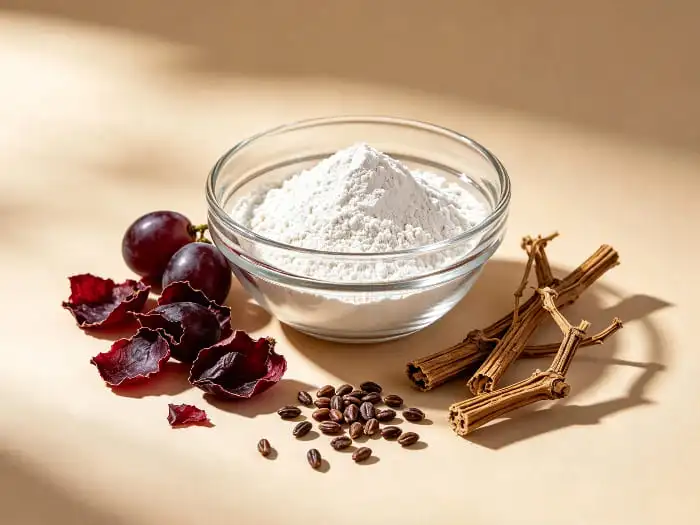
Liposomal resveratrol powder is freeze-dried or sprayed dry, and carriers like cyclodextrin or maltodextrin are often used to keep the structure of the vesicles. This changes the substance into a light yellow to off-white powder that mixes quickly with water to make a milky nano-emulsion. Premium formulas achieve capsule efficiency of more than 85%, which means that most of the resveratrol stays safe inside the lipid matrix. Particles are usually between 100nm and 300nm in size, and their Polydispersity Index is less than 0.3. This makes sure that they are spread out evenly, which is important for accurate doses and cell uptake.
The powder form is very stable, and according to ICH storing standards, it can stay fresh for up to 36 months. This longevity comes from less moisture activity and less oxidative stress, which stop trans-resveratrol from breaking down into its less effective cis-isomer. The powder works well in capsules, tablets, sachets, and dry mix uses, giving formulators more options than liquid forms can offer.
Liquid Form: Immediate Dispersibility with Trade-Offs
Resveratrol in the form of liquid liposomes keeps the active molecule in a watery habitat. This shape makes it easier to add to ready-to-drink drinks and beauty shots because it doesn't need to be reconstituted during production. Functional beverage makers who want to attract wellness-conscious people on the go like how quickly the drinks can be spread.
However, liquid versions come with their own set of problems. Water action speeds up the growth of microbes and oxidative breakdown, which means that preservatives or cooling may be needed, which could go against clean-label goals. The shelf life is usually between 12 and 18 months, which is a lot less time than powder options. Shipping costs go up because of size and weight, and fragile glass packing makes it more likely that something will break during transport. Changes in temperature during storage can damage the structure of liposomes, making them less bioavailable over time.
Comparing Key Performance Metrics: Powder vs Liquid
Bioavailability: Absorption Advantages Across Formats
Both types use liposomal technology to help the body absorb more resveratrol. In vitro dissolution testing has shown that advanced formulas like EncapsWell™ are up to 14 times more bioavailable than normal liposomal resveratrol powders. Because they are pre-suspended, liquid forms may have slightly faster beginning absorption, which is good for items that work quickly. When powders are mixed with liquids or reconstituted, they produce similar plasma concentrations (Cmax) and area-under-curve (AUC) values. This means that they are both equally useful for long-term uses that aim to improve cardiovascular health and life.
Stability: Where Powder Excels Decisively
The most important thing that sets them apart is their stability. Liposomal resveratrol powder doesn't lose much of its effectiveness when stored for long periods of time or when the temperature or humidity changes. Validated stable data collected under rapid aging conditions (40°C, 75% RH) show that the material doesn't break down much over 36 months. This durability makes storage easier, extends the life of products, and cuts down on waste from old stock.
Stability problems with liquid formulas are always happening. Even when antioxidants like tocopherols are added, breakdown and oxidation are sped up in wet settings. Over time, liposomal vesicles may stick together or join together, which makes particles less regular and less effective at absorbing. The need for a cold chain during delivery makes logistics more difficult and costs more. This is especially true for foreign shipments or markets with warm climates.
Dosage Precision and Manufacturing Flexibility
By using gravimetric mixing during packaging or tableting, powder forms let you precisely control the dose. Manufacturers can change the amount of resveratrol in each serving without changing the whole lot. This means they can make a wide range of products, from low-dose supplements for upkeep to high-potency therapeutic formulas. Standard production tools, like capsule fillers, pill presses, and sachet packing lines, can work with the dry version without any special handling.
Dosing liquids by volume is necessary, which can be unpredictable because of changes in viscosity, sedimentation, or mistakes made when pipetting. To keep the suspension uniform, high-speed canning lines need homogenization methods. This means that there are more steps in the process and quality control checks. Adding useful ingredients like collagen peptides or adaptogens to liquid liposomes can make emulsions less stable, so they need to be tested for suitability in a lot of detail.
Procurement Considerations for B2B Buyers
Cost-Efficiency at Scale
Powder formulas usually have better cost-per-kilogram economics. Less water in the product means less freight costs, since shipping 100 kg of powder is the same as shipping 500+ liters of wet product. The storage size gets smaller, which lowers the cost of storing. With a longer shelf life, there is less pressure to sell items quickly and less loss from markdowns.
The cost of packing liquids is higher because they need to be kept cold during distribution and come in glass or HDPE bottles. Smaller producers that don't have temperature-controlled services face huge problems. Powder can be bought in bulk starting at 500 kg per month, which lets contract makers and private-label companies grow without having to make expensive infrastructure investments.
Supplier Certification and Quality Assurance
Strict approval proves that the making is honest and follows the rules. The best providers keep cGMP, ISO 22000, FSSC 22000, and HACCP standards, which make sure that everything can be tracked from where the raw materials come from to how they are packaged at the end. More certifications, like HALAL, KOSHER, NOP Organic, and Non-GMO Project proof, make it easier for a wider range of consumers to buy your products.
The liposomal resveratrol powder EncapsWell™ has many certificates, such as ISO9001, HALAL, NOP, EOS, KOSHER, cGMP, ISO22000, FSSC22000, HACCP, Non-GMO, and Vegan. Every batch that is made in Wellgreen's cGMP facilities and can be tracked using blockchain goes through third-party testing to check for heavy metals, bacteria contamination, solvent leftovers, and resveratrol content (≥98%). Time-to-market is cut by 40% with pre-made regulatory dossiers that help companies get into the FDA, EU Novel Food, and ASEAN markets.
Logistics and Supply Chain Resilience
Powder is stable at room temperature, so it doesn't need to be kept cold. This makes foreign shipping easier. Dual sourcing methods that use resveratrol from both the EU and the US help keep supplies from being interrupted by changes in regional regulations or changes in farming conditions. Multiple-layer foil bags with nitrogen flushing and fiber drums with moisture barrier layers are some of the packaging choices that can be used to balance cost and security.
Liquid forms need special carriers who know how to handle temperature-sensitive freight. The rate of breakage during handling can hit 5–8 percent, which drives up the cost of replacement. Customs delays in chilled cases can cause food to go bad, which makes it harder for distributors who serve multiple markets to plan their imports.
Application and Market Fit: Which Form Works Best?
Capsules and Tablets: Powder's Natural Domain
Liposomal resveratrol powder mixes evenly with fillers like microcrystalline cellulose or magnesium stearate, which lets more than 200,000 units per hour of direct compression or capsule filling happen. Cross-contamination between runs is not possible with the dry format, which is very important for facilities that make more than one SKU.
Tablet formulas can meet the required hardness levels without using binders that could get in the way of dissolution because powder is easy to crush. Time-release matrices with HPMC or ethylcellulose work well with liposome encapsulation to control the release of resveratrol over 8 to 12 hours, providing long-lasting antioxidant activity that supports healthy aging practices.
Functional Beverages: Evaluating Trade-Offs
Liquid liposomes may be better for mixing in ready-to-drink health drinks that aim to support mitochondria or promote beauty from the inside out. But powder forms are becoming more competitive because they hide tastes better—liposomal encapsulation lowers resveratrol's typical bitterness and chalky mouthfeel, which lets it be mixed into protein shakes, collagen drinks, or electrolyte mixes without adding too many sweeteners.
Liposomal resveratrol powder in dry bags is portable and can be mixed into any drink at any time. This format is good for workers who move a lot and fitness fans who want to support longevity without bringing around heavy bottles. Manufacturers of drinks can co-pack powder packs with RTD lines to increase the variety of their products without having to build two sets of production facilities.
Nutricosmetics: Bioavailability Meets Beauty
Beauty product companies that care about skin health use liposomal resveratrol to get antioxidants to the surface layers. Powder forms can be mixed with collagen peptide blends, hyaluronic acid complexes, or ceramide formulas to make beauty-from-within items that work better together. The uniform potency of powder helps with clinical placement and backs up marketing promises about protecting against photoaging and improving skin elasticity.
Because liposomal structures are amphiphilic, they make it easier for resveratrol to pass through the gut walls and into the bloodstream and skin matrix. Brands that show bioavailability benefits with powder formulas can set themselves apart from generic skin supplements and charge higher prices that are in line with their clinical-grade marketing.
Risks, Safety, and Quality Assurance
Safety Profile and Regulatory Compliance
With Generally Recognized As Safe (GRAS) status for certain uses, resveratrol has a good safety record. Liposomal formulations that use food-grade phospholipids keep this safety rating as long as the production process follows clean standards. Possible side effects are still low at normal supplement levels (100–500 mg daily), but stomach problems have been recorded with megadoses above 1,000 mg.
Powders are less likely to spread pollution than liquids, which are easy for microbes to grow in. Dry processing in a nitrogen atmosphere reduces oxidative breakdown as much as possible, protecting the trans-resveratrol content and stopping the formation of oxidation products that could be unpleasant. Third-party testing methods should make sure that there are no solvent residues left over from the extraction process, heavy metals below USP limits, and microbial counts within the accepted levels set by USP <2021>.
Quality Verification Strategies for Procurement Teams
Multi-tiered quality assurance must be used by people who work in procurement. Ask for Certificates of Analysis (CoA) that show the amount of resveratrol found using HPLC, the effectiveness of the capsule using ultracentrifugation or dialysis, and the particle size distribution as measured by dynamic light scattering. When the zeta potential is between -20mV and -40mV, it means that the vesicles are stable in suspension and can't stick together.
As part of supplier checks, cGMP building certifications, lot-coding systems that make it easy to track ingredients, and proven cleaning methods that stop cross-contamination should all be checked. Blockchain-based tracking, like what is used in EncapsWell™ production, allows for real-time visibility from receiving raw materials to releasing finished products. This meets the growing demand from retailers for supply chain responsibility.
Stay away from sellers who don't have third-party tests or who give you vague instructions. Labels that don't match, no stability data, or a refusal to share analysis methods are all signs of possible quality problems. Set up vendor qualification rules that say they need to be requalified every 24 months. This will make sure that they stay in line as regulations change.
Conclusion
Which liposomal resveratrol powder or liquid type to use depends on your product plan and business needs. Powder is the best choice for pill, tablet, sachet, and dry mix uses in the nutraceutical, nutricosmetic, and functional food sectors because it is stable, cheap, easy to use, and can be made into a wide range of formulations. Liquid types are only used in certain ready-to-drink drinks where they can be mixed right away, which is worth the extra work and shorter shelf life. If B2B buyers care about scaling, regulatory compliance, and long-term product integrity, powder formulations will help them reach their growth goals while still keeping the clinical-grade bioavailability that sets premium supplements apart in a crowded market. To choose the style that will help your brand succeed in the long term, you should think about how you can make it, what it will be used for, and your quality standards.
FAQ
Is liposomal resveratrol powder as effective as liquid forms?
When made correctly, liposomal resveratrol powder has the same absorption as liquid resveratrol. Advanced powder technologies, such as EncapsWell™, make it 14 times easier for the body to absorb resveratrol than regular resveratrol, which is about the same as liquid liposomal products. More than the shape, the usefulness is determined by how well the particles are encapsulated, how evenly they are distributed in size, and the quality of the phospholipids. Validated dissolving profiles show that powder can be reconstituted into stable nanoemulsions that can be taken up by cells at the same rate.
What certifications should I require when sourcing liposomal resveratrol powder for bulk manufacturing?
Give top priority to cGMP, ISO 22000, FSSC 22000, and HACCP standards that prove clean production and can be tracked. Check for HALAL, KOSHER, Non-GMO, Organic (NOP/EOS), and Vegan certifications based on the areas you want to reach. Ask for stability data that has been checked against ICH standards, third-party CoAs that show the amount and quality of resveratrol, and regulatory dossiers that back up your plans for geographic distribution. This reduces the risk of buying and makes it easier to get into the market.
Can I customize particle size or combine liposomal resveratrol powder with other actives like NMN or quercetin?
Reliable providers allow OEM/ODM customization, which can change the particle size, add ins, or make mixes that work well together. EncapsWell™ allows custom formulas that combine resveratrol with NMN to help with aging or quercetin to make antioxidant networks stronger. For customization to work, people must work together during the development stages to make sure that all the actives are compatible, stable, and that the capsule integrity is kept.
Partner with EmerWell for Liposomal Resveratrol Powder Solutions
EmerWell is your one-stop shop for liposomal resveratrol powder. They have technical experts in San Diego and can make large amounts of it in Wellgreen's cGMP facilities. Our own EncapsWell™ platform offers resveratrol content of at least 98% and has been shown to increase absorption by 14 times. It was created by PhD-led research and development teams that are experts in optimizing phospholipids and modeling their stability. We can completely customize pills, tablets, sachets, and powders that are ready to mix with drinks. Our services are backed by full certifications such as ISO9001, cGMP, HACCP, Non-GMO, and Vegan qualifications. Bulk price starts at monthly pledges of 500 kg, and regulatory dossiers that have already been put together speed up market entry in the FDA, EU, and ASEAN. Our R&D center in San Diego handles local sample logistics and offers technical advice. This makes sure that fast prototyping and a smooth transition from test runs to commercial production are possible. Contact info@emerwell-bio.com right away to talk about your formulation needs and get custom sourcing solutions that will help your nutritional portfolio with bioavailability that is based on science and that you can trust.
References
Amri A, Chaumeil JC, Sfar S, Charrueau C. Administration of resveratrol: What formulation solutions to bioavailability limitations? Journal of Controlled Release. 2012;158(2):182-193.
Bertelli AAE, Das DK. Grapes, wines, resveratrol, and heart health. Journal of Cardiovascular Pharmacology. 2009;54(6):468-476.
Cottart CH, Nivet-Antoine V, Beaudeux JL. Review of recent data on the metabolism, biological effects, and toxicity of resveratrol in humans. Molecular Nutrition & Food Research. 2014;58(1):7-21.
Pannu N, Bhatnagar A. Resveratrol: from enhanced biosynthesis and bioavailability to multitargeting chronic diseases. Biomedicine & Pharmacotherapy. 2019;109:2237-2251.
Walle T. Bioavailability of resveratrol. Annals of the New York Academy of Sciences. 2011;1215(1):9-15.
Zupančič Š, Lavrič Z, Kristl J. Stability and solubility of trans-resveratrol are strongly influenced by pH and temperature. European Journal of Pharmaceutics and Biopharmaceutics. 2015;93:196-204.
Online Message
YOU MAY LIKE
High quality furniture manufacturer
_1776234307158.webp)
_1776234266736.webp)