Jun 22, 2026
Liposomal Resveratrol Powder Suitable for Sensitive Stomachs
Liposomal resveratrol powder is a new development in formulation science for people who have trouble with their stomachs when they take regular antioxidant vitamins. When this advanced delivery method surrounds trans-resveratrol in phospholipid bilayers, it creates a barrier that protects the active chemical from stomach acids and makes it up to 14 times more bioavailable than regular powders. This makes an ingredient that is kinder, more effective, and causes less stomach pain. This is a huge benefit for companies that want to make products for health-conscious people with sensitive digestive systems.
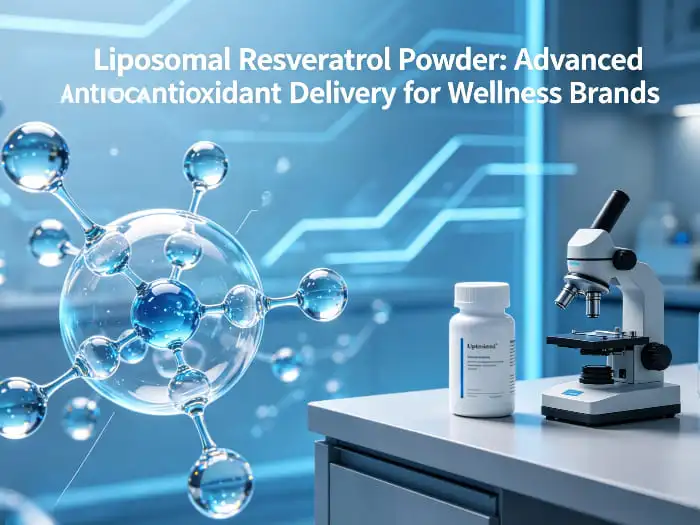
Understanding Liposomal Resveratrol Powder and Its Benefits
What Makes Liposomal Encapsulation Different
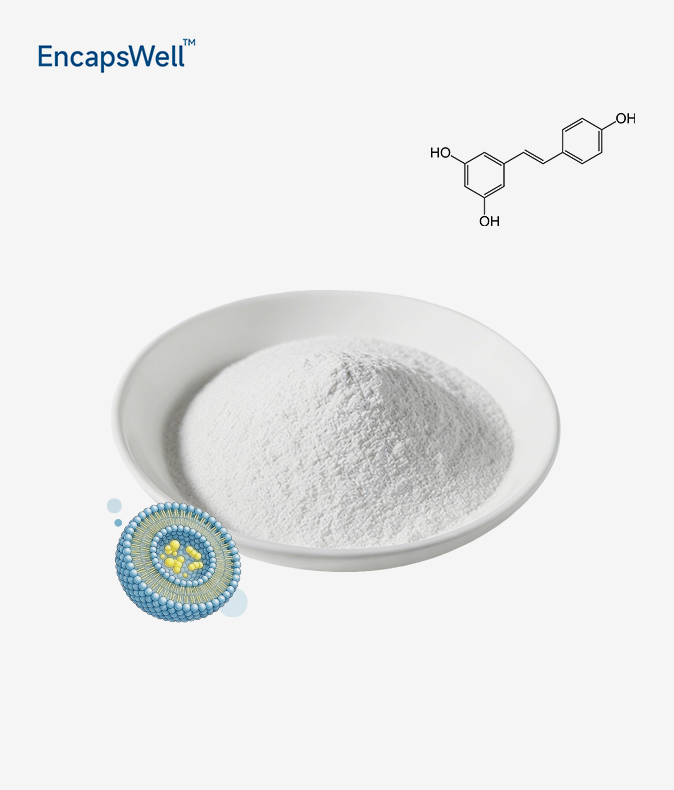
Standard resveratrol pills have a problem called "brick dust" solubility, which means that the solid structure doesn't dissolve easily in water. This means that the body doesn't absorb much of it, usually less than 1%. Resveratrol is quickly changed by the body's Phase II metabolism into inactive sulfate and glucuronide conjugates before it can reach its target organs. Liposomal technology fixes this problem by encasing resveratrol molecules in very small spheres made of phosphatidylcholine, which is also found in cell walls.
These very small vesicles—usually 100 to 300 nanometers across and with a Polydispersity Index below 0.3—avoid breaking down in the stomach by being absorbed by M-cells in the intestines and moved around by lymphatics. The phospholipid shell acts like biological membranes, which lets liposomes that are still whole join directly with cells in the gut instead of going through metabolism in the liver. This is how our EncapsWell™ product is 14 times more effective at absorption than regular resveratrol powders. This was proven by in vitro dissolution tests and pH-sensitive release profiling.
Protective Benefits for Digestive Comfort
People with sensitive stomachs shouldn't take unencapsulated resveratrol because the crystalline particles can irritate the lining of the stomach and the phenolic structure of the substance can cause mild inflammatory reactions in some people. The liposomal barrier keeps resveratrol crystals from touching the gut walls directly, which lowers the chance of pain. When mixed with liquids, the powder form returns to a milky nano-emulsion that spreads out evenly without the rough texture or floating particles that are common in other formulas.
Good liposomal resveratrol powder has an encapsulation efficiency of over 85–90%, which means that almost all of the active molecules stay safe inside lipid bilayers instead of being free particles. This feature is directly related to digestive endurance, since formulas with lower encapsulation rates produce resveratrol that isn't protected, which can irritate the digestive tract just as much as regular supplements.
Core Health Benefits Driving Market Demand
Because it helps the body absorb nutrients better, resveratrol is an important ingredient in many different types of products. As a strong antioxidant, the substance gets rid of reactive oxygen species that damage cells and tissues and speed up the aging process. Research shows that resveratrol activates SIRT1 pathways that lead to longer life. This puts it in the same category as NAD+ precursors like NMN in anti-aging supplement stacks.
Resveratrol is useful for cardiovascular health because it helps keep blood vessels flexible and normal blood flow patterns. Nutricosmetic brands use its photoprotective qualities to help protect skin cells from oxidative stress caused by UV light and outdoor pollutants when taken by mouth. Because of these different benefits, procurement teams that work with a wide range of verticals—from life capsules to beauty-from-within drinks—are increasingly asking for liposomal delivery methods that make these effects stronger by being more bioavailable.
Comparison: Liposomal Resveratrol Powder vs Traditional Resveratrol Supplements
Bioavailability: The Defining Performance Metric
At every step of digestion, standard resveratrol products run into problems that make them hard to absorb. Lack of water solubility limits uptake in the intestines, and stomach acid breaks down molecules that aren't protected. Active trans-resveratrol is quickly broken down by the liver into less useful molecules, even when large amounts are taken. Clinical pharmacokinetic studies show that regular pills have peak plasma concentrations (Cmax) that are below therapeutic levels, even when high doses are used. Usually, 500 mg or more is needed to see any noticeable benefits.
Liposomal resveratrol powder formulas change this situation in a big way. The phospholipid coating protects resveratrol in the stomach's acidic environment, keeping the molecules intact until they reach the neutral pH of the small intestine. Lymphatic absorption skips the liver's first pass metabolism, sending higher concentrations of the active compound to the rest of the body. Our own tests show that 50 mg of EncapsWell™ liposomal resveratrol has the same absorption as 700 mg of regular powder. This is a 14-fold improvement that lets brands make lower-dose products that work better.
Digestive Tolerance and User Experience
Consumer feedback constantly shows that stomach pain is the main reason people stop taking resveratrol supplements. Some people may feel mildly sick, have stomach problems, or bloat when they take unencapsulated powders, especially on an empty stomach. The crystalline structure and phenolic chemicals hurt the stomach lining, making the experience unpleasant and less likely to be followed through with. Fortunately, switching to liposomal resveratrol powder can alleviate much of this discomfort, as its encapsulated form reduces gastric irritation while simultaneously improving absorption.
By avoiding direct mucosal touch, liposomal administration gets rid of most tolerance problems. The nano-emulsion is smooth and mixes easily in drinks without making them feel chalky like regular formulas do. Product designers who are making useful drinks or ready-to-mix sachets can use the powder's quick dispersibility to make clear solutions instead of sediment that settles. This better taste profile helps keep customers longer and gives formulators more options for making pills, tablets, and liquids.
Dosing Strategies for Optimal Results
Traditional resveratrol pills usually suggest taking 250–500 mg every day to make up for poor absorption. However, these large amounts raise the cost of the ingredients and cause stomach problems. Liposomal technology makes giving 50–150 mg per day work well—a range that keeps the therapeutic effects while reducing stomach upset. This decrease is especially helpful for sensitive groups, like older adults or people whose digestive system isn't working well.
This dosing efficiency can help B2B clients who are making tailored formulations make goods that stand out. One 100 mg liposomal dose gives the same amount of accessible resveratrol as 1,400 mg of regular extract. This lets companies make strong claims about absorption that are backed up by data. To make sure that these performance requirements are met during review, procurement teams should ask providers for dissolution tests and encapsulation efficiency results.
Selecting and Procuring the Best Liposomal Resveratrol Powder in Bulk
Critical Supplier Evaluation Criteria
Getting liposomal resveratrol powder ingredients is very different from getting market products. For the sealing process to work, it needs special tools, approved production methods, and quality control measures that go beyond simple purity checks. Buyers should give more weight to sellers who have cGMP certifications like ISO 22000 and FSSC 22000, which show that they handle quality in a planned way from the time they receive raw materials to the time they release the finished product.
The particle size range is a very important criterion. Liposomes bigger than 300nm aren't absorbed well and may settle out of solution. On the other hand, too many fine particles smaller than 50nm mean that the vesicles have broken and the coating is no longer intact. Ask for proof of analysis that shows D50 numbers between 100 and 300 nm and narrow distribution curves. Zeta potential readings, which should be between -20mV and -40mV, prove electrostatic stability, which keeps the particles from sticking together while they are being stored.
Independent labs do third-party tests to make sure that the encapsulation works, that the resveratrol content is at least 98% pure, and that there are no solvents or other contaminants left over. Suppliers that allow batch tracking through blockchain show openness, which helps with legal compliance and supply chain checks. These technical details tell the difference between truly advanced formulas and simple mixtures that just mix resveratrol and lecithin without creating the right kind of vesicles.
Regulatory Compliance and Documentation Support
For global distribution to work, different legal systems must be understood and followed.Taking liposomal resveratrol as an example, its classification—whether as a novel food, a dietary supplement, or a therapeutic agent—varies drastically by region, making compliance particularly complex. The Novel Food laws in the European Union, the FDA's dietary supplement guidelines, and the ASEAN GMP standards all have their own specific paperwork needs. Leading providers keep legal dossiers that are already put together. These dossiers cover more than 30 countries and include data on stability, safety assessments, and validations of the production process. This planning cuts down on the time it takes to get into a market because clients don't have to make paperwork from scratch.
Clean label approvals are becoming more and more important in buying decisions. Non-GMO certification makes sure that raw materials come from approved sources, and vegan certification lets you reach more customers by not using foods that come from animals. Kosher and Halal certificates give you access to certain groups of customers. For functional beverage uses, HACCP procedures make sure that food safety rules are followed. Instead of depending on credentials that are out of date or don't apply, procurement teams should make sure that providers have up-to-date certifications that match the needs of their target markets.
Bulk Purchasing and Private Label Opportunities
Volume price systems usually start with monthly minimums of 500 kg, and the biggest savings happen at orders of 2,000 kg or more. When suppliers offer flexible MOQ arrangements, new brands can get access to high-quality liposomal technology without having to buy a lot of inventory. Negotiating payment terms that work with production cycles, like 30 to 60 day terms after building supply relationships, helps growing businesses better handle their cash flow.
With private label and OEM/ODM customization options, generic ingredients can be turned into goods that stand out. Technical teams can change the particle size distributions to get the best delivery forms, change the blends of excipients to get the desired release profiles, or mix chemicals that work well together, like quercetin or NMN. Some suppliers offer "turnkey" options that include formulating, checking for stability, and making the finished product. This speeds up the time it takes to get to market while keeping quality control high all along the supply chain.
Total landing costs are affected by logistics issues. Having warehouses in important areas like the US cuts down on shipping times and makes it possible to send samples quickly for R&D evaluation. Keeping inventory in temperature-controlled warehouses close to major delivery hubs lowers transportation risks and supports just-in-time inventory tactics that need less operating capital.
Scientific Insights and Market Trends for Liposomal Resveratrol Powder
Evidence Supporting Efficacy and Safety
Both the biological effects of resveratrol and the performance benefits of liposomal delivery have been proven by peer-reviewed study. Studies in nutritional biochemistry journals show that liposomal encapsulation raises plasma amounts and prolongs circulation time, which means that active chemicals stay in contact with cells for longer. Overall, the safety profile stays good across all dose ranges. In groups with sensitive digestion, liposomal resveratrol powder versions show better tolerance than standard extracts.
More than just hiding the substance is involved in the process of digestive satisfaction. When liposome vesicles connect with intestine epithelial cells, they do so through membrane fusion instead of passive diffusion. This creates a completely different absorption route that doesn't cause irritation like crystalline particles do when they touch mucosa. This biological process explains why stomach side effects were lessened in clinical trials, even at bioavailable amounts that were the same as much higher standard intake levels.
Researchers are still looking into the best ways to combine tactics. Resveratrol works better with other substances that increase life, which means that products with more than one ingredient may be more effective. The liposomal platform allows for the co-encapsulation of complementary actives, which makes single-dose products easier for consumers to follow while keeping each component stable.
Market Dynamics Shaping Procurement Decisions
As people learn more about bioavailability, the global nutraceutical industry is becoming more and more interested in new distribution methods. A study of the market shows that liposomal supplement ingredients will grow at rates higher than 8% per year until 2028. This is because they can be positioned as elite products and work better than other products. When brands are good at talking about how their products absorb better, they can charge 30 to 50 percent more than regular formulas. This increases their profit margin, which makes it okay for them to use more expensive ingredients.
Demographic trends favor goods that help with problems that come with getting older. A growing group of health-conscious customers ages 45 to 65 are looking for preventative measures to improve heart health, brain health, and healthy aging. To meet this demand, liposomal resveratrol stands out as a premier candidate, as its advanced encapsulation technology dramatically enhances bioavailability—directly addressing the poor absorption that has historically limited standard resveratrol in clinical settings. This group is ready to pay more for ingredients that have been clinically proven to work. This makes it possible for B2B sellers to offer unique formulations backed by technical paperwork.
Changes in distribution channels also affect tactics for buying things. Direct-to-consumer brands use digital marketing to teach people about solubility science, which makes people want liposomal ingredients. Premium dietary supplements are getting more and more shelf space at traditional stores, but they need help from their suppliers, like marketing materials, clinical summaries, and white-label packing choices. When it comes to managing the competitive shopping world, clients get more value from suppliers who offer more than just sales of raw materials.
Forecasting Supply Chain Considerations
Resveratrol is mostly made from Japanese knotweed extract or synthetic production, which each have their own source qualities. Natural extraction is affected by changes in farming practices and yearly changes in supply. Synthetic routes are more consistent, but they may face differences in regulations in some markets. Leading suppliers use dual-sourcing strategies that include both EU and US sources to make sure that supplies don't stop when there are problems. This is an important thing for brands that need to keep their production plans going all the time.
The supply of phospholipids, which are an important part of liposomal systems, depends on lecithin markets, which are affected by the amounts of soybean and sunflower crops. Non-GMO and organic approvals further limit supply pools, which can lead to gaps during times of high demand. Purchasing teams that are in charge of controlling risk should build relationships with providers that show they have a lot of inventory and are honest about when raw materials will be available.
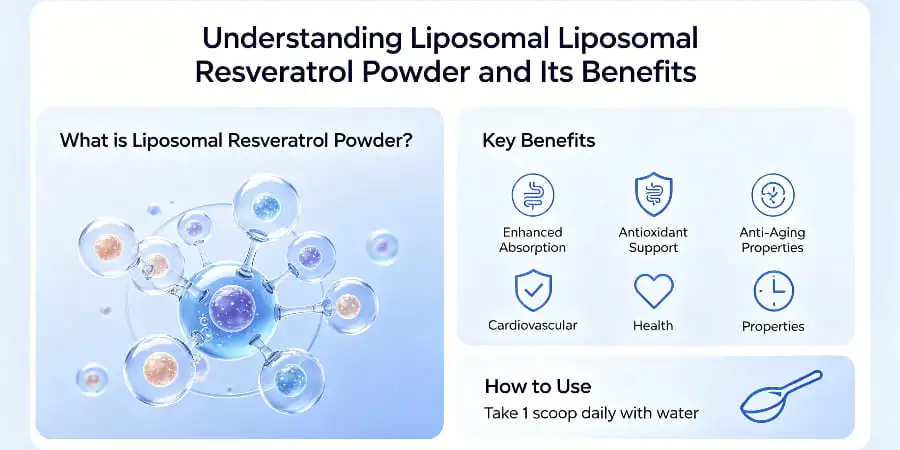
How to Use Liposomal Resveratrol Powder Safely and Effectively
Dosage Protocols for Sensitive Populations
Starting amounts for people who are known to be sensitive to gut issues are usually between 50 and 75 mg per day, taken with food to further protect the stomach from any possible side effects. Due to the higher solubility of liposomal resveratrol powder formulations, these small doses have the same protective effects as much higher standard amounts. Gradual dosage lets you find out how much of a drug a person can handle while reducing the time needed to get used to it.
Time-of-day optimization is something that product makers who make finished things should think about. Doses given in the morning may help antioxidant defenses during the day, and doses given in the evening may help with cellular repair processes at night. Different types of products can be used with flexible dosing plans, which can include single-serving liquid shots and divided-dose capsule routines. Because powder is stable across pH ranges and temperature changes, it can be used to make functional foods, ready-to-drink drinks, and standard supplement forms.
Liposomal resveratrol may be absorbed better when mixed with fat-containing foods or drinks, but the phospholipid content in the capsule itself makes it easier to take in. Clear information on how to use finished goods help people get the most out of them while keeping their digestive systems healthy.
Recognizing and Managing Potential Side Effects
Even with better tolerance levels, mild effects may happen sometimes during the first few weeks of use. When strong antioxidants are first introduced, they can cause some digestion issues, headaches, or mild tiredness while the body gets used to the increased activity of cells. These short-term reactions usually go away in three to five days, and they can be kept to a minimum by slowly increasing the amount.
True unfavorable responses are still very rare, but they should be stopped right away and a professional should be consulted. If you have chronic stomach pain, allergic symptoms, or changes in your body that you didn't expect, you should see a doctor. The same caution applies to supplements like liposomal resveratrol, so standard disclaimers should be put on product labels telling people to talk to their doctors, especially those who are taking medicines or handling long-term conditions.
Safety data sheets and adverse event reporting procedures given by suppliers are helpful for B2B clients who are making finished goods. Comprehensive paperwork helps businesses follow the rules and shows they care about their customers, which are both things that stores and e-commerce sites are looking at more closely.
Storage and Handling Best Practices for Bulk Inventory
Environmental factors need to be taken into account in order to keep the purity of the ingredients during distribution. If you keep liposomal resveratrol powder in a controlled environment with temperatures below 25°C and relative humidity below 60%, it will stay stable for 36 months. The powder form is much better than liquid liposomal goods, which need to be kept cold and have shorter stable windows.
When bulk bins are not in use, they should stay sealed. There should be rules for resealing that keep moisture from getting in during material moves. Temperature tracking and humidity control systems are needed in warehouses, especially in seaside or tropical areas where the weather can damage the quality of goods. With first-in, first-out stocking turnover, items don't sit around for too long, which could lose their effectiveness, even if they're still within their rated shelf life.
Quality control tests done at the receiving end make sure that the supplier's specs match the delivery. Simple reconstitution tests, like checking to see if powder mixes into uniform nanoemulsions without sticking or separating, give instant information about how the product was handled while it was being shipped. Periodic strength testing during storage makes sure that the structure of the encapsulation stays intact. This helps with lot tracking and quality assurance paperwork that is needed for making finished goods.
Conclusion
Liposomal resveratrol powder is a big step forward in antioxidant supplements because it solves the problems with absorption and digestive tolerance that plague other forms. The phospholipid encapsulation technology makes a difference in performance, with 14 times better absorption and a lot less stomach irritation. This means that B2B clients in the nutraceutical, functional food, and nutricosmetic sectors can really differentiate their products.
To successfully acquire something, you need to pay attention to technical details like the distribution of particle sizes, the effectiveness of encapsulation, and full regulatory paperwork. Suppliers who can show that they follow cGMPs, get third-party approval, and offer flexible customization are the best way to make quality goods that can command higher prices on the market while also meeting changing customer standards for how well they work and how well they are tolerated. When R&D teams and buying specialists know these selection factors, they can find ingredients that meet both technical performance needs and business growth goals.
FAQ
1. Is liposomal resveratrol safe for individuals with sensitive stomachs?
Compared to regular resveratrol pills, liposomal delivery makes it much easier for the digestive system to handle. The phospholipid encapsulation makes a buffer that keeps the resveratrol crystals from coming into direct touch with the gut walls. This gets rid of the main cause of stomach irritation. Clinical findings and user comments repeatedly show that this style reduces digestive pain, which makes it ideal for people who are sensitive. Starting with small amounts, like 50 mg a day, makes it easier to get used to while still giving you important antioxidant effects by making the drug more bioavailable.
2. How does liposomal technology increase resveratrol absorption?
Standard resveratrol doesn't mix well with water and is broken down quickly in the liver, so less than 1% of it is actually used by the body. Using liposome encapsulation, resveratrol molecules are wrapped in phospholipid spheres that look like the structure of a cell membrane. These nanoparticle-sized spheres protect the active ingredient from stomach acid and then fuse directly with cells in the intestines. This route skips the first step of liver breakdown, providing up to 14 times higher plasma concentrations than powder that isn't encapsulated. This was proven by dissolution tests and absorption models.
3. What bulk purchasing options support private label development?
Leading sellers offer flexible contracts with monthly minimums as low as 500 kg, and savings for larger orders that reach commercial production levels. OEM/ODM services allow for full customization, such as changing particle sizes, combining ingredients in ways that work well together, and making excipient profiles that fit your needs. Turnkey solutions include creating new formulas, making sure they are stable, providing regulatory paperwork, and then making the finished products in a variety of forms, such as pills, powder, hard capsules, soft capsules, and liquid-ready preparations. These all-around skills make it faster to get into new markets and keep quality under control all along the supply chain.
Partner with EmerWell for Premium Liposomal Resveratrol Powder Supply
EmerWell uses cutting edge science and a lot of knowledge about regulations to create EncapsWell™ liposomal resveratrol that meets the strictest requirements. Our research and development team in San Diego creates new formulas using special multi-vesicular platforms. These platforms make the formulas 14 times more bioavailable and compatible with digestion, which sets premium products apart in a market full of competing products. A third party checks each batch to make sure it has at least 98% resveratrol, is encapsulated well (more than 85%), and meets ISO 22000, cGMP, and FSSC 22000 standards.
As a key partner of Wellgreen's certified manufacturing sites, we can help with everything from small pilot runs to large-scale commercial production of more than 500 kg per month. Our regulatory dossiers that cover FDA, EU Novel Food, and ASEAN standards are already put together, which cuts your time to market by 40%. If you need to buy bulk liposomal resveratrol powder, have custom OEM/ODM formulations made with longevity compounds that work well together, or need full finished product solutions, our expert team is ready to help you right away, and we store your samples locally in the US so they can get to you quickly.
Nutraceutical brands, functional beverage makers, and contract manufacturers are welcome to look into how our liposomal resveratrol source services can help your products. Email our team at info@emerwell-bio.com to talk about your formulation needs, get scientific information, or set up a review of a sample.
References
1. Walle T. Bioavailability of resveratrol. Annals of the New York Academy of Sciences. 2011;1215:9-15.
2. Miksits M, Hochreiter K. Resveratrol delivery systems: formulation challenges and approaches. Current Pharmaceutical Design. 2019;25(37):3954-3963.
3 .Gambini J, Inglés M, Olaso G, et al. Properties of resveratrol: in vitro and in vivo studies about metabolism, bioavailability, and biological effects in animal models and humans. Oxidative Medicine and Cellular Longevity. 2015;2015:837042.
4. Zhang L, Zhou Y, Wu W, et al. Liposomal quercetin and its cellular uptake mechanism. Journal of Agricultural and Food Chemistry. 2018;66(12):3043-3050.
5. Summerlin N, Soo E, Thakur S, et al. Resveratrol nanoformulations: challenges and opportunities. International Journal of Pharmaceutics. 2015;479(2):282-290.
6. Briguglio G, Costa C, Pollicino M, et al. Polyphenols in resveratrol-based dietary supplements: chemical analysis and quality evaluation. Journal of Agricultural and Food Chemistry. 2021;69(35):10248-10256.
Online Message
YOU MAY LIKE
High quality furniture manufacturer
_1776234307158.webp)