May 15, 2026
Liposomal Resveratrol: Is It Worth the Extra Cost?
For brands prioritizing bioavailability, clean-label positioning, and competitive differentiation, liposomal resveratrol powder offers a compelling value proposition despite its higher cost. Conventional resveratrol suffers from poor absorption and rapid metabolism, limiting its therapeutic potential. Liposomal encapsulation protects the active compound during digestion, achieving up to 14‑fold higher systemic availability. For nutraceutical brands, functional beverage manufacturers, and contract producers targeting efficacy‑driven consumers, this translates into measurable product performance that justifies premium pricing through superior customer outcomes and brand credibility.
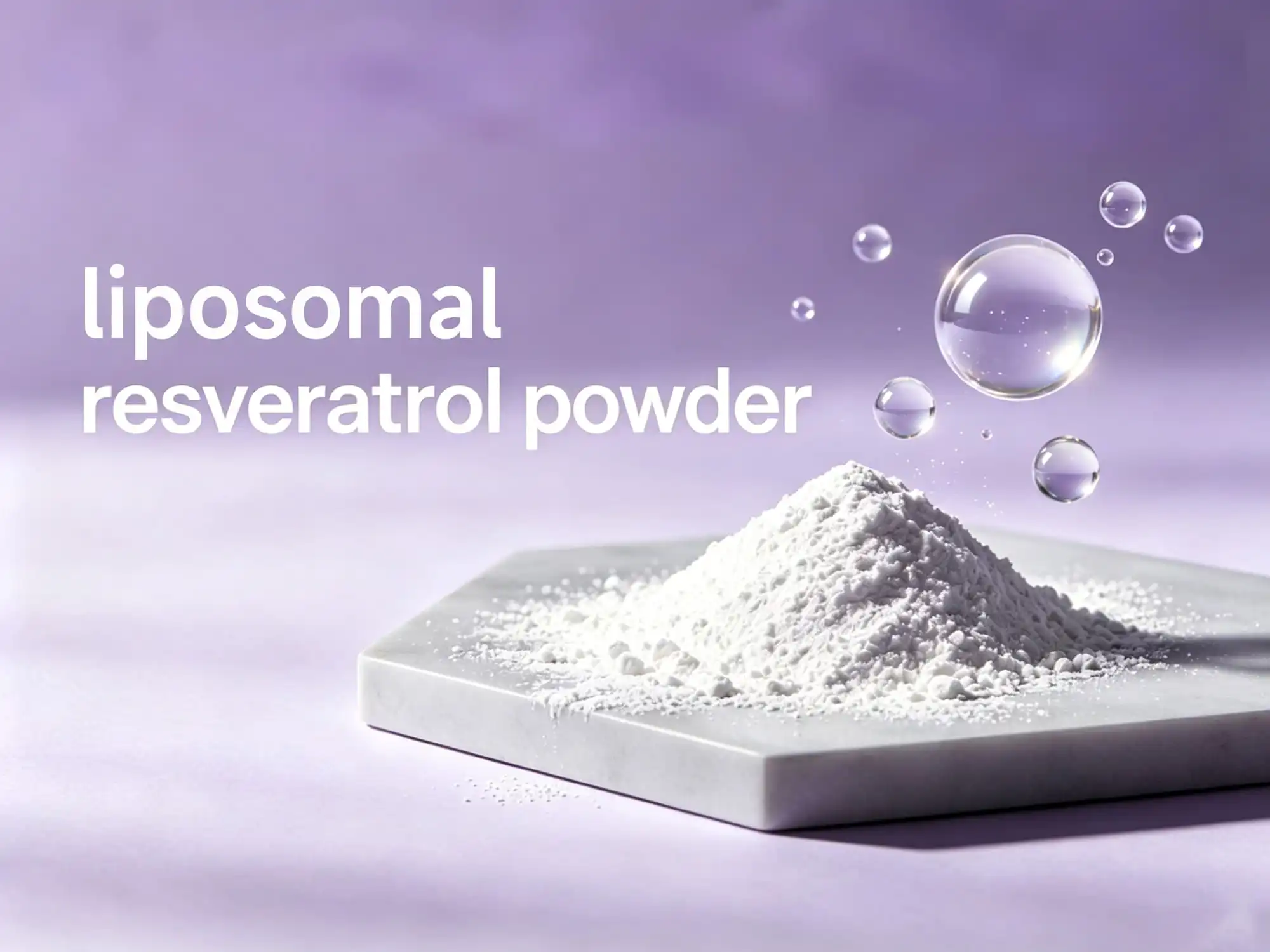
Understanding Liposomal Resveratrol Powder Technology
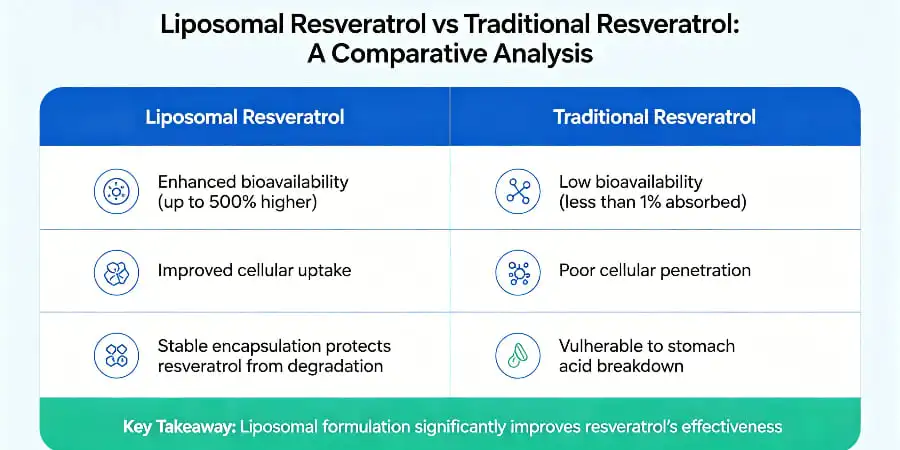
This is a big step forward in how resveratrol is delivered: liposomal resveratrol powder. Traditional resveratrol has a lot of problems. Its hydrophobic qualities make it hard to dissolve, and most oral doses are quickly broken down in the liver before they can reach the systemic circulation. Studies show that normal resveratrol is less than 1% bioavailable, which means it can't do much as an antioxidant.
Liposomal resveratrol powder represents a significant advancement in resveratrol delivery. Traditional resveratrol has multiple limitations. Its hydrophobic properties make it poorly soluble, and most oral doses are rapidly metabolized in the liver before reaching systemic circulation. Studies show that conventional resveratrol has less than 1% bioavailability, severely limiting its antioxidant potential.
The Science Behind Phospholipid Encapsulation
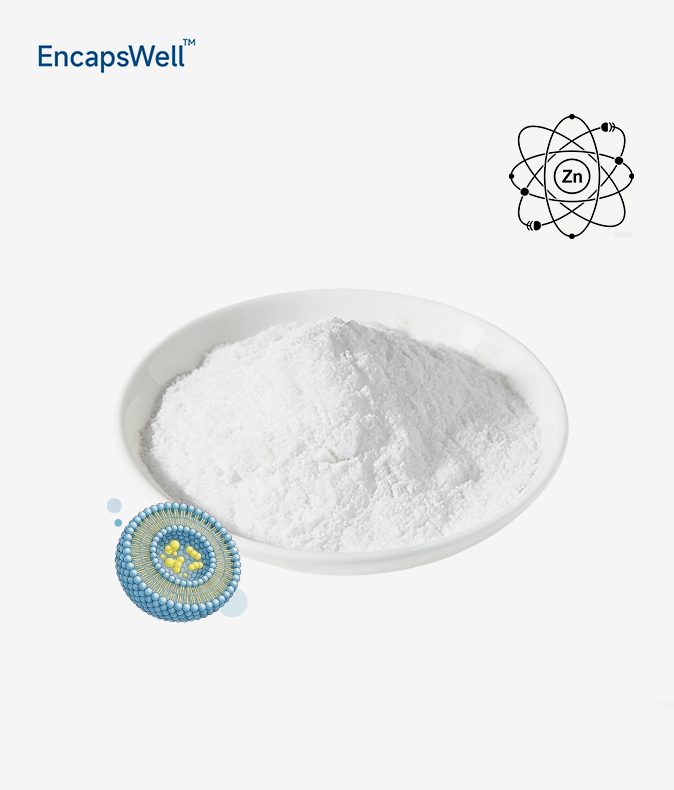
Liposomal resveratrol powder uses phospholipid bilayers to protect resveratrol molecules. These bilayers are typically derived from non‑GMO sunflower or soy lecithin. This lipid shield mimics cell membranes, enabling direct transport across intestinal epithelial cells via M‑cell mediated uptake and lymphatic transport. The encapsulation bypasses the glucuronidation and sulfation pathways that rapidly metabolize conventional forms.
Through advanced manufacturing techniques such as freeze‑drying or spray‑drying, liquid liposomal solutions are converted into stable powders. This transformation preserves the phospholipid vesicle structure while enabling versatile formulation applications. The resulting water‑dispersible powder can be used in capsules, tablets, sachets, and beverage systems, meeting the diverse format requirements of different product categories.
Stability and Shelf‑Life Advantages
Beyond enhancing absorption, liposomal resveratrol powder offers significant shelf‑life benefits. Resveratrol’s polyphenolic structure is susceptible to oxidation and photodegradation; exposure to UV light or high temperatures converts active trans‑resveratrol into less bioavailable cis‑isomers. The phospholipid layer shields the active ingredient from environmental factors, substantially extending product shelf life. High‑quality liposomal resveratrol powder products remain stable for up to 36 months under proper storage conditions, as demonstrated by ICH‑compliant accelerated stability studies. This long‑term stability reduces waste, simplifies inventory management, and ensures consistent product performance throughout the supply chain—critical factors for global procurement strategies.
Liposomal Resveratrol vs Traditional Resveratrol: A Comparative Analysis
Informed procurement decisions require understanding performance differences across delivery formats. The comparison extends beyond cost per kilogram to include bioavailability, formulation flexibility, and finished product efficacy.
Bioavailability: The Core Performance Metric
Despite label claims, conventional resveratrol powders provide limited systemic exposure. Research indicates that liposomal resveratrol powder achieves 10‑ to 14‑fold higher absorption than standard extracts. This substantial improvement enables comparable or superior biological effects at lower doses. From a procurement perspective, this efficiency can offset higher raw material costs by reducing the required amount per serving. Procurement professionals should evaluate cost‑per‑absorbed‑milligram rather than cost‑per‑raw‑gram when assessing true cost‑effectiveness. From this viewpoint, premium liposomal resveratrol powders often deliver superior value through enhanced performance.
Formulation Versatility and Industrial Suitability
Traditional resveratrol is difficult to formulate due to poor water solubility, limiting its use in beverages, and its chemical instability restricts processing options. Liposomal resveratrol powders overcome these challenges through improved dispersibility and enhanced thermal resistance during manufacturing.
The powder format is compatible with multiple dosage forms. Tablet and capsule manufacturers benefit from uniform flow properties and compressibility. Water dispersibility enables beverage formulators to avoid the cloudiness and sedimentation associated with conventional extracts. Functional food developers can incorporate liposomal resveratrol into bars, gummies, and other matrices without compromising stability. This flexibility simplifies formulation, accelerates development, and expands product possibilities—significant advantages for brands targeting diverse consumer segments.
Purity Standards and Quality Assurance
Premium liposomal resveratrol powders typically contain >98% resveratrol derived from verified botanical sources. This high purity ensures batch‑to‑batch consistency and facilitates regulatory submissions. Comprehensive certifications including cGMP, ISO 22000, FSSC 22000, HACCP, Non‑GMO, Vegan, KOSHER, and HALAL compliance enable global market access. These quality credentials are increasingly essential for brands navigating complex international regulations and meeting retailer quality assurance requirements.
Benefits and Limitations of Liposomal Resveratrol Powder
A balanced evaluation requires examining both advantages and limitations. This objective perspective helps procurement professionals select ingredients aligned with product goals and market positioning.
Quantifiable Advantages for B2B Applications
Enhanced absorption directly enables product differentiation. Brands can leverage comparative bioavailability data to support superior absorption claims. This evidence‑based approach appeals to increasingly knowledgeable consumers who scrutinize supplement efficacy. The technology allows effective lower doses, potentially reducing per‑unit cost while maintaining therapeutic value.
Practical Limitations and Risk Considerations
Improved stability reduces degradation losses during manufacturing and storage, protecting margin integrity. Extended shelf life facilitates logistics and supports broader distribution networks without refrigeration requirements. Clean‑label formulations meet consumer preferences for recognizable ingredients and transparent sourcing—critical factors in premium market segments where liposomal resveratrol powder fits naturally.
The primary limitation is higher raw material cost. Liposomal resveratrol powder commands a premium over conventional extracts, affecting product margin structures. Brands must carefully assess whether target customers perceive sufficient value to support higher price points. Market positioning is crucial; premium positioning requires additional marketing investment and educational materials to clearly communicate bioavailability benefits.
Certain excipients and processing conditions may be incompatible with liposomal structures. High‑shear mixing or extremely low pH can damage liposome integrity. Compatibility testing and process evaluation should be part of formulation development. Regulatory documentation demands extensive safety and process control data. Reputable suppliers provide supporting dossiers, but internal regulatory teams must review and adapt this information to market‑specific requirements. Dosage considerations remain important—even with improved absorption, appropriate serving sizes must balance efficacy and safety, particularly for vulnerable populations.
Sourcing Liposomal Resveratrol Powder: What B2B Buyers Should Know
Strategic supplier selection directly impacts product quality, regulatory compliance, and long‑term business success. Procurement decisions should extend beyond unit price.
Evaluating Supplier Capabilities and Certifications
Reliable suppliers maintain robust quality systems backed by third‑party certifications. Look for facilities operating under cGMP guidelines and holding ISO 22000 or FSSC 22000 food safety certifications. These frameworks ensure systematic process controls, contamination prevention, and batch traceability. HACCP certification demonstrates established hazard analysis procedures to mitigate biological, chemical, and physical risks.
Technical expertise is another critical evaluation criterion. Suppliers with dedicated R&D capabilities—particularly PhD‑led scientific teams—can provide formulation support, customization options, and troubleshooting assistance. This technical partnership proves invaluable during product development and scale‑up. Determine whether they conduct in‑house testing such as particle size analysis, encapsulation efficiency validation, and dissolution profiling. These analytical capabilities ensure consistent quality and substantiate stability claims.
Customization Options and Private Label Services
OEM and ODM capabilities offer brands flexibility at various growth stages. Established suppliers provide customizable formulations through particle size adjustment, phospholipid source selection, and excipient system optimization. Co‑formulation options enable products combining resveratrol with complementary actives such as quercetin, NMN, or curcumin. This flexibility accelerates innovation and allows brands to create differentiated product lines.
Private label services facilitate market entry for emerging brands without in‑house manufacturing. Comprehensive services should include formulation development, stability testing, regulatory documentation support, and packaging design. Flexible minimum order quantities accommodate different business sizes—reputable suppliers offer tiered bulk pricing starting at approximately 500 kg per month while also accommodating smaller trial runs for market testing.
Due Diligence and Supplier Verification
Thorough due diligence prevents quality and supply chain disruptions. Request Certificates of Analysis for recent production batches and review specifications for resveratrol content, microbial limits, heavy metal testing, and residual solvents. Third‑party testing from independent laboratories provides greater confidence than supplier‑only testing.
Supply chain stability is critical given global disruption risks. Inquire about raw material sourcing strategies. Sourcing from both European and North American suppliers reduces single‑region dependency. Inventory management practices and lead times affect production planning, particularly when demand fluctuates seasonally. Establish clear communication channels and technical support pathways to ensure rapid assistance for formulation optimization or troubleshooting. Long‑term supplier relationships built on transparency and shared accountability offer greater value than transactional, price‑focused arrangements.
Making the Decision: Is Liposomal Resveratrol Worth the Extra Cost?
The investment case depends on market positioning, target consumer profiles, and competitive dynamics. Strategic analysis should consider more than simple cost differentials.
Premium absorption technology aligns naturally with efficacy‑focused messaging. Liposomal resveratrol powder is well suited for brands targeting educated consumers willing to pay a premium for enhanced bioavailability and science‑backed formulations. This demographic is increasingly discerning about supplement quality, seeking transparent manufacturing practices and scientific validation. The technology enables differentiated marketing narratives centered on measurable performance advantages over generic supplements.
Market Segment Analysis
Enhanced bioavailability is particularly valuable for brands developing cognitive health, cardiovascular support, or longevity supplements. These segments attract consumers prioritizing therapeutic outcomes over price. Resveratrol’s antioxidant properties are especially relevant in beauty‑from‑within and nutricosmetic applications. Liposomal resveratrol powder improves systemic delivery to skin cells, supporting anti‑aging claims.
Cost‑Benefit Framework for Procurement Decisions
Functional beverage manufacturers face unique processing challenges that liposomal technology effectively addresses. Water dispersibility eliminates the cloudiness and bitterness associated with conventional resveratrol, improving consumer acceptance. Stability in acidic beverage environments extends product shelf life without refrigeration. Contract manufacturers serving diverse clients can leverage a flexible ingredient platform compatible with multiple application types.
Calculate total formulation cost, including any formulation efficiency gains. If liposomal resveratrol powder enables 30‑50% lower dosage while maintaining equivalent absorption, the higher raw material cost is partially offset by reduced per‑serving quantity. Consider reduced stability losses—longer‑lasting ingredients mean less product waste and broader distribution without cold chain requirements.
Premium positioning supports higher retail prices, potentially increasing profit margins despite higher ingredient costs. Marketing investment focused on bioavailability benefits can build brand loyalty and reduce price competition. Consumer education is essential; without clear communication of liposomal advantages, price‑sensitive buyers may opt for cheaper alternatives. Pilot testing with target consumer groups validates willingness to pay before full‑scale production commitment.
Supplier partnerships that offer technical support, regulatory assistance, and formulation flexibility add value beyond commodity pricing. Such relationships shorten development timelines, reduce technical risks, and facilitate regulatory approvals—intangible benefits that significantly impact time‑to‑market and overall program success.
Conclusion
Liposomal resveratrol powder represents a significant technological advancement, addressing the poor bioavailability that has limited conventional resveratrol supplements. For brands prioritizing product performance, clean labels, and competitive differentiation, the premium cost is justified by superior customer outcomes and enhanced formulation flexibility. Strategic procurement decisions should evaluate not only raw material price but also bioavailability gains, stability improvements, regulatory alignment, and supplier technical expertise. The technology is particularly valuable for efficacy‑driven segments such as nutraceuticals, functional beverages, and nutricosmetics, where bioavailability directly influences product performance and consumer satisfaction. Careful supplier selection, pilot testing, and total cost analysis enable informed decisions balancing quality, cost, and market positioning.
FAQ
How does liposomal resveratrol powder differ from regular resveratrol supplements?
The primary difference lies in the delivery system. Conventional resveratrol is poorly water‑soluble and undergoes extensive first‑pass liver metabolism, resulting in less than 1% bioavailability. Liposomal resveratrol powder encapsulates resveratrol within phospholipid vesicles, protecting the compound during digestion and facilitating direct cellular uptake. This approach achieves 10‑ to 14‑fold higher systemic availability, potentially delivering greater efficacy at lower doses.
Can liposomal resveratrol powder be used across multiple supplement formats?
The powder format offers significant versatility. It is compatible with capsules, hard and soft gels, sachets, and ready‑to‑mix beverage powders. Water dispersibility enables use in functional beverages, while stability supports incorporation into food matrices such as bars and gummies. This flexibility allows brands to develop comprehensive product lines addressing diverse consumer needs and preferences.
What certifications should buyers prioritize when sourcing liposomal ingredients?
Key certifications include cGMP for manufacturing quality control, ISO 22000 or FSSC 22000 for food safety management, and HACCP for hazard analysis systems. Clean‑label certifications such as Non‑GMO, Vegan, KOSHER, and HALAL expand market accessibility. Third‑party validation testing adds quality assurance. Comprehensive regulatory documentation aligned with FDA, EU Novel Food, and ASEAN GMP standards facilitates international distribution.
Partner with EmerWell for Premium Liposomal Resveratrol Powder Solutions
EmerWell engineers science‑based liposomal resveratrol powder for supplement manufacturers demanding proven performance and high‑quality production. Our EncapsWell™ platform delivers up to 14‑fold higher absorption than conventional extracts, with >98% resveratrol purity and comprehensive certifications including cGMP, ISO 22000, Non‑GMO, and Vegan compliance. As a key partner of Wellgreen’s advanced manufacturing facilities, we provide full OEM/ODM services from formulation development to commercial‑scale production. Our San Diego R&D team offers local technical support, rapid sample delivery, and regulatory guidance for US market entry. Customization across dosage forms and synergistic blends is straightforward, and bulk supply tiers accommodate both emerging brands and established manufacturers. Contact our procurement specialists at info@emerwell-bio.com to learn how our liposomal resveratrol powder solutions can enhance your product line with superior bioavailability and the highest market quality standards.
References
Walle, T., Hsieh, F., DeLegge, M.H., Oatis, J.E., & Walle, U.K. (2004). High absorption but very low bioavailability of oral resveratrol in humans. Drug Metabolism and Disposition, 32(12), 1377-1382.
Marier, J.F., Vachon, P., Gritsas, A., Zhang, J., Moreau, J.P., & Ducharme, M.P. (2002). Metabolism and disposition of resveratrol in rats: extent of absorption, glucuronidation, and enterohepatic recirculation evidenced by a linked-rat model. Journal of Pharmacology and Experimental Therapeutics, 302(1), 369-373.
Figueiras, A., Domingues, C., Jarak, I., Carvalho, R.A., Veiga, F., & Figueiras, A. (2017). Advanced liposomal formulations for improved therapeutic applications. Current Pharmaceutical Design, 23(43), 6632-6645.
Amri, A., Chaumeil, J.C., Sfar, S., & Charrueau, C. (2012). Administration of resveratrol: What formulation solutions to bioavailability limitations? Journal of Controlled Release, 158(2), 182-193.
Salehi, B., Mishra, A.P., Nigam, M., Sener, B., Kilic, M., Sharifi-Rad, M., Fokou, P.V.T., Martins, N., & Sharifi-Rad, J. (2018). Resveratrol: A double-edged sword in health benefits. Biomedicines, 6(3), 91.
Patel, K.R., Brown, V.A., Jones, D.J., Britton, R.G., Hemingway, D., Miller, A.S., West, K.P., Booth, T.D., Perloff, M., Crowell, J.A., Brenner, D.E., Steward, W.P., Gescher, A.J., & Brown, K. (2010). Clinical pharmacology of resveratrol and its metabolites in colorectal cancer patients. Cancer Research, 70(19), 7392-7399.
Online Message
YOU MAY LIKE
High quality furniture manufacturer
_1776234266736.webp)