Sep 4, 2026
Liposomal Resveratrol for Healthy Aging: Mechanisms and Potential Benefits
Liposomal resveratrol has better bioavailability and cellular absorption than standard formulations, therefore addressing the bioavailability limitations that have long been a barrier for the therapeutic potential of this polyphenol. The innovative delivery system includes encapsulation of trans-resveratrol within phospholipid bilayers. This method not only protects the active chemical from degradation but also enables improved cellular absorption. This is a big advance for anti-aging product companies with absorption rates as high as 14x. This is what makes liposomal formulations particularly important to nutraceutical and functional beverage companies that want to demonstrate efficacy in healthy aging products.
Understanding Liposomal Resveratrol and Its Mechanisms
The Science Behind Liposomal Encapsulation Technology
Resveratrol is a polyphenolic substance, and when taken as a conventional vitamin, it is not well absorbed by the body. It is swiftly broken down in the first pass. It is not water soluble and not easily available in the body. Such problems are reduced by liposomal transport methods, in which the nanoparticles are enclosed in phospholipid vesicles, which resemble the look and function of cell membranes.
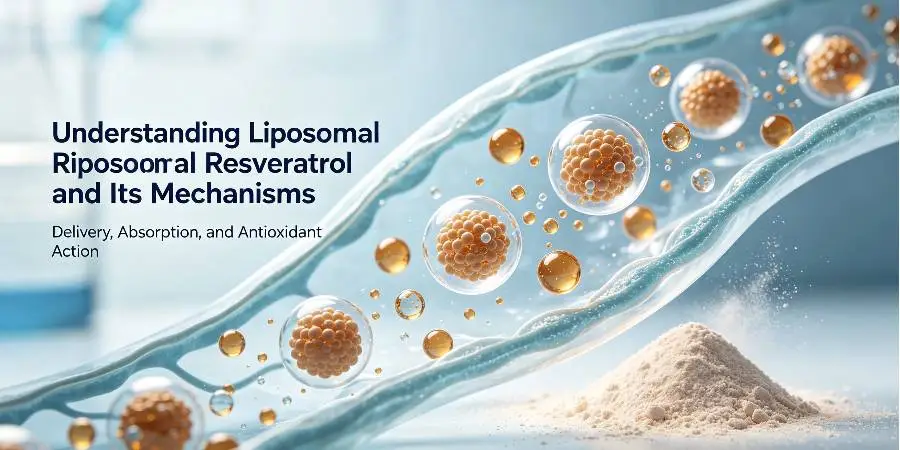
Encapsulation results in spherical bilayer structures ranging in diameter from 50nm to 200nm. These pockets protect resveratrol from breakdown by enzymes in the digestive system and enable it to flow freely between epithelial cells in the stomach. The phospholipids are amphiphilic which enables the liposomal carrier to penetrate the cell membrane and so accomplish the direct transport of the active payload into the cytoplasm.
How Enhanced Absorption Translates to Cellular Benefits
Advanced liposomal technologies achieve capsule success rates above 90%, such that only a little amount of free resveratrol is exposed. This molecular integrity protects the food once it enters the stomach, where unprotected polyphenols are often broken down by the acidic conditions of the stomach. When the liposomal membrane reaches the target tissues, it unites with the cell membranes. This suggests that resveratrol can go into cells directly, where it triggers pathways that extend life span in humans.
Pharmacokinetic studies show that liposomal delivery makes both Cmax (peak plasma concentration) and AUC (area under the curve) parameters much better. The EncapsWell™ platform improves absorption 14 times more than regular resveratrol powder. This was proven by in vitro dissolution tests and pH-sensitive release tracking. This huge improvement lets formulators reach effective levels with lower doses, which lowers the risk of stomach problems that come with taking high doses of regular resveratrol.
Molecular Stability and Long-Term Efficacy
It is balanced between its chemically inactive cis-isomer and trans-resveratrol. Light and oxidative stress speed up this process. Liposomal packaging creates a safe microenvironment that keeps the trans-configuration stable over the entire duration of the product. Following ICH guidelines for stability testing confirms that properly formulated liposomal resveratrol powder has a 36-month shelf life and keeps its potency from manufacturing to consumer use.
The lipid matrix protects resveratrol from isomerization caused by UV light and stops the oxidative breakdown of phospholipids by controlling the amount of water in the powder. This two-layer defense system makes sure that finished goods, like capsules, tablets, or ready-to-mix drinks, keep their beneficial effects even when they are stored in different ways or in different climates.
Health Benefits of Liposomal Resveratrol for Anti-Aging
Cellular Protection and Oxidative Stress Management
Resveratrol turns on sirtuins, a group of NAD+-dependent deacetylases that help control metabolism and the stress response in cells. Liposomal delivery improves absorption and makes sure that there are enough SIRT1 molecules inside cells to change their expression. SIRT1 is an important part of DNA repair and mitochondrial production. This activation cascade helps cells fight off oxidative damage that comes with getting older.
The compound is an antioxidant that does more than just get rid of free radicals. Liposomal resveratrol increases the activity of antioxidant enzymes like superoxide dismutase and catalase, which protects for a longer time than the compound's half-life in plasma. Because of this, liposomal versions with smaller doses work just as well as normal resveratrol with much higher doses at promoting a healthy inflammatory response and pathways for cellular longevity.
Cardiovascular and Metabolic Wellness Support
Resveratrol makes nitric oxide more bioavailable and lowers endothelial reactive stress, which is very good for vascular endothelial function. Liposomal delivery has a better absorption rate, which means that plasma levels stay steady and support endothelial NOS activity throughout the dose period. This long-lasting bioavailability is especially helpful for functional beverage uses where dosing only happens once a day.
Metabolic effects include better control of sugars and lipids. Resveratrol changes AMP-activated protein kinase (AMPK) signaling, which is a key driver of energy balance in cells. The better uptake by cells made possible by liposomal delivery improves AMPK activity patterns. This helps maintain healthy metabolic flexibility, which naturally decreases with age.
Cognitive Function and Neuroprotection
The ability of cognitive health ingredients to pass through the blood-brain barrier is very important. Liposomal carriers are lipophilic, which makes it easier for them to cross this selective barrier. They then carry resveratrol to neural regions, where it helps the expression of brain-derived neurotrophic factor (BDNF). Synaptic plasticity and cognitive resilience are helped by this neurotropic effect.
Another way that resveratrol helps the brain age in a healthy way is by controlling microglial activity and neuroinflammation. Advanced delivery methods make sure that the drug is consistently bioavailable, which means that it reaches the right amounts in the brain to affect neuroinflammatory cascades without needing too much systemic dosing.
Dermatological Benefits and Beauty-from-Within Applications
Because liposomal resveratrol is amphiphilic, it works well in nutricosmetic formulas. When taken by mouth, the improved uptake sends antioxidants to the skin layers, which are where collagen breakdown and photoaging happen. This general method works with topical skin care routines to help fight oxidative stress at the cellular level in skin tissue.
Resveratrol affects fibroblast activity in a way that helps make collagen and control matrix metalloproteinase. Because liposomal versions are more bioavailable, they make sure that enough amounts reach dermal fibroblasts to change gene expression patterns that are involved in maintaining the extracellular matrix and keeping the skin flexible. A reliable liposomal resveratrol manufacturer plays a key role in ensuring this bioavailability through proper encapsulation and quality control.
Comparing Liposomal Resveratrol with Other Forms
Bioavailability Advantages Over Standard Formulations
Most traditional resveratrol supplements don't get absorbed more than 20% of the time. This is because most of the dose that is taken goes through phase II metabolism before it gets to the systemic circulation. Standard powder formulas have extra problems because particles stick together and don't dissolve well in water. Liposomal encapsulating changes this pharmacokinetic profile in a basic way in a number of ways.
The phospholipid transporter improves lymphatic absorption, skipping the first step of liver metabolism that breaks down free resveratrol quickly into glucuronidates and sulfates. This different way of absorbing the compound keeps the parent compound whole and delivers whole molecules to specific areas. Comparative studies show that liposomal systems reach plasma concentrations that are the same as doses that are 10 to 15 times higher when given as regular pills or capsules.
Manufacturing Considerations for Scalability
To make reliable liposomal formulations, you need to know a lot about colloid science and process engineering. The EncapsWell™ platform uses encapsulation methods that use 30% less energy and produce pharmaceutical-grade quality while also reducing solvent waste by 30% compared to industry standards. This concern for the earth fits with the clean-label trend without hurting the performance of the product.
Controlling the spread of particle sizes is important for maintaining stability from batch to batch. Dynamic Light Scattering (DLS) testing makes sure that every production lot stays within the desired 50–200nm range and has good polydispersity index values. This quality control parameter has a direct effect on how the substance dissolves and how biologically it is absorbed, which makes it an important specification for evaluating procurement.
Format Flexibility for Diverse Product Applications
Liposomal resveratrol in powder form gives you more options than liquid liposomal goods. Formulation experts can put the powder into hard pills, tablets, stick packs, or drink mixes without having to worry about the water activity issues that make liquid systems less stable over time. This flexibility shortens the time it takes to make new products and lets brands stand out across a range of delivery formats.
The ability to mix with water is especially helpful for useful drinking uses. Standard resveratrol is hydrophobic and makes obvious sediment. Liposomal powder, on the other hand, dissolves easily in water, making drinks that are clear or almost see-through. The phospholipid layer also hides the bitter taste of resveratrol, so ready-to-drink drinks don't need as many sweeteners or flavor-hiding agents.
Purchasing and Procurement Guide for Liposomal Resveratrol
Critical Quality Specifications for Supplier Evaluation
Buying groups should give more weight to sellers who offer more than just basic certificate of analysis reports when it comes to analytical paperwork. Important requirements include measuring the amount of resveratrol using HPLC (≥98% purity), finding out how well the particles are encapsulated using centrifugation-ultrafiltration, and describing the particles using DLS. Suppliers who can't give you this scientific information probably don't have real liposomal capabilities.
Long-term colloidal stability is shown by zeta potential readings. Values between -20 mV and -50 mV suggest strong electrostatic repulsion that keeps particles from sticking together. Cryo-TEM (cryo-transmission electron microscopy) shows that the vesicular structures are still whole, not just broken-up lipid fragments. These improved methods for characterizing liposomal products tell the difference between real liposomal products and fake ones that are just mixes of lipids.
Regulatory Compliance and Certification Requirements
To get into global markets, you have to be in line with a lot of different rules. There are many standards for the EncapsWell™ liposomal resveratrol powder, such as cGMP, ISO22000, FSSC22000, HACCP, HALAL, KOSHER, Non-GMO, and Vegan. When compared to getting ingredients without export paperwork, pre-compiled regulatory dossiers that cover 30+ jurisdictions cut the time it takes to get into a market by up to 40%.
Novel Food licensing rules in the EU and ASEAN GMP standards make it hard for ingredient providers to do their jobs. Working with makers that have specific regulatory support teams makes the process of compliance easier and lessens the load on internal quality assurance departments. This extra service is especially helpful for new brands that don't have a regulatory infrastructure yet.
OEM/ODM Customization Capabilities
To make a product stand out, companies need to use more than just off-the-shelf ingredients in their recipes. In the supplement market, being able to change particle sizes, excipient profiles, or make beneficial mixes with actives that work well together, such as NMN, quercetin, or curcumin, gives companies an edge. Suppliers with flexible minimum order numbers let you do test production runs to see if there is a need in the market before committing to large amounts of inventory.
Bulk pricing structures usually start at monthly volumes of 500 kg, but scalable partnerships should be able to adapt to growth paths from entering the market for the first time to having fully developed product lines. Using clear pricing models that take into account the costs of raw materials, the difficulty of encapsulation, and the cost of maintaining certifications helps procurement teams accurately predict how much a product will cost throughout its development lifecycle. Choosing the right resveratrol powder bulk supplier is essential to achieving this level of cost transparency and supply stability.
Dosage, Usage Guidelines, and Safety Considerations
Recommended Dosing for Optimal Bioavailability
For general health purposes, the clinical research on traditional resveratrol recommends doses of 150 mg to 500 mg per day. Because liposomal delivery methods are better at absorption, formulation designers can get similar plasma levels with smaller doses. Usually, 50 mg to 150 mg of liposomal resveratrol is enough because it is 14 times more bioavailable. This lower dose keeps substance costs low while lowering the risk of stomach problems that come with higher amounts.
Patterns of uptake are affected by timing issues. If you eat it with foods that have a reasonable amount of fat, it may help your body absorb it even more. However, the liposomal carrier creates a lipophilic environment that makes absorption possible whether you are hungry or not. This dosing flexibility works for a wide range of product forms, from wellness shots in the morning to capsules that help you live longer at night.
Safety Profile and Contraindications
Resveratrol has been shown to be very safe in clinical tests, with few side effects reported even at amounts higher than what is considered nutritional. Liposomal versions have a higher safety margin because they need less of a dose to work. Because there are fewer total polyphenols in improved liposomal delivery, mild digestive effects that are common with high doses of standard supplements happen less often.
Concerns about resveratrol's phytoestrogen activity and blood-thinning effects are reason enough for product labels to use standard warning wording. People who take anticoagulant drugs or have conditions that make them sensitive to hormones should talk to their doctors, but there isn't a lot of clinical evidence yet that these drugs interact with each other. Third-party testing for heavy metals using ICP-MS and microbial contamination according to USP limits makes sure that the safety of the product meets all international standards.
Quality Assurance Through Analytical Validation
Stability testing methods that go beyond normal shelf-life studies make sure that the product will continue to work. At 40°C and 75% relative humidity, which speeds up the aging process, possible degradation pathways are shown. These include trans-to-cis isomerization and lipid peroxidation. Good providers do these checks on their own, giving information about stability that backs up marketing claims and government filings.
Checking for stability from lot to lot using statistical process control shows that the manufacturing process is reliable, which is necessary for large-scale production. Blockchain-based batch tracking systems make the whole supply chain clear, from where the raw materials come from to where the finished products are sent. This digital proof infrastructure meets the needs of retailers and customers who want the supply chain to be more accountable.
Conclusion
Liposomal resveratrol is a scientifically proven improvement in the creation of anti-aging supplements. It solves the problems with absorption that have plagued older versions. Phospholipid encapsulation improves absorption 14 times, which means that smaller doses are effective while still having a wide range of health benefits across cardiovascular, cognitive, metabolic, and dermatological areas. When purchasing professionals look at different suppliers, they should focus on those that provide detailed analytical documentation, follow all regulations in all target markets, and offer customization options that help make products stand out. With confirmed stability data and clean-label standards, the powder format is the most flexible way to make a wide range of products, from capsules to useful drinks. As the number of people looking for life solutions based on evidence keeps growing, liposomal delivery technology gives new wellness products the science basis and business sense they need to succeed in competitive markets.
FAQ
1. What makes liposomal resveratrol more effective than standard supplements?
The phospholipid coating keeps resveratrol from breaking down during digestion and helps cells take it in directly by fusing membranes. With this delivery method, plasma concentrations can be up to 14 times higher than with regular powder doses. This means that lower effective doses are needed and the drug is less likely to cause stomach problems. The higher bioavailability means that sirtuins and AMPK signals can be activated more effectively at physiologically relevant amounts.
2. Can liposomal resveratrol be customized for private label products?
Advanced providers give a wide range of OEM/ODM services, such as optimizing particle size, customizing excipients, and putting together actives that work well together. Different brand branding tactics can be used with powder, tablets, hard capsules, soft capsules, and liquid-ready formulas, which are all flexible dosage forms. With scalable partnerships that grow with the market demand, minimum order quantities starting at 500 kg per month can support both new brands and well-known product lines.
3. How should quality be verified when sourcing liposomal resveratrol?
For liposomal goods to be real, they need more proof than just basic quality tests. Ultracentrifugation is used to measure encapsulation efficiency; DLS is used to measure particle size distribution; zeta potential is used to predict stability; and Cryo-TEM imaging is used to confirm the results visually. Full certifications that include cGMP, ISO22000, Non-GMO, and Vegan standards show that the production process is thorough, and regulatory dossiers that have already been put together speed up entry to foreign markets in the EU, FDA, and ASEAN.
Partner with EmerWell for Superior Liposomal Solutions
EmerWell uses advanced science and targeted US-based support to provide liposomal resveratrol powder that is designed to work in a way that can be measured. Our San Diego-based PhD-led R&D teams created the EncapsWell™ platform, which improves absorption 14 times through a special process using phospholipids. We keep a lot of certificates, like cGMP, ISO22000, FSSC22000, Non-GMO, and Vegan verification. These are backed up by 36-month stability data and legal paperwork that has already been put together for more than 30 global markets. Customized formulas can be made possible by flexible OEM/ODM capabilities, and bulk price starts at 500 kg per month. Get in touch with our technical team at info@emerwell-bio.com to talk about how our partnership with a liposomal resveratrol supplier can help you speed up the development of your product while still meeting the quality standards your brand requires.
References
1. Walle T. Bioavailability of resveratrol. Annals of the New York Academy of Sciences. 2011;1215:9-15.
2. Amri A, Chaumeil JC, Sfar S, Charrueau C. Administration of resveratrol: What formulation solutions to bioavailability limitations? Journal of Controlled Release. 2012;158(2):182-193.
3. Chimento A, De Amicis F, Sirianni R, Sinicropi MS, Puoci F, Casaburi I, Saturnino C, Pezzi V. Progress to improve oral bioavailability and beneficial effects of resveratrol. International Journal of Molecular Sciences. 2019;20(6):1381.
4. Subramanian AP, John AA, Vellayappan MV, Balaji A, Jaganathan SK, Supriyanto E, Yusof M. Gallic acid: prospects and molecular mechanisms of its anticancer activity. RSC Advances. 2015;5(45):35608-35621.
5. Cottart CH, Nivet-Antoine V, Beaudeux JL. Review of recent data on the metabolism, biological effects, and toxicity of resveratrol in humans. Molecular Nutrition & Food Research. 2014;58(1):7-21.
6. Fabbrocini G, Staibano S, De Rosa G, Battimiello V, Fardella N, Ilardi G, La Rotonda MI, Longobardi A, Mazzella M, Siano M, Pastore F. Resveratrol-containing gel for the treatment of acne vulgaris: a single-blind, vehicle-controlled, pilot study. American Journal of Clinical Dermatology. 2011;12(2):133-141.
Online Message
YOU MAY LIKE
High quality furniture manufacturer