

Jul 20, 2026
Liposomal Omega-3 Powder OEM Guide for Supplement Brands
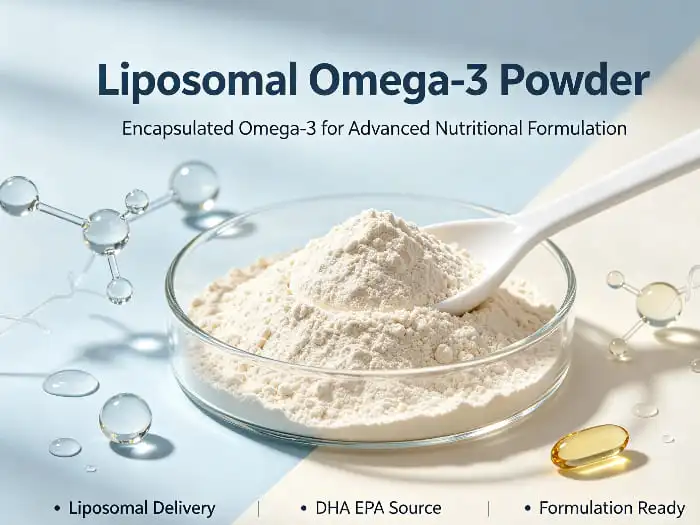
To succeed in the industry of supplement production, you need access to the newest ingredients that produce proven outcomes. Liposomal Omega-3 powder gives a unique opportunity for firms looking to improve bioavailability and product stability. This innovative formulation wraps EPA and DHA fatty acids inside phospholipid bilayers, preserving them from oxidative destruction and significantly boosting absorption, unlike standard fish oil powders. This OEM guide helps nutraceutical companies, functional beverage makers, and contract manufacturers understand the sourcing, formulation, and commercial benefits of adding liposomal omega-3 technology to their product portfolios.
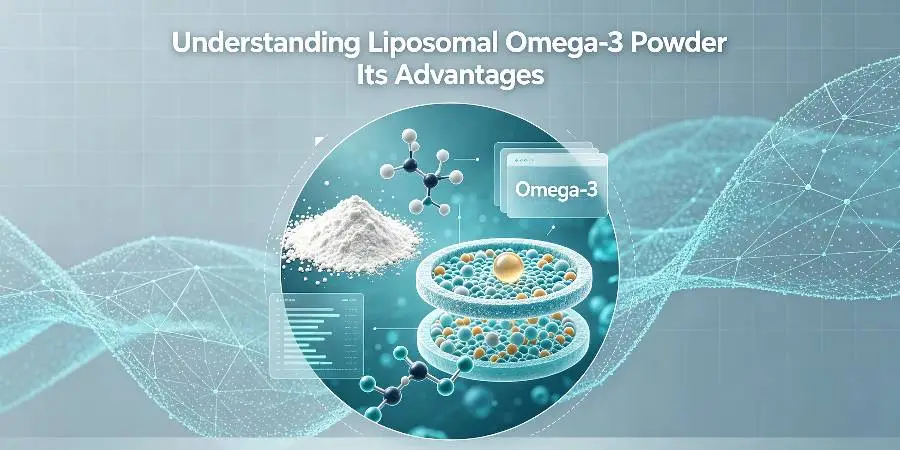
Understanding Liposomal Omega-3 Powder and Its Advantages
What Makes Liposomal Technology Different
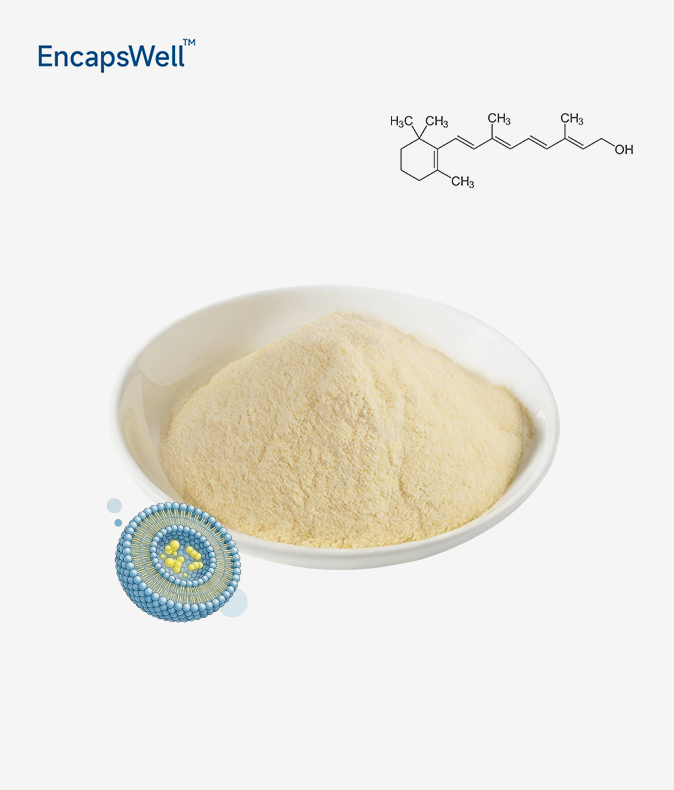
The liposomal packing technique alters the way omega-3 fatty acids enter cells, as well as how they remain in the body after digestion. Standard omega-3 powders are less stable and effective due to breakdown by stomach acid and digestive enzymes. Our EncapsWell™ technology addresses these issues by enclosing EPA and DHA molecules in biomimetic phospholipid layers that resemble the membranes of live cells. Clinical studies demonstrate liposomal delivery techniques boost the bioavailability of omega-3s 8 to 12-fold compared to standard formulations. This way the active compounds reach the tissues of the heart, brain, and immune system with little waste.
Liposome powders are superior to liquid liposomes in terms of manufacturing. Liposomal granules that dissolve in water will stay intact in cold beverages without separating the oil. This makes them ideal for functional beverages, powder sachets, and even newborn nourishment products. The capsule efficiency with the EncapsWell™ platform is >85%, enabling companies to provide medical dosages in lower serving sizes with exceptional oxidative stability throughout the shelf life.
Documented Health Benefits That Drive Consumer Demand
Omega-3 fatty acids are important for heart health since they assist in maintaining the lipids in balance and the circulation system running effectively. More than 40 percent of the polyunsaturated fatty acids in brain tissue are DHA, and it is particularly crucial for the formation of the brain and the ability to hold onto memories and cognitive abilities throughout life. The phospholipid layer maintains the omega-3s potency while delivering natural anti-inflammatory compounds straight to cells for joint and general wellness.
Another fascinating use is visual health, particularly for the elderly and children. Targeted liposomal administration increases DHA levels in retinal tissues, which are important for vision and healthy eye development. Liposomal Omega-3 powder is a popular option for organizations looking to manufacture high-performance vitamins, beauty-from-within supplements, and sports nutrition products because of its impressive health advantages.
Why OEM Supplement Brands Should Choose Liposomal Omega-3 Powder
Meeting Rising Consumer Expectations for Efficacy
Consumers of supplements nowadays are more interested in bioavailability claims and chemical clarity. Product designers are under pressure to prove their goods provide quantifiable absorption advantages that justify the increased price. That’s where liposomal omega-3 powder comes in. It uses a delivery system that has been clinically tested to be superior to other delivery systems for absorption. Certainly, brands using this technology may communicate the effectiveness advantages of their product to formulation-savvy consumers and healthcare experts.
The omega-3s industry around the globe is rising due to increased consciousness about its advantages for brain health, heart health, and inflammation management. Nutraceutical brands and functional food firms realize improved ingredient forms are the key to breaking out in already crowded sectors. OEM companies that can create liposomes enable brands to launch new products that are more profitable and fulfill clean label regulations.
Overcoming Common Manufacturing Challenges
Powder stability is an ongoing challenge in omega-3 manufacturing. The spray-dried fish oil powders are often oxidized fast, resulting in off-flavors and off-odors and reduced efficacy. The multi-layered liposomal structure is resistant to oxygen, light, and moisture, providing a significant extension of shelf life even at ambient temperature. Peroxide readings are below 2 meq/kg, which is substantially lower than the norm for the industry. This maintains the integrity of substances from manufacture to consumer usage.
Brands don’t typically take up new technology because they’re worried they won’t be scalable. In contrast, established OEM partners with cGMP-certified facilities may simply shift liposomal formulations from trial runs to full commercial manufacturing. Quality control measures compliant with ISO 22000, HACCP, Kosher and Halal standards ensure that the particles are of the same size, properly encapsulated and free of microorganisms throughout all manufacturing runs. Contaminants have to be extremely thoroughly tested to fulfill newborn feeding guidelines, including heavy metals at less than 0.5 ppm lead and total plate counts at less than 1000 cfu/g.
Comparison of Liposomal Omega-3 Powder With Other Omega-3 Forms for OEM Selection
Bioavailability and Absorption Efficiency
Omega-3 forms and their absorption rates are a measure of how well they perform and how much they cost. Regular fish oil capsules have a bioavailability of just 20-30% because the digestive system has a hard time digesting the lipids. The quality of the ethyl ester extracts improves, but the limitations of absorption remain the same. Liposomal Omega-3 powder technology solves these challenges by delivering medications at the cellular level. It produces absorption rates of above 85% by facilitating the fusion of membranes to intestinal cells.
This substantial gain means that firms may now manufacture lower-dose supplements that result in the same or greater amounts of EPA and DHA in the plasma than high-dose supplements. The liposomal components have a higher cost, but the purchasing teams save on the raw materials since a less effective amount is used. The higher absorption profile also minimizes the stomach upset that occurs with taking a lot of fish oil, making it more affordable for more individuals.
Shelf Life and Stability Considerations
Because of oxidative stability difficulties, liquid fish oils and soft gel tablets can only remain fresh for 12-18 months under chilling conditions. Standard omega-3 powders help things out a little bit but are still prone to the creation of peroxides and fishy smells. Liposomal encapsulation wraps active substances in safe phospholipid bilayers that protect them from spoiling via oxidation. These will be effective at room temperature for 18-24 months if kept correctly. Stability is one of the advantages that reduces waste in the distribution chain and enables the global market to develop without cold-chain transportation.
The production scale is quite diverse for the various forms of omega-3. Soft gel packing involves specific instruments and has few specialized formulae. The powder is more versatile and can be readily formulated into pills, capsules, sachets, and ready-to-drink beverages. Liposomal Omega-3 powder may be used in functional beverages, smoothie mixes, and even gummy bears to cover up the fishy smell that makes people not want to follow the recommendations since it dissolves quickly in water.
Practical Guide to Sourcing and Procuring Liposomal Omega-3 Powder for OEM Supplement Brands
Identifying Qualified Manufacturing Partners
It’s not enough to just pick an OEM supplier with the correct basic manufacturing capability. Seek partners whose liposomal systems are distinctive and whose work has been supported by peer-reviewed research and clinical trials. Nutraceuticals should be produced in facilities with up-to-date Good Manufacturing Practice certificates and robust quality control systems. A notable example of this standard is the EncapsWell™ platform, which combines PhD-led research teams with pilot-scale development technologies that allow the rapid optimization of formulations.
Location matters when establishing a B2B purchasing strategy. U.S. partners can assist in navigating laws, safeguarding intellectual property, and communicating more effectively. EmerWell has its own research & development lab and warehouse in San Diego, California. This enables North American customers to take advantage of local technical support and rapid sample processing. This job allows those working closely together on product development to collaborate, while also providing the stability of the supply chain.
Strategic Procurement and Partnership Models
For new companies, minimum order volumes may greatly impact their cash flow and inventory management. Large OEM suppliers have flexible MOQ structures that enable trial launches while maintaining low costs for bulk production. Negotiate yearly number agreements rather than quantities per order for better cost structures. With subscription-based procurement strategies, supply chains are more predictable, and companies with recognizable product lines may achieve better rates.
Quality assurance protocols should involve examining the source of raw materials, testing throughout the production process, and researching the safety of the finished product. Request CoA records that illustrate encapsulation efficiency, size distribution, peroxide levels, and microbiological tests for typical manufacturing batches. Suppliers with their own labs can respond more quickly and provide greater technical support than those that utilize third-party labs. What separates Liposomal Omega-3 powder OEM partners from the usual contract producers is the post-production support.
Formulation & Dosage Insights: Optimizing Liposomal Omega-3 Powder for Your Brand
Targeted Dosing for Specific Health Applications
Cardiovascular support recommendations typically recommend a total of 1000-2000 mg EPA and DHA daily, or the equivalent of 5-10 grams of normal 10% DHA/5% EPA Liposomal Omega-3 powder. Cognitive health products focus on higher DHA ratios and dosages of 200-1000 mg DHA, depending on the target population. Often the content of EPA is prioritized for anti-inflammatory purposes, which implies that concentration levels need to be carefully considered while formulating.
The encapsulation in liposomes increases the bioavailability of medications and hence potentially provides therapeutic benefits with much lower dosages than the usual forms. This may lead to single-serve packets, low-volume capsules, and beneficial beverages that can’t accommodate as many ingredients since there’s not enough capacity. Markets are subject to varying laws and regulations. U.S. dietary supplement rules permit structure/function claims with sufficient substantiation. European markets need health claims to be approved by the European Food Safety Authority (EFSA) and include precise dosage recommendations.
Format Integration and Consumer Acceptance
Masking the flavor is a big aspect of making omega-3 supplements function. The liposomal structure fully encloses the oily core, preventing the fishy tastes and aromas associated with previous formulations. The new finding may be included in chewable tablets, candies, ready-to-drink beverages, and powder bags, all depending on how well people receive the flavor. It is possible to make it taste even better without affecting its stability by adding natural fruit flavors, stevia sweeteners, or masking agents.
The way powder is disseminated impacts the enjoyment of mix-and-drink beverages. Our water-dispersible formula enables us to produce a stable solution in cold liquids without separation or clumping of oil so that the product looks attractive and is dosed evenly. When you test for stability, think about how the compound appears, how it dissolves and how long the active ingredient remains under realistic storage settings including temperature and humidity variations. Proper packaging, such as nitrogen flushed sachets or bulk boxes covered with desiccant, will maintain the quality of the product throughout all phases of delivery.
Conclusion
Liposomal Omega-3 powder technology provides supplement firms with a scientifically established method to make their goods stand out and assist clients get greater results. excellent bioavailability, excellent oxidative stability and broad format compatibility combine to overcome long-standing issues in omega-3 consumption. The keys to a successful OEM cooperation are suppliers with proven liposomal competence, flexible production capabilities and complete regulatory assistance. For manufacturers seeking clean-label recipes, safety requirements for babies and proven efficacy, liposomal encapsulation technology provides benefits that will enable them to win in the market and gain consumer confidence.
FAQ
1. How does liposomal omega-3 powder improve absorption compared to standard fish oil?
Liposomal encapsulation keeps EPA and DHA from being broken down by stomach acid and digestive enzymes. This makes it easier for them to be absorbed directly through the cell membranes of the intestines. Clinical tests show that bioavailability is 8-12 times better than with regular fish oil, which means that higher blood plasma levels are reached with the same or lower amounts of liposomal omega-3 powder.
2. What certifications should brands verify when sourcing liposomal omega-3 powder?
Authentic providers keep cGMP certification for nutraceutical production, as well as ISO 22000 certification for food safety management, HACCP compliance, and third-party Kosher/Halal proof. Products meant to feed babies should have heavy metal levels below 0.5 ppm lead and microbiological safety with total plate counts below 1000 cfu/g.
3. Can liposomal omega-3 powder be incorporated into functional beverages?
Modern versions that dissolve easily in water keep the powder in solution in cold liquids without separating the oil. This makes them perfect for ready-to-drink drinks, smoothie mixes, and powder packets. Complete micro-encapsulation gets rid of fishy smells and tastes, making sure that consumers will accept the product in situations where taste is important.
Partner With EmerWell for Advanced Liposomal Omega-3 Powder Solutions
Through our own EncapsWell™ platform, EmerWell specializes in making customized liposomal vitamin formulas. We take your ideas for products and turn them into high-performance nutrients that are more stable and bioavailable. Our R&D lab in San Diego helps U.S. clients with localized technical support, quick sample shipping, and recipe optimization led by PhDs. As a top liposomal omega-3 powder maker, we provide full OEM/ODM services, cGMP-certified production, and adjustable MOQ choices to help brands from test launches to full commercial scaling. Email our team at info@emerwell-bio.com to get product samples, talk about special recipes, or look into ways to work together.
References
1. Schuchardt, J.P., & Hahn, A. (2013). Bioavailability of long-chain omega-3 fatty acids. Prostaglandins, Leukotrienes, and Essential Fatty Acids, 89(1), 1-8.
2. Yurko-Mauro, K., McCarthy, D., Rom, D., et al. (2010). Beneficial effects of docosahexaenoic acid on cognition in age-related cognitive decline. Alzheimer's & Dementia, 6(6), 456-464.
3. Mozaffarian, D., & Wu, J.H. (2011). Omega-3 fatty acids and cardiovascular disease: effects on risk factors, molecular pathways, and clinical events. Journal of the American College of Cardiology, 58(20), 2047-2067.
4. Akbari, M., Ostadmohammadi, V., Lankarani, K.B., et al. (2016). The effects of omega-3 fatty acid supplementation on biomarkers of inflammation: a systematic review and meta-analysis. Journal of Clinical Lipidology, 10(6), 1234-1247.
5. Ghasemifard, S., Hermon, K., Turchini, G.M., & Sinclair, A.J. (2015). Metabolic fate of long-chain n-3 polyunsaturated fatty acids in relation to liposomal and emulsion delivery systems. Prostaglandins, Leukotrienes and Essential Fatty Acids, 102, 23-31.
6. Tan, M.L., Shao, P., Friedhuber, A.M., et al. (2014). The potential role of free docosahexaenoic acid and docosahexaenoic acid-containing phospholipids in inflammation signaling. Prostaglandins, Leukotrienes and Essential Fatty Acids, 91(1-2), 1-6.
Online Message
YOU MAY LIKE
High quality furniture manufacturer
_1776234307158.webp)