Jul 17, 2026
Liposomal Omega-3 Powder Explained: Benefits, Uses, and Science Behind It
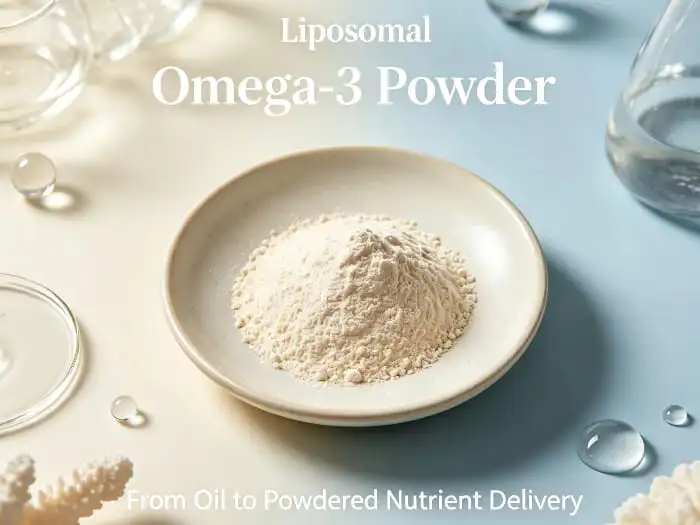
Liposomal Omega-3 Powder has EPA and DHA in phospholipid vesicles, which is a new way to deliver omega-3s. This special mix keeps omega-3s from breaking down due to oxidation and digestion, and it works 8–12 times better than fish oil pills. Powders are clean-label ingredients that work better for vitamin, functional beverage, and OEM partners because they last longer and are easier to absorb.
What Is Liposomal Omega-3 Powder?
The Technology Behind Advanced Omega-3 Delivery
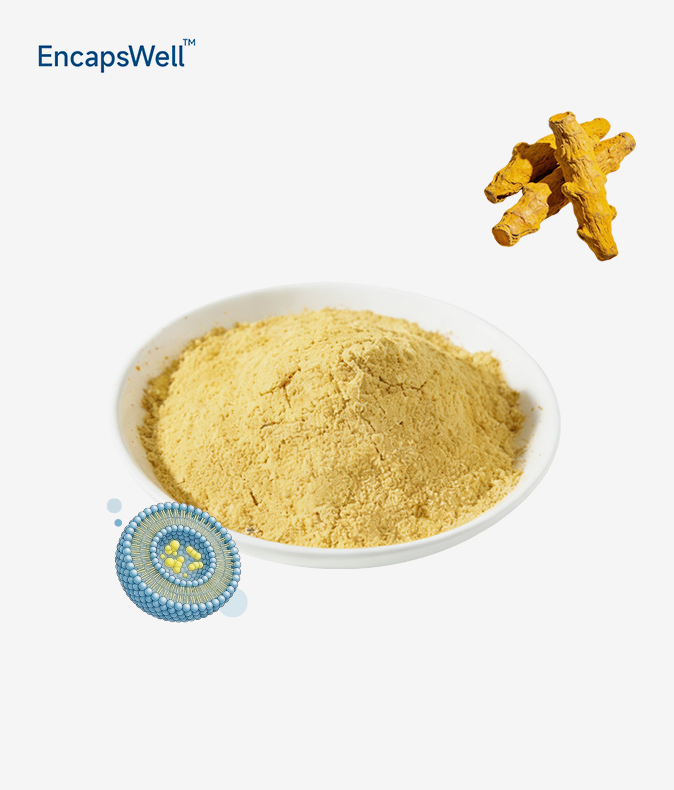
Liposomal Omega-3 Powder. EPA and DHA are surrounded by small lipid bilayers, which changes the way omega-3s are eaten. Phospholipids protect delicate fatty acids from damage from the surroundings and enzymes that break them down, just like cell membranes do. Unlike fish oil capsules or liquid concentrates, this method stops oxidative rancidity and keeps the integrity of the ingredients while they are being made and while they are being stored.
Powder is good for supplement makers. You can add water-dispersible properties to protein powders, functional food matrices, and drink systems without worrying about phase separation or texture. Non-GMO soy or sunflower lecithin that is free of gluten, lactose, and allergens is used as a carrier. It's hard to absorb omega-3s when they taste and smell like fish.
Differentiating Factors for B2B Procurement
Manufacturers of products that want to make sure they are bioavailable choose liposomal administration. Encapsulation makes particles uniform to 100–400 nanometers so that they can be absorbed by the intestines. Plasma omega-3 is now higher than ethyl ester and triglycerides thanks to this precise engineering.
Key to commercial recipe stability. Our Liposomal Omega-3 Powder has 2 meq/kg of peroxide, which is a lot less than the 5 meq/kg limit set by the industry. Excellent oxidative stability increases the shelf life to 18–24 months when it is regulated. This lowers the risk of running out of stock and opens up more channels of distribution. It works because 95% of the active ingredient stays in the product over time.
Health Benefits and Uses of Liposomal Omega-3 Powder
Cardiovascular and Metabolic Support
It is known that EPA and DHA improve lipids and circulation. Liposomal release is good for tissue concentrations because it is bioavailable. Clinical nutritionists say that omega-3s lower cholesterol and make blood vessels more flexible.
Precision cellular delivery concentrates active substances where they are needed to help the metabolism and gets rid of waste from tissues that aren't being treated. People who make products for heart health like this customization. Liposomal omega-3 powder is gentle for kids and older people who have trouble with their circulation.
Cognitive Function and Neurological Wellness
DHA is found in the membranes of many neuronal cells in brain tissue. Lipid DHA dispersion helps with cognitive attention and crossing the blood-brain barrier. Brain health is improved by formulas that raise omega-3 biomarkers.
Medication that helps the brain is needed by seniors, students, and workers who are under a lot of stress. In markets where competition is high, liposomal technology's better absorption profile allows for lower dosages while keeping the same level of effectiveness, which leads to new products.
Immune Balance and Inflammatory Response
Omega-3s can help reduce inflammation. It keeps immunity in check without lowering it. Athletes and fitness fans are creating sports nutrition sites to deal with inflammation caused by exercise.
Liposomal Omega-3 Powder is gentle and won't make you feel alert, so sensitive people can take it every day. Curcumin, vitamin D, omega-3s, and plant extracts all help with overall health.
Vision and Ocular Health Maintenance
DHA is found in large amounts in retinal tissue and helps photoreceptors work and keep your eyesight. Older people or people who spend a lot of time in front of a screen need to eat. Liposomal Omega-3 powder formulations that are backed by science deliver concentrated DHA to eye tissues, aiming at this growing market.
Procurement Insights: Choosing and Buying Liposomal Omega-3 Powder
Quality Assurance and Certification Standards
To find reliable liposomal omega-3 powder providers, you need to know about production and quality control. GMP certification is needed for nutraceuticals to be trusted. Partners should keep records of how they get raw materials, how they prepare them, and how they test the finished product.
An analytical evaluation of the supplier is needed. Choose partners based on their fatty acid makeup, particle size distribution, ability to encapsulate well, and resistance to oxidation. Independent lab tests back up what suppliers say and what the rules are around the world.
It is important to be able to track sources when choosing them. Ask possible partners for data on the marine source-to-powder production chain of custody. Certified sustainable fishing and heavy metal testing take care of issues of customer purity and environmental responsibility.
Pricing Models and Bulk Purchasing Considerations
Due to better preparation and performance, Liposomal Omega-3 Powder is more expensive than fish oil concentrates. Knowing how costs are structured helps procurement teams figure out value in more ways than just per kilogram.
The high prices are due to encapsulation, maintaining tools, and making sure the quality is good. When bioavailability is higher, the final formulation dose goes down. This may make up for higher ingredient costs by making the product work better and making users happier.
By buying in bulk, supply chains and prices are improved. Minimum order quantities can be changed for both new brands that want to get into the market and experienced makers who need to make a lot of products. Talking to suppliers can lead to long-term partnerships with plans for growth and sales.
Evaluating Private-Label and OEM Partnership Potential
Brand owners and contract makers who want to make custom formulations should look at how innovative a supplier is in areas other than commodity elements. Strategic partners are different from transactional vendors because they offer technical support and formulation knowledge and work together to create new products.
Ask for statistics on how stable your product formats are in a range of storage and processing conditions. Learning how liposomal omega-3 powder works in drinks, pills, and functional foods cuts down on the cost of reformulation and speeds up the time it takes to get a product on the market.
Businesses can be told apart by things like private label particle size, taste masking, and changing the certificate of analysis. Genuinely partnership-oriented providers who communicate quickly, offer sample programs, and help with technical issues make it easier to introduce new products and make money.
How Does Liposomal Omega-3 Powder Work? (Science Behind It)
Liposomal Encapsulation Mechanics
Biomimicry makes liposomal omega-3 powder better. Liposome phospholipid bilayers look like the membranes of human cells so they can be naturally recognized and absorbed. Omega-3s are broken down by stomach acid and pancreatic lipase, but small vesicles protect EPA and DHA from these acids.
Liposomes can pass through enterocyte membranes through a number of different intestinal absorption routes. The structural compatibility lets the membranes fuse and the cells endocytose without breaking down. Pharmacokinetic studies show that this method makes it 8–12 times easier for the body to absorb fish oil.
The phospholipid transport delivers phosphatidylcholine that is good for the health of the liver and membranes. Modern supplement clean-label formulations use this two-in-one way to get people to eat more of the ingredients and waste less of the excipients.
Oxidative Stability and Shelf Life Performance
Omega-3 fatty acids are broken down by oxygen, which releases molecules of peroxide that make the food taste and work less well. Molecular oxygen can't get to EPA and DHA because liposomes protect them. The protective method keeps the amount of peroxide below 2 meq/kg in storage at room temperature, which makes distribution networks around the world better.
Traditional forms of liposomal omega-3 powder have a small amount of oxidation. Encapsulation keeps pictures safe without using opaque packaging or chemicals that block light. Powder mixes and drinks don't react as badly to water as bulk fish oil, so they can be used in more ways.
Forecasts for longer shelf lives (18–24 months) reduce the amount of inventory that needs to be replaced and help with retail distribution. Products that are fully claimed to work and keep more than 95% of their active ingredients boost company reputation and repeat sales.
Clinical Validation and Real-World Performance
Pharmacokinetic studies showed that the plasma concentrations of liposomal omega-3 powder were higher. Liposomal EPA and DHA blood levels and area under the curve go up when you take supplements. Biomarker changes help treat heart disease, dementia, and inflammation.
Lab results are backed up by customer satisfaction and repurchase rates from well-known supplement brands. Because it doesn't have a taste, Liposomal Omega-3 Powder technology makes it easier for people to take high-dose fish oil pills without having stomach problems.
According to the data, liposomal delivery is the way of the future for high-end omega-3 supplements, which means that health-conscious customers who are willing to spend more should invest in ingredients.
Practical Guide: How to Use Liposomal Omega-3 Powder in Your Product Line?
Formulation Integration Strategies
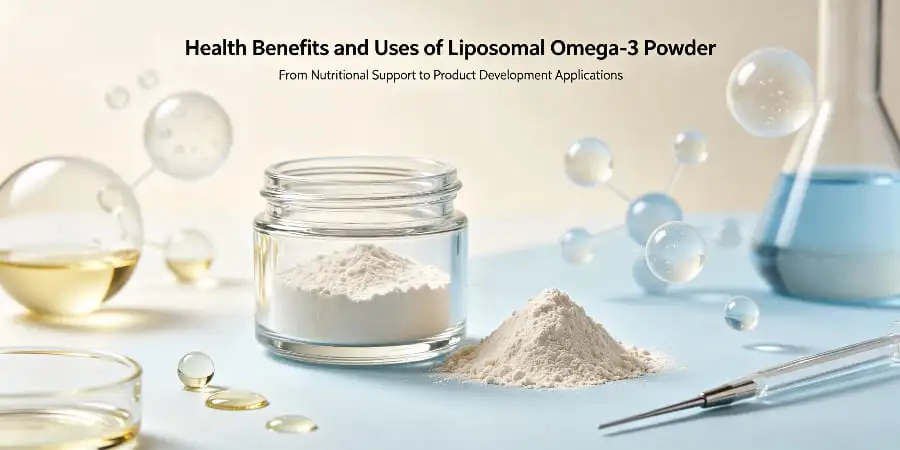
Supplement makers can profit from liposomal omega-3 powder. In ready-to-mix beverage powders, functional drink concentrates, and liquid supplements, water-dispersible design facilitates inclusion. Each serving should include 500 mg to 2,000 mg omega-3, per health claims and marketing.
Neutral taste and no fishy smell make the powder drinkable. Liposomal Omega-3 Powder integrates into fruit-flavored health beverages, protein shakes, and beauty-from-within drinks without altering taste, unlike liquid fish oil concentrates. Citrus, berry, and tropical fruit flavors enrich the foundation ingredient.
Powder flows into tablets and capsules. Liposomal Omega-3 Powder simplifies manufacture using standard encapsulation equipment. Compatible vegetarian capsules increase vegan and vegetarian product claims.
Omega-3-fortified nutrition bars, snacks, and dairy replacements should address heat sensitivity. Although processing temperatures below 80°C avoid premature release, liposomal encapsulation is heat-resistant better than bulk oil.
Stability Optimization and Storage Protocols
Maintaining liposome structure throughout manufacture and shelf life requires correct management. Powder survives below 60% humidity. Desiccating inserts in HDPE bottles and foil lamination pouches avoid hydration-induced clumping and facilitate free flow.
Long-term stability needs storage temperature control. At 15-25°C, ambient storage lasts 18–24 months, although refrigerated storage may last longer. Skip liposomal membrane-damaging freeze-thaw cycles. Distribution partners require defined storage standards to guarantee product quality throughout supply chains.
Light protection is less important than liquid fish oil but still important. Store lighting oxidation is prevented by opaque or amber packaging. Safety before quality deterioration is peroxide readings below 2 meq/kg.
Addressing Common Formulation Challenges
Taste is important in omega-3 consumer goods. Even though liposomal encapsulation decreases fishy taste and smell, formulators should taste test proposed flavor systems. Vanilla, chocolate, and berry flavors hide fatty acids in powders and drinks.
Formulation matrix affects solubility. Gentle agitation homogenizes pure aqueous solutions. Stable protein drink suspensions may require homogenization or high-shear mixing. Under anticipated consumption settings, stability testing avoids phase separation and settling.
Tests for ingredient compatibility avoid formula conflicts. Iron and copper oxidize with omega-3s. Combining or encapsulating intelligently reduces reactivity.
Conclusion
In bioavailability, stability, and formulation diversity, Liposomal Omega-3 Powder outperforms fish oil supplements. Industrial difficulties such as oxidative degradation, sensory palatability, and absorption efficiency are solved via phospholipid encapsulation. Clean-label nutraceuticals, functional drinks, and beauty-from-within ingredients are available to procurement professionals. Due to its peroxide stability below 2 meq/kg, 18–24 month shelf life, and allergen-free profile, premium health supplement companies with scientifically verified, consumer-friendly formulations should use this substance.
FAQ
Why is liposomal omega-3 powder better than fish oil?
Phospholipid encapsulation protects EPA and DHA from stomach acid and digestive enzymes for intestinal absorption. This approach enhances absorption by 8–12 times over normal fish oil, allowing lower dosages to achieve plasma omega-3 levels. Fishy taste and gastrointestinal discomfort from traditional supplements are minimized.
How should I analyze buying vendors?
Choose suppliers with GMP, analytical testing, and supply chain traceability. Encapsulation efficiency, particle size, and oxidative stability are essential. Check peroxide below 2 meq/kg and supplier active ingredient retention over 95% during shelf life.
Is liposomal omega-3 powder useful for private label?
A reliable provider optimizes particle size, designs taste systems, and tests product stability. Choose partners with flexible minimum order quantities, technical support, and fast sample programs to facilitate product development and market launch.
Partner with a Leading Liposomal Omega-3 Powder Manufacturer
EncapsWell™ technology is used to create superior liposomal omega-3 powder formulations by EmerWell. Our San Diego R&D Center and cGMP-certified production facilities commercialize concepts. Nutraceutical, functional beverage, and contract producers benefit from peroxide levels below 2 meq/kg. Bioavailability, sensory, and regulatory solutions for small-batch sampling or bulk distribution for existing product lines are customized by the PhD-led technical team. Contact info@emerwell-bio.com to see how our liposomal omega-3 powder supplier can boost your product line with scientifically advanced ingredients, localized US support, and fast delivery.
References
1. Hashimoto, M., Hossain, S., Shimada, T., Sugioka, K., Yamasaki, H., Fujii, Y., Ishibashi, Y., Oka, J., and Shido, O. (2002). Docosahexaenoic acid provides protection from impairment of learning ability in Alzheimer's disease model rats. Journal of Neurochemistry, 81(5), 1084-1091.
2. Mozaffarian, D. and Wu, J.H. (2011). Omega-3 fatty acids and cardiovascular disease: effects on risk factors, molecular pathways, and clinical events. Journal of the American College of Cardiology, 58(20), 2047-2067.
3. Calder, P.C. (2017). Omega-3 fatty acids and inflammatory processes: from molecules to man. Biochemical Society Transactions, 45(5), 1105-1115.
4. Swanson, D., Block, R., and Mousa, S.A. (2012). Omega-3 fatty acids EPA and DHA: health benefits throughout life. Advances in Nutrition, 3(1), 1-7.
5. Akbarzadeh, A., Rezaei-Sadabady, R., Davaran, S., Joo, S.W., Zarghami, N., Hanifehpour, Y., Samiei, M., Kouhi, M., and Nejati-Koshki, K. (2013). Liposome: classification, preparation, and applications. Nanoscale Research Letters, 8(1), 102.
6. Ulven, S.M., Kirkhus, B., Lamglait, A., Basu, S., Elind, E., Haider, T., Berge, K., Vik, H., and Pedersen, J.I. (2011). Metabolic effects of krill oil are essentially similar to those of fish oil but at lower doses of EPA and DHA in healthy volunteers. Lipids, 46(1), 37-46.
Online Message
YOU MAY LIKE
High quality furniture manufacturer
_1776234307158.webp)