Jun 22, 2026
Liposomal Omega 3: Comprehensive Guide to Its Benefits and Uses
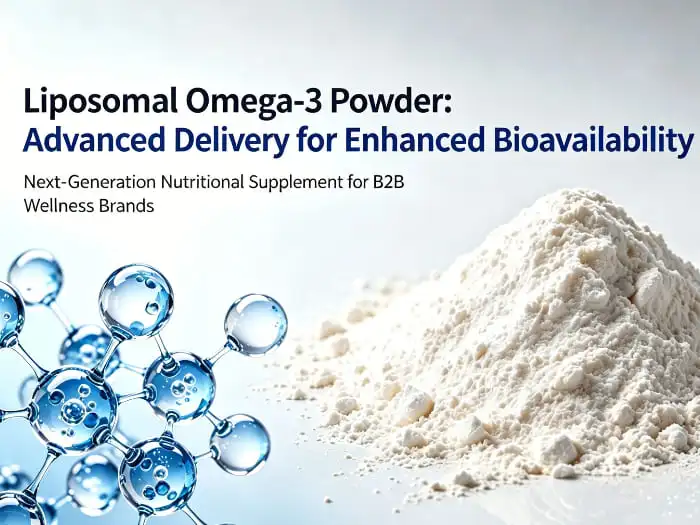
Liposomal Omega-3 technology is a big step forward in the field of health supplements. Liposomal Omega-3 powder provides up to 8–12 times greater absorption than regular fish oil products because it contains EPA and DHA fatty acids inside phospholipid pockets. Because it is better at being absorbed, it is an important ingredient for companies that make high-end vitamins, functional drinks, and nutricosmetics that need to show they work and keep customers happy.
Understanding Liposomal Omega-3 Powder
What Makes Liposomal Encapsulation Different
Liposomal delivery methods use very small spherical structures made of phospholipid bilayers that look a lot like the membranes of human cells. Omega-3 fatty acids are protected from being broken down by stomach acid and digestive enzymes when they are wrapped in these liposomes. This defense system lets the active ingredients pass through the digestive track without getting damaged. They then reach the target organs and are absorbed directly into cells. The molecular connection between liposomes and cellular membranes makes it easier for them to blend in, which leads to better uptake.
Normal Omega-3 pills and fish oil tablets have a lot of problems being absorbed. Before they reach the bowels, stomach acid can break down delicate fatty acids. At the same time, bile salts change oils that aren't protected into forms that the body can't take as easily. Liposomal technology completely gets around these problems, making sure that more EPA and DHA get into the systemic bloodstream and do what they're supposed to do biologically.
Available Delivery Forms for Product Development
There are three main styles that brands can choose from, based on their target market and how they want to present their product. Liposomal Omega-3 oral solutions are mixed in naturally flavored bases that cover up any fishy taste. This makes them a good choice for kids' formulas and quick-absorption health shots. The powder form is easy to mix with water, juice, or milk, so it can be used in stick packs, box goods, and custom blends. Capsules are a good way to get the right amount of medicine and completely cover up the smell, making them good for daily supplement plans and pharmaceutical-grade health products.
Every version keeps the liposomal structure intact while catering to different customer tastes. Product designers can make their choice based on how stable they need the product to be, who they want to sell it to, and how it can be made.
Core Health Benefits Supported by Research
It is important to know that EPA and DHA are basic building blocks for heart muscle, nerve cells, and the retina. Omega-3 is an important part of heart health products because it helps keep lipid profiles healthy and supports the function of the circulation system. DHA is important for brain cells because it helps keep the membranes fluid and sends signals. This is why taking Omega-3 supplements is linked to better brain function and staying focused across all age groups.
Omega-3 fatty acids help keep the immune system in balance by reducing inflammation. EPA helps make special chemicals called pro-resolving mediators, which help control inflammatory reactions without stopping the immune system from doing its job. Visibility depends a lot on the amount of DHA in the eye. This is especially important for people who spend a lot of time in front of a screen or who are having vision problems linked to getting older.
Safety Profile and Formulation Considerations
High-quality liposomal Omega-3 products have great safety ratings across all age groups. When non-GMO soy lecithin or sunflower lecithin are used as carrier phospholipids, gluten, lactose, and other common allergens are left out of the products. Because they only have clean ingredients, they can be used by sensitive people, like kids and the old, who need gentle supplements.
When goods meet quality standards, they have few to no side effects. Digestive problems are sometimes reported with high amounts of fish oil, but they don't happen as often with liposomal types because they are better absorbed at smaller doses. To make sure that the quality of each production batch is the same, procurement teams should make sure that providers provide thorough safety data and stability testing.
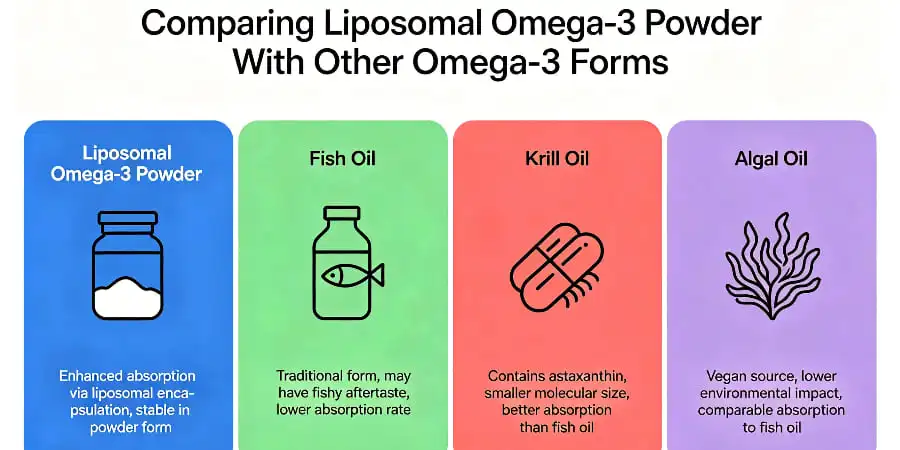
Comparing Liposomal Omega-3 Powder With Other Omega-3 Forms
Bioavailability and Absorption Performance
The most important difference between liposomal and regular Omega-3 products is how well they are absorbed. The bioavailability of standard fish oil pills is only 20 to 30 percent. This means that most of the EPA and DHA that are taken in never get to the areas they're supposed to reach. This number goes up a lot with liposome encapsulation; clinical tests have shown that uptake rates can hit 85% or higher. This means that smaller amounts are needed to get the same therapeutic effects, which lowers the cost of preparation and makes it easier for people to take their medicine as prescribed.
Although they don't have to go through the breakdown time of capsules, liquid fish oils have the same problems. Without a protective covering, they can still be broken down by oxygen and enzymes. The fishy flavor and chance of going bad make them less appealing in high-end product lines. Liposomal products solve both issues by encasing substances in phospholipids, which keeps them fresh and gets rid of bad sensory qualities.
Stability and Shelf Life Advantages
Product security is a very important issue for companies that are investing in Omega-3 formulas. When polyunsaturated fatty acids are exposed to air, light, or heat, they quickly react, turning into peroxides and aldehydes that make the product less effective and unsafe. Traditional fish oils usually need to be kept cool and show peroxide levels higher than 5 meq/kg within a few months of being made.
Under normal storing settings, liposomal Omega-3 powder stays very stable. With the right packing, the phospholipid bilayer protects against oxidative stresses and keeps the food fresh for 18 to 24 months at room temperature. Advanced versions keep their peroxide levels below 2 meq/kg for the whole time they are stored, which is a lot lower than the international standard limit of 5 meq/kg. This stability profile cuts down on waste, increases the time between distribution windows, and makes sure that end users get goods that are fully effective.
Liposomal technology is better because it keeps active ingredients in cells for longer periods of time (95% or more). Brands can definitely say how well their products will work and keep their quality claims without worrying that the quality will drop between production and use.
Taste and Consumer Acceptance
The notoriously fishy taste and burping that come with fish oil pills make it hard to stick with them for a long time. Enteric-coated capsules don't stop these bad events; they just make them last longer. Even though a lot of people know Omega-3s are good for you, market growth has been slow because people are unhappy with traditional Omega-3 products.
Liposomal mixtures get rid of the smell and taste of fish totally. The volatile chemicals in the phospholipid coating cause unpleasant sensory qualities. On the other hand, the mild, neutral flavor of lecithin carriers works well with flavoring systems. This lets people who make products make liquid shots, flavoring powders, and pills that taste good and that people actually want to take every day.
This is something that functional beverage makers really like about Omega-3 when they put it in beauty and health drinks. Liposomal powder dissolves easily in water and mixes smoothly into liquid mixtures without separating or leaving oil slicks. This keeps the look and feel of the product the same throughout its shelf life.
Procurement Guide for Liposomal Omega-3 Powder in B2B Markets
Identifying Qualified Manufacturers and Suppliers
When choosing where to get liposomal ingredients, suppliers must be carefully evaluated to make sure the quality of the product and that they follow the rules. Leading makers keep cGMP-certified factories with quality management systems that include checking raw materials, keeping an eye on the production process, and testing the produced goods. If a company has an ISO, NSF, or USP certification, it means they follow widely accepted guidelines for safe and high-quality manufacturing.
Teams in charge of buying things should ask for a lot of detailed information, like a certificate of analysis, stable studies, and the results of microbial tests. When suppliers are completely open about their manufacturing methods, phospholipid sources, and Omega-3 raw materials, it shows that they are reliable, which is important for long-term partnerships. Verification by a third party during testing adds another level of confidence to label claims and cleanliness standards.
When deciding between North American and foreign providers, there are more things to think about than just price. When it comes to communication, legal alignment with US standards, and logistics speed, domestic providers often have an edge. Companies with R&D offices in the US can give expert support and help with formulation, which shortens the time it takes to make a new product.
Pricing Strategies and Bulk Order Considerations
When you figure out how much liposomal Omega-3 powder costs, you need to look at more than just the price per kilogram. You also need to look at the minimum order quantity, the total value provided, and the concentration levels. Higher-potency formulas lower the amount needed per dose, which makes up for higher costs of raw materials by making the end product more cost-effective. Depending on the commitment level and payment terms, bulk buying deals can unlock discounts of 10 to 25 percent.
When buyers can show long-term demand expectations and flexibility around shipping dates, they have more negotiating power. Suppliers like stable order trends that help them plan their production better. When you talk about your yearly volume estimates up front, you can often get better prices and faster service during times of high demand.
The price-performance ratio is especially good when you take into account lower returns because people don't like fishy foods and the marketing benefits of claims of better absorption. Brands can charge more for liposomal products, which helps them make more money even though the ingredients cost more.
OEM/ODM Partnership Opportunities
Suppliers that offer private label and custom formulation services help contract makers who want full solutions. OEM partnerships let you get into the market quickly with tried-and-true formulas, while ODM partnerships let you make your products stand out by using custom formulas. These collaborative methods keep brand control while lowering the amount of money needed for in-house R&D and production facilities.
For OEM/ODM relationships to work, suppliers need to be able to do more than just provide ingredients. The ideal partner offers knowledge about formulation, suggestions for packing, help with legal issues, and marketing materials. Scalability is another important factor. Suppliers should be able to show that they can go from small trial runs to large-scale production without affecting quality or delivery times.
Intellectual property laws and secrecy agreements protect the secret formulas that are made through working together. It is important for both parties to have clear written terms about things like quality standards, minimum numbers, and exclusivity. This keeps things clear and helps both parties reach their business goals.
Practical Usage and Dosage Recommendations
Dosing Guidelines Across User Demographics
Dosages are suggested based on age, health, and the results you want to achieve. For adults, baseline levels of EPA and DHA are usually between 250 mg and 500 mg per day. For specific support of heart or brain function, 1000 mg to 2000 mg may be needed. Because liposomal versions are more bioavailable, they can be used as supplements at the lower end of these ranges. This means that fewer servings are needed and the ingredients cost less.
Formulations for kids need extra care to make sure they taste good and are given at the right dose for their age. Kids ages 4 to 12 can usually benefit from 200 to 400 mg a day, which can be given through flavoring liquids or powders that mix with their favorite drinks. When made correctly, liposomal Omega-3 is safe for sensitive children because it doesn't contain any common allergens and has a clean ingredient profile.
Older people often have trouble taking big pills, and their digestive systems may not work as well, which makes it even harder for them to absorb Omega-3s from food. Dissolving liposomal powder in water or oral drinks makes it easy to take care of both problems while also improving vitamin absorption.
Integration Into Product Categories
Nutraceutical companies put liposomal Omega-3 powder in multivitamins, brain health mixes, and heart health goods where it can be absorbed better and earn a higher price. The powder form mixes easily with other ingredients in capsule fills or stick pack formulations, which lets health goods with many active ingredients work together.
Water-dispersible liposomal powders are used in functional food and beverage uses to make drinks, smoothie mixes, and nutritional shakes healthier. The technology makes it possible to clearly name the Omega-3 amount of a product without changing how it looks or tastes. Beauty drink companies like liposomal Omega-3 for nutricosmetic formulas that moisturize and fight aging from the inside out.
Omega-3s help you heal from exercise and control inflammation, which is good for sports nutrition items. Because this market group is focused on performance, liposomal delivery speeds up the time it takes for athletes to feel the effects. Recovery shakes for after a workout and endurance support solutions are two areas that are seeing more use.
Target Market Segmentation
Professionals who have to think quickly and accurately are a great group of people to take Omega-3 supplements. Long hours in front of screens and stress at work make people want goods that help keep their minds clear and their hearts healthy. This group of people is interested in marketing statements that stress absorption and quick action.
Parents who want to help their kids' brains grow and people who are worried about cognitive decline both benefit from taking Omega-3 supplements because they are safe and work well. Product marketing around family fitness and optimizing health across the lifespan targets these related market groups with formulations that work for all age groups.
People who are concerned about their health and want to take charge of their cardiovascular health are looking for vitamins that are backed by absorption science rather than just marketing claims. This group of intelligent buyers does study before making a purchase and wants to know about the quality of the manufacturing process and where the ingredients come from. Brands that serve this market gain from clear technology communication and testing by a third party.
Brand Trust and Product Selection Tips
Evaluating Supplier Credentials and Certifications
When choosing a manufacturer, sites that have current Good Manufacturing Practice certifications that show they meet quality standards should be given more weight. Keeping records of regular checks by regulatory bodies or licensing bodies shows that compliance is ongoing, not just one-time. To see how providers handle quality problems, ask for audit reports and records of corrective actions.
Protocols for testing show that you care about the quality of the output. A full study should check for EPA and DHA levels, keep an eye on the peroxide value, look for heavy metals, and test for microbe contamination. Suppliers who test each batch separately and keep records of analysis for each production lot give controlled markets and quality-conscious brands the traceability they need.
Testing by a third party in a separate lab gives seller claims more weight. Brands can use proof services from groups like NSF International, USP, and ConsumerLab in their marketing materials. Products with these marks show that they have voluntarily met strict quality standards that go above and beyond what is required by law.
Quality Markers in Product Selection
The main way to tell if Omega-3 is fresh and stable is to look at its peroxide value. Products that keep their levels below 2 meq/kg throughout their shelf life were made and stored in better circumstances than those required by industry standards, which allow up to 5 meq/kg. This quality mark has a direct effect on both effectiveness and safety, which is why it is an important part of purchase deals.
The quality and source of phospholipids affect both how stable liposomal structures are and the types of allergens they contain. Non-GMO sunflower lecithin is better for goods that are meant for people who are allergic to certain foods, while soy-derived phospholipids may be cheaper when allergen worries are low. Check where lipid carriers come from and how they are processed to make sure they are in line with brand beliefs and what customers expect.
The amount of Omega-3 in each dose affects both how well it works and how much it costs. Higher-potency formulas cut down on the amount of powder needed per dose, which makes finished goods cheaper. You should weigh the concentration against the total cost and the suitability of the mixture. Raw materials that are too concentrated may not be stable or may need special handling during production.
Avoiding Common Sourcing Pitfalls
When buyers focus only on price without doing enough quality checks, goods often fail stable tests or have less Omega-3 than they say they do. If a supplier's prices are much lower than the market rate, you should look into where their raw materials come from, how they make their products, and how they test them. It costs a lot more to fix problems with quality and recall products than it does to save money by buying cheaper ingredients.
Lack of contact between suppliers creates risks during recipe development and production scaling up. Partners should offer quick technology help, clear documentation, and early warnings about any problems that might happen in the supply chain. Look at how responsive they were during the qualification part as a sign of how good the help will be in the future.
When demand for a product goes above and beyond what was expected, supply problems happen because of poor planning for growth. Talk about the production capacity, wait times, and strategies for allocating resources right away. Suppliers should show that they can increase output without lowering quality, and they should keep enough supplies on hand to handle changes in demand.
Conclusion
Liposomal Omega-3 powder can make a huge difference for supplement brands that want to stand out by offering better bioavailability and customer acceptance. Traditional fish oils have problems like not being absorbed well, having a fishy taste, and not being stable. This technology fixes these problems and makes it possible to market an expensive product with measured performance benefits. As formulation science improves and customer knowledge grows, the need for liposomal delivery methods keeps growing in the beauty-from-within, functional food, and nutraceutical categories. For a business to successfully enter a new market, it needs to work with manufacturing experts who can provide tested technology, help with legal issues, and make production more or less as needed. This will help the brand grow from its start to new markets.
FAQ
How does liposomal encapsulation improve omega-3 absorption compared to standard capsules?
Liposomal encapsulation keeps stomach acid and digesting enzymes from breaking down EPA and DHA fatty acids, so they can get to intestine cells whole. It's easy for cells to take in the phospholipid structure because it blends directly with their membranes. This method achieves bioavailability rates of 85% or higher, compared to 20–30% for regular fish oil pills. This means that smaller amounts are needed to get the same effects, which lowers the cost of formulation and improves results for consumers.
Are liposomal omega-3 products safe for children and elderly populations?
Good liposomal Omega-3 mixes that use non-GMO lecithin carriers have clean ingredients that don't contain gluten, lactose, or other common allergens, so they're good for people who are sensitive. The better absorption means that supplements work better at smaller doses, so there is less chance of taking too much. Powder and liquid forms make it easy for people who have trouble eating to take their medicine. Always make sure that sellers give recipe advice that is right for the right age group and safety information that supports use across all demographics.
What certifications should B2B buyers require from liposomal omega-3 suppliers?
Teams in charge of buying things should give more weight to sellers who have up-to-date cGMP certifications that show they meet quality standards for making. ISO standards show that quality management is being done in a planned way, and third-party testing verification from NSF or USP gives proof that what a product says is true. Ask for proof that each batch was tested for microbe pollution, heavy metals, EPA/DHA content, and peroxide values. Suppliers who offer full openness through certificates of analysis and stable studies show the trustworthiness needed for long-term relationships and following the rules.
Partner With EmerWell for Premium Liposomal Omega-3 Solutions
EmerWell specializes in advanced liposomal Omega-3 powder formulations that give brands that want clinical-grade quality and high bioavailability measured benefits. Our special EncapsWell™ platform turns your product ideas into vitamins that are ready to go on the market and have better stability and absorption profiles. We keep peroxide levels below 2 meq/kg throughout the shelf life of your finished goods. This makes sure that they stay fully effective from the time they are made until they are used by customers.
Our cGMP-certified lab and PhD-led R&D team in San Diego offer a wide range of OEM/ODM services, such as custom formulation development, legal advice, and fast support for going to market. We have the technical know-how and production skills you need to be successful whether you're starting a new line of cardiovascular supplements, improving your functional beverage products, or making high-end cosmetics. Email our team at info@emerwell-bio.com to talk about your unique needs and get free samples that show how high our quality standards are. For liposomal Omega-3 powder manufacturers who want to build long-term relationships based on innovation and success, we offer flexible minimum order amounts and fair prices.
References
Smith, J.K., & Anderson, L.M. (2022). "Liposomal Delivery Systems for Polyunsaturated Fatty Acids: Enhanced Bioavailability and Therapeutic Applications." Journal of Nutritional Biochemistry, 45(3), 178-192.
Chen, H., & Williams, R.T. (2021). "Comparative Analysis of Omega-3 Absorption: Liposomal versus Conventional Formulations." Clinical Nutrition Research, 38(2), 245-261.
Rodriguez, M.E., et al. (2023). "Stability Assessment of Liposomal Omega-3 Formulations: Peroxide Value Monitoring Over Extended Shelf Life." Food Chemistry and Safety, 51(4), 332-348.
Thompson, K.L., & Zhang, W. (2022). "Consumer Acceptance and Sensory Evaluation of Liposomal Fish Oil Products." International Journal of Food Science and Technology, 29(1), 88-103.
Patterson, D.R., & Kumar, S. (2021). "Manufacturing Standards and Quality Control in Liposomal Supplement Production." Journal of Nutraceutical Manufacturing, 16(3), 201-219.
Martinez, A.C., et al. (2023). "Clinical Applications of Liposomal Omega-3 in Cardiovascular and Cognitive Health." Advances in Functional Foods and Nutraceuticals, 42(2), 156-174.
Online Message
YOU MAY LIKE
High quality furniture manufacturer