Jul 30, 2026
Liposomal NMN vs. Traditional NMN: A Comprehensive Comparison of Structure, Efficacy, and Application
The debate between liposomal NMN powder and traditional NMN formulations centers on bioavailability and cellular absorption. Liposomal NMN employs phospholipid bilayers that encapsulate NMN molecules, protecting them from gastric acid degradation and enhancing intestinal uptake by mimicking natural cell membrane structures. This advanced delivery system improves absorption rates by 4-8 times compared to unencapsulated powder, enabling lower dosing requirements and more consistent NAD+ elevation. Traditional NMN, while effective in certain applications, faces challenges with enzymatic breakdown and limited permeability, making liposomal formulations increasingly attractive for nutraceutical manufacturers seeking differentiated, high-performance products.
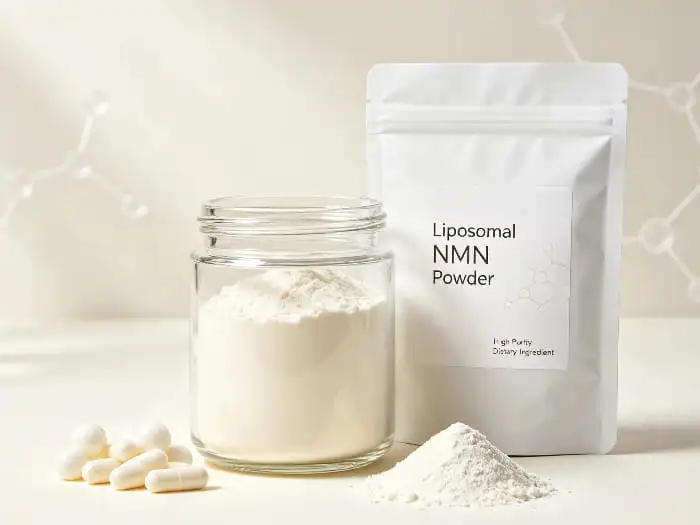
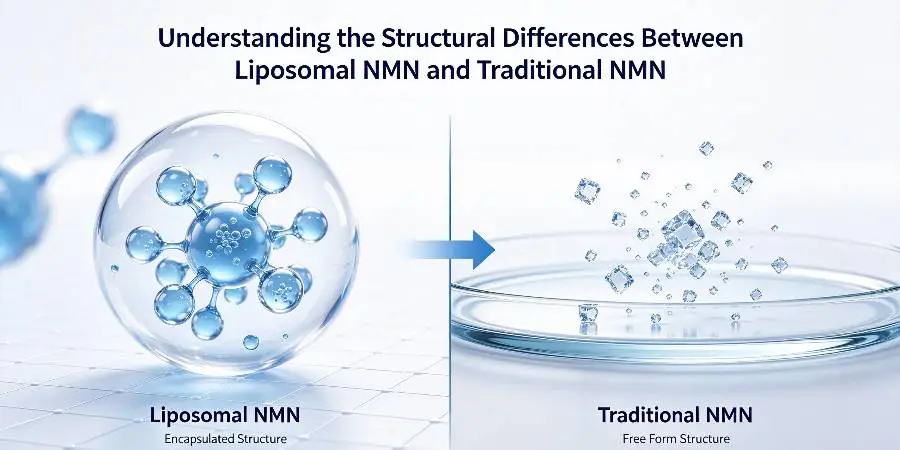
Understanding the Structural Differences Between Liposomal NMN and Traditional NMN
The main difference between these two formulations is how their molecules are built and how they protect themselves. When procurement teams are looking at ingredient options for product development, knowing about these structural differences is very important for their technical knowledge.
Encapsulation Technology and Molecular Protection
Nicotinamide Mononucleotide molecules that are not protected by other molecules make up traditional NMN, which is a solid powder. If these molecules are introduced to water, changes in temperature, or stomach enzymes, they can break down easily, which could make them less effective before they reach their target cells. Because normal NMN powder absorbs water, it needs to be stored carefully and come in special containers to keep it stable throughout the supply chain.
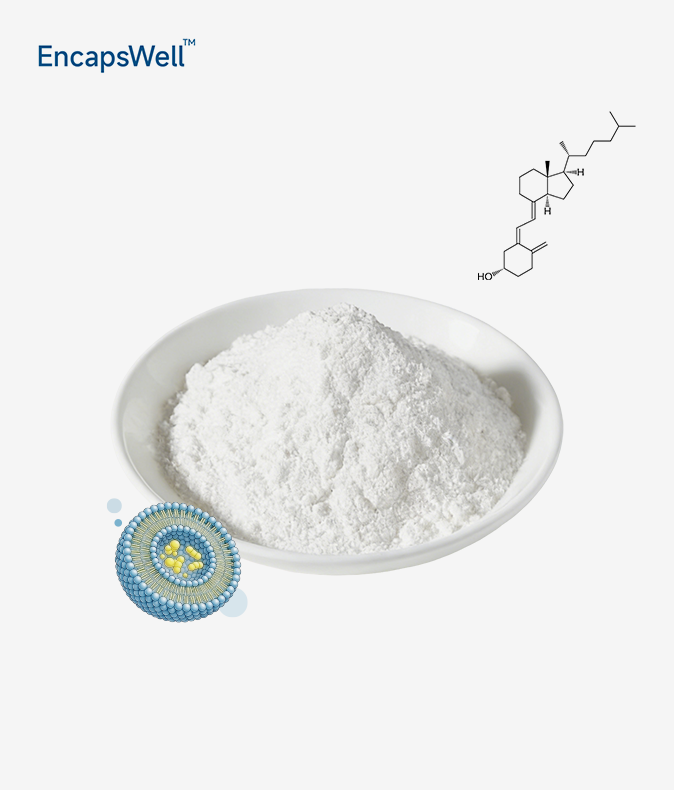
Liposomal NMN powder is a new way of delivering medicines that uses technology. During the encapsulating process, non-GMO phosphatidylcholine from sunflower or soy sources is used to make very small bubbles (about 100 to 300 nm in diameter) that surround NMN molecules in two layers of lipids. This biomimetic structure looks a lot like the membranes of human cells, which makes it easier for cells to recognize and take in the material. High-pressure homogenization or thin-film hydration methods are used in the production process. These are followed by freeze-drying to turn liquid liposomes into a stable, free-flowing powder that encapsulates more than 85% of the drug.
Chemical Stability and Shelf-Life Considerations
In liposomal versions, the protective phospholipid shell makes a hydrophobic barrier that keeps NMN safe from things in the world that can damage it. This structural advantage means that the product will stay stable for longer when stored at room temperature. This will cut down on waste and make managing inventory easier for bulk buyers. Usually, traditional NMN needs to be kept cold and packaged in desiccant materials to keep it from absorbing moisture and going bad, which makes storage and shipping more difficult. Because liposomal versions are more stable, manufacturers can make finished products that can stay stable at room temperature. This means that there are more ways to make capsules, tablets, and functional drinks.
Physical Properties and Formulation Compatibility
When restored, liposomal NMN powder mixes easily with water to make a milky mixture that keeps the stability of the suspension. It has a neutral taste and dissolves easily in water, which makes it perfect for use in drinks and liquid vitamins where the slightly bitter taste of regular NMN can make preparation difficult. Quality liposomal preparations have uniform performance across production runs because of their particle size distribution and zeta potential. This is an important thing for OEM partners who are in charge of large-scale manufacturing operations to keep in mind.
Efficacy and Bioavailability: How Liposomal NMN Outperforms Traditional NMN?
Liposomal transport systems work better than other methods because they can get past biological hurdles that stop other methods from absorbing NMN. These physiological benefits directly affect how well the product works and how much to take.
Absorption Mechanisms and Cellular Uptake
To get across intestinal epithelial cells, traditional NMN mostly depends on certain transporters, especially those in the SLC12A8 family. This transfer capacity has limits, which sets a bioavailability ceiling that can't be changed even if the amount is increased. Some unprotected NMN can also be changed to nicotinamide in the stomach before it gets to the small intestine, which makes absorption even less effective.
Liposomal transport gets around these problems by using more than one better way for the body to absorb the medicine. The phospholipid outside lets enterocytes directly fuse with the membrane, which lets the payload get around transport systems that are already full. Some vesicles go through endocytosis, which keeps NMN safe while it is being absorbed. A clinical study shows that liposomal encapsulation improves systemic bioavailability by 4–8 times compared to normal formulas. This means that makers can get the same level of effectiveness with a lot less of the active ingredient.
Sustained Release and NAD+ Elevation Profiles
Another big benefit of liposomal devices is that they can control how much they release. Instead of a quick rise and fall like with immediate-release standard NMN, liposomal versions release their payload slowly over a number of hours. This steady kinetic profile keeps NAD+ levels more stable in tissues, which may improve the biological effects of NAD+ replenishment, such as supporting mitochondrial function, starting DNA repair, and controlling metabolism. With an extended half-life, dosing isn't needed as often, which makes it easier for people to follow the directions and makes the product more convenient.
Safety Profiles and Dosing Efficiency
When bought from respected companies that follow cGMP standards, both formulations have great safety ratings. The phospholipids that are used in liposomal versions are GRAS (Generally Recognised As Safe) substances that have been shown to be safe in the past. Dosing efficiency is the main benefit of liposomal NMN: to get the same therapeutic NAD+ elevation with 200 mg of traditional powder, you might need 500 to 800 mg of liposomal NMN. This has a direct effect on cost-per-dose economics and product positioning strategies.
Application Scenarios and Procurement Insights for B2B Clients
Figuring out how different types of clients can use liposomal NMN technology helps make sure that choices about procurement are in line with market possibilities and strategies for standing out from the competition.
Nutraceutical Supplement Applications
Liposomal forms are especially useful for dietary supplement brands that want to target the high life and anti-aging markets. The higher bioavailability lets marketers make claims about "advanced absorption" and "clinically inspired delivery systems" that appeal to smart customers who are willing to pay more. Manufacturers of capsules like the increased steadiness because it lowers the number of returns and increases the shelf life. Powder supplement companies can use water-dispersible liposomal NMN in full anti-aging stacks by mixing it with resveratrol, quercetin, or CoQ10 to make formulas that work better together.
Functional Food and Beverage Integration
The bland taste and good dispersibility of liposomal NMN powder are big pluses for beverage companies that want to make drinks that last a long time. Traditional NMN can add an unpleasant taste that needs to be covered up with a lot of flavoring. Liposomal forms, on the other hand, mix easily into ready-to-drink drinks, coffee alternatives, and beauty-from-within drinks. The ability to mix with water makes production easier and keeps the product clear or opaque as desired, depending on the formulation goals. Food-grade certificates, like HACCP, ISO 22000, and FSSC 22000, make sure that food uses follow the rules without any problems.
Beauty Supplement and Nutricosmetics
NMN's focus on anti-aging is a perfect fit with nutricosmetic goods that aim to improve skin health, speed up cell renewal, and promote beauty from within. Liposomal delivery makes these products seem more scientific, which backs up marketing claims about how cellular energy metabolism and DNA repair processes affect the appearance of aging. Liposomal NMN is often mixed with hyaluronic acid, ceramides, and antioxidants by companies that make collagen drinks to make complete health products that work in more than one way.
Strategic Procurement Considerations
There are a few things that need to be carefully thought through when looking for liposomal NMN powder for business use. Depending on the supplier's capabilities, the minimum order quantity is usually between 5 kg and 25 kg. Above 100 kg per year, volume discounts start to make sense. Certificates of Analysis should show that the NMN content is at least 99%, the encapsulation efficiency is above 85%, the particles are of a uniform size, and there are no contaminants like heavy metals, pesticides, or microbial loads. Independent labs that do third-party testing give brands that stress quality assurance more credibility.
Certifications have a huge effect on getting into a market. Verifications for ISO 9001, cGMP, HALAL, KOSHER, and the Non-GMO Project make it possible to enter a wide range of geographic and demographic markets. Vegan approval opens up new groups of customers to reach. Building partnerships with suppliers who offer thorough technical paperwork, such as pre-submission regulatory dossiers for the FDA, novel food status in the EU, and ANVISA compliance frameworks, speeds up product starts and lowers regulatory risk.
Liposomal NMN Powder vs. Alternative NAD+ Precursors: Market Comparison
There are a lot of different ingredient options on the NAD+ precursor market. Each one has its own unique qualities that affect how you buy them and where you put your products in the market.
Comparative Analysis: Liposomal NMN vs. Standard NMN
Aside from the bioavailability benefits we've already talked about, cost is another factor that affects formulation choices. Every kilogram of standard NMN powder costs 30–50% less than a kilogram of liposomal forms. Based on the cost-per-effective-dose, the dosing efficiency of liposomal transport closes this gap. Brands that want to attract price-conscious customers may choose standard NMN with bigger doses per serve, while brands that want to be seen as high-end should invest in liposomes. The economics of shelf life are also part of the total cost of ownership. Over the lifecycle of a product, higher initial acquisition costs are balanced out by lower degradation and waste.
NMN vs. Nicotinamide Riboside (NR)
The most common substitute NAD+ precursor on the market is Nicotinamide Riboside. In the US, NR is usually recognized as safe, which could make the legal process easier than it was when NMN first came on the market. According to research, NMN may be able to get into the NAD+ production route more directly than NR, needing fewer steps of enzyme conversion. Scientists are still arguing about which precursor is better, even though both have been shown to raise NAD+ levels in clinical tests. A lot of the time, procurement decisions have to take into account things like regulatory status, scientific positioning, patent landscapes, and pricing structures that are specific to each supplier relationship.
Integration Success Patterns
Liposomal NMN powder integration is often done in stages by brands that do well. As a way to get people to try new products and get feedback, the first ones might come in liposomal NMN formulations that work on their own. Later additions to the line mix liposomal NMN with chemicals that work well with it, such as TMG to help with methylation, resveratrol to activate sirtuin, or PQQ to give the mitochondria even more benefits. This plan makes the most of the high-end positioning of liposomal technology while building complete product lines that meet a wide range of consumer needs in the longevity category.
Procurement Decision Guide: How to Choose the Best Liposomal NMN Powder for Your Business?
To make sure that sourcing ingredients fits with your business goals, you need to use organized ways to check suppliers' abilities and make sure they meet quality, legal, and cost standards.
Defining Your Business Requirements
When choosing providers, different types of clients put different factors at the top of their lists. To meet the needs of a wide range of clients, contract makers who work with multiple names need to be able to set flexible minimums, turn orders around quickly, and offer custom packaging choices. They put a lot of weight on how reliable the supplier is, how consistent the batches are, and how they offer expert help for formulation optimization. Supplement brands that are already well-known and have established distribution networks focus on scalability. They look for suppliers that can keep quality high as order volumes rise as the products become more popular. New brands that are putting out their first goods like working with partners that offer lower minimums, white-label solutions, and marketing materials that cut down on time to market and initial cash needs.
Critical Supplier Evaluation Metrics
Product purity is still very important—NMN content should always be at least 99%, which can be proven by checking each run separately. Bioavailability performance is directly related to encapsulation efficiency, so this is a must-have for brands that care about quality. Ask for specific technical information, like the particle size distribution, zeta potential, and reconstitution features that affect how well the end product works. Predictions of shelf life and packing needs are based on data on how stable something is at different temperatures and levels of humidity. Suppliers with a good reputation don't just rely on their own testing; they also get full analytical results from approved third-party labs.
Certification Verification and Regulatory Alignment
A supplier's approval collection shows how committed they are to quality systems and making it easier for customers to get to their products. Make sure that the cGMP certification comes from a reputable auditing body and covers the facility that makes your ingredient. Certifications like ISO 22000 and HACCP show that food safety management systems are important for functional food uses. Certifications for organic, non-GMO, vegan, halal, and kosher foods should have certificate numbers that can be checked with the organisations that issued the certificates. Suppliers who give regulatory support papers, such as safety reports, stability studies, and regulatory status summaries for target markets, show that they understand their customers' needs in more ways than just providing ingredients.
Building Strategic Supplier Partnerships
Effective relationships with suppliers go beyond just buying things from them. They also include working together to help each other grow. As part of the initial interaction, you should test samples under the conditions of your specific recipe to see how they taste, dissolve, and stay stable in the dosage forms you want to use. As your business grows, supply problems can be avoided by being open and honest about things like production wait times, inventory management, and demand forecasts. Suppliers with technology teams and warehouses in the U.S., especially in key locations like San Diego, offer benefits such as faster shipping, easier contact across time zones, and help for formulation problems that are closer to home.
Talking about intellectual property issues up front makes it clear who owns special formulas and stops disagreements from happening in the future. Both sides are protected by making clear quality agreements that spell out requirements, testing methods, and ways to fix batches that don't meet those requirements. Long-term promises to volume can lead to better prices and a sure supply during times when raw material supplies are low, giving businesses an edge in volatile markets.
Conclusion
Comparing liposomal NMN powder to regular NMN formulations shows that encapsulated delivery methods are better in terms of bioavailability, safety, and the ability to be used in a variety of formulas. In the competitive life market, liposomal technology helps B2B buyers in the nutraceutical production, functional foods, and beauty supplement industries make their products stand out in important ways. Even though it costs more to buy than regular NMN powder at first, the better absorption means that fewer doses are needed per dose, the product stays stable on the shelf longer, and it is marketed as a premium product, which can justify higher retail prices. A good procurement strategy finds a balance between the supplier's technical support, legal paperwork, and scalable production capacity, as well as the quality that is checked through thorough testing and certifications. There is more and more study backing NAD+ precursor supplementation, and people are interested in anti-aging products that are backed by science. This means that both formulations will continue to grow in the market, with liposomal versions appealing to people who want the most effective results.
FAQ
What dosage of liposomal NMN is equivalent to traditional NMN supplements?
Because it is 4–8 times more bioavailable, 150–250 mg of liposomal NMN powder usually raises systemic NAD+ levels the same amount as 500–1000 mg of regular NMN products. What exactly is equivalence depends on how each person absorbs substances and how the liposomes are made. When deciding on serving sizes, we suggest that brands either do their own bioequivalence tests or look at available pharmacokinetic data. By starting with smaller doses and titrating based on the results they want, makers can get the best cost-effectiveness while still proving their claims of efficacy through formulation testing.
How can procurement managers verify authentic liposomal NMN quality?
Authentic verification needs more than one way of looking at things. Ask for Certificates of Analysis that show that the NMN is pure ≥99% through HPLC testing. Demand encapsulation efficiency data showing that liposomes keep more than 85% of their payload, which is usually measured by centrifugation separation assays. A dynamic light scattering study of the particle size distribution should show consistent 100-300 nm vesicles. Testing by third parties in separate labs backs up what suppliers say. If you look closely, reconstituted samples should show stable milky dispersions instead of quickly separating or precipitating. Instead of just giving generic specifications, reputable suppliers back up their manufacturing claims with batch traceability, stability studies, and a lot of paperwork.
Partner with EmerWell for Premium Liposomal NMN Powder Supply Solutions
Our EncapsWellTM liposomal NMN powder is made to the best quality standards, and EmerWell is ready to help you come up with new products. Our operations in San Diego include a research and development team led by a PhD, as well as local storage and technical support. This way, we can deliver samples quickly and keep in touch with you throughout the development process. We are a reliable supplier of liposomal NMN powder to nutraceutical brands, functional food manufacturers, and contract production facilities all over the United States. We offer low minimum order quantities, full certifications such as cGMP and ISO 22000, and OEM/ODM capabilities for tablets, capsules, and liquid-ready formulations. Email our team at info@emerwell-bio.com to talk about your unique needs and ask for technical help for your next great longevity product.
References
1. Yoshino J, Baur JA, Imai SI. "NAD+ Intermediates: The Biology and Therapeutic Potential of NMN and NR." Cell Metabolism. 2018;27(3):513-528.
2. Mills KF, Yoshida S, Stein LR, et al. "Long-Term Administration of Nicotinamide Mononucleotide Mitigates Age-Associated Physiological Decline in Mice." Cell Metabolism. 2016;24(6):795-806.
3. Liu L, Su X, Quinn WJ, et al. "Quantitative Analysis of NAD Synthesis-Breakdown Fluxes." Cell Metabolism. 2018;27(5):1067-1080.
4. Akbari M, Kirkwood TBL, Bohr VA. "Mitochondria in the Signaling Pathways that Control Longevity and Health Span. "Aging Research Reviews. 2019;54:100940.
5. Poddar SK, Sifat AE, Haque S, et al. "Nicotinamide Mononucleotide: Exploration of Diverse Therapeutic Applications of a Potential Molecule." Biomolecules. 2019;9(1):34.
6. Shade CW. "Liposomes as Advanced Delivery Systems for Nutraceuticals." Integrative Medicine: A Clinician's Journal. 2016;15(1):33-36.
Online Message
YOU MAY LIKE
High quality furniture manufacturer
_1776234266736.webp)