Sep 3, 2026
Liposomal NMN Powder Import Guide for Global Buyers
Sourcing high-quality liposomal NMN powder demands more than price comparisons—it requires understanding advanced encapsulation technology, regulatory compliance, and supplier capabilities that directly impact your product's market success. This guide addresses the technical and logistical considerations that nutraceutical brands, functional food developers, and contract manufacturers face when importing NAD+ precursors enhanced through liposomal delivery systems. We examine bioavailability advantages, certification requirements, supplier evaluation criteria, and supply chain integration strategies that help you make confident procurement decisions aligned with consumer demand for premium anti-aging formulations.
Understanding Liposomal NMN Powder: Science and Benefits
What Makes Liposomal Encapsulation Different?
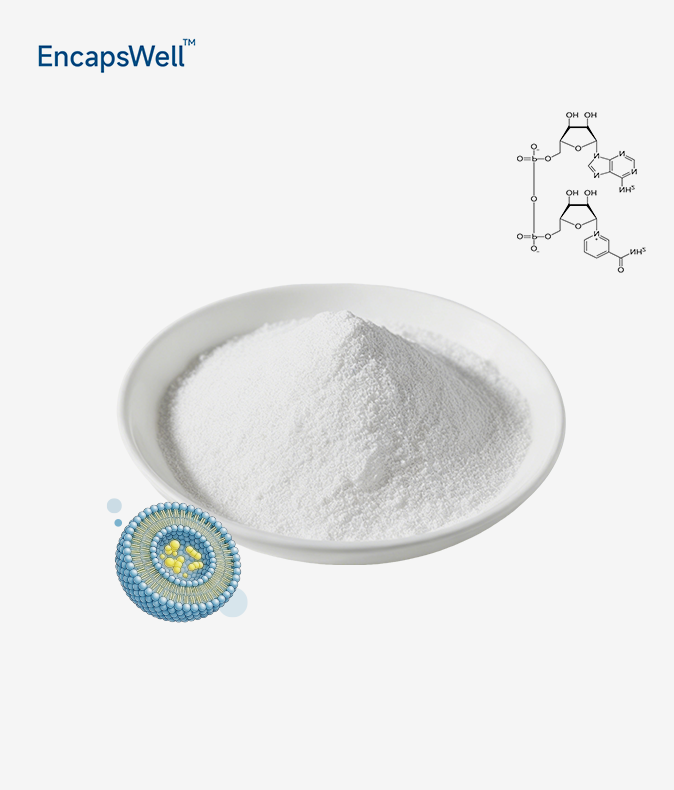
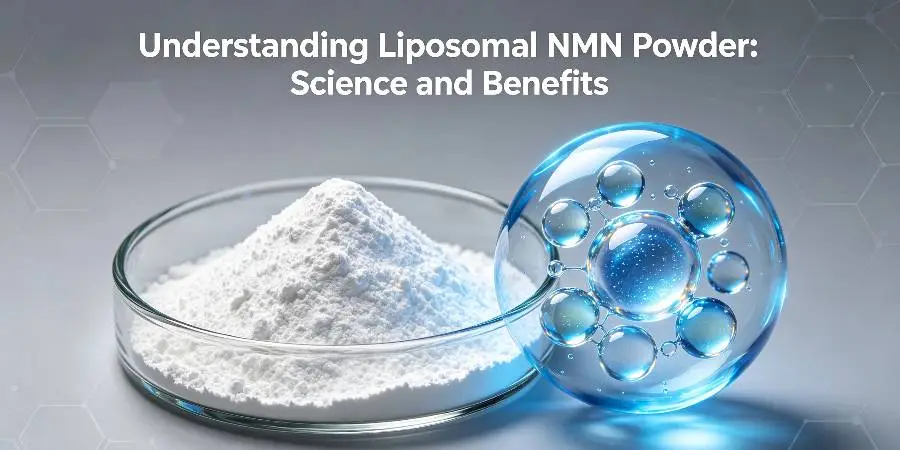
Comparing liposomal NMN powder to other Nicotinamide Mononucleotide formulations is a big step forward. The method wraps NMN molecules in phospholipid bilayers, which are very small structures that look like the membranes of human cells. This protected layer solves two major problems: breakdown in the stomach and efficient cell uptake. Standard NMN can change into nicotinamide before it gets to the gut, which makes it less useful as a NAD+ precursor. The liposomal shell protects molecules from stomach acid, sending compounds in their whole form to the best place for absorption.
Enhanced Bioavailability: The Absorption Advantage
Clinical research shows that liposomal delivery systems can increase the rate of absorption by 4–8 times compared to alternatives that are not encapsulated. This improvement happens because phospholipid shapes make direct membrane fusion or endocytosis easier, which gets around normal transport bottlenecks. For procurement teams, this means products that need lower doses to work just as well or better than the old ones. This is a great deal for consumers who want to save money while still getting good results.
Key Benefits for Product Positioning
NMN's molecular benefits are mostly related to how cells make energy and fix DNA. NMN products help keep ATP production going by supporting mitochondrial function. This has an effect on energy levels, brain health, and metabolic health. The compound also turns on sirtuins, which are proteins linked to pathways for aging. This makes it appealing to companies that want to get into the growing market for anti-aging supplements. When combined with better absorption, liposomal formats give formulating teams a unique ingredient that is worth the higher price.
Comparing Liposomal NMN Powder with Alternative NMN Formats
Format Analysis: Absorption and Stability Considerations
Professionals in procurement come across a number of different NMN delivery formats, each with its own unique features. Regular crystalline powders are cheap, but they aren't always stable, and their absorption rates change. The capsule form is convenient, but how well it works depends on the person's digestive system. Sublingual preparations try to skip the first-pass metabolism, but they often have problems with dosing and taste. Nicotinamide riboside is similar to NAD+, but it needs to be changed by enzymes before it can help make NAD+.
Liposomal powders get around these problems by mixing improved bioavailability with powder handling that doesn't affect the shelf life. The freeze-dried format keeps its effectiveness while being stored and shipped, and it can be used in a wide range of ways, from making drink mixes to compressing tablets. This adaptability is important for making product lines that can be delivered in different ways or for targeting specific consumer tastes in various markets.
Quality Markers for Supplier Evaluation
To choose reliable sources, you need to carefully look at certain quality signs. Purity levels should be at least 99%, which can be proven with HPLC analysis, not less accurate UV methods. Heavy metal screening with an ICP-MS must show that it meets USP standards. Lead, arsenic, cadmium, and mercury amounts must usually be less than 0.5 ppm. Microbiological tests should show that there are no pathogens and that the total plate counts are good.
Besides basic purity, advanced suppliers offer stability data showing how well the product works under accelerated conditions (40°C/75% RH), particle size distribution analysis proving that liposomes form consistently, and stereochemical verification confirming that the product contains only 100% beta-NMN and no biologically inactive isomers. These technical details set professional-grade ingredients apart from cheaper options.
Importing Liposomal NMN Powder: What Global Buyers Should Know
Regulatory Landscape Across Key Markets
In the US, NMN is considered an ingredient in dietary supplements and is regulated by the FDA in line with cGMP standards and DSHEA rules. Importers should make sure that their sources of liposomal NMN powder have up-to-date good manufacturing practice standards, such as ISO 22000, FSSC 22000, and HACCP. Documentation like Certificates of Analysis showing testing results for each batch, allergen labels, and country-of-origin statements are helpful for each package.
When it comes to Novel Food regulations, European markets add more things to think about, even though NMN's regulatory status is still changing. Buyers who want to sell goods in the EU should ask for pre-submission dossiers and make sure they are in line with food safety management systems. To bring finished goods into Canada, you need Natural Product Numbers, and to register with the Australian Therapeutic Goods Administration, you need a lot of paperwork. Knowing about these regional differences can help you avoid delays and expensive re-formulation needs.
Documentation and Certification Requirements
For professional buying, there must be full paper tracks. The Certificate of Analysis should list the NMN content (≥99%), the moisture level (<1%), the particle size, and the fact that there are no liquids left over after GC tests. Certifications include more than just manufacturing standards. They also include Kosher, Halal, Non-GMO Project verification, and Vegan Society registration when the product's position in the market calls for them.
Verification by a third party through independent labs boosts trustworthiness, especially when sellers offer testing from well-known facilities in addition to their own results. During due research and when telling customers or governmental officials about the integrity of a product during audits, this openness becomes very important.
Pricing Structures and MOQ Considerations
Liposomal products usually cost more in bulk because they need more work than regular powders. Global buyers can expect different price levels based on the amount they order, with big price drops for orders over 50 to 100 kilograms. Different suppliers have different minimum order amounts, which can be anywhere from 1 kilogram for samples to 25 kilograms or more for production orders.
When you negotiate well, you don't just look at the price per kilogram; you also look at the total landed costs, which include shipping, customs duties, and storage needs. Temperature-controlled operations may raise freight costs by 15–30%, but it is necessary to keep products safe during foreign shipping. Brands can find out how the market reacts to their products before committing to large inventory positions by building relationships with suppliers who offer flexible MOQs.
Evaluating and Managing Supplier Relationships for B2B Procurement
Critical Supplier Assessment Criteria
Reliable partnerships start with a careful check of each other's production skills. Check to see if facilities have separate liposomal production lines to avoid cross-contamination. Also, look at their annual production capacity to make sure they can keep up with your growth, and if you can, check their quality management systems through certification reviews and facility audits.
Transparency in communication is an early sign of how good a relationship is. Respondent providers give out technical data sheets, answer questions about formulations with scientific accuracy, and share reports on stability or changes to regulations that affect ingredients before they are needed. Lead times for production are usually between 8 and 12 weeks for special recipes, but established stock-keeping units may be able to ship within days. By making these dates clear, supply chain problems can be avoided during product launches or seasonal demand spikes.
Negotiation Tactics for Long-Term Value
Total relationship value is part of successful buying, not just the original price. When you commit to a certain volume, you can often get better price, priority scheduling for production, and access to expert help for formula optimization. Talking about payment terms, quality guaranties, and replacement policies for batches that don't meet specifications sets clear goals that protect both sides.
Private Label and Custom Formulation Opportunities
A lot of buyers around the world use OEM/ODM skills to get into new markets faster. EmerWell's EncapsWellTM platform shows how unique liposomal technology can be used in different dosage forms, such as tablets, hard capsules, soft gels, and liquid-ready formulations. This lets brands keep the quality of their ingredients uniform while adding new products to their line. Custom blending services let you make unique mixtures of NMN with substances that work well together, such as resveratrol, quercetin, or TMG. This lets you make goods that stand out and deserve a higher price.
White-label packaging support cuts down on time-to-market, which is especially helpful for new brands that don't have their own packaging infrastructure. Suppliers that offer enteric coating and taste covering services can help with common recipe problems that would otherwise require a lot of in-house development.
Ensuring Successful Import and Integration into Your Supply Chain
Logistics and Storage Best Practices
Keeping the purity of the product starts with how it is handled during foreign shipping. Once freeze-dried, liposomal powders are stable at room temperature, but it is still important to keep humidity levels under control. Choose shipping packages with moisture shields, and if the trip will be long, think about desiccant packs. As soon as you get the materials, you should store them in climate-controlled warehouses that keep the temperature between 15°C and 25°C and the relative humidity below 60%.
Keeping track of foreign ingredients in inventory means matching the need for a steady supply with the cost of storage and the dates on which the ingredients go bad. When stored properly, most high-quality liposomal NMN powders have shelf lives of 24 to 36 months, which means that you can keep some in stock. Using first-in, first-out rotation and keeping track of batch numbers will help you keep track of things throughout the whole production cycle.
Supply Chain Integration Strategies
To integrate things well, you need to think about how the new materials will work with the current production schedules. Long lead times from international suppliers—usually 10 to 16 weeks from when the order is placed to when it arrives in the warehouse—require planning ahead and figuring out how much safety stock to keep on hand. Setting restock points based on how much is used and how long it takes for suppliers to deliver goods stops stock-outs that mess up manufacturing schedules.
In later steps, the technical information that providers give is useful. The information in your Certificate of Analysis goes into the specs for your finished product. This helps with quality assurance and legal compliance. Analytical methods can be changed to be used for testing while the product is still being made, and stability data helps set the right expiration dates for produced goods.
Addressing Common Import Challenges
Sometimes, customs clearance takes longer than expected, especially when bringing in new ingredients. This process goes more smoothly if you work with experienced customs brokers who know how to classify food supplements. Most questions can be answered quickly if you have all the necessary paperwork on hand, such as business bills, packing lists, and material safety data sheets.
Quality problems are rare with well-known sources, but they do happen and need clear ways to be fixed. In purchase agreements, spell out the conditions for acceptance, how to handle samples that are kept so that they can be tested against others, and what steps need to be taken to fix the problem, such as returns, refunds, or new orders. During the relationship-building phase, before trust fully develops, these safeguards are very important.
Conclusion
To successfully import liposomal NMN powder, you need to have both scientific knowledge and practical procurement skills. The bioavailability benefits of the technology make it possible to differentiate products in an appealing way. However, this promise can only be realized by choosing suppliers who are good at making, follow the rules, and are reliable in partnerships. Global sellers set themselves up to meet the market's desire for effective anti-aging supplements by focusing on quality certifications, stable data, open communication, and planning for logistics. The money spent on carefully checking out suppliers and following the right steps for importing goods pays off in lower risk, consistent product quality, and, in the end, a better brand image in the health market, which is very competitive.
FAQ
1. How do I verify a supplier's liposomal encapsulation quality?
Ask for a particle size distribution analysis that shows consistent liposome formation, which should be between 100 and 300 nanometers. Ask for pictures taken with a transmission electron microscope that show bilayer structures that are still whole. Comparing the rates of encapsulated and free NMN degradation in stability data gives functional evidence. Third-party certificates from separate labs are an extra way to check what a supplier says.
2. What lead times should I expect for bulk liposomal NMN orders?
Items in stock from well-known suppliers may be sent out within 5 to 10 business days. Getting the raw materials, making the recipe, checking its quality, and packaging it usually takes 8 to 12 weeks for custom formulas. Depending on where the package is going and where it is coming from, international shipping can take an extra two to four weeks. For first orders, allow 12 to 16 weeks from the time of the buy order to the time they arrive at the warehouse. For future orders, this time may be cut down to 6 to 8 weeks once specifications are set.
3. Are there minimum order quantities that make importing cost-effective?
Most specialist providers have minimum orders of 1 to 25 kilograms, and orders of 50 kilograms or more save a lot of money per unit. To find your break-even volume, add up all of your landed costs, such as freight, duties, and storage. You can make smaller initial orders more cost-effective while you test the market by sharing warehouse space with ingredients that go well together or teaming up with contract manufacturers.
Ready to Elevate Your Product Line with Premium NAD+ Solutions?
EmerWell helps you reach your formulation goals by combining cutting-edge biology with U.S.-based knowledge. Our San Diego R&D Center and lab team, which is led by experienced PhDs, can help you with technical issues as you develop your product. The EncapsWellTM platform lets you make liposomal NMN powder and offers adjustable OEM/ODM services. This lets you make unique vitamins that meet strict quality standards like cGMP, ISO 22000, and thorough third-party testing. We help brands quickly go from idea to market by storing samples close to where they will be used and communicating with them in a way that answers their formulation questions. You can talk to our buying experts at info@emerwell-bio.com or emerwelllabs.com about your specific needs and get suggestions that are made just for you.
References
1. Yoshino, J., Baur, J.A., & Imai, S. (2018). NAD+ Intermediates: The Biology and Therapeutic Potential of NMN and Related Molecules. Cell Metabolism, 27(3), 513-528.
2. Akbarzadeh, A., Rezaei-Sadabady, R., Davaran, S., et al. (2013). Liposome: Classification, Preparation, and Applications. Nanoscale Research Letters, 8(1), 102-111.
3. Mills, K.F., Yoshida, S., Stein, L.R., et al. (2016). Long-Term Administration of Nicotinamide Mononucleotide Mitigates Age-Associated Physiological Decline in Mice. Cell Metabolism, 24(6), 795-806.
4. Bulbake, U., Doppalapudi, S., Kommineni, N., & Khan, W. (2017). Liposomal Formulations in Clinical Use: An Updated Review. Pharmaceutics, 9(2), 12-38.
5. Poddar, S.K., Sifat, A.E., Haque, S., et al. (2019). Nicotinamide Mononucleotide: Exploration of Diverse Therapeutic Applications of a Potential Molecule. Biomolecules, 9(1), 34-52.
6. Allen, T.M. & Cullis, P.R. (2013). Liposomal Drug Delivery Systems: From Concept to Clinical Applications. Advanced Drug Delivery Reviews, 65(1), 36-48.
Online Message
YOU MAY LIKE
High quality furniture manufacturer