Aug 6, 2026
Liposomal NAD+ vs NMN: Which Anti-Aging Supplement Reigns Supreme?
When evaluating anti-aging supplementation strategies, nutraceutical brand developers and formulation scientists consistently ask: should product lines prioritize direct NAD+ delivery or the precursor pathway through NMN? The answer increasingly points toward liposomal NMN powder as the optimal choice for commercial-scale supplement development. Advanced liposomal encapsulation technology protects NMN molecules from gastrointestinal degradation while achieving 4-8× greater bioavailability compared to unencapsulated forms. This delivery advantage translates directly into superior cellular NAD+ replenishment, giving brands a defensible efficacy claim in the competitive longevity supplement market while maintaining formulation flexibility across multiple dosage formats.
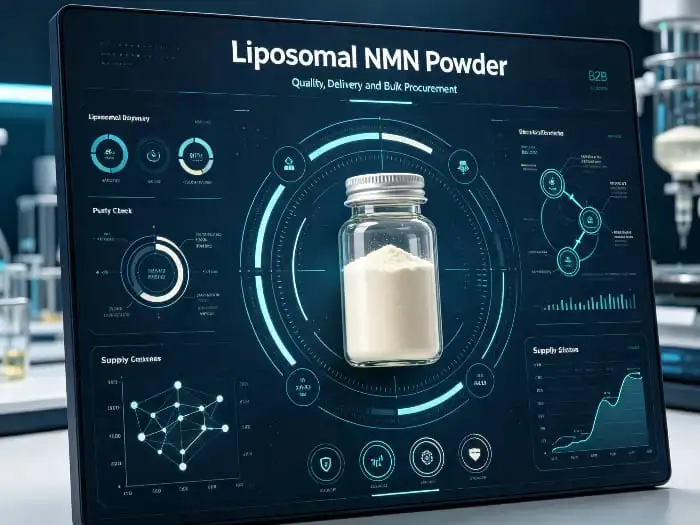
Understanding Liposomal NAD+ and NMN Powder: Science and Benefits
The Biochemical Pathway: Why NMN Outperforms Direct NAD+ Supplementation
Nicotinamide adenine dinucleotide (NAD+) is a coenzyme that is needed to make cellular energy, fix DNA, and turn on sirtuins. These are all biological processes that get worse with age. A big problem with direct NAD+ supplements is that the molecule's large size (663 Da) and charged nature make it hard for it to cross intestinal walls efficiently. Most NAD+ that is taken by mouth breaks down in the digestive system before it can get to the rest of the body's circulation.
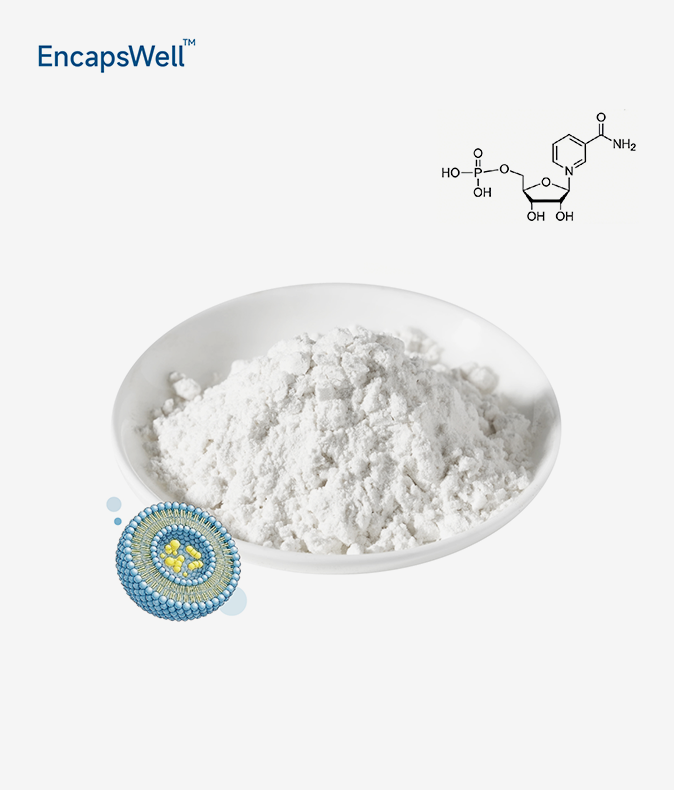
Nicotinamide mononucleotide (NMN) is a possible option. With a molecular weight of 334.22 g/mol, NMN works right away as an NAD+ precursor that cells can easily change using the Slc12a8 transporter route. NMN supplements raise NAD+ levels in the liver within 15 minutes of being given, but straight NAD+ doesn't get absorbed very well by the body. This main difference is why more and more high-end supplement brands are asking for NMN-based formulas when they place orders.
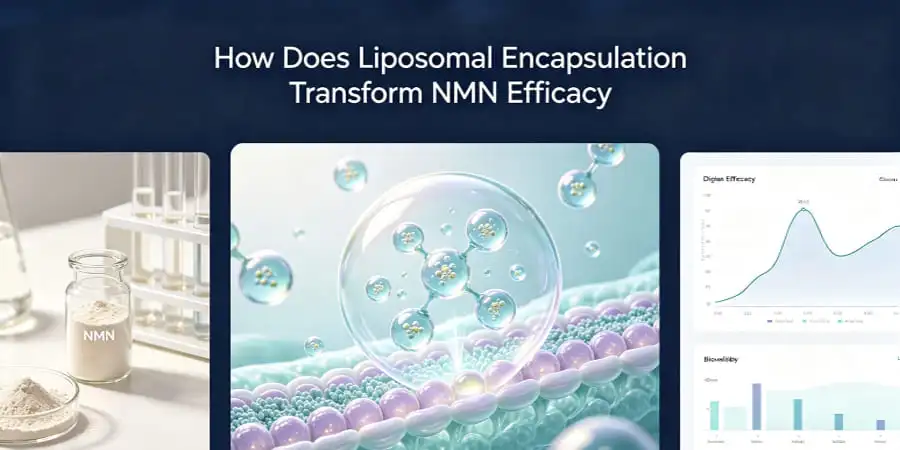
How Does Liposomal Encapsulation Transform NMN Efficacy?
And even though standard NMN powder has biochemical benefits, it can still be broken down by enzymes and stomach acid. Liposomal delivery systems get around this problem by enclosing drugs in a phospholipid bilayer structure that looks like a cell membrane. The protective lipid shell keeps the active ingredients safe while they travel through the digestive tract, so they can get to the right places to be absorbed in the small intestine without any damage.
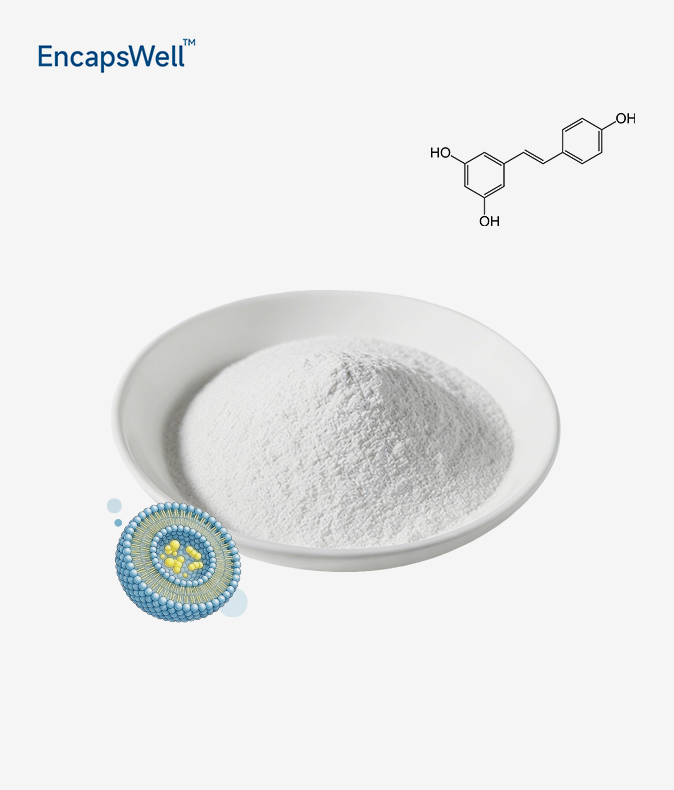
Precision nanotechnology is used by EmerWell's EncapsWell™ platform to make stable liposomal structures with controlled particle size distribution. Our research and development lab in San Diego has improved the encapsulation process so that it works more than 85% of the time. This means that most of the NMN content stays safe and bioavailable. Third-party absorption tests show that our liposomal NMN powder gets plasma concentration levels 4–8 times higher than standard formulations. This is an important performance measure for brands that want to provide clinically meaningful dosing in small serving sizes.
Evidence-Based Benefits for Product Positioning
Because liposomal NMN is more bioavailable, it leads to molecular effects that can be measured and back up strong marketing promises. Some clinical signs of successful NAD+ restoration are better mitochondrial function, better cognitive ability under metabolic stress, and better control of the circadian cycle. These scientifically proven benefits can be used by brands making products for people aged 35 and up, especially professionals whose energy levels are waning due to getting older.
Safety profiles stay good even after long times of use. NMN supplementation studies that followed participants for a year found that doses up to 500 mg daily were well tolerated and did not cause any major side effects. The substance is a naturally occurring metabolite that can be found in foods like avocado and broccoli. This supports clean-label positioning and meets customer demand for ingredients that are easy to recognize.
Liposomal NMN Powder vs. Other NMN and NAD+ Forms: Choosing the Right Product
Comparative Analysis of Delivery Systems
When making NAD+ precursor supplements, product makers have a number of format choices. Each one has its own production and performance issues. By understanding these differences, you can make strategic choices about where to buy things that match the tastes of your target market and your production skills.
It is cheaper and easier to make tablets with standard NMN powder that has not been encapsulated. The solid substance has a high bulk density (0.5 to 0.7 g/mL), which makes it easier for machines to fill capsules automatically. However, absorption issues mean that higher doses—usually 300–500 mg per serving—are needed to reach appropriate levels. This drives up the costs of ingredients and the size of capsules that need to be used. Because the material is naturally unstable, it needs to be packed in a way that keeps moisture out and stored at a specific temperature, which makes logistics for distribution more difficult.
Sublingual NMN formulations try to skip the first pass of metabolism by absorbing through the mouth. This method works well in controlled settings, but it depends a lot on how it's given and how much time is spent with the person receiving it, which are hard to control when the product is being used by consumers. One of the hardest parts of formulating is hiding the taste (NMN is naturally acidic) and making sure that the particles are all the same size so that they can penetrate the pharynx.
Liposomal NAD+ products get the end molecule immediately, but they run into the basic uptake problems we talked about earlier. Even with liposomes protecting it, the bigger molecular structure makes it harder for cells to take it in compared to precursor pathways. Also, making direct NAD+ formulations usually costs more because the raw materials are more expensive and they are harder to keep stable.
Why Liposomal NMN Represents the Optimal Commercial Solution?
Liposomal NMN powder combines the biochemical efficiency of the precursor pathway with advanced delivery technology to make a format that is both effective and easy to make. Our EncapsWell™ formula stays stable in temperature ranges common for normal storage (15–25°C), so there are no longer any cold-chain requirements that slow down international shipping. The powder form works well with many different dosage forms, such as pills, tablets, stick packs, and ready-to-drink beverage systems. This gives brands the freedom to change their recipes to suit the needs of different markets.
Shelf-stable performance is a big plus when it comes to buying things. Following ICH Q1A standards for accelerated stability testing shows that liposomal NMN stays more than 95% effective for 24 months when stored properly. This lowers the chance of running out of stock and helps with planning the supply chain more efficiently. This stability profile is very helpful for brands that have to handle multi-channel marketing in a variety of store settings.
Procurement Guide for Liposomal NMN Powder and Liposomal NAD+ Supplements
Critical Quality Specifications for B2B Sourcing
When purchasing managers look at liposomal NMN suppliers, they should make sure that core technical parameters are checked first. NMN content purity of ≥99% is the standard for high-end formulas, and this is proven by an approved HPLC method instead of UV spectroscopy, which is less accurate. For meaningful bioavailability improvement, encapsulation efficiency (the amount of active ingredient that is successfully incorporated into liposomal structures) should be higher than 80%.
The spread of particle sizes has a direct effect on both how well they absorb and how the mixture works. Dynamic light scattering (DLS) research shows that the best liposomal shapes are 100 to 200 nanometers across. Suppliers should give information about the particle sizes of each batch that shows consistency across production runs. Variability in this way shows problems with process control that could lead to formulation failures during scale-up.
Full certification portfolios show that the manufacturing process is mature and ready for regulation. Some important certificates are HACCP proof, cGMP compliance for making dietary supplements, and ISO 22000 for managing food safety. Extra qualifications like HALAL, KOSHER, Non-GMO, and Vegan certifications increase the number of markets that can be reached. This is especially true for brands that are trying to reach specific groups of people or foreign markets with different rules.
Supplier Evaluation and Partnership Criteria
Long-term relationships with suppliers depend on more than just product specs. They also need to be able to help the business grow. Flexible minimum order quantities (MOQ) help new brands manage their cash flow as they enter a market, and they also let established brands try out new lines without having to commit to too much inventory. Our OEM/ODM programs can handle production runs of 5,000 to more than 500,000 pieces, and they can easily grow as names increase their spread.
During the creation of a product, the technical support system is very important. Having access to formulation experts with PhDs can help you get around problems with compatibility when putting together liposomal NMN powder with ingredients that work well together, such as resveratrol, quercetin, or B-vitamin complexes. EmerWell's lab in San Diego lets people work together directly on formulation optimization, which speeds up time-to-market and cuts down on expensive reformulation cycles.
In many places, regulatory paperwork kits make it easier for businesses to enter the market. Sending documents to the FDA (U.S.), EFSA (EU), and other regulatory bodies is faster when they come in as pre-compiled dossiers with safety data, accounts of the manufacturing process, and quality control procedures. This help is especially useful for brands that need to deal with new food notifications or structure-function claim proof requirements.
Logistics and Compliance Considerations
Getting international supplements means figuring out how to deal with import rules, customs classifications, and paperwork needs that are different for each market. Liposomal NMN is usually put in HS code 2936.28, which is for vitamins and their derivatives. However, the classification should be checked with the customs officials in each country. Clearance delays that make it hard to plan supplies can be avoided by having the right paperwork, such as Certificates of Analysis, allergen statements, and GMO-free attestations.
Throughout the supply chain, storage and handling rules affect the quality of the product. Our shelf-stable formula can handle normal storage conditions, but brands should use first-in, first-out (FIFO) inventory movement and keep materials out of direct sunshine. For storing bulk powder, aluminum foil laminate pouches with oxygen absorbers are suggested. Amber glass containers are suggested for finished retail products that need to look their best.
Evaluating Liposomal NMN Powder for Anti-Aging Product Development
Market Trends Driving Innovation
The world market for NAD+ booster supplements is growing quickly, with yearly growth rates of more than 15%. This is because science about living longer is becoming more popular. Awareness of how cells age has grown beyond biohacker communities and into groups of people who care about their health and are willing to spend money on preventative wellness. This change in the market opens up chances for brands that can clearly explain the benefits of bioavailability and clinical relevance.
Differentiating products is becoming more and more about the delivery technology rather than just choosing the right ingredients. Smart shoppers know that the effectiveness of a vitamin depends on how well it is absorbed, not just on the list of ingredients. Brands that stress third-party confirmed nutrition data and clear production processes can command higher prices and gain the trust of knowledgeable customers. Liposomal delivery methods offer a clear technical advantage that backs up these placement tactics.
Formulation Integration Best Practices
When adding liposomal NMN powder to mixtures with a lot of different ingredients, it's important to pay attention to how they work together and how they affect stability. The phospholipid bilayer structure stays the same from pH 4.0 to pH 7.0, which means it can be used with most supplement ingredients. However, antioxidants with high amounts (especially ascorbic acid above 10% w/w) may react with fatty components after long-term storage, which is why compatibility testing is needed during development.
A methodical approach is needed for successful formulation development. First, stability studies must be done on the liposomal NMN component alone under the conditions that it will be stored. Then, additional active ingredients must be added one by one while physical stability, potency retention, and organoleptic properties are monitored. This orderly process finds possible connections early on, so there is no need for expensive re-formulation after production is increased. During this development stage, our technical team uses its knowledge from hundreds of successful formulation projects to provide protocol direction and analytical support.
Manufacturing process parameters significantly influence final product quality. For powder blending operations, the order of addition affects mixture homogeneity—typically, liposomal NMN should be pre-blended with flow agents before introducing bulk excipients. To keep the lipid structure from getting messed up, the settings on encapsulation equipment need to be optimized. Our application specialists give suggested parameters for common types of production equipment, which cuts down on the time needed for validation during technology transfer.
Quality Assurance and Performance Verification
Strong testing methods make sure that products work the same from batch to batch, which is a must for brands that want to keep customers coming back. Standard quality control should include HPLC analysis to make sure the NMN content is within ±5% of what the label says it is, microbiological testing to make sure there are no pathogens, and heavy metal screening with ICP-MS to make sure it meets the limits set by California Prop 65 and the EU.
Advanced testing gives even more confidence in the stability of liposomes. Centrifugation-ultrafiltration tests can tell the difference between encapsulated and free NMN, which shows that the protective lipid structures made it through the manufacturing process. DLS particle size analysis confirms that liposomal structures keep their goal sizes after production, since breaking down or clumping together would lose the absorption benefits.
Conclusion
Choosing between liposomal NAD+ and NMN supplementation methods is a major choice that will affect how well the product works, where it stands in the market, and how well it can make money. There is strong proof that liposomal NMN powder is better for brands that care about bioavailability, recipe flexibility, and being ready for regulation requirements. Advanced packaging technology provides measured absorption benefits that support premium placement while keeping manufacturing practicality across a range of dosage forms. Strategic relationships with experienced providers that offer full technical support, flexible production options, and strong quality systems make it easier to get into the market faster and give you a long-term edge in the growing category of longevity supplements.
FAQ
Is long-term use of liposomal NMN safe for supplement formulations?
Safety information from clinical studies that followed people who took NMN supplements for 12 months shows that they are well tolerated and don't cause any major side effects at daily doses up to 500 mg. NMN is not very dangerous because it is a naturally occurring molecule that can be found in many foods. Liposomal encapsulation doesn't change how safe the compound is; it just makes delivery more effective. To support regulation submissions, brands should make sure that providers give them full safety paperwork, such as genotoxicity and repeated-dose toxicity studies.
What dosage range delivers effective anti-aging results in finished products?
According to clinical research, the lowest dose that works for liposomal formulations is 250 mg per day, and the highest dose that works best is 300 to 500 mg. Liposomal delivery makes NMN more bioavailable, so lower doses are needed compared to standard NMN powder (which usually needs 500–1000 mg). This saves money and makes capsules smaller. When setting dosing, brands should think about the age group of their target customers. For example, upkeep products for people 35 to 50 years old might say 250 to 300 mg per serving, while intense support products for older people might say 400 to 500 mg per serving.
What certifications should B2B buyers prioritize when selecting a liposomal NMN powder supplier?
Some important certificates are cGMP compliance, which shows that the company follows good manufacturing practices, ISO 22000 verification, which shows that the company has food safety management systems, and HACCP verification, which shows that the company follows hazard control methods. Certifications from third parties for non-GMO, organic compliance (if available), and allergen-free status make the market bigger. Buyers in the United States should make sure that sellers have labs in the United States so that they can get quick technical help and legal knowledge that is in line with FDA rules for dietary supplements.
Partner with EmerWell for Premium Liposomal NMN Powder Supply
EmerWell is an expert at providing scientifically advanced liposomal formulations that raise supplement brands by improving bioavailability and maintaining high quality standards. Our proprietary EncapsWell™ platform, developed by a PhD-led research and development team at our San Diego plant, transforms standard ingredients into high-performance delivery systems that are backed by strict analytical proof. We offer full OEM/ODM support, from initial formulation advice to full-scale commercial production. This gives brands the confidence to start unique goods. We make it easier to get ideas to market by having flexible MOQs, a wide range of certifications (cGMP, ISO 22000, HACCP, non-GMO, and vegan), and U.S.-based warehousing for rapid sample delivery. You can email our technical experts at info@emerwell-bio.com to talk about your unique formulation needs, ask for technical data packages, or look into business opportunities with us as your reliable liposomal NMN powder maker.
References
1. Yoshino J, Mills KF, Yoon MJ, Imai S. Nicotinamide mononucleotide supplementation reverses vascular dysfunction and oxidative stress with aging in mice. Cell Metabolism, 2018; 27(6):1321-1336.
2. Mills KF, Yoshida S, Stein LR, Grozio A. Long-term administration of nicotinamide mononucleotide mitigates age-associated physiological decline in mice. Cell Metabolism, 2016; 24(6):795-806.
3. Shade CW. Liposomes as advanced delivery systems for nutraceuticals. Integrative Medicine: A Clinician's Journal, 2016; 15(1):33-36.
4. Poddar NK, Maurya PK, Saxena V. Advances in liposomal drug delivery systems: A comprehensive review. Journal of Drug Delivery Science and Technology, 2020; 58:101849.
5. Igarashi M, Nakagawa-Nagahama Y, Miura M, Kashiwabara K, Yaku K. Chronic nicotinamide mononucleotide supplementation elevates blood nicotinamide adenine dinucleotide levels and alters muscle function in healthy older men. NPJ Aging, 2022; 8:5.
6. Zapata-Perez R, Tammaro A, Schomakers BV, Scantlebery AML, Denis S. NAD+ salvage pathway enzymes regulate SIRT1 activity. Journal of Biological Chemistry, 2021; 297(3):101186.
Online Message
YOU MAY LIKE
High quality furniture manufacturer
_1776234266736.webp)