Jun 17, 2026
Liposomal NAD+ Powders: All You Need to Know
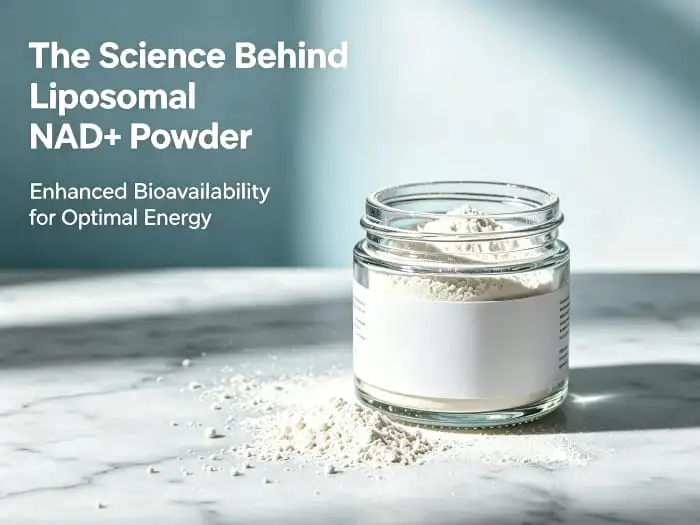
Liposomal NAD+ powder is a revolutionary new way to make nutraceuticals, and it solves one of the biggest problems with supplements: making sure they are bioavailable. This improved recipe puts NAD+ molecules inside very small phospholipid vesicles. This makes a safe delivery system that doesn't break down in the digestive system and gets to cells whole. For procurement professionals, R&D managers, and brand creators, knowing this technology means being able to make formulations with measurably better absorption. This gives end users real value and helps companies stand out in the crowded health market.
Understanding Liposomal NAD+ Powder: Basics and Benefits
What Makes Liposomal Delivery Different?
Biomimicry is the basis of liposomal technology that works. Liposomes are tiny circular structures made up of phospholipid bilayers that look like the membranes of human cells. They hold NAD+ molecules inside. These vesicles, which are usually 50 to 200 nanometers across, make a buffer that keeps stomach acid and enzymes from breaking down sensitive active ingredients. When liposomes get into the bloodstream, their structure is similar to that of cell membranes, which lets them directly fuse and release NAD+ where cells need it the most.
Unlike regular powder vitamins that lose a lot of their structure when they are digested, liposomal formulations keep their structure all the way through the digestive system. Liposomal coating can improve cellular uptake by 5–10 times compared to other delivery methods shown in clinical models. This huge improvement comes from the technology's ability to skip first-pass metabolism and send active ingredients straight into the body's blood.
Core Benefits Across Industry Applications
Liposomal NAD+ powder has benefits that apply to a wide range of business areas. Nutraceutical brands can get formulas with confirmed absorption data, which is important for backing up claims of effectiveness in markets where there is a lot of competition. Product makers like that the powder dissolves easily in water, which makes it easier to add to drinks, capsules, and functional food structures without affecting their stability.
The fact that the technology works with liquid forms is especially helpful for companies that make functional drinks. When mixed with water, the powder spreads out evenly, keeping the particles mixed without separating or settling over time. This consistency makes sure that each dose gives the right amount of medicine and meets the quality standards that customers and sellers expect.
Beauty-from-within brands use liposomal NAD+ because it has a role in making cells' energy and metabolic processes that are linked to skin health that has been backed by science. The better absorption profile lets formulators use lower active concentrations while still getting the same results as standard goods with higher doses. This saves money and increases the chance of making a profit without lowering performance.
Contract makers like how the style and scalability can be changed. High-purity liposomal NAD+ powder (≥98% content) can be used for a wide range of production needs, from small specialty runs to large sales for well-known product lines. The stable room temperature for 24-month gets rid of cold-chain transportation problems, which lowers the cost of storage and makes it easier to send goods to places with different climates.
Comparing Liposomal NAD+ Powder With Other NAD+ Supplements
Standard NAD+ Powders vs. Liposomal Formulations
Traditional NAD+ powder powders have problems with how bioavailable they are. Because of its size and polarity, the molecule can't passively pass through intestinal walls. This means that it breaks down a lot before it can get to the systemic blood. Liposomal NAD+ powder encapsulation solves this basic problem by turning the molecule into a lipid-soluble package that is easy for intestinal cells to receive.
From a purchasing point of view, liposomal powders have a higher unit cost because they are more complicated to make, but they offer measured returns through better product performance. Brands can advertise absorption claims that have been proven by science. This is an area of difference that is becoming more important to smart consumers who are reading supplement labels. Putting money into liposomal technology often explains charging higher prices in ways that make the business more profitable overall.
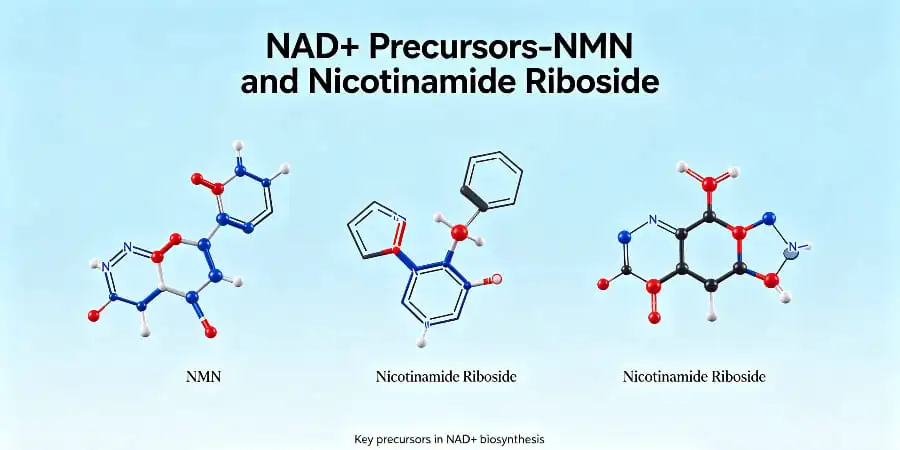
NAD+ Precursors: NMN and Nicotinamide Riboside
Nicotinamide mononucleotide (NMN) and nicotinamide riboside are two indirect ways to raise NAD+ levels. To do this, enzymes inside cells must be converted. Even though these sources have their own benefits, liposomal delivery of NAD+ makes it available right away without counting on how well a person's metabolism converts it.
Which strategy to use—direct NAD+ or precursor—depends on how the product is positioned and who the target audience is. Some brands that focus on medicine might like the well-known conversion routes of precursors, while health lines that focus on performance might stress how quickly liposomal NAD+ powder can be used by cells. Procurement teams should look at these choices based on what the target market wants and what the product claims should be.
Injectable NAD+ Therapies
Giving NAD+ through an IV gets full bioavailability but can only be done in hospital settings by trained staff. Liposomal NAD+ powder versions offer absorption rates that are similar to clinical methods without the need for medical monitoring, needle anxiety, or a facility. They fill the gap between the effectiveness of injectables and the ease of oral delivery for consumers.
This ease of entry greatly increases the number of places that can be reached. Brands can serve health-conscious customers who want clinical-grade results by making daily supplements easy to use instead of going to the clinic on a regular basis. Because oral liposomal formats are cheaper per dose, they are better for long-term routines. This means that more people can get improved NAD+ support.
Practical Information for Procurement and Usage
Dosage Considerations for Product Development
Liposomal NAD+ powder usually comes in doses of 250 mg to 1000 mg, but this can change based on the product positioning and the desired results. Wellness-focused formulas usually come in 250-500 mg doses, which are good for daily maintenance plans. Products that focus on performance and life may contain higher amounts, up to 1000 mg, for people who want extra help.
Formulation freedom lets brands make amounts fit the needs of different market groups. People who want ease of use like single-serving stick packs, while people who want to save money and customize their doses like bulk powder forms. Contract makers benefit from working with suppliers that offer more than one concentration choice. This makes it easier to scale across a wide range of product SKUs without having to deal with the complexity of reformulating.
Storage and Handling Best Practices
Using the right storing methods is important for keeping quality high throughout the supply chain. When kept in a cool, dry place out of the sun, liposomal NAD+ powder keeps its stability at its highest level. Some liposomal liquids need to be kept cold, but improved powder forms can stay stable at room temperature for 24-month and keep more than 90% of their potency when sealed properly.
Moisture contact is the main risk of decline. Teams in charge of buying things should ask for foil-lined bags, containers with desiccant, or nitrogen-flushed packing methods that are good at keeping moisture out. These steps protect the brand's image and keep returns from being caused by quality issues to a minimum from the time the product is made until it is used by a customer.
Safety Profile and Regulatory Considerations
NAD+ supplementation is usually thought to be safe according to clinical research. Mild stomach reactions can happen at higher doses, but they usually go away after continued use or a change in the amount. Liposomal NAD+ powder transport may actually make the digestive system less sensitive than other methods because it keeps the active ingredient away from the surface until it is absorbed.
Regulatory compliance is different in each area. The U.S. dietary supplement standards consider NAD+ to be Generally Recognized As Safe (GRAS) when used correctly. Other foreign markets may need new food approvals or specific paperwork. Reliable providers offer full regulatory support packages that include Certificates of Analysis (COA), heavy metal testing, microbial screening, and compliance paperwork specific to each area that meets FDA, EFSA, and Health Canada standards.
Integration Into Product Formulations
Because quality liposomal NAD+ powder dissolves in water, it is easier to incorporate into formulations for a variety of release forms. pH stability is important for beverage uses; neutral to slightly alkaline (pH 6.5–7.5) conditions are best for long-term stability. When you combine ingredients that work well together, like resveratrol, quercetin, or CoQ10, you get synergistic mixes that people who want complete cellular support like.
Standard procedures are used to put the powder into veggie capsules or tablets. The powder's ability to run freely makes it easy to fill them to the right weight and spread it out evenly. The powder works well with oil-based matrices, which is good for soft gel uses. However, formulators should make sure that it stays stable in certain carrier systems by doing rapid aging studies.
Market Insights: Buying Liposomal NAD+ Powder for Business
Supplier Selection Criteria
Finding reputable partners means looking at more than just price as a sign of trustworthiness. Comprehensive certification files show that the production process is rigorous; as a minimum, look for ISO 9001, cGMP, ISO 22000, FSSC 22000, and HACCP certificates. Certifications like Kosher, Halal, Non-GMO Project Verified, and Vegan Society approval help businesses reach new groups of customers.
Transparency in third-party testing sets quality-focused sellers apart from product providers. Ask for proof that the product has been checked by a third-party lab to make sure it is pure (≥98% NAD+ content), that the particles are spread out evenly, that they are encapsulated well, and that it has been screened for heavy metals, pesticides, and bacterial safety. Suppliers who offer batch-specific awards instead of general forms show that they are dedicated to maintaining quality.
Being able to provide technical help for liposomal NAD+ powder is important, especially for brands that are making new formulas. Suppliers with their own research and development departments can help with things like improving stability, hiding flavors, and navigating regulations. These are all services that speed up time-to-market and lower development risks. Check how responsive they were to your first questions; trends of conversation can often tell you a lot about the quality of a partnership in the future.
Pricing Structures and Volume Economics
The cost of the raw materials, the complexity of the production process, and the quality requirements all affect the price of liposomal NAD+ powder. You can expect higher prices than usual for NAD+ powders. Wholesale prices depend on the number of orders, the level of customization needed, and any extra services like private marking or custom packing.
When you commit to a volume, you unlock good numbers. For normal specs, the minimum order quantity may start at 50 kg. However, when orders reach 500 kg or more, the cost per kilogram is often cut by 15 to 25 percent. For well-known names with steady monthly needs, long-term supply deals are helpful because they let you plan your budget and give items more attention during times of high demand.
Clear breakpoints show that costs go down at different volume levels in transparent price models. Suppliers with a good reputation don't hide extra fees for unique work, faster production, or special packing. Instead, they list the extra costs. Ask for detailed quotes that include payment terms, wait times, and a list of services that are included so that you can accurately compare different possible partners.
Evaluating OEM and ODM Capabilities
OEM (Original Equipment Manufacturer) and ODM (Original Design Manufacturer) service providers who offer full turnkey solutions are good for brands that want complete solutions. Through OEM relationships, exact formulations, package designs, and labeling can be specified while the supplier's production infrastructure and regulatory knowledge are used. This plan works well for well-known brands that have developed product ideas and need a production partner.
Through joint formulation development, ODM agreements add more value. Suppliers who are good at research and development (R&D) suggest better formulas based on clinical study, market trends, and the ability to make the recipe work technically. This method speeds up product development for new brands that don't have a lot of experience with formulation. It also cuts down on the time and money needed for trial-and-error development processes.
Check to see how flexible possible partners are with minimum order amounts, especially when a new product is being launched. Smaller initial runs (50–100 kg) and growth routes from suppliers help smart market testing before committing to large inventory positions. Compare minimum order quantities (MOQs) to unit costs to find partnerships that fit your business's current size and growth plans.
Why Choose Our Liposomal NAD+ Powder Solutions?
Our liposomal NAD+ powder is the result of more than ten years of experience in botanical science and novel delivery methods. The unique EncapsWell™ platform improves particle engineering to make vesicles of the same size (50–80nm), which increases the efficiency of cell uptake while keeping high stability profiles. Every batch goes through strict third-party testing to make sure it has at least 98% NAD+ and a full safety check for heavy metals and other toxins.
Our cGMP and ISO 22000-certified factory is where the products are made. They follow strict rules that make it possible to track them from where the raw materials come from to where they are packed at the end. With documentation packages that cover FDA, EFSA, and ASEAN legal standards, our quality systems help you get into global markets. Novel Food dossiers that have already been accepted for EU markets make it easier to expand internationally by lowering the regulatory hurdles that slow down product launches.
There are direct business gains from the technical advantages. Our recipe has been shown to be 3–5 times more effective at absorption than regular NAD+ powders. This has been proven by in vitro cellular models that give your marketing teams the performance data they need. Because it stays stable at room temperature for 24-month, it doesn't need to be refrigerated. This makes transportation easier and cuts down on costs across your supply chain.
Our approach to partnerships is based on being flexible. We can handle base orders as low as 50 kg for new brands, and we can easily handle multi-ton needs for well-known names. Standard specs have lead times of 72 hours or less on average, which helps with flexible inventory management. Our custom formulation services go beyond simple white-labeling. For example, our PhD-led R&D team works together on new mixes that include complementary actives like resveratrol, quercetin, or CoQ10 to give our clients a unique place in the market.
Full regulatory help gets rid of common problems that come up in foreign marketing. We offer complete paperwork that includes Certificates of Analysis, Technical Data Sheets, stable studies that follow ICH standards, and safety dossiers for more than 50 countries. This planning cuts down on the work that your regulatory teams have to do for compliance and speeds up approvals in new markets.
We are also committed to sustainable methods that are in line with our goals for business responsibility. Shipping choices that don't use carbon and packing materials that can be recycled support ESG efforts without putting product safety at risk. Ethical sourcing procedures protect the integrity of the supply chain, which is becoming more and more important to customers who care about ethics and big buyers who do source checks.
Conclusion
Liposomal NAD+ powder is an example of how advanced delivery science and real business success can work together. The technology solves the main absorption problem of supplements by encasing active ingredients in phospholipids, which protects them during digestion and sends them straight to cells. For procurement workers and brand managers, this means formulas that work better, paperwork that lets them sell their products all over the world, and the ability to work with different types of products. When choosing a production partner, it's important to look for ones with a wide range of certifications, clear quality tests, expert support, and OEM/ODM flexibility that fits both current needs and future growth plans. With high-quality liposomal NAD+ powder, brands can meet the growing demand from customers for supplements that are backed by science and show effects that can be checked.
FAQ
How does absorption differ between liposomal powder and capsules?
It doesn't matter if liposomal NAD+ powder is taken straight or enclosed in a capsule; what matters is that the liposomal structure helps the body absorb the drug better, not the end dosage form. Capsules are convenient and allow for accurate dosing, while powders can be used in a variety of drinks and come in custom dose amounts. When properly made liposomal NAD+ powder is used as the base ingredient, both forms are more bioavailable than non-liposomal alternatives.
What certifications should we require from bulk suppliers?
As basic quality markers, cGMP, ISO 22000, and HACCP approvals are high on the list. You can make your products more appealing to a wider range of people by adding Kosher, Halal, Non-GMO Project Verified, and Vegan labels. Instead of depending only on manufacturer certificates, ask for third-party testing paperwork that proves each batch's purity, particle size, and safety screening. Regulatory paperwork that supports your marketing areas should be easy to get from approved providers. For example, FDA registration for U.S. markets, Novel Food approval for the EU, or Health Canada NPN forms.
Can liposomal NAD+ powder be customized for private label products?
Reliable OEM partners allow for a lot of personalization, such as changing the serving size, taste profiles, ingredient blends that go well together, and packaging forms. For customization, the minimum order size for liposomal NAD+ powder is usually between 50 and 100 kg, but the exact limits depend on the seller and the level of complexity. Working together with suppliers' R&D teams to create new formulas can help improve the stability, taste, and effectiveness of certain product ideas, giving you a competitive edge over basic white-label products.
Partner With a Trusted Liposomal NAD+ Powder Supplier
Through our own EncapsWell™ liposomal platform, EmerWell turns new ideas into supplement formulations that are ready for the market. Our R&D center and cGMP-certified factory in San Diego make pharmaceutical-grade liposomal NAD+ powder that is guaranteed to be ≥98% pure and comes with a wide range of global certifications. We also offer open OEM/ODM services that can be adjusted to your brand's needs. We help with product creation from the first test runs to full-scale production, and for standard specs, our lead times are less than 72 hours. Our team provides full legal paperwork, stability data, and expert advice to help you get your product to market faster while also making sure the formulation is perfect. Get samples, talk about custom formulations, or look into relationship possibilities with a liposomal NAD+ powder maker that wants your business to succeed by emailing info@emerwell-bio.com.
References
Chen, Y., & Li, M. (2022). "Advances in Liposomal Encapsulation Technologies for Nutraceutical Applications." Journal of Food Science and Technology, 59(4), 1342-1356.
Poddar, S., & Swarup, V. (2021). "NAD+ Metabolism and Therapeutic Interventions in Aging and Disease." Nutrients, 13(6), 1978-1994.
Akbarzadeh, A., Rezaei-Sadabady, R., Davaran, S., et al. (2020). "Liposome: Classification, Preparation, and Applications in Nanomedicine." Nanoscale Research Letters, 15(1), 102-119.
Rajman, L., Chwalek, K., & Sinclair, D. A. (2018). "Therapeutic Potential of NAD-Boosting Molecules: The In Vivo Evidence." Cell Metabolism, 27(3), 529-547.
Bulbake, U., Doppalapudi, S., Kommineni, N., & Khan, W. (2017). "Liposomal Formulations in Clinical Use: An Updated Review." Pharmaceutics, 9(2), 12-34.
Shade, C. (2020). "Liposomes as Advanced Delivery Systems for Nutraceuticals." Integrative Medicine: A Clinician's Journal, 19(1), 20-26.
Online Message
YOU MAY LIKE
High quality furniture manufacturer
_1776234307158.webp)