Sep 9, 2026
Liposomal NAD+ powder vs NMN: Which Is Better?
When choosing between these two cellular health ingredients, Liposomal NAD+ powder delivers a distinct advantage through superior bioavailability. Unlike NMN, which requires enzymatic conversion before reaching cells, liposomal NAD+ utilizes phospholipid encapsulation to bypass digestive degradation entirely. This technology achieves absorption rates 5–10 times higher than standard NAD+ forms, making it the preferred choice for brands developing high-performance anti-aging and energy supplements. The decision ultimately depends on your formulation goals, target market positioning, and the clinical evidence you need to support product claims.
Introduction
A turning point has arrived in the longevity supplement industry. Now, product developers, procurement teams, and OEM partners must decide which NAD+-boosting substance has the best efficacy, stability, and economic viability. This technical comparison of Liposomal NAD+ powder and Nicotinamide Mononucleotide (NMN), two cellular health leaders, cuts through marketing noise.
Beyond product specs, understanding these chemicals crucial. Bioavailability issues, regulatory compliance in U.S. and European markets, and supply chain logistics affect whether your formulation succeeds or fails amid hundreds of competitors. We investigate formulation technologies, absorption paths, safety profiles, and procurement that affect your bottom line. In a competitive market, this research helps R&D managers, procurement specialists, and contract manufacturers choose ingredients that match brand positioning and preserve supply reliability.
Understanding Liposomal NAD+ Powder and NMN
Both nutrients work to raise the amount of NAD+ in cells, which is the same biological goal, but they do it in very different ways. Being aware of these differences helps you match the properties of ingredients to your product development plan.
What Is Liposomal NAD+ Powder?
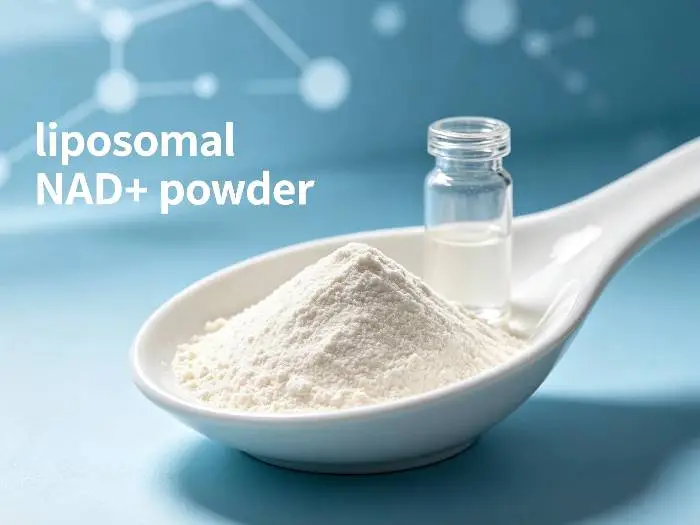
In Liposomal NAD+ powder, an innovative delivery technology, non-GMO sunflower lecithin phospholipid bilayers contain nicotinamide Adenine Dinucleotide molecules. Liquid liposomal solutions are freeze-dried or spray-dried into stable powders. The long-standing issue is that NAD+ molecules are large and charged, making oral absorption difficult. The phospholipid layer protects NAD+ from stomach acid and helps it connect with intestinal cell membranes. This allows the active molecule to enter the bloodstream easily.
Our EncapsWell™ platform ensures particles are 50-80nm in size and have a PDI < 0.3. This guarantees equal material absorption between batches. Water-soluble Liposomal NAD+ powder works well in beverages, pills, and blends. The NAD+ level remains at ≥98%, as validated by independent assays.
How NMN Functions as a NAD+ Precursor?
Nicotinamide Mononucleotide is a key NAD+-making component. NMN molecules are absorbed through the gut walls after eating, but specialists don't know how. Some studies demonstrate that particular transporters aid uptake, while others show that it is partially converted to NR before absorption. Once within cells, enzymes convert NMN to NAD+ via the rescue pathway.
Simple NMN may enter cells easier than NAD+ due to its lower molecular weight. This is good but reduces absorption and security. In moist regions, NMN's water absorption might impair product shelf life.
The NAD+ Metabolic Pathway and Cellular Impact
NAD+ is a coenzyme involved in over 500 enzyme pathways that regulate gene expression, DNA repair, and cell energy production. NAD+ helps mitochondria convert nutrients into cell energy currency ATP. NAD+ levels drop by 50% between 40 and 60, causing mitochondrial malfunction and oxidative stress.
More NAD+ activates sirtuins, which control metabolism and lifespan. This boosts glucose and lipid metabolism, stress resistance, and inflammation response. Formulators must choose an additive that elevates NAD+ levels meaningfully without sacrificing solubility or amount.
Key Differences Between Liposomal NAD+ Powder and NMN
How well a product works and whether it can be sold depend on how well you understand how these ingredients vary in important ways. These differences have a direct effect on what the label says, how the drug is dosed, and how it is positioned in the market.
Bioavailability and Absorption Mechanisms
Absorption distinguishes healthy supplements from poor ones. In rough stomach circumstances, normal NAD+ molecules break down the pyridine nucleotide structure before reaching the intestines for absorption. Research shows that less than 10% of unpreserved NAD+ passes past the stomach. Encapsulating liposomes changes this equation totally. Liposomes can directly contact enterocytes through the phospholipid bilayer's cell barrier appearance. Properly constructed liposomal systems can absorb 92% of cells in vitro. This is crucial for brands claiming absorption.
Even though NMN is more stable than unprotected NAD+, it needs to be replaced and may break down in the gut. Product quality and digestive system function determine absorption rates of 20–40%. Enzyme conversion creates variation that may make a product less effective for all clients.
Our liposomal technique releases NAD+ continuously over 12–16 hours, preventing rapid fluctuations. This pharmacokinetic profile allows a once-daily dosing and reduces metabolic load from digesting many precursor chemicals.
Clinical Effectiveness and Mitochondrial Function
Increasing the amount of NAD+ in cells has measurable effects on the bioenergetics and vitality of cells. Increasing NAD+ has been linked to better exercise capacity, better brain function, and signs of good aging in the lab. The question for formulators now is which chemical is most likely to provide these benefits?
Direct delivery of NAD+ through liposomal devices makes substrates available right away for enzymes that rely on NAD+. This is important, especially for uses that need to meet sudden energy needs or provide cognitive support, where the availability of NAD+ quickly affects how successful they are thought to be. According to customer reviews, liposomal formulations give people more noticeable benefits more quickly than precursor-based approaches.
NMN only works if the change process inside target cells works well. People whose metabolism isn't working well or whose genes change in ways that affect NAD+ production enzymes may not get as many benefits. Because of the need for conversion, higher doses are often needed to get the same increases in cellular NAD+, which affects the cost-per-serving.
Safety Profiles and Dosage Considerations
Formulation limits are set by regulatory acceptance and buyer safety. As a naturally occurring coenzyme, NAD+ doesn't pose many safety concerns at doses that are useful for supplements. In tests on humans, amounts of up to 1000 mg of NAD+ were given intravenously without any major side effects. Oral Liposomal NAD+ powder formulations usually contain between 50 mg and 300 mg per serving, which gives you a lot of safety while still getting the job done.
There is a lot of evidence that NMN is safe. For example, amounts of up to 1250 mg per day for 12 weeks were tested on humans and no major side effects were seen. Both ingredients are usually well tolerated, but each person's reaction is different. Documentation needs are the most important thing for business buyers. Our Liposomal NAD+ powder comes with full safety dossiers, Certificates of Analysis (COA), and Technical Data Sheets (TDS) that have already been accepted for filing to regulatory bodies in over 50 countries.
Hypoallergenic formulation is important for a wide range of customers. Our vegan-certified, gluten-free, and lactose-free liposomal powder gets rid of common allergen worries. This makes it easier to get into the European organic market and North American specialty stores like Whole Foods or GNC.
Product Format Versatility
How quickly you can take advantage of market opportunities depends on how flexible your manufacturing is. The format adaptability of Liposomal NAD+ powder is excellent. The water-dispersible powder can be added to functional drinks to make ready-to-drink life shots, which are becoming more popular in convenience stores. Putting supplements into hard or soft gelatin pills is a common way to do it, and tablet compression is still possible with the right fillers.
Liposomal technology works especially well in beverage uses. The powder spreads out evenly without settling, stays stable in liquid mixtures, and can handle changes in pH better than NAD+ that isn't covered. Beauty-from-within brands that are making collagen-NAD+ combination drinks like how clean the taste is and how nicotinamide-based compounds don't usually taste bitter.
Because NMN is hygroscopic, it usually comes in pill or tablet form. This makes it harder to use in beverages. The crystalline structure easily draws water, so it needs special packing and storage conditions that control humidity. These factors make foreign shipping more difficult.
Comparative Market Analysis and B2B Procurement Insights
For a business to be successful, performance requirements must be balanced with the facts of the supply chain. When purchasing managers look at these items, they need to think about more than just basic facts on how well they work.
Pricing Structures and Economies of Scale
The cost of raw materials affects how much things cost in stores and how much profit they make. As production capacity has grown, especially from Asian sources, the price of NMN has dropped by a large amount. The price of bulk products right now ranges from $150 to $400 per kilogram, depending on the purity grade and the size of the order. When you buy more than 100 kg, you can get volume prices that matter. This means that mid-sized brands can use NMN to test how the market responds.
Because of the complicated production methods involved, Liposomal NAD+ powder is expensive. Pharmaceutical-grade materials that meet the requirements for ≥98% pure will cost between $800 and $1500 per kilogram when bought in bulk. When you figure out the cost difference per effective amount, it becomes smaller: better bioavailability means that fewer NAD+ molecules per serve are needed to reach the same level of concentration in cells. It's possible that a 100mg liposomal dose could raise NAD+ levels just as much as 400mg of normal NMN. This would completely change the value equation.
Our MOQ policies are flexible enough to let both new brands test formulations at 50 kg minimums and established brands scale up to orders of many tons. Volume-tiered prices and 72-hour lead times make sure that supplies are always available without making it too expensive to keep goods on hand.
Supplier Reliability and Quality Verification
In an industry where fraud and adulteration are common, decisions about where to get ingredients come with a lot of risk. Reliable sellers show consistent quality by using clear testing procedures, keeping records of where products come from, and talking to customers ahead of time about supply conditions.
The first step in verification is to look over the Certificate of Analysis. Premium providers give batch-specific COAs that show the NAD+ level through HPLC analysis, the presence of heavy metals below USP limits, proof of microbiological safety, and tests for residual solvents. In addition to basic COAs, you should ask for stable studies that follow the rules set by the ICH. Data from accelerated aging shows how goods work when stored in real life.
Verification by a third party confirms the quality of the manufacturing. Our cGMP-certified plant follows ISO 22000, FSSC 22000, and HACCP rules, and is regularly audited to make sure it stays in line with standards for pharmaceutical-grade production. Certifications like HALAL, KOSHER, NOP organic, and non-GMO make it easier to get into new markets with a wide range of customers without having to change the way the product is made.
North American buyers benefit greatly from businesses based in the United States. Our R&D center and local warehouse in San Diego get rid of trans-Pacific shipping delays, lower freight costs, and make it easier for people in different time zones to talk to each other. Our PhD-led technical support team makes sure that formulation problems are fixed quickly, which speeds up your time to market.
Regulatory Compliance and International Logistics
The speed of market access depends on how well you can navigate global regulatory frameworks. In the US, NAD+ and NMN are considered food ingredients by the FDA and need to be given either GRAS (Generally Recognized as Safe) status or New Dietary Ingredient notices, based on their history of use in food. Our Liposomal NAD+ powder comes with proof that it can be used as a dietary supplement without breaking NDI rules.
The European markets are even more complicated. Some EU member states aren't sure how to evaluate NMN as a Novel Food, but NAD+ formulations that are properly documented may be able to use existing regulatory pathways more easily. We offer Novel Food dossiers that are already put together and regulatory advice that is specific to each country. This makes it easier for you to follow the rules and saves you money on legal fees.
Logistics of storage and delivery affect how much something costs all together. Unlike liquid liposomal versions that need to be handled in a cold chain, our powder format can be kept at room temperature for 24 to 36 months in light- and airtight cases. This feature gets rid of the cost of shipping refrigerated goods and lowers the amount of warehouse infrastructure that is needed. This is especially helpful for distributors who serve more than one area.
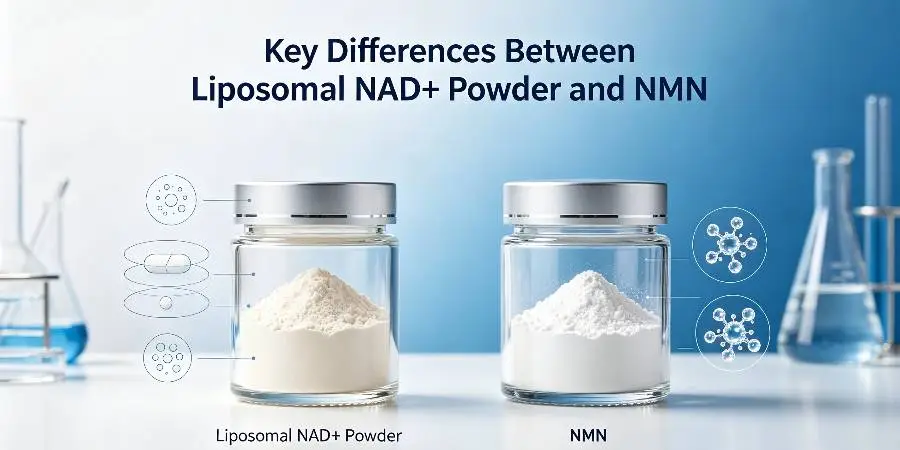
Choosing the Right Solution: Liposomal NAD+ Powder or NMN?
Strategically choosing ingredients makes sure that technical skills are in line with how the brand is positioned and what the target market wants. Frameworks for making decisions shouldn't just look at one factor, like price, but should look at many factors at once.
Application-Specific Suitability
Liposomal NAD+ powder has better absorption kinetics, which is helpful for anti-aging and longevity clinics that want quick, measurable results. When doctors give supplements to patients while they are being watched, the patients feel more energetic faster and have fewer pills to take than with high-dose precursor protocols. Being able to show absorption benefits helps premium price tactics in both direct-to-consumer and practitioner routes.
Liposomal technology helps makeup and nutricosmetic brands make their beauty-from-within goods stand out in the market. "Liposomal delivery" sounds good to people who know about this technology from vitamin C and glutathione pills. NAD+ combined with collagen peptides, hyaluronic acid, or astaxanthin in combination formulas makes full-spectrum cellular beauty treatments that sell for more money.
Mass-market supplement brands that sell in stores that care about costs may find that NMN's lower raw material costs help them hit their retail price goals. Established NMN brand recognition among biohacking groups gives consumers built-in knowledge, which means they don't need to learn about marketing.
Formulation Versatility and Innovation Potential
Product designers who are making next-generation transport systems like that Liposomal NAD+ powder works with a variety of new format innovations. The powder spreads out evenly in functional beverage matrices, which makes it possible to add it to ready-to-drink shots, sparkling longevity waters, and protein shakes. When you mix ingredients that work well together, like resveratrol, quercetin, or pterostilbene, you get products that work on more than one route for aging at the same time.
The clean taste and lack of sharpness are especially important to people who make drinks. When liposomal systems are properly engineered, flavor masking problems that come up with nicotinamide-based formulations are solved. This quality is necessary for supplements to be accepted by the general market, not just die-hard supplement fans who are ready to put up with bad tastes for what they think are the benefits.
Encapsulation versatility is important for brands that sell through a lot of different outlets. The liposomal powder base can be used to make expensive capsules for health food shops, stick packs for e-commerce subscription models, or bulk powders for direct-to-consumer brands that want to build community engagement by giving people a lot of different ways to use their products.
Partnership and Co-Development Opportunities
Finding ingredients is more than just buying them; it can also involve smart relationships that give you a competitive edge. Genuine co-development help from suppliers speeds up innovation while lowering technical risk.
EmerWell's method focuses on developing formulations together. Our PhD team in San Diego works directly with your R&D staff to find the best doses, improve stability in your unique matrix conditions, and quickly get through regulatory paths. We offer technical resources that are usually only available for much larger orders, whether you're introducing a new type of beverage, making a professional-grade clinical product, or increasing the amount of an existing formula.
White-label and custom preparation services help make the link between getting raw materials and making finished products. We provide complete solutions that include formula creation, stability testing, regulation paperwork, and production that can be scaled up or down from small batches to large numbers for business use. This unified method shortens the time it takes to create a product from idea to market release, giving companies that make supplements that move quickly a competitive edge.
Conclusion
Bioavailability science, business realities, and strategic brand positioning all need to be taken into account when choosing between Liposomal NAD+ powder and NMN. The absorption efficiency, formulation flexibility, and premium market placement of liposome encapsulation are unmatched. On the other hand, NMN gives well-known customer recognition and affordable entry price. The best choice relies on how sophisticated your target market is, how you want your product to stand out, and how much you are willing to spend on better delivery technology. Both of these ingredients have their place in a wide range of products. Successful brands will choose ingredients that are in line with their entire marketing strategy. This way, they can make sure that the technical performance fits what customers want and the price point they want to set.
FAQ
What dosage ranges work best for commercial formulations?
Liposomal NAD+ powder formulations usually give 50–300 mg per dose, with 100–150 mg being the best balance between effectiveness, cost, and what customers want. The usual dose of NMN products is between 125 mg and 500 mg. Because liposomal delivery is more bioavailable, smaller amounts of NAD+ can reach the same levels of concentration in cells. This means that formulas at the lower end of this range can be more cost-effective while still being competitive.
How do I verify supplier quality and ingredient purity?
Ask for Certificates of Analysis that are unique to each batch and show the NAD+ level using approved HPLC methods, as well as heavy metal screening (for example, lead, arsenic, cadmium, and mercury), microbiological testing, and residual solvent analysis. Suppliers with a good reputation follow ICH guidelines when giving out stability data and keep third-party certifications like cGMP, ISO 22000, and NSF verification. Visit factories if you can, and make sure that tracking systems keep track of ingredients from where they are sourced as raw materials to when the end product is released.
Are there safety concerns when switching between NAD+ precursors?
At amounts that are useful as supplements, both Liposomal NAD+ powder and NMN have great safety records. There isn't much risk in switching between ingredients, but users may notice differences in when the effects start or how they feel because different ingredients are absorbed in different ways. Keep the labels clear so that customers don't get confused about the different types of ingredients, and give them educational materials that explain the technical benefits of the approach you've chosen.
Partner With a Trusted Liposomal NAD+ Powder Manufacturer
Through our unique EncapsWell™ platform, EmerWell turns new ideas into formulations that are ready for the market. We are a company based in San Diego, California, that uses cutting-edge liposomal technology and full OEM/ODM services to help brands quickly release unique goods. Our R&D lab and local warehouse in the U.S. allow us to turn orders around faster than foreign sources, and our PhD-led technical team offers formulation knowledge that you won't find from most ingredient providers. We keep the flexibility and quality consistency your brand needs, whether you need small samples for initial testing or large production runs of several tons. Get in touch with info@emerwell-bio.com to talk about custom formulations, ask for technical specifications, or look into partnership opportunities with a dependable Liposomal NAD+ powder provider that wants you to succeed.
References
1. Cantó, C., Menzies, K. J., & Auwerx, J. (2015). NAD+ Metabolism and the Control of Energy Homeostasis: A Balancing Act between Mitochondria and the Nucleus. Cell Metabolism, 22(1), 31-53.
2. Fang, E. F., Lautrup, S., Hou, Y., Demarest, T. G., Croteau, D. L., Mattson, M. P., & Bohr, V. A. (2017). NAD+ in Aging: Molecular Mechanisms and Translational Implications. Trends in Molecular Medicine, 23(10), 899-916.
3. Mills, K. F., Yoshida, S., Stein, L. R., Grozio, A., Kubota, S., Sasaki, Y., Redpath, P., Migaud, M. E., Apte, R. S., Uchida, K., Yoshino, J., & Imai, S. (2016). Long-Term Administration of Nicotinamide Mononucleotide Mitigates Age-Associated Physiological Decline in Mice. Cell Metabolism, 24(6), 795-806.
4. Shade, C. W. (2016). Liposomes as Advanced Delivery Systems for Nutraceuticals. Integrative Medicine: A Clinician's Journal, 15(1), 33-36.
5. Yoshino, J., Baur, J. A., & Imai, S. (2018). NAD+ Intermediates: The Biology and Therapeutic Potential of NMN and NR. Cell Metabolism, 27(3), 513-528.
6. Akbari, M., Krokan, H. E., & Sharma, D. C. (2019). Liposomal Delivery Systems for Nutraceuticals: Design Considerations and Recent Advances. Pharmaceutical Development and Technology, 24(6), 685-699.
Online Message
YOU MAY LIKE
High quality furniture manufacturer
_1776234266736.webp)