May 18, 2026
Liposomal NAD+: Effectiveness, Absorption & What to Expect
Liposomal NAD+ powder represents a significant advancement in cellular health supplementation, addressing the persistent challenge of oral bioavailability that long plagued traditional NAD+ products. Unlike conventional supplements that degrade rapidly in the digestive system, this specialized formulation uses phospholipid encapsulation technology to shield NAD+ molecules from gastric acids and enzymatic breakdown. This protection enables significantly enhanced absorption—up to 5–10 times greater than standard forms—making it an increasingly sought-after ingredient for brands developing next-generation longevity and metabolic health products. The transformation from lab innovation to commercial reality now offers B2B clients a reliable, scalable solution for formulations demanding proven bioavailability.
Understanding Liposomal NAD+ Powder – What Sets It Apart?
The Core Technology Behind Enhanced Delivery
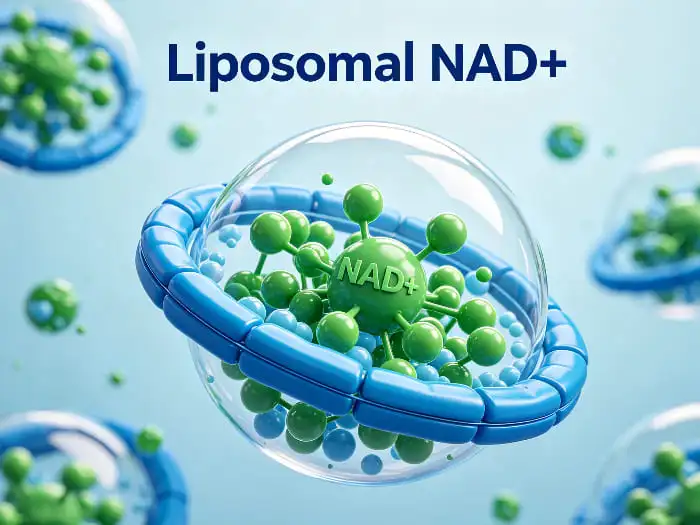
The most important thing that sets liposomal technology apart is its biomimetic design. Liposomal NAD+ powder uses non-GMO phospholipids, which are usually derived from sunflower or soy lecithin, to make liposomes, which are tiny circular structures. These very small bubbles (50–80nm across) have a two-layer membrane that is chemically similar to the membranes of human cells. Because their structures are compatible, the liposomes can join directly with intestine epithelial cells. This makes intracellular delivery easier than passive diffusion or active transport mechanisms, which don't always work with regular supplements.
Studies show that when stomach acid (pH 1.5–3.5) comes in contact with raw NAD+, it breaks down at rates higher than 80% in just a few minutes. The liposomal shield changes this result essentially by building a barrier that protects and stays stable in the stomach environment. When the phospholipid vesicles get to the small intestine, they interact with bile salts and the lining of the gut. They then release their payload in a controlled way that improves circulation throughout the body.
Comparative Bioavailability Advantage
When researchers compare different delivery methods, they find big differences in how well they absorb substances. Oral bioavailability of standard solid NAD+ is less than 5%, which means that most of it never gets to the cells it is supposed to reach. With liposome packaging technology, this number goes up by a huge amount—clinical models show that absorption rates go up to 40–50%. This means that formulators can get real benefits: smaller doses get the same or better results, which saves money and lowers the risk of side effects from using too much.
Quality liposomal powders can dissolve in water, which makes them even more useful. Oil-based liquid liposomes separate or need to be shook hard, but properly made powder forms quickly re-formulate in water-based solutions. This makes them perfect for functional drinks, ready-to-mix packets, and encapsulation into different delivery formats.
Quality Markers That Matter for Procurement
When judging sources, there are a number of technical factors that separate high-quality goods from less-than-stellar ones. HPLC testing should show that the purity of the NAD+ level is at least 98%. The regularity of absorption is directly related to how uniform the particle sizes are. The specs should show that 90% of the particles are within the 50-100nm range. For clinical-grade performance, encapsulation efficiency (the amount of NAD+ that is properly trapped within liposomes compared to free-floating material) should be at least 85%.
Third-party testing paperwork is an important way to make sure something is correct. Comprehensive Certificates of Analysis should show that the amount of heavy metals (lead, arsenic, cadmium, and mercury) is below the safety levels set by USP guidelines. Microbiological tests should also show that there are no pathogens. Brands that sell in more than one market need their suppliers to keep up with certifications like ISO22000, FSSC22000, cGMP, HACCP, and approvals special to the area, like HALAL or KOSHER, based on the customers they are trying to reach.
Effectiveness and Benefits of Liposomal NAD+ Powder
Cellular Repair and Longevity Applications
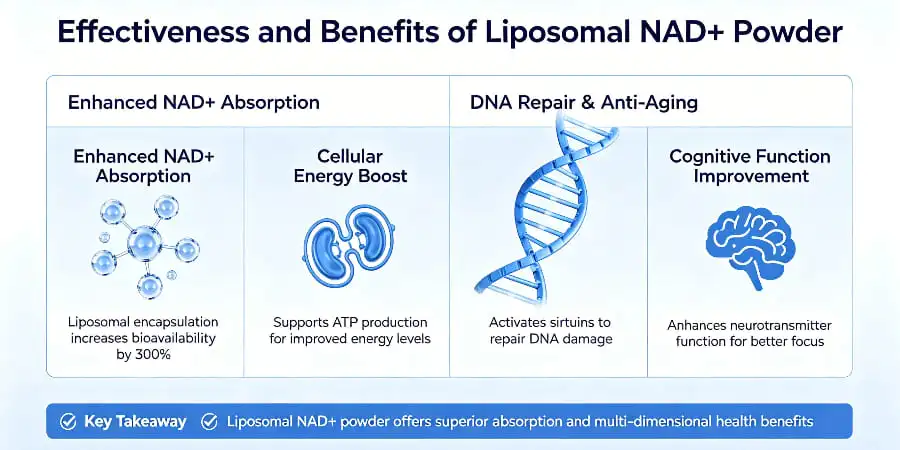
NAD+ is an important coenzyme that is used in more than 500 chemical processes in the body. It is especially important for mitochondrial activity and DNA repair. The loss of NAD+ with age is linked to many degenerative processes, which makes supplementation an appealing option for goods that aim to extend life. Liposomal NAD+ powder transport makes sure that cells get enough to support sirtuins, which are proteins that play a role in cellular aging, and PARP enzymes, which fix DNA damage.
Formulations that show measured results are helpful for product makers who are going after the longevity market. With liposomal technology's better absorption profile, brands can market their goods around supporting energy metabolism, rejuvenating cells, and healthy aging. This answers people's doubts about supplements' effectiveness by providing formulas where absorption data backs up marketing claims.
Cognitive and Metabolic Function Support
NAD+ is an important part of keeping neurons healthy and keeping the metabolism in check. Neuroplasticity, or the brain's ability to make new links, and neurotransmitter production depend on having enough NAD+ in brain tissue. When mixed with other ingredients like pterostilbene or alpha-lipoic acid, liposomal NAD+ powder can be used as a key ingredient in cognitive health goods.
There are many metabolic uses, such as controlling glucose levels, metabolizing fats, and creating mitochondria. Wellness brands that are making goods to help with metabolic health, weight loss, or physical recovery find liposomal NAD+ powder to be very useful. The better absorption makes sure that metabolic pathways have enough substrates without needing doses that are too high to be useful or that are hard for consumers to follow.
Safety Profile and Formulation Dosing
The safety data for NAD+ supplements shows that they are not harmful in acceptable amounts. The usual dosage runs from 250 mg to 1000 mg per meal, and the best dose depends on the form of delivery and the intended use. Because they are more bioavailable, liposomal versions usually get the results that are wanted at the lower end of this range.
Potential side effects are kept to a minimum when goods are used according to the dosage instructions. Some people say that higher amounts cause slight stomach pain or flushing, but liposomal delivery often makes these side effects less common compared to non-encapsulated forms. For goods that are meant for people who are new to taking NAD+ supplements, the makers should include clear instructions on how to use them and think about using staged dosing procedures. To meet the needs of markets that are becoming more strict in different places, regulatory documents should include safety studies and tracking statistics for adverse events.
Comparing Market Options: Liposomal NAD+ Powder vs. Other NAD+ Forms
Delivery Method Performance Analysis
There are several delivery formats for NAD+ supplements, and each has unique characteristics that influence formulation decisions. Standard capsules containing crystalline NAD+ are easy to manufacture and familiar to consumers, but they often have limited absorption efficiency. Sublingual tablets are designed to bypass part of the digestive process through absorption in the mouth. However, improvements in bioavailability may still be limited due to saliva dilution and partial swallowing before complete absorption occurs.
Injectable NAD+ has almost full bioavailability, but it can't be used in market goods because of safety issues, complicated regulations, and problems with administration. This method is only useful in clinical settings. Nicotinamide riboside (NR) or nicotinamide mononucleotide (NMN) are NAD+ substrates that can be used in other ways to raise NAD+. However, the efficiency of these conversions changes a lot between people due to genetic and metabolic factors.
Here are some of the main benefits that liposomal NAD+ powder mixtures bring to product development:
- Versatile Format Integration: Water-soluble powder can be easily mixed into drinks, stick packs, pills, hard capsules, soft capsules, and liquid-ready formulas without the need for special tools or complicated methods.
- Stability Without Refrigeration: Liposomal powders that are made correctly keep their effectiveness above 90% for 24 months at room temperature, so they don't have to deal with the cold-chain issues that are a problem for liquid liposomal goods.
- Clean Label Compatibility: Formulations that are vegan, non-GMO, and allergen-free are in line with what consumers want and what regulations require in all foreign markets.
- Scalable Manufacturing Economics: Powder forms make big production, storage, and shipping more efficient than liquid options, which helps brands' profit margins.
These practical factors have a direct effect on plans for going to market and the speed of operations. This makes format selection an important decision point during the product development stages.
Sourcing Transparency Considerations
Quality control starts with choosing the right raw materials. Reliable sellers give full traceability paperwork that shows where the phospholipids come from (non-GMO certifications), how the NAD+ is made, and the qualifications of the production plant. Synthetically making NAD+ through controlled fermentation processes is more consistent than extraction methods, but both can produce pure enough NAD+ if done right.
Organic approvals make things more complicated and cost more, but they don't always make liposomal NAD+ powder goods safer or more bioavailable. Functional performance measures, such as particle size distribution, packaging efficiency, and stability data, are more important to most B2B buyers than organic status. For brands that sell in more than one market, regulatory compliance paperwork that shows they follow FDA, EFSA, and ASEAN rules is more important.
Procurement Insights: How to Source Quality Liposomal NAD+ Powder
Supplier Assessment Framework
To find trustworthy partners, you need to evaluate them systematically across a number of different areas. As part of a technical capability review, the R&D infrastructure, analytical testing skills, and formulation knowledge should all be looked at. Suppliers with in-house research teams run by PhDs show they are committed to new ideas and can help with technical issues during the creation of new products.
Manufacturing flexibility is what sets established providers apart from small businesses that can't handle much. Liposomal NAD+ powder purchasing teams should make sure that production facilities can handle orders ranging from small ones (usually 50–100 kg for testing the market) to large ones (multi-ton monthly capacity). Lead time dependability is important—suppliers who promise a consistent 72-hour turnaround for standard specs make it possible to handle inventory quickly and respond to market starts.
Quality control methods are very important for lowering risks. Facilities that follow cGMP guidelines and have regular checks by a third party show that they are working with discipline. To make sure compliance claims are true, ask for recent audit results from certification groups such as NSF, UL, or SGS. Data that shows tight specs across multiple production runs from batch to batch shows that the manufacturing process is stable.
Certification Priorities for Market Access
Regulatory standards that suppliers must meet change from market to market. In order to be sold in the United States, dietary supplements must follow FDA rules, which include following good production practices (cGMP) and having the right labels. Novel Food permission is needed for some recipes on European markets, along with EU organic certifications if the product claims to be organic. For cultural reasons, Asian markets often need Halal or KOSHER approvals.
Full certification packages make it easier to get into new markets and lower legal risk. Suppliers with ISO9001, ISO22000, FSSC22000, and HACCP standards have strong quality systems that can be used in any industry. Product-specific certificates, such as registration with the Vegan Society or proof by the Non-GMO Project, help with marketing positioning and meet the needs of consumers in certain groups.
Strategic Procurement Considerations
Pricing models are very different depending on the number of orders, the level of customization needed, and the delivery requirements. Discounts for buying in bulk usually start at 500 kg, 1 ton, and 5 tons. For bigger orders, better price levels are unlocked. When comparing seller offers, procurement teams should think about the total cost of ownership, which includes shipping, storage, and the waste that could happen from old stock.
Being able to make custom formulations lets products stand out. Brands can make their own mixes by mixing liposomal NAD+ powder with ingredients that work well together, such as resveratrol, quercetin, or trimethylglycine, through OEM/ODM partnerships. Suppliers who offer formulation development, stability testing, and help with regulatory paperwork shorten the time it takes to get a product on the market while lowering the need for internal resources. White-label programs offer complete solutions for companies that value speed over customization, but the profit margins are usually lower than with fully customized goods.
Practical Guide to Using Liposomal NAD+ Powder in Your Products
Dosage Optimization and Safety Guidelines
Dosing based on facts is the first step to making a recipe work. Clinical study shows that taking 250 to 500 mg of NAD+ every day is enough to raise NAD+ levels for general health purposes. Formulations that focus on extending life may include 500 to 1000 mg. Liposomal NAD+ powder delivery is more effective than traditional forms because it lets brands get the results they want with smaller amounts. This makes the products more cost-effective and easier for customers to follow.
When choosing a serving size, you should think about how effective it is, how easy it is to make, and how the customer feels. Capsule versions usually give 250–500 mg per 2–4 capsules, which lets you choose how much to take. For beverage uses, 200 to 300 mg per dose might be okay, but keep in mind that taste and liquid volume limits affect the upper limits. Stick packs that are easy to use as a single serving are good for 300–500 mg amounts that dissolve quickly in water or juice.
Storage and Handling Protocols
Environmental factors need to be taken into account in order to keep products potent throughout the supply chain. When made correctly, liposomal NAD+ powder is very stable at room temperature, but storing conditions are still important. Moisture barriers should be used in packaging, like aluminum foil or layered laminate bags, to keep liposomes from getting wet and becoming unstable. Oxygen contact speeds up the breakdown of NAD+, so nitrogen flushing or oxygen filters are useful for making things last longer.
When handling and packing items, factories should keep the temperature and humidity under control, with the humidity below 60% and the temperature between 15°C and 25°C. Finished goods can handle a wider range of conditions, but customers should be told to store them away from direct sunlight and heat sources for best results. To keep their effectiveness and stop microbes from growing, reconstituted liquid goods need to be kept in the fridge and used within 24 to 48 hours.
Synergistic Formulation Strategies
When you mix liposomal NAD+ powder with ingredients that work well together, you get high-quality goods that work in more than one way. Resveratrol and pterostilbene work together to make you live longer by activating sirtuins that use NAD+ as a cofactor. B-vitamin complexes help the body make NAD+, which could make the effects of supplements last longer. Along with NAD+'s metabolic actions, coenzyme Q10 and PQQ improve the performance of mitochondria.
When formulators are making a product, they should think about how the ingredients will work together. Some chemicals are sensitive to pH or don't mix well with others, which can affect their longevity. For multi-ingredient goods aimed at high-end health markets, getting help from suppliers who know how to formulate the right ingredients can be very helpful.
Using scientific credibility in marketing tactics helps goods stand out in crowded categories. Educating customers about liposomal technology, the benefits of absorption, and how cells work builds trust and supports higher prices. Claims of effectiveness are backed up by references to clinical studies, absorption comparison charts, and certificates from third-party testing. Transparency about where the supplements come from, how they are made, and quality tests is important to customers who are becoming more skeptical of supplement claims that can't be backed up.
Conclusion
Liposomal NAD+ powder is an example of how science progress and business sense can come together. It solves long-standing bioavailability problems that made NAD+ treatment hard to do. The technology improves absorption in a way that can be measured and gives formulators more options for making different types of products. Finding sources with technical know-how, quality systems, and scalable production capacity is key to successful procurement. Product makers can get a competitive edge by using formulations that have been tested and shown to work, backed up by a lot of legal and testing information. As people learn more about cellular health, companies that offer highly accessible NAD+ products that are backed by science can take advantage of growing markets in the areas of metabolic wellness and living longer.
FAQ
How does liposomal NAD+ compare to standard NAD+ supplements?
It is 5–10 times more bioavailable for liposomal preparations than for regular NAD+ powders or tablets. The phospholipid coating keeps molecules from breaking down in the digestive system, which means that much higher percentages can reach specific organs and the systemic circulation. Cell uptake tests show that liposomal technology can reach 40–50% solubility, while standard forms usually only absorb less than 5%.
What certifications should I prioritize when selecting a supplier?
Pay attention to quality standards for manufacturing, such as cGMP, ISO22000, FSSC22000, and HACCP, which show that your quality systems are strong. Product-specific certifications rely on the markets you want to reach. For example, FDA approval is needed for sales in the US, Novel Food authorization is needed for sales in Europe, and culture certifications like Halal or Kosher are needed for certain groups of people. Verification by a third party of purity, strength, and toxins is an important part of quality assurance.
Are there safety concerns with liposomal NAD+ supplementation?
At the suggested doses (250–1000 mg daily), NAD+ supplements are still safe, with few side effects being recorded. Compared to types that aren't encapsulated, liposomal transport may cause less stomach pain. Formulators should give clear instructions on how much to use and take into account that people's responses can vary.
Partner with EmerWell for Superior Liposomal NAD+ Solutions
EmerWell combines cutting edge liposomal technology with top-notch manufacturing to help your brand do well in the crowded market for supplements that promote life. This is our special EncapsWell™ base that gives you liposomal NAD+ powder that is 98% pure and absorbs better than other options. At our cGMP-certified facilities, we offer flexible OEM/ODM services to help nutraceutical brands, functional beverage makers, and contract manufacturers with everything from trial runs to full commercial production. Our PhD-led research and development team in San Diego can help you with bulk liposomal NAD+ powder supplier agreements or custom formulation development. They offer regional technical support, fast sampling, and regulatory paperwork to make it easy to get into the market. Email our team at info@emerwell-bio.com to talk about how we can use bioavailable technology to improve the way your products are made.
References
Poddar, S. K., Sifat, A. E., Haque, S., Nahid, N. A., Chowdhury, S., & Mehedi, I. (2019). Nicotinamide Mononucleotide: Exploration of Diverse Therapeutic Applications of a Potential Molecule. Biomolecules, 9(1), 34.
Shade, C. (2016). Liposomes as Advanced Delivery Systems for Nutraceuticals. Integrative Medicine: A Clinician's Journal, 15(1), 33-36.
Akbarzadeh, A., Rezaei-Sadabady, R., Davaran, S., Joo, S. W., Zarghami, N., Hanifehpour, Y., Samiei, M., Kouhi, M., & Nejati-Koshki, K. (2013). Liposome: Classification, Preparation, and Applications. Nanoscale Research Letters, 8(1), 102.
Rajman, L., Chwalek, K., & Sinclair, D. A. (2018). Therapeutic Potential of NAD-Boosting Molecules: The In Vivo Evidence. Cell Metabolism, 27(3), 529-547.
Bogan, K. L., & Brenner, C. (2008). Nicotinic Acid, Nicotinamide, and Nicotinamide Riboside: A Molecular Evaluation of NAD+ Precursor Vitamins in Human Nutrition. Annual Review of Nutrition, 28, 115-130.
Yoshino, J., Baur, J. A., & Imai, S. I. (2018). NAD+ Intermediates: The Biology and Therapeutic Potential of NMN and NR. Cell Metabolism, 27(3), 513-528.
Online Message
YOU MAY LIKE
High quality furniture manufacturer