Jun 4, 2026
Liposomal NAD+: Benefits, Downsides, And How To Choose
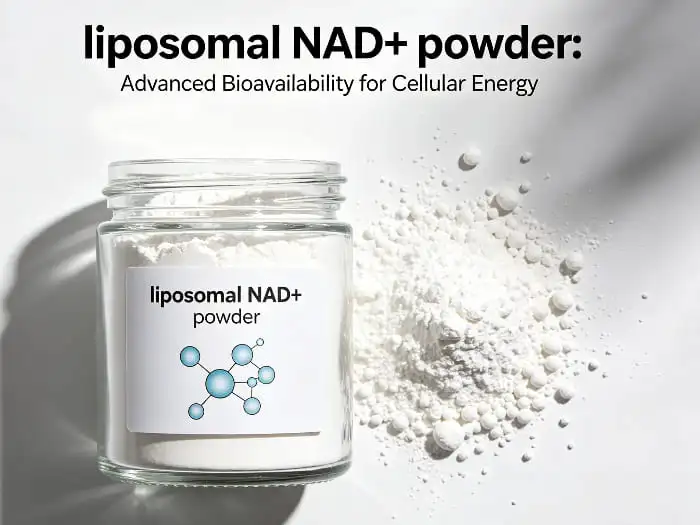
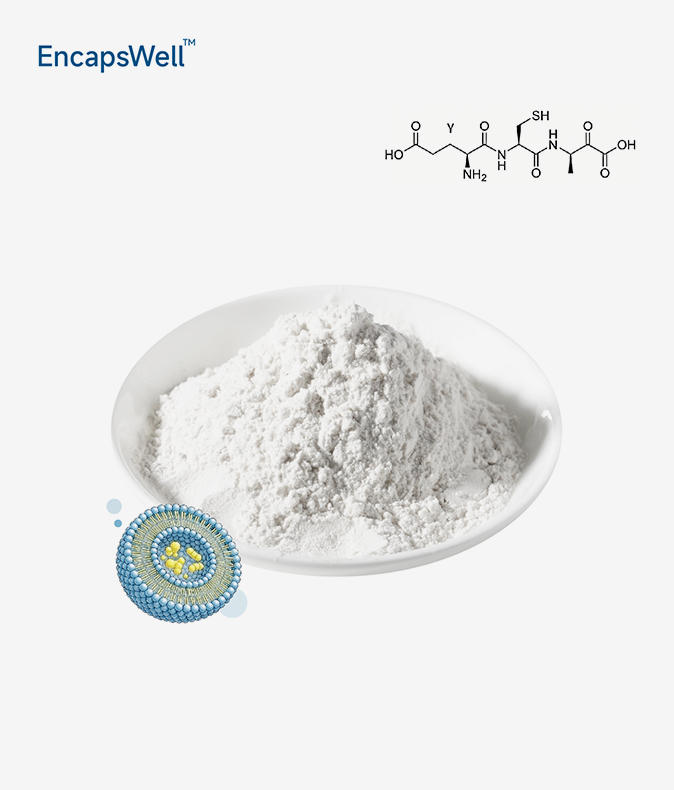
Through cutting-edge phospholipid capsule technology, liposomal NAD+ powder is revolutionizing cellular health nutrition. This transport method solves the problem of poor bioavailability by encasing NAD+ molecules in protective lipid vesicles. It does this 5–10 times better than normal versions, making the drug more bioavailable. This covering keeps the delicate coenzyme from being broken down by digestion. This lets NAD+ go straight into cells, where it does its important work in making energy and fixing cells. Product makers who want to make high-performance anti-aging and health formulas are turning more and more to this technology because it gives measured results with lower dosing needs.
Understanding Liposomal NAD+ Powder
The Science Behind Advanced Delivery Systems
Nicotinamide adenine dinucleotide (NAD+) is an important coenzyme that is found in all cells. It helps with hundreds of biological processes, from making ATP to keeping DNA healthy. Normal NAD+ nutrients have a hard time being absorbed, even though they are very important for biology. Acids and enzymes in the stomach break down molecules that aren't protected before they reach their target tissues. This means that very high amounts are needed that still don't work well.
This limitation is turned into a chance by liposomal NAD+ powder. The technology works like natural cell membranes by enclosing NAD+ in phospholipid bilayers, which usually make particles 50 to 80 nanometers across. These tiny carriers get through the digestive system without getting broken down. They then join with cell membranes either directly or through receptor-mediated endocytosis. This process makes sure that the active ingredient gets to the parts inside cells where NAD+ can affect metabolism.
Why Formulators Prioritize Liposomal Delivery?
Teams working on new products are always under pressure to make them stand out in markets that are already full. Liposomal NAD+ powder solves several manufacturing problems at the same time. Because it dissolves in water, it can be easily added to a wide range of products, from ready-to-drink health drinks to dry-mix packs and traditional capsuled vitamins. This flexibility goes beyond just being convenient; it also lets brands make mixes that work better together, using actives that work well with each other, such as resveratrol, quercetin, or NMN precursors.
Quality production methods keep particles stable and uniform. Advanced liposomal systems can stay stable for 24 months at room temperature and keep more than 90% of their effectiveness. This gets rid of the need for cold chains, which make delivery more difficult. Procurement managers like these features because they lower the total cost of ownership and back up premium placement claims with bioavailability data that can be measured.
Market Positioning and Consumer Demand
Longevity and good aging continue to grow quickly, thanks to customers who are learning more about how cells work. As more people learn about the link between NAD+ and healthspan, search interest in NAD+ enhancement has grown by leaps and bounds. Generic vitamins that need huge amounts to make small changes in blood concentration are losing market share to brands that can clearly show better absorption through liposomal delivery.
OEM and ODM partners see this recipe as a way to set their products apart from others. Built-in effectiveness stories make private label opportunities easier to sell and explain higher prices. The clean-label profile—vegan, non-GMO, and allergen-free—meets the modern standards for transparency among a wide range of people, from biohackers to regular wellness customers.
Evaluating the Benefits and Downsides
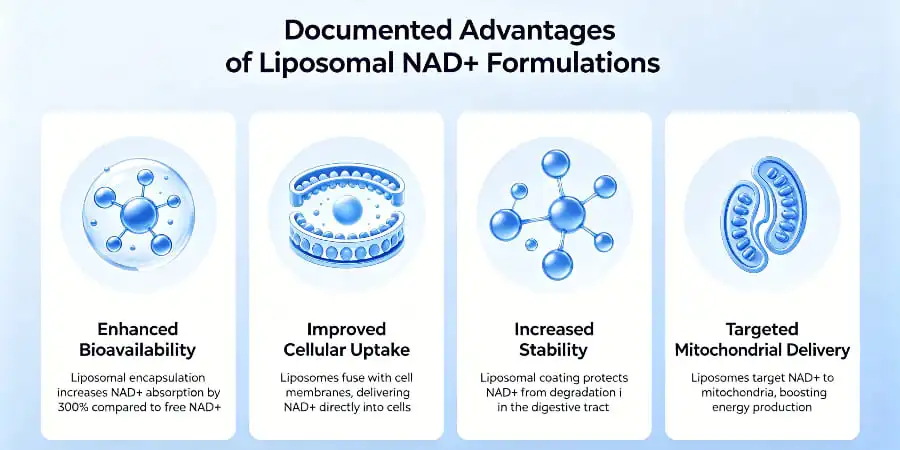
Documented Advantages of Liposomal NAD+ Formulations
According to clinical study, liposomal NAD+ is an important part of mitochondrial function, sirtuin activation, and poly(ADP-ribose) polymerase activity. These are all molecular processes that are directly connected to cellular energy, stress resistance, and genomic stability. Liposomal administration makes these effects even greater by improving pharmacokinetics:
Superior Bioavailability: Studies that compare liposomal forms to normal capsules show that they achieve much higher peak plasma concentrations (Cmax) and area-under-curve (AUC) values. This means that therapeutic benefits can be seen at 250–500 mg serving sizes instead of the multigram amounts needed by traditional forms.
Reduced Gastrointestinal Discomfort: NAD+ and its predecessors that are not protected often cause stomach problems at the right amounts. Lipid encapsulation keeps the drug from coming into direct touch with the mucosa, which reduces common side effects like nausea and pain that make people less likely to follow through.
Stable Formulation Architecture: Good liposomal NAD+ powder systems don't oxidize or clump particles together because they use the right phospholipids and follow good manufacturing practices. This stability makes sure that the product works the same way throughout its entire life, from production to the date it goes bad.
Flexible Application Potential: Improving NAD+ may help with more than just anti-aging. New research shows it may also improve brain health, workout recovery, and metabolic health. With scientifically sound claims, the powder format lets brands put their goods in a number of different wellness areas.
Limitations and Practical Considerations
An honest evaluation requires recognizing the limits that are already in place. Liposomal technology requires complex production methods that raise the cost of raw materials compared to basic ingredients. Brands have to weigh this against their ability to charge more at stores because their products work better. It's important to know where you stand in the market because premium groups can easily handle price differences while value-focused outlets might not.
Different sellers offer different levels of quality. Not all "liposomal" goods really encapsulate nanoparticles; some are just mixes of phospholipids that don't have any protective structure. For verification, complex scientific methods are needed, such as Dynamic Light Scattering (DLS) to find out how big the particles are and transmission electron microscopy (TEM) to prove the structure. For procurement teams to be satisfied, they need to see full evidence that includes Polydispersity Index (PDI) numbers below 0.3 and validation of encapsulation efficiency by a third party.
Another thing to think about is regulatory steering. In major countries, NAD+ is a well-known dietary ingredient, but brands need to make sure that all quality paperwork meets local standards. This includes certificates of analysis (COA), tests for heavy metals below the limits set by Prop 65, and making sure the food is safe for microbes.
Comparative Analysis: Liposomal NAD+ vs Alternative Precursors
There are several ingredient methods in the NAD+ optimization group. Nicotinamide riboside (NR) and nicotinamide mononucleotide (NMN) are building blocks that need to be changed by enzymes to become active NAD+. These intermediates avoid some problems with breakdown, but they still have problems with absorption that can be fixed by liposomal transport.
Directly administering NAD+ through liposomal technology has clear benefits. Bypassing the multi-step conversion route, it gives cells the effective coenzyme right away, ready to be used. This directness is especially helpful for recipes that are meant to help with short-term issues like brain performance or exercise recovery, where quick bioavailability gives the product a competitive edge.
Product designers often use more than one method, like matching liposomal NAD+ powder with precursors or activators that work well together to support the whole process. When these things are put together, they make strong value propositions that can command premium placement and give formulators intellectual property possibilities through new ratios and delivery combos.
How to Choose the Right Liposomal NAD+ Powder Supplier?
Defining Your Formulation Requirements
To choose a strategic source, you must first be clear about what you want to use it for. Formulators of drinks need ingredients that are very easy to mix with water and have normal organoleptic profiles that won't change the taste. Developers of encapsulated products put flowability for automatic equipment and compatibility with different capsule shell materials at the top of their list of priorities. By knowing these technical standards, you can cut down the list of possible suppliers to those who have the right knowledge and quality processes.
Forecasts of volume have a big effect on supplier fit. Partners who offer open minimum order amounts (MOQ) that don't put a strain on working capital during market testing phases are good for new brands. Well-known businesses that want to use tried-and-true formulas on a larger scale need a reliable way to handle orders of several tons with steady wait times. Supply chain resilience, which includes finding different sources for raw materials and keeping track of supplies, is necessary to keep production plans on track.
Validating Quality and Compliance Standards
Portfolios of certifications show how mature a business is. Important qualifications include cGMP registration, which shows that the company follows current good production practices, ISO 22000 or FSSC 22000 for managing food safety, and appropriate religious or dietary certifications, such as Halal, Kosher, or Vegan, that match the needs of the target market. These licenses need to be checked by third parties who check that the practices being used are real and not just claims.
Analytical skills set advanced suppliers apart from commodity traders. Ask for proof of any in-house or contracted testing that was done to characterize particle size, find out how well the particles are encapsulated, check the NAD+ content (≥98% purity standard), do stability studies according to ICH guidelines, and check for heavy metals, microbiology, and pesticide residues. When suppliers are sure of their products' quality, they are happy to give batch-specific papers that show compliance.
During all stages of product creation, the level of technical help is important. Reformulation delays that cost a lot of money can be avoided by having access to formulation scientists who know how liposomal systems work with other chemicals. Expertise in regulatory affairs speeds up entry into the market by offering region-specific paperwork packages that include letters about the status of ingredients and safety dossiers needed for novel food notifications.
Evaluating Business Partnership Potential
In addition to professional skills, you should also look at cultural fit and how well they can communicate. Product creation is a fluid process that requires clear sharing of information and the ability to solve problems in a variety of ways. Check to see how quickly possible partners answer your questions, how detailed their answers are, and how willing they are to make acceptable changes.
When co-developing private formulas, intellectual property issues need to be taken into account. Make it clear who owns unique mixes, analytical methods, or stable data that were created while working together. Reliable providers keep private information safe and offer ways to get exclusive formulas that help you stand out in the market.
Logistics skills have a big impact on how efficiently operations run. When compared to direct shipping overseas, warehousing and delivery in the U.S., like EmerWell's operations in San Diego, cuts down on wait times and makes just-in-time inventory management easier. Having local expert help in your time zone speeds up problem-solving and keeps production moving forward.
Market Comparison: Top Liposomal NAD+ Powder Brands and Suppliers
Evaluating Supplier Differentiation Factors
There are both local and foreign suppliers of liposomal NAD+ powder, and the level of technology used by each varies. To tell the difference between real innovation and marketing claims, you need to look at certain success measures. Dynamic Light Scattering with PDI values can be used to measure particle size consistency, which shows how precisely the product was made. Suppliers who offer thorough scientific data, such as particle size distribution graphs and TEM images, show openness that commodity traders usually avoid.
Differentiation through proprietary packaging methods is important. Some suppliers use multi-vesicular systems that offer prolonged release, while others make single-layer structures work better for instant bioavailability. Knowing these changes in architecture helps you match the skills of your supplier to the performance goals of your formulation. The EncapsWellTM platform is an example of this method because it uses particle engineering created by a PhD to get 92% of cells to take them up in proven models.
Scale of production and freedom are what set strategic partners apart from transactional providers. With turnaround times of less than 72 hours, the ability to handle orders ranging from 50 kg trial runs to 2 tons of commercial production, brands can grow without having to switch partners. This stability makes sure that the product stays the same while lowering the costs of qualifying new sources.
Cost-Quality Optimization Strategies
There are big differences in how prices are set across the supply base because of the different quality methods, licenses, and service levels. When quality consistency, expert help, and supply reliability are taken into account, the lowest unit cost is rarely the best overall deal. A full review compares price to the level of encapsulation efficiency, data robustness, stability, and paperwork accuracy needed for regulatory applications to go smoothly.
Pricing tiers based on volume reward partners for their loyalty while still allowing for changes in demand. Progressive discounts usually start at commitment levels every three months. This is done to balance how efficiently material is used with cash flow concerns. For high-volume relationships, some sellers offer consignment deals or vendor-managed inventory. This lowers the load on working capital while still making sure materials are available.
When comparing, you should pay close attention to hidden costs. Landed costs are affected by freight terms, minimum batch charges, special testing fees, and rush order prices in a big way. Suppliers with U.S. warehouses get rid of the risks of foreign freight while speeding up delivery. Different sample supply policies also exist. Progressive providers offer sufficient amounts for formula development without charging too much, which limits new ideas.
Assessing Supplier Reputation and Track Record
It's not just about technology specs; operational efficiency is also part of due investigation. Look into the past of the supplier, paying special attention to how well they've served your business. Nutraceutical names profit from suppliers who know the rules and quality standards for dietary supplements. People who make functional drinks need partners who know how to deal with problems that are unique to drinks, like keeping the pH stable and making the flavors taste better.
Referrals from customers are very helpful. Ask present clients with similar applications and business sizes for their contact information. Ask about the accuracy of orders, the dependability of deadlines, the speed of technical support, and the methods used to resolve problems. Peer feedback that is honest can show practical facts that sales pitches might gloss over.
Participation in an industry shows dedication to its growth. Suppliers who are involved in trade groups, give talks at scientific conferences, or share research show that they are thought leaders in ways that go beyond just doing business. These events also help you make connections and learn about new rules that could affect your business early on.
Conclusion
To find the best liposomal NAD+ powder provider, you need to find a balance between technical performance, quality security, and business compatibility. Advanced packaging technology improves solubility in ways that can be measured. This helps products stand out in markets that are already very competitive. Real innovation can be told apart from fake claims by carefully checking manufacturing skills, certification portfolios, and analysis paperwork. Strategic relationships with suppliers that offer open design, full technical support, and reliable supply chains set brands up for long-term growth in the health and longevity categories, which are both growing. People are becoming more interested in cellular health, and proven delivery methods are making great chances for formulators who want to make products based on science.
FAQ
What makes liposomal NAD+ superior to standard NAD+ supplements?
Bioavailability is what makes the difference. Standard NAD+ preparations are broken down a lot by stomach acid and digestive enzymes, so they need to be taken in very large amounts to have little effect on blood levels. Liposomal encapsulation protects NAD+ molecules with two layers of phospholipids. These layers keep the coenzyme safe while it is being broken down and then make it easier for cells to take it in directly through membrane fusion. This protection mechanism makes absorption 5–10 times more efficient, so therapeutic effects can be seen at meal sizes of 250–500 mg instead of multigram amounts that make stomach pain.
How can I verify authentic liposomal encapsulation versus simple phospholipid mixtures?
For authentic proof, certain scientific tests are needed. Ask for Dynamic Light Scattering (DLS) data that shows the particle size distribution and has Polydispersity Index (PDI) values below 0.3, which means that nanoparticles are formed evenly. Transmission Electron Microscopy (TEM) lets you see for yourself that the structures of vesicles are still whole. When mixed with water, simple phospholipid solutions separate quickly, but real liposomal formulas make stable colloidal suspensions. Reliable providers easily give this information along with encapsulation efficiency rates found by ultracentrifugation separation and analysis that follows.
What certifications should I prioritize when selecting a supplier?
Some important certificates are HACCP proof, ISO 22000 or FSSC 22000 for full food safety management systems, and cGMP registration, which shows that the company follows current good manufacturing practices. Relevant religious or nutritional approvals, such as Halal, Kosher, Vegan, and Non-GMO, rely on the target market but make it easier to reach a wider range of customers. Documentation from third-party tests that check for heavy metals (below Prop 65 standards), microbiology, and chemical residues gives you even more peace of mind. Suppliers with more than one widely recognized certification usually have stricter quality systems than those with fewer qualifications.
Partner with EmerWell for Liposomal NAD+ Powder Excellence
EmerWell offers liposomal NAD+ powder solutions that have been scientifically proven to work through its own EncapsWellTM platform, which is designed to give these solutions the most absorption and flexibility in terms of structure. Our PhD-led team blends cutting-edge research and development from our San Diego center with cGMP-certified manufacturing excellence to make sure that every batch meets strict purity standards (≥98% NAD+ content), which are checked by third parties. We offer full support from test runs to commercial-scale production, whether you need to buy bulk liposomal NAD+ powder, create a custom recipe, or get turnkey OEM/ODM services with a variety of dosage forms. Our local storage in the U.S. speeds up shipping, and our regulatory paperwork packages make it easier to get into markets in more than 50 countries. Email our formulation experts at info@emerwell-bio.com to talk about how our cutting-edge liposomal technology can help your product line stand out in the growing market for supplements that promote life.
References
Shade, Christopher W. "Liposomes as Advanced Delivery Systems for Nutraceuticals." Integrative Medicine: A Clinician's Journal 15.1 (2016): 33-36.
Yoshino, Jun, et al. "NAD+ Intermediates: The Biology and Therapeutic Potential of NMN and NR." Cell Metabolism 27.3 (2018): 513-528.
Akbarzadeh, Abolfazl, et al. "Liposome: Classification, Preparation, and Applications." Nanoscale Research Letters 8.1 (2013): 102-111.
Covarrubias, Anthony J., et al. "NAD+ Metabolism and Its Roles in Cellular Processes during Ageing." Nature Reviews Molecular Cell Biology 22.2 (2021): 119-141.
Ghanbarzadeh, Saeed, et al. "Liposomes in Food Technology: Manufacturing, Stability, and Applications." Critical Reviews in Food Science and Nutrition 56.15 (2016): 2625-2639.
Cantó, Carles, and Johan Auwerx. "Targeting Sirtuin 1 to Improve Metabolism: All You Need Is NAD+?" Pharmacological Reviews 64.1 (2012): 166-187.
Online Message
YOU MAY LIKE
High quality furniture manufacturer
_1776234266736.webp)