Sep 14, 2026
Liposomal Glutathione Powder: Solubility, Stability, and Formulation Considerations
Liposomal glutathione powder is a precision-engineered antioxidant ingredient that addresses one of the most persistent challenges in oral supplementation—poor bioavailability. By encapsulating reduced L-glutathione within a phospholipid bilayer, this delivery format shields the active tripeptide from gastric degradation and enzymatic breakdown in the gut. The result is a water-dispersible powder that delivers measurably higher systemic absorption. For nutraceutical brands, functional beverage producers, and OEM manufacturers, understanding how solubility, stability, and formulation variables interact is essential to building high-performance products that truly deliver on their label claims.
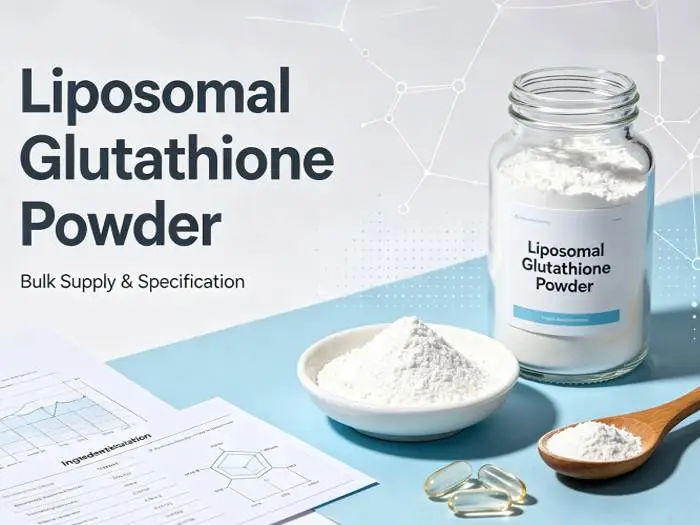
Understanding Liposomal Glutathione Powder: Key Properties and Benefits
Standard oral glutathione has a well-known limit to absorption. In the digestive tract, an enzyme called gamma-glutamyltransferase cuts the tripeptide before it can get into the bloodstream. This means that most glutathione supplements don't work to raise levels inside cells. Liposomal packaging gets around this problem completely.
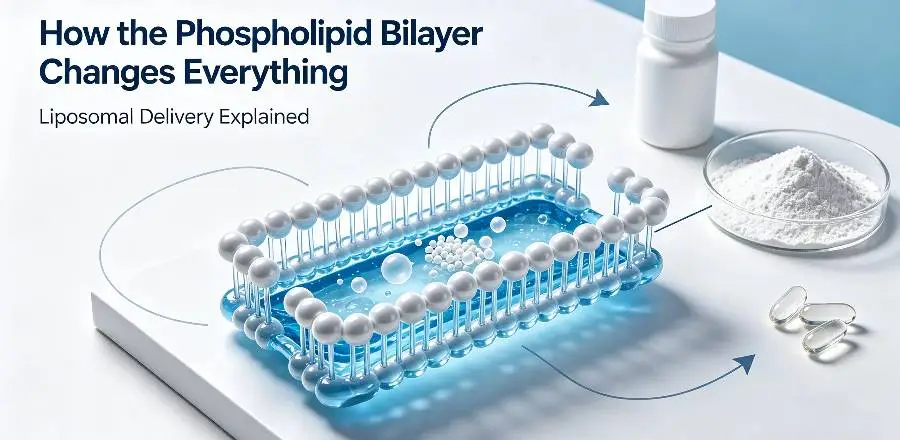
How the Phospholipid Bilayer Changes Everything?
The structure of liposomes is like the membranes of human cells. This allows paracellular transport and greatly speeds up first-pass metabolism. Our EncapsWell™ platform at EmerWell makes particles that are between 100nm and 250nm in diameter and have an encapsulation efficiency of more than 90%. Our liposomal glutathione powder is 13 times more effective at absorption than regular glutathione powder. This was proven by testing by a third party. This element can be used on a large scale without losing any of its effectiveness. It has a glutathione level of at least 95% and can be stored for 24 months.
Why Solubility Matters for Functional Product Development?
The powder naturally turns into a steady colloidal mixture of liposomal vesicles when it is mixed with water again. Because it dissolves in water, it's a great ingredient for ready-to-mix packets, enhanced drinks, and vitamin powders that you can dissolve in water. Because it doesn't have as strong of a sulfurous smell, which is a problem with most glutathione products, it works much better in taste-sensitive situations like beauty drinks and health shots. For people who make products, this means improved sensory patterns and more positive reactions from customers.
Formulation Considerations: Ensuring Quality and Performance
How well a liposomal ingredient works depends a lot on the choices that were made during development. Priorities include picking the right carrier lipids, keeping the vesicle structure safe during processing, and making sure the result stays stable for as long as it's supposed to.
Phospholipid Selection and Structural Integrity
In high-end liposomal formulations, liposomal glutathione powder with non-GMO sunflower lecithin is the best source of phospholipids. It gets rid of worries about soy allergens, meets clean-label requirements, and has strong zeta potential properties that keep particles from sticking together. A steady zeta potential keeps the vesicles' electrostatic resistance strong, which keeps the integrity of the encapsulation during production and storage. A key level of moisture is below 5%. Any amount above this speeds up the breakdown of phospholipids and weakens the bilayer structure over time.
Stability, Packaging, and Dosage Guidelines
Oxidation is the main way that reduced glutathione breaks down. A useful standard for shipping and storing large amounts of goods is nitrogen-flushed, moisture-barrier packing with desiccant inserts. With these packaging rules and storage at temperatures below 25°C, you can be sure that the product will be stable for 24 months. Unlike liquid liposomal versions, the powder form doesn't need to be chilled before it can be opened, which is a big plus for global distribution.
The dosage form changes depending on the purpose. Here are the general rules for use that we suggest across formats:
- Capsules and pills: 100–500 mg per serving for capsules and pills, based on health claims and label placement
- Ready-to-mix packets and functional drinks: 100–300 mg per serving, along with low-shear mixing methods to keep the integrity of the vesicles
- Nutricosmetic blends: 150–250 mg per dose when mixed with collagen or vitamin C to help fight free radicals together.
These ranges are just starting points. Our technical team, led by a PhD and based in the US, gives you advice that is specific to your formulation matrix and target consumer.
Comparative Analysis: Liposomal Glutathione Powder vs. Other Forms
Glutathione can be bought as a supplement in a number of different forms, such as normal pills, sublingual tablets, topical serums, and IV dosing. Each has pros and cons, but the liposomal powder format consistently shows better measurable outcomes for oral delivery on a commercial scale.
A study published in Antioxidants in 2021 confirmed that liposomal oral glutathione significantly raised whole-blood glutathione levels compared to oral glutathione that wasn't encapsulated at the same doses. It's not a small difference; the absorption benefit lets you get medically relevant plasma concentrations without having to go through the pain and expense of IV treatments.
Liposomal glutathione powder costs more per kilogram than commodity-grade glutathione when it comes to logistics. Higher bioavailability, on the other hand, means that a much lower effective dose is needed. This makes cost-per-effective-dose estimates a lot better. This makes the ingredient a value driver instead of a cost center for OEM manufacturers making high-end anti-aging, skin-brightening, or detox-support SKUs.
The most important things to look for in a supplier are multi-standard certification, third-party potency testing, and encapsulation verification (DLS particle size reports and TEM imaging). A reliable liposomal glutathione powder provider should at least have cGMP, ISO22000, FSSC22000, HACCP, Non-GMO, and Vegan certifications. They should also be able to quickly provide full paperwork, such as COA, TDS, and SDS.
Procurement Strategies for Liposomal Glutathione Powder
It takes more than just finding a low price to get bulk liposomal glutathione powder for business use. Reliability in the supply chain, compliance with regulations, and the ability to grow are all very important, especially for names that sell in the US and EU.
EmerWell is a strategic partner based in the US. Its headquarters are in San Diego, California, and it has local storage, sample logistics, and an independent lab for in-house R&D testing. This system gets rid of the usual delays that come with buying things from other countries and lets US buyers get technical help directly, without having to deal with time zone issues. Our MOQ for the test batch is 10 kg, and we'll reach full business production at 2,000 kg per month.
Our regulatory team handles all the paperwork and market-specific approvals for brands that need to follow FDA DSHEA or EU Novel Food rules. There are different certifications, such as Halal, Kosher, NOP, and EOS, which allow for a wide range of sales outlets in North America, Europe, and the Middle East.
Future Outlook: Innovations and Trends in Liposomal Glutathione Powder
The liposomal transport market for nutraceuticals is growing very quickly. Analysts predict that the demand for liposomal supplements will continue to grow by double digits until 2030. This is because consumers are becoming more aware of bioavailability science and the clinical validation of encapsulated actives. It is in this area that liposomal glutathione is strategically strong in terms of skin health, immune support, and oxidative stress.
New ideas in formulation include multi-vesicular liposomal structures that extend continuous release profiles, co-encapsulation of actives that work better together (like glutathione with N-acetylcysteine or alpha-lipoic acid), and particle-size optimization for clearness in beverages. When it comes to sustainability, the need for solvent-free encapsulation methods and traceable, ethically audited raw material sourcing is changing how suppliers are judged. Our manufacturing process uses nano-encapsulation, which is energy-efficient and leaves no solvent remains in the finished product. This is becoming an increasingly important factor for brands with ESG goals when they are buying things.
Conclusion
Liposomal glutathione powder solves the problem of absorption that has kept regular glutathione supplements from being used for decades. When compared to standard forms, its phospholipid-encapsulated structure gives it significantly higher bioavailability, more formulation options, and better stability. This ingredient is a basic improvement for nutraceutical brands, functional food makers, and OEM producers who want to make trustworthy, high-performance goods. To get a competitive glutathione product on the market, the most important thing to do is choose a provider with proven encapsulation technology, multi-standard approval, and quick technical support.
FAQ
Is liposomal glutathione powder safe for long-term use?
Reduced L-glutathione is naturally found in human cells and is well tolerated when taken as a supplement. Safety studies that have been published support taking standard supplement doses every day. Always make sure that the dose fits with what the product says it does and who it's meant for.
What dosage is appropriate for capsule vs. beverage formulations?
Capsules usually have between 100 mg and 500 mg per serving. Between 100 mg and 300 mg works well for beverage and sachet applications, with low-shear blending helping to keep the structure of the vesicles.
How does it compare to standard glutathione capsules in cost-effectiveness?
The price per kilogram is higher, but because it is absorbed 13 times better, smaller effective doses are needed to get the same systemic effects. This makes the cost-per-dose more efficient overall.
Does EmerWell's product contain soy-derived phospholipids?
No, our formula doesn't contain soy. Instead, it uses non-GMO sunflower lecithin, which means it's safe for clean-label products.
What documentation is available for regulatory submission?
On request, we offer COA, TDS, SDS, particle size distribution reports (DLS), and TEM images. We can also help with FDA DSHEA and EU compliance papers.
Partner with EmerWell for Scalable Liposomal Glutathione Powder Supply
EmerWell makes liposomal glutathione powder and is based in San Diego, California. They have an independent US laboratory, local storage, and an R&D team led by a PhD that is ready to help you with your formulation from the idea stage to commercial production. Our EncapsWell™ base and full OEM/ODM features make it easy to make changes. You can email our team at info@emerwell-bio.com or go to emerwelllabs.com to get samples and start talking about preparation right away.
References
1. Richie, J.P. et al. — European Journal of Nutrition, 2015
2. Sinha, R. et al. — Nutrition and Cancer, 2018
3. Allen, J. & Bradley, R.D. — Journal of Alternative and Complementary Medicine, 2011
4. Kalyanaraman, B. et al. — Redox Biology, 2018
5. Teskey, G. et al. — Antioxidants, 2018
6. Schmitt, B. et al. — Antioxidants, 2021
Online Message
YOU MAY LIKE
High quality furniture manufacturer