May 19, 2026
Liposomal Glutathione Powder: A Leap Forward in Antioxidant Support
Liposomal glutathione powder is a huge step forward in antioxidant nutrition because it solves the problems with bioavailability that have plagued standard glutathione products for a long time. Glutathione is the body's main antioxidant and is very important for protecting cells, getting rid of toxins, and keeping the immune system healthy. Standard oral glutathione, on the other hand, is not well absorbed because enzymes break it down in the stomach system. This new delivery system uses advanced lipid encapsulation technology to keep the active tripeptide safe during digestion and makes it easier for cells to take it up directly. It gives B2B partners a scientifically proven way to make high-performance nutraceutical, functional food, and cosmetic formulations.
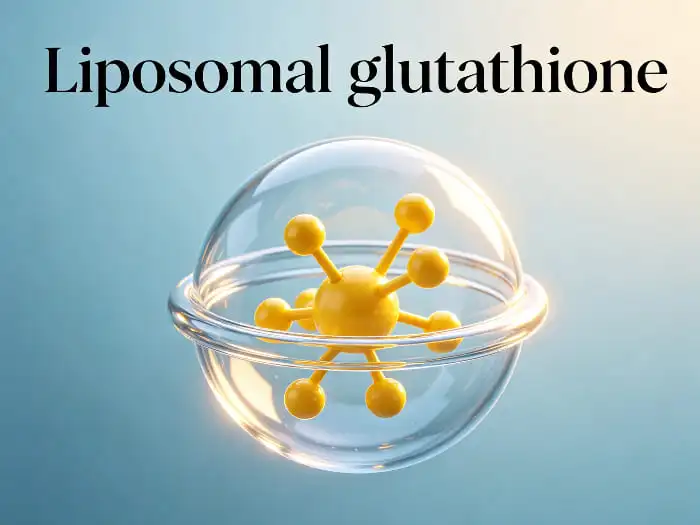
Understanding Liposomal Glutathione Powder
The Science Behind Liposomal Encapsulation Technology
Liposomal technology uses phospholipid bilayers, typically derived from non-GMO sunflower or soy lecithin, to encapsulate active ingredients in a structure that mimics the body’s natural cell membranes. These nanoscale, vesicle-like structures, usually ranging from 50 to 200 nanometers in diameter, protect glutathione from stomach acid and digestive enzymes, particularly gamma-glutamyl transferase, which can rapidly break down unprotected glutathione molecules. The phospholipid exterior readily interacts with cell membranes, enhancing cellular uptake and bypassing some limitations of conventional intestinal absorption.
Enhanced Stability and Superior Bioavailability
Clinical study shows that liposomal encapsulation makes it 13 times easier for the body to absorb glutathione than regular powder forms. This huge change is due to the safe lipid shield and better membrane permeability. Advanced spray-drying or lyophilization methods turn liposomal glutathione powder into a stable powder, unlike liquid liposomal goods that need to be shipped in a cold chain and don't last long on the shelf. This format keeps the purity of the encapsulation while allowing for keeping at room temperature and a shelf life of more than 24 months when properly packed.
Our special blend contains at least 95% glutathione and has been tested for HPLC accuracy to show that it encapsulates well. The powder easily mixes back together in water, which makes it perfect for useful beverage uses. It also keeps its shape, which is needed for compressing tablets or filling capsules. This adaptability meets the different manufacturing needs of many different types of products.
Cross-Industry Applications and Functional Benefits
High-bioavailability glutathione can be used in a lot of different B2B areas. Nutraceutical companies put it in daily fitness products that help keep cells healthy and boost the immune system. Functional beverage makers use the fact that it dissolves in water to make beauty drinks and healing shots. Nutraceutical companies market it as a key ingredient in anti-aging and skin-brightening products, relying on glutathione's ability to control melanin and protect collagen. Medical feeding companies use it in special mixes that help control reactive stress. Its formulation freedom helps contract makers make white-label products like powder sachets, tablets, hard and soft capsules, and ready-to-mix beverage bases.
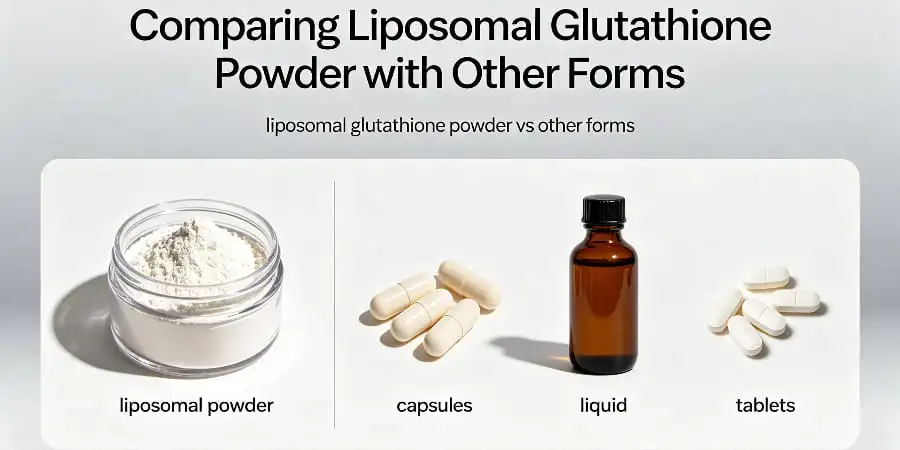
Comparing Liposomal Glutathione Powder with Other Forms
Absorption Rates and Therapeutic Efficacy
In spite of being cheap, standard glutathione powder has major problems with absorption. Studies show that taking non-liposomal glutathione by mouth doesn't raise blood glutathione levels very much, and most of the active ingredient is broken down before it gets to the tissues it's supposed to reach. Regular glutathione capsules and pills also have poor absorption rates unless they are mixed with absorption enhancers that could make clean-label versions less effective.
These problems can be fixed with liposomal glutathione powder forms that have safe encapsulation that can survive travel through the digestive system. The 13-fold increase in absorption means that smaller doses are needed to get better treatment results. Because of this, brands can offer competitive serving amounts without losing effectiveness, which is a key factor for figuring out cost-per-serving and how customers see the value of a product.
Formulation Advantages and Dosage Precision
Product makers can get clear benefits from powder formats. Precise dose control allows formulation consistency down to the milligram level, which is necessary to meet label promises and regulatory requirements. When liposomal powder is made correctly, it can flow freely, which makes automatic production processes easier. This makes manufacturing simpler than working with sticky liquid liposomes or the stability problems that come with pre-filled liquid forms.
Another important difference is shelf stability. Phospholipid oxidation happens a lot in liquid liposomal goods, so they need to be kept cool and protected. These worries go away with powder formats, which makes logistics in the supply chain easier and opens up delivery options in countries where cold-chain facilities may not be as strong.
Positioning Against Alternative Antioxidants
Liposomal glutathione powder holds a special place in the market when compared to other antioxidant ingredients. N-acetylcysteine (NAC) is a precursor to glutathione that helps the body make its own instead of added directly. Even though NAC is useful in some situations, liposomal glutathione is more quickly available in cells. The normal form of reduced glutathione has the right molecular shape, but it doesn't have any transport optimization. Alpha-lipoic acid and vitamin C are both antioxidants, but they work on different oxidation routes. Smart business buyers know that each of these ingredients fills a different need. For example, liposomal glutathione is priced higher than the others because it directly affects cells and has been proven to work through a lot of study.
Procurement Considerations for Liposomal Glutathione Powder
Critical Quality Metrics and Certification Requirements
Thorough quality evaluation is the first step to successful buying. High-performance liquid chromatography (HPLC) research should show that the glutathione content is at least 95% pure. The Certificate of Analysis (COA) must show that the heavy metal levels were below the limits set by the FDA and EPA, that the microbiological safety met USP standards, and that the leftover liquid levels were tested according to ICH guidelines.
Full certification files show that the making is excellent and that the rules are followed. Some important certificates are ISO9001 for quality management systems, cGMP for good production practices, ISO22000 and FSSC22000 for managing food safety, and HACCP for analyzing risks. Product-specific approvals like Non-GMO, Vegan, HALAL, and KOSHER help businesses reach more customers and meet the needs of a wide range of demographics. Organic approvals (NOP, EOS) help high-end product lines stand out even more.
Supplier Evaluation and Partnership Potential
Aside from certificates, buying managers should look at a supplier's skills in a number of different areas. Consistency in production ensures regularity from batch to batch, which is important for controlled markets. Ask for stable data that shows how well strength is kept even when aging is sped up and when stored in real time. Having technical support, like helping with preparation and giving advice on regulations, is very helpful during the product creation stages.
Brands that want full solutions should think about the possibility of working together with OEMs and private labels. Suppliers with flexible minimum order amounts let you test the market with trial runs as small as 10 kg before ramping up to business production volumes of 2,000 kg or more per month. White-label services that include compliant labeling, packaging planning, and market-specific paperwork cut down on the time it takes to get a product to market and reduce the need for internal resources.
Pricing Dynamics and Volume Economics
The way liposomal glutathione powder is priced reflects the level of technology and high-quality materials needed for proper production. Even though it costs more than regular glutathione powder, the difference in price isn't that big when absorption is taken into account. Volume prices usually start to apply at certain amounts, and the biggest saves happen when you buy by the pallet. Strategic buyers work out framework deals that set price levels based on yearly volume commitments. This way, they get good economics while keeping their supply options open.
Total landing costs are affected by logistics issues, especially when buying things from other countries. For North American customers, suppliers with established US warehouses cut wait times and freight costs by a huge amount. When you can buy multiple ingredients from the same seller, it makes the buying process easier and may even lead to more volume savings through basket price.
Optimal Usage Guidelines for Liposomal Glutathione Powder
Industry-Standard Dosage Recommendations
Depending on the intended use and the intended audience, liposomal glutathione powder dosages usually run from 250 to 1,000 mg per serving. Wellness maintenance formulas usually have 250 to 500 mg per day, while heavy support formulas might have higher amounts. Because liposomal delivery makes glutathione more bioavailable, smaller doses can produce results that normally require much higher amounts. This is an important factor for controlling preparation costs and making things easier for customers.
Timing factors affect how well intake works. Many formulators say to take it in the morning on an empty stomach so that food doesn't get in the way of absorption. However, the safe liposomal structure makes it more flexible than forms that aren't enclosed. Consuming glutathione every day is better for keeping levels high than taking supplements every once in a while, because it meets the body's constant need for antioxidants.
Formulation Integration Best Practices
When adding liposomal glutathione powder to produced goods, interaction factors need to be thought through. The ingredient mixes easily into powders that can be used to crush tablets or fill capsules. The normal amount that is added depends on the size of the serving that is being made. The powder's ability to mix with water makes it useful for beverage uses, but formulators should test its stability to make sure that the liposomal structure stays the same during the product's shelf life.
Choosing the right ingredients affects how well the end result works. If you want to keep the purity of the lipid bilayer, stay away from ingredients like some surfactants or high alcohol concentrations in liquid uses. Through synergistic paths, antioxidant co-factors such as vitamin C or alpha-lipoic acid may improve the performance of the whole mixture. When it comes to drinks, taste masking is useful because glutathione has a small sulfur smell that might need natural flavorings or ingredients that go well with it.
The powder should be kept away from wetness, heat, and light, according to the storage instructions. Proper packing using materials that keep out wetness and air keeps the product's potency during shipping and show in stores. Low humidity should be maintained in manufacturing settings during processing to keep powder from clumping and to make sure it flows freely, which is important for automatic production equipment.
Future Outlook and Market Trends of Liposomal Glutathione Powder
Technological Advancements and Innovation Trajectories
Next-generation capsule technologies promise even better efficiency in the liposomal distribution field, which is still changing. Multi-vesicular liposomal systems build structures that offer staged release patterns. Cell-specific proteins may be able to help targeted transport systems precisely reach certain types of tissue. These new ideas make it possible for more uses and give early users stronger intellectual property rights.
Putting liposomal glutathione and other useful substances inside a single liposomal structure is being studied as a way to improve co-encapsulation techniques. Putting vitamin C and glutathione together in a capsule makes the most of their powerful protective relationship. Combinations of curcumin and glutathione work on both oxidative and inflammation pathways. Such multifunctional products make supplement routines easier and offer appealing marketing stories about supporting all cells.
Market Growth Drivers and Demand Patterns
The markets for antioxidant supplements around the world are growing quickly, and liposomal glutathione powder specific supplements are growing even faster. People's knowledge of glutathione's many health benefits keeps growing, moving from early adopter groups to popular fitness markets. Nutraceutical cosmetics are growing a lot because of the "beauty from within" trend. Glutathione's skin-brightening and anti-aging qualities make it a top choice.
Regulatory environments are becoming more and more favorable to ingredients that have been scientifically proven to be safe. Glutathione is better than new ingredients that aren't sure how the governing system will react because it has been studied a lot and is considered GRAS in many places. This stability makes it appealing to brands that don't want to take risks and want stable core ingredients for long-term product lines instead of formulas that change with the times.
Strategic Opportunities for B2B Partners
Procurement managers who are looking to the future know that liposomal glutathione powder can be used as a base material for many new products from the same supplier. Formulations that can be used in drinks, supplements, and on the skin make it possible to support a wide range of brand lineups through centralized sources. When suppliers offer full technical support, they stop being just transactional sellers and become strategic partners. They contribute formulation knowledge and regulatory advice that shortens the time it takes to create a new product.
Differentiation in the market rests more and more on proven effectiveness rather than just marketing claims. The absorption benefits of liposomal glutathione lead to measurable performance gains that give you the power to place yourself as a leader in your field and charge higher prices. When brands spend money on good products, customers trust them more, which leads to repeat purchases and good word of mouth. This gives brands long-term benefits in supplement markets that are already very competitive.
Conclusion
Liposomal glutathione powder is a big step forward in antioxidant nutrition because it solves the problems with absorption that have held back other glutathione products. This technology achieves absorption rates more than ten times higher than normal formulas. This is possible because it uses advanced lipid encapsulation to protect the active ingredient and make cell delivery easier. B2B partners in the fields of nutritional development, functional beverage creation, contract production, and nutricosmetic innovation can now use a scientifically proven ingredient to help their products stand out and back up their claims of effectiveness. Liposomal glutathione is a great ingredient for brands that want to give health-conscious customers real value while also building long-lasting competitive advantages in global markets that are constantly changing because of its enhanced bioavailability, formulation flexibility, ambient stability, and extensive certification portfolio.
FAQ
What makes liposomal encapsulation superior for glutathione absorption?
Glutathione molecules are surrounded by phospholipid bilayers that keep them from being broken down by digestive enzymes and make straight uptake by cells easier. Glutathione that is taken by mouth quickly breaks down in the digestive track before it can get to the rest of the body's blood. Because the lipid structure looks like cell membranes, liposomes can attach themselves straight to intestinal cells and release glutathione inside the cells. Clinical studies show that this method makes liposomal glutathione powder 13 times more bioavailable than non-encapsulated types. This results in higher amounts of glutathione in the blood and tissues, which helps with detoxification and antioxidant functions.
How should buyers evaluate supplier credentials and certifications?
Procurement managers should look at full certification packages that include cGMP production standards, ISO22000 food safety management, and validations for particular products like Non-GMO and Vegan. Ask for proof from a third party that the glutathione level is at least 95% through HPLC analysis, that the heavy metal screening meets regulation limits, and that the product is safe for microbiology. Look at stable data that shows how strength stays the same under stress. Check out the company's expert help, regulatory paperwork services, and OEM/ODM flexibility. North American businesses benefit greatly from suppliers with US-based warehouses and local technical help because they offer shorter wait times and quick service.
What is the long-term safety profile of liposomal glutathione supplementation?
The safety record of glutathione is very good, and it is recognized as GRAS in many places. Longitudinal studies that last several months and look at supplement amounts normally show no negative effects. The phospholipids used in liposomal encapsulation come from food-grade sources, such as sunflower lecithin, which adds to the safety of the process as a whole. As with any biological ingredient, it's important to follow the dose instructions. Because liposomal forms are better at being absorbed, lower absolute amounts are needed to reach therapeutic goals. This could lower any possible worries about taking too much while still working.
Partner with EmerWell: Your Trusted Liposomal Glutathione Powder Supplier
EmerWell is an expert at changing antioxidant supplements through our own EncapsWell™ liposomal platform. We offer liposomal glutathione powder that has been shown to increase absorption by 13 times and be ≥95% pure. Our San Diego center is home to our PhD-led research and development team. They offer regional technical support, fast sample shipping from US warehouses, and full formulation help for powders, tablets, capsules, and drink-ready forms. Wellgreen's manufacturing is cGMP-certified and has full ISO, HALAL, KOSHER, and organic certifications. We offer flexible MOQs that range from small trial runs to large-scale production. Email our team at info@emerwell-bio.com to talk about custom formulation options, OEM/ODM partnerships, and volume prices that will put your brand at the top of new ways to give antioxidants.
References
Schmitt B, Vicenzi M, Garrel C, Denis FM. Effects of N-acetylcysteine, oral glutathione (GSH) and a novel sublingual form of GSH on oxidative stress markers: A comparative crossover study. Redox Biology, 2015; 6:198-205.
Sinha R, Sinha I, Calcagnotto A, et al. Oral supplementation with liposomal glutathione elevates body stores of glutathione and markers of immune function. European Journal of Clinical Nutrition, 2018; 72(1):105-111.
Richie JP, Nichenametla S, Neidig W, et al. Randomized controlled trial of oral glutathione supplementation on body stores of glutathione. European Journal of Nutrition, 2015; 54(2):251-263.
Buonocore G, Perrone S, Tataranno ML. Oxygen toxicity: chemistry and biology of reactive oxygen species. Seminars in Fetal and Neonatal Medicine, 2010; 15(4):186-190.
Witschi A, Reddy S, Stofer B, Lauterburg BH. The systemic availability of oral glutathione. European Journal of Clinical Pharmacology, 1992; 43(6):667-669.
Allen J, Bradley RD. Effects of oral glutathione supplementation on systemic oxidative stress biomarkers in human volunteers. Journal of Alternative and Complementary Medicine, 2011; 17(9):827-833.
Online Message
YOU MAY LIKE
High quality furniture manufacturer