Jul 13, 2026
Key Advantages of Liposomal Vitamin C Powder Over Traditional Forms
New ideas for nutrient delivery systems When it comes to normal supplements, vitamin C is hard to absorb. Liposomal vitamin C powder fixes this problem. By enclosing ascorbic acid in phospholipid bilayers that look like human cell membranes, this new recipe is up to 8 times more bioavailable than regular powders. This lets more vitamin C get to your cells without being broken down or flushed out. Liposomal encapsulation improves absorption, lowers stomach pain caused by high-dose conventional vitamin C, and keeps the product stable on the shelf. This makes it perfect for nutritional supplement brands, functional drink developers, and contract manufacturers looking for ingredients that are scientifically proven to work and are also better for business.
Introduction
Vitamin C supplements come in different forms, which changes how well they work and where they stand in the market. Different delivery formats have technical and business differences that affect how well procurement pros' portfolios do in this competitive field. Ascorbic acid powders, capsules, and liquid solutions make up most of the market. However, a new study shows that they are not very good at absorbing ascorbic acid or staying stable in their formulations.
In liposomal vitamin C powder formulas, we focus on the benefits of liposomal encapsulation. This study looks at three important procurement priorities: improving bioavailability in a measurable way, keeping formulations stable during storage and transport, and finding sources that are easy to work with. Knowing these basic differences will help you choose ingredients for immune support capsules, beauty-from-within drinks, and private-label wellness goods that work well and don't cause problems in the supply chain. This in-depth investigation gives us the technical and business information we need to confidently buy nutraceuticals around the world.
Understanding Liposomal Vitamin C Powder and Its Mechanism
The Science Behind Phospholipid Encapsulation
Phospholipid coating is what makes modern methods of delivering vitamin C stand out. In order to protect ascorbic acid from breaking down and being absorbed too slowly, liposomal vitamin C powder technology creates protective spherical structures of phosphatidylcholine-based lipid bilayers. These 100–400 nanometer vesicles are made of phospholipids and vitamin C in water under controlled processing conditions.
The main benefit of this process is that these liposomes are structurally similar to the membranes of human cells. The lipid membrane protects ascorbic acid from the acidic pH and digestive enzymes that break down vitamin C that is not protected. Liposomes connect with intestinal epithelial cells via membranes, allowing direct delivery inside cells instead of using saturated transporter proteins that stop vitamin C absorption.
Bioavailability Improvements Backed by Research
There are big differences in how fast liposomal and conventional ascorbic acid are absorbed in the blood according to clinical studies that compare their vitamin C levels. Liposomal formulations had higher peak serum concentrations (8 times higher) than powdered dosages and longer plasma retention periods, which means they were available to cells for longer. This better bioavailability profile lets formulators reach therapeutic tissue saturation with lower total doses, which saves users money and reduces the number of pills they have to take.
This difference in bioavailability is a quantitative performance criterion that procurement teams use to look at ingredient needs and justify the higher cost. Products with Encapsulation WellTM technology keeps vitamin C levels above 99% for 24 months in the right conditions, as proven by testing by a third party that the capsule works above 95% of the time. These factors affect how different market sectors make decisions about economics and how to place their products.
Key Advantages of Liposomal Vitamin C Powder Over Traditional Vitamin C Forms
Superior Cellular Uptake and Systemic Effectiveness
Liposomal compositions' improved absorption yields health effects that standard forms cannot match. Due to SVCT1 intestine transporters' poor capability, standard oral ascorbic acid absorption peaks around 200-400 mg per dosage. Liposomal Vitamin C Powder avoids this physiological barrier by direct membrane fusion, allowing more dosages to reach systemic circulation and target tissues.
Formulations targeting immunological function, collagen formation, and antioxidant protection are especially affected. Immune cells accumulate vitamin C 10-100 times greater than plasma through active transport pathways; however, plasma availability is required. Long-term blood elevation from liposomal distribution supports immune cell saturation. Dermal fibroblasts need vitamin C to produce collagen, making liposomal forms ideal for beauty-from-within treatments due to their sustained-release characteristic.
Minimized Gastrointestinal Side Effects
High-dose vitamin C supplements sometimes cause osmotic diarrhea and gastrointestinal pain, limiting dosage escalation and customer compliance. Unabsorbed ascorbic acid in the intestinal lumen draws water through osmotic pressure, causing digestive issues. Crystalline ascorbic acid compounds' acidity aggravates gastric discomfort, especially in sensitive digestive systems or supplement users.
Both methods are addressed by liposomal encapsulation. Ascorbic acid's acidity is neutralized by the phospholipid layer, minimizing stomach discomfort. More crucially, improved absorption efficiency reduces unabsorbed vitamin C reaching the lower digestive tract for osmotic effects. Tolerability allows formulations with larger effective dosages without commensurate side effect risk, which is important for therapeutic-grade drugs and high-compliance applications like surgical recovery or rigorous immune support programs.
Extended Shelf Stability and Reduced Degradation
The supplement supply chain struggles with vitamin C stability. Ascorbic acid oxidizes easily in light, oxygen, heat, and moisture, which cannot be eliminated during manufacture, storage, and distribution. Traditional powder formulations lose strength over time, possibly dropping below label claims before reaching consumers. Liquid vitamin C degrades considerably faster, necessitating refrigeration and having shelf life in weeks rather than years.
Dual protective mechanisms in the lipid encapsulation matrix greatly increase product stability. The phospholipid bilayer blocks oxygen from reaching ascorbic acid molecules, decreasing oxidative breakdown. Dry liposomal vitamin C powder reduces the aqueous environment that increases hydrolytic breakdown pathways in liquid suspensions. When properly packed, our EncapsWell™ formulations maintain over 95% potency for 24 months, allowing for extended distribution chains, reduced waste from expired inventory, and full label-claim potency for customers.
Formulation Flexibility Across Multiple Delivery Formats
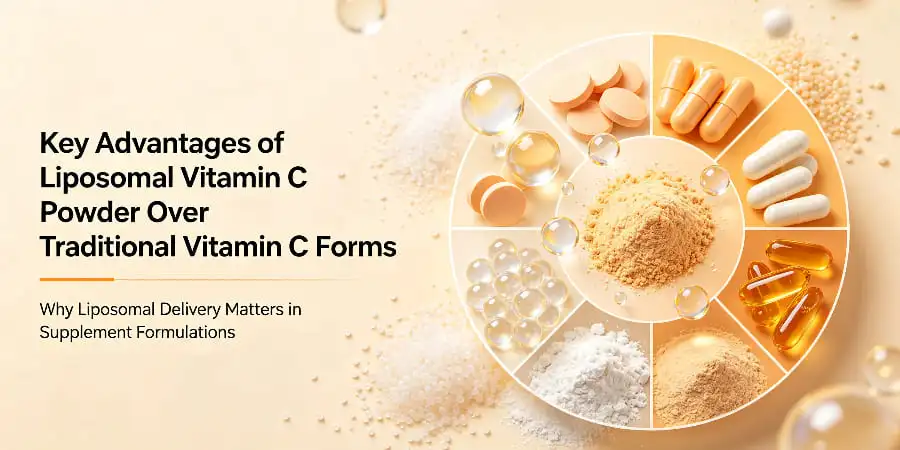
One neglected benefit of liposomal powder in completed product development is its adaptability. The water-dispersibility of appropriately prepared liposomal powder permits smooth incorporation into varied delivery systems without affecting encapsulation integrity. Product makers can use the same basic ingredient in ready-to-mix beverage powders, pressed tablets, filled capsules, effervescent formulations, and direct-consumption stick packs while retaining liposomal bioavailability.
This versatility simplifies inventory management and formulation creation for multi-market brands. Procurement teams may use a single high-performance powder for capsule and beverage lines instead of separate ingredients. Encapsulating ascorbic acid neutralizes its sourness, facilitating flavor formulation for functional drinks and chewables, where palatability directly affects customer acceptability and repeat purchase rates.
Procurement Considerations for Liposomal Vitamin C Powder in the B2B Market
Certification Requirements and Regulatory Compliance
Advanced nutrition delivery system regulation requires careful attention to certification criteria that differ by target market. Third-party audits of cGMP compliance ensure production quality and traceability for US distribution. European markets increasingly require novel food registrations for specialized formulations, while some Asian countries demand import certificates. EmerWell's manufacturing relationship with Wellgreen provides access to ISO 9001, ISO 22000, FSSC 22000, and HACCP certifications for market entrance in over 50 countries.
Religious and dietary certifications boost distribution possibilities by opening new markets. Halal and Kosher certifications allow distribution to niche retailers and institutions serving specific groups. Non-GMO Project verification and vegan certification serve the rising clean-label consumer sector that scrutinizes ingredient source and processing. Procurement teams should acquire current certification papers and certificates of analysis for recent manufacturing batches from possible suppliers to ensure systemic quality management and batch-specific verification processes fulfill your brand's standards for liposomal vitamin C powder.
Cost Structure Analysis and Volume Economics
Beyond per-kilogram price, the liposomal ingredient's total cost of ownership must be calculated. Liposomal versions cost more than commodity ascorbic acid, but its bioavailability allows dosage reduction to offset raw material costs. A 500 mg liposomal vitamin C formulation that works as well as 2000 mg ascorbic acid minimizes per-serving ingredient costs and supports premium positioning and distinctive marketing claims.
Specialized ingredient pricing is heavily influenced by volume commitments. Annual contract suppliers usually offer tiered pricing that improves economics as volume rises and supply security to mitigate spot market volatility. Suppliers' minimum order quantities range from metric tonnes for major firms to smaller quantities that allow new companies to use innovative ingredients without investing in inventory. We provide flexible MOQ rules for expanding brands and dedicated account management to ensure constant supply as your formulas gain popularity.
Private Label Capabilities and Customization Options
In competitive supplement marketplaces, customized formulas and exclusive branding provide goods an edge. Leading liposomal ingredient suppliers provide OEM and ODM services beyond white-label packaging, including synergistic component mixing, unique dosage forms, and turnkey product development. Vertical integration speeds time-to-market and controls formulation compatibility and stability testing.
Combination formulations of vitamin C and additional nutrients provide considerable customization potential. Zinc, quercetin, and elderberry blends make immune support products more appealing. Beauty supplements include liposomal vitamin C, amino acids, and plant extracts to create collagen. Our R&D team works directly with brand partners to produce bespoke blends with stability testing and bioavailability optimization, delivering technical documentation for regulatory filings and marketing.
Comparing Liposomal Vitamin C Powder With Other Supplement Formats
Liposomal Powder Versus Conventional Capsules
Traditional capsules are convenient and accurate, but they limit absorption kinetics and formulation possibilities. Standard ascorbic acid capsules release into gastric fluid, where digestive enzymes and acidic pH degrade before intestinal absorption. Therapeutic tissue saturation needs numerous daily doses or impractically large capsule sizes due to the bioavailability ceiling, which reduces compliance. Enteric-coated capsules reduce gastrointestinal degradation but require more production and use saturation transporter systems for absorption.
Capsules of liposomal vitamin C powder offer ease and improved distribution because the capsule is only packaging. Pre-formed liposomes in the capsule remain intact during gastric transit and improve absorption when they reach intestinal surfaces. Brands targeting traditional supplement users who want premium effectiveness would like this format. Alternatives include distributing the same powder in stick packs or jars for beverage mixing to increase consumption and differentiate in crowded retail locations.
Liposomal Powder Versus Liquid Suspensions
Liquid liposomal vitamin C solutions have become popular as premium alternatives to standard forms. These suspensions are useful for acute immune support due to their quick absorption and simplicity of use. However, liquid formats have substantial practical limits that limit formulation and supply chain alternatives. Aqueous conditions promote vitamin C breakdown, requiring preservatives that contradict clean-label positioning. Cold chain storage and delivery cost a lot and limit shop positioning.
Powder avoids these limits while retaining liposomal technology's benefits. When reconstituted in water or drinks, appropriately prepared liposomal powder forms new suspensions before consumption, maximizing stability without preservatives. Concentrated dry shipment minimizes costs and carbon impact compared to water-heavy liquids. Powder ingredients have better inventory economics than other ingredients since they last longer and need less storage. Major functional beverage manufacturers use powder-based liposomal materials for formulation development due to these practical benefits.
Performance Against Standard Ascorbic Acid Powder
Direct comparison with commercial ascorbic acid powder shows the biggest performance difference. Traditional powder absorbs by passive diffusion and saturated active transport, resulting in 50% bioavailability at low dosages and precipitous decreases with dosage. Conventional ascorbic acid is unsuitable for sustained high tissue concentrations because the dose-response curve flattens at 500 mg single doses. Unmodified ascorbic acid's sour taste and stomach acidity restrict its use in tasty functional foods and beverages.
Basic constraints are overcome via liposomal encapsulation. The 8-fold bioavailability enhancement makes 500mg liposomal vitamin C comparable to 4000mg regular powder, which is too much for human digestion. Proper encapsulation creates a neutral taste profile that allows its formulation in flavored drinks, candies, and other consumer-preferred forms where raw ascorbic acid is incompatible. The performance gap supports the ingredient premium for efficacy-claim and consumer-experience businesses through unique positioning and higher customer happiness.
Safe Usage and Dosage Guidelines for Liposomal Vitamin C Powder
Recommended Intake Levels and Formulation Strategies
A liposomal vitamin C powder dose must take into account its higher bioavailability and health benefits. General wellness formulations include 250-500mg per serving, providing systemic exposure comparable to several grams of vitamin C with great tolerability. Using the sustained plasma concentration profile to maintain immune cell saturation, immune support products may specify 500-1000 mg for seasonal or acute demands. Beauty products that target collagen synthesis utilize 500 mg daily dosages to overload skin collagen biochemical pathways.
Powder versions provide complex dosage methods based on customer use habits. Individually dosed 500mg stick packets give on-the-go immune support, while bigger containers with measuring scoops allow for customized consumption. Combination products may contain liposomal vitamin C and additional nutrients to address several health issues. Formulation teams should evaluate target plasma concentrations for desired benefits rather than matching vitamin C dosages since greater bioavailability modifies dose-response relationships.
Safety Profile and Contraindication Awareness
Decades of consumption data confirm vitamin C liposomal administration acceptability across varied groups. Vitamin C's water-soluble nature allows excess ingestion to be eliminated through urine rather than accumulate to hazardous levels, opening a broad therapeutic window. Phosphatidylcholine from sunflower or soy lecithin is utilized in liposomal encapsulation and a GRAS food ingredient with thorough safety evidence for supplements and functional foods.
Formulating goods for specific demographics or health problems requires attention. Hemochromatosis and iron overload patients should avoid high-dose vitamin C owing to increased iron absorption. Standard supplementation ranges carry no danger, although large dosages may cause hemolysis in glucose-6-phosphate dehydrogenase deficiency. Vitamin C is well-tolerated by pregnant and nursing mothers, although formulators should follow prenatal nutrition standards. To ensure ethical marketing and broad accessibility, product labels should include standard disclaimers suggesting consultation with healthcare providers for those with medical issues or taking prescriptions.
Conclusion
Liposomal vitamin C powder encapsulation is the next-generation vitamin C supplement due to its technological and economic advantages. The 8-fold bioavailability enhancement over typical powder improves product efficacy, allowing marketers to provide demonstrable customer advantages that boost happiness and loyalty. GI tolerance removes a barrier to high-dose supplements, enhancing immune support, beauty-from-within, and performance nutrition use cases. Extended shelf stability and formulation flexibility save waste and enable innovative product creation across formats throughout the supply chain. These many benefits justify premium positioning and give quantitative return through superior product performance for procurement professionals analyzing ingredient possibilities.
FAQ
What makes liposomal encapsulation more effective than regular vitamin C?
Why is liposomal vitamin C powder more effective than normal ones? Phospholipid bilayers shield ascorbic acid from gastrointestinal breakdown and allow membrane fusion for direct cellular absorption. Liposomal vitamin C has 8 times greater systemic bioavailability and sustained plasma concentrations that support cellular functioning than saturated intestinal transporters.
How do I verify authentic liposomal formulation quality?
True liposomal goods should have third-party certifications of analysis verifying vitamin C content above 99%, particle size distribution within 100-400nm, and encapsulation effectiveness above 90%. Request cGMP, ISO 22000, and HACCP manufacturing certificates. Reliable providers give batch traceability and stability data showing potency throughout shelf life.
Which dosage forms work best for different market segments?
Water-dispersible powder fits well into ready-to-drink or mix-at-home cosmetic and functional drinks. Consumers demand daily capsule doses via typical supplement channels. Rapidly dissolving effervescent pills appeal to consumers seeking different experiences. Capsules suit convenience-focused shoppers, whereas drinks and effervescents suit experience-focused buyers.
Partner With EmerWell for Superior Liposomal Vitamin C Powder Supply
EmerWell specializes in providing B2B partners with clinically validated liposomal nutrient delivery systems that elevate product performance and market positioning. Our EncapsWell™ liposomal technology achieves exceptional 8× bioavailability improvements while maintaining the clean-label, vegan, and non-GMO formulation standards today's consumers demand. As a liposomal vitamin C powder manufacturer backed by Wellgreen's cGMP-certified facilities and 100+ metric ton annual production capacity, we deliver the quality consistency and supply reliability that growing brands require. Whether you need off-the-shelf powder for private labeling or custom formulations blending vitamin C with complementary actives, our PhD-led R&D team provides comprehensive technical support from concept through commercialization. Contact us at info@emerwell-bio.com to discuss sample evaluation, request certificates of analysis, or explore OEM/ODM partnership opportunities that transform your product vision into market-ready formulations.
References
1. Davis JL, Paris HL, Beals JW, et al. Liposomal-encapsulated Ascorbic Acid: Influence on Vitamin C Bioavailability and Capacity to Protect Against Ischemia-Reperfusion Injury. Nutrition and Metabolic Insights. 2016;9:25-30.
2. Gopi S, Balakrishnan P. Evaluation and Clinical Comparison Studies on Liposomal and Non-Liposomal Ascorbic Acid (Vitamin C) and Their Enhanced Bioavailability. Journal of Liposome Research. 2021;31(4):356-364.
3. Hickey S, Roberts HJ, Miller NJ. Pharmacokinetics of Oral Vitamin C. Journal of Nutritional and Environmental Medicine. 2008;17(3):169-177.
4. Lykstad J, Sharma S. Biochemistry, Water Soluble Vitamins. StatPearls Publishing. 2023 Jan.
5. Padayatty SJ, Sun H, Wang Y, et al. Vitamin C Pharmacokinetics: Implications for Oral and Intravenous Use. Annals of Internal Medicine. 2004;140(7):533-537.
6. Zhao Y, Feng Y, Liu M, et al. Liposomal Delivery System: A Novel Strategy for Enhancing Bioavailability and Therapeutic Efficacy of Vitamin C. Pharmaceutics. 2022;14(9):1847.
Online Message
YOU MAY LIKE
High quality furniture manufacturer