Sep 11, 2026
How to Use Liposomal Glutathione Powder in Supplement Formulations
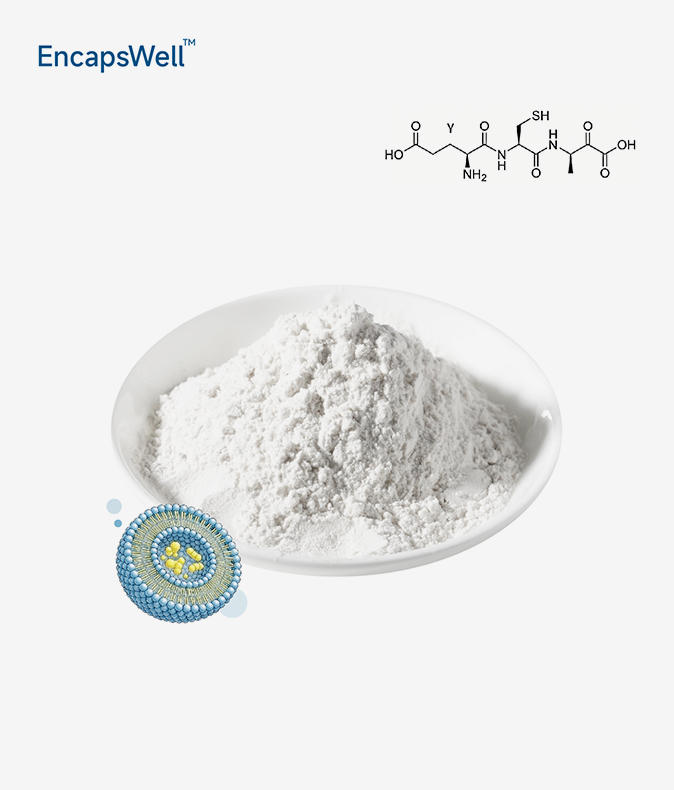
Using liposomal glutathione powder in supplement formulations starts with understanding what sets it apart from standard glutathione. By encapsulating reduced L-glutathione within phospholipid bilayers, this delivery format protects the active tripeptide from gastric acid and enzymatic degradation in the gut. The result is up to 13× greater absorption compared to conventional glutathione powder. Whether you're developing capsules, sachets, or functional beverages, integrating this ingredient correctly—from dosage selection to mixing protocols—determines whether your finished product delivers measurable antioxidant support or simply passes through the digestive tract underutilized.

Understanding Liposomal Glutathione Powder and Its Benefits
Standard oral glutathione has been a problem for formulators for a long time. Before it can get to the rest of the body's bloodstream, the tripeptide is easily broken down by gamma-glutamyl transferase in the intestines and by stomach acid. Liposomal glutathione powder encapsulation fixes this issue by enclosing glutathione molecules in a phospholipid bilayer that has the same structure as human cell membranes. This allows transfer outside of cells and skips the first pass metabolism completely.
Why Bioavailability Is the Deciding Factor?
Clinical studies show that liposomal glutathione powder boosts plasma GSH levels more effectively than types that are not encapsulated. In a study that came out in 2014 in the European Journal of Clinical Nutrition, healthy people who took liposomal glutathione powder had 40% more glutathione in their blood after 30 days. Functional beverage makers, nutricosmetic brands, and clinical nutrition formulators need this kind of systemic elevation to back up their claims of effectiveness. High-grade liposomal glutathione powder has particles that are between 100 and 250 nm in size and an encapsulation rate of more than 90%. Its physical and chemical profile also supports stable performance across batch runs.
Antioxidant and Skin Health Advantages
In addition to protecting cells, glutathione stops tyrosinase activity, which stops the enzyme that makes melanin. This makes it a key ingredient in beauty-from-within products. The liposomal format delivers glutathione to the body's cells more efficiently than regular glutathione at similar oral amounts. This is helpful for brands that want to improve skin clarity, fight aging, or control oxidative stress.
Key Factors for Using Liposomal Glutathione Powder in Supplement Formulations
Getting the recipe right is more than just adding something to a mix. The shape of liposomal glutathione powder vesicles can change easily, and there are a number of things that directly impact how well the packing holds up during processing and storage.
Stability, Compatibility, and Dosage Guidance
Every person who makes products should think about these basic formulation rules before choosing a dosage form:
- Use low-shear mixing exclusively. When you mix things at high speed, the phospholipid bilayers break apart. This lets free glutathione out and takes away the bioavailability advantage. Low-shear blending at temperatures below 40°C protects the integrity of the vesicles during production.
- Avoid prolonged exposure to acidic co-ingredients. When there is a lot of ascorbic acid in a liquid, it can make liposomal structures less stable. It is best to use delayed encapsulation or co-encapsulation with a single liposomal system when making a formulation with vitamin C.
- Dosage ranges typically fall between 200–500 mg per serving Most of the time, 200 to 500 mg per dose is enough to help with antioxidants in general. Higher doses may be used in therapeutic-adjacent protocols that target oxidative stress, but label claims should be based on regional regulatory frameworks, such as FDA DSHEA guidelines.
These rules are the same whether you're making ready-to-mix powders, hard pills, or packets. Safety of the ingredients and making sure they follow the rules for your target market come first, after making sure the stability protocols are met.
Comparative Analysis: Liposomal Glutathione Powder Versus Other Antioxidants
Standard glutathione, N-acetyl cysteine (NAC), and liposomal glutathione powder are the three antioxidant ingredients that buying teams usually compare when looking for high-value new formulas.
Where Liposomal Delivery Holds a Distinct Edge
NAC is a precursor to glutathione that depends on endogenous synthesis pathways. It works for people who have enough enzymes, but it doesn't always work for people whose livers don't work well or who are constantly exposed to oxidative stress. Standard GSH powder is easier to use, but it has the same problems with degradation as the other options. Liposomal glutathione powder sends the whole tripeptide straight to cells, raising plasma levels in a way that can be repeated and doesn't require any metabolic conversion.
When it comes to price, liposomal types are more expensive per kilogram than raw GSH powder. However, the formulation efficiency—achieving the same or better bioavailability at lower absolute doses—often cancels out the difference. This is especially true for high-end SKUs where claims of effectiveness drive customer value.
Sourcing and Procurement Strategies for Liposomal Glutathione Powder
When buying liposomal glutathione powder actives, you have to be more careful than when buying regular ingredients. Some products that are sold as "liposomal" don't really meet the physical and chemical standards for encapsulation. If a supplier can't give you transmission electron microscopy (TEM) images or dynamic light scattering (DLS) particle size reports, you should be very worried right away.
Supplier Evaluation Criteria That Matter
When looking for a source of liposomal glutathione powder, buying managers should ask for and check the following:
- Third-party validated encapsulation efficiency (EE%), usually higher than 90%, and proven by HPLC analysis.
- Zeta potential data shows that the particles are electrostatically stable and don't stick together.
- 24-month accelerated stability data that includes data from different temperature and humidity conditions.
- Certifications such as cGMP, ISO 22000, FSSC 22000, HACCP, HALAL, KOSHER, non-GMO, and vegan.
- Complete documentation package: COA, TDS, SDS, and heavy metal screening results that meet FDA/EPA limits make up the whole package of paperwork.
Logistics are also important. Liposomal glutathione powder with a moisture content below 5% and a shelf life of 24 months can be shipped in room temperature conditions, which is a big advantage over liquid liposomal formats that need to be kept cold during transport.

Practical Case Studies and Formulation Tips
A nutricosmetic brand from the US changed the ingredients in its collagen drink line so that each bottle now contains 300 mg of concentrated glutathione. By switching from regular GSH to a liposomal glutathione powder form using phospholipids from sunflowers, the brand got rid of the sulfurous aftertaste that was present in older versions and achieved a stable shelf life of 24 months without having to be refrigerated.
Synergistic Pairing and Flavor Masking Solutions
Liposomal glutathione powder works well with vitamin C (co-encapsulated), alpha-lipoic acid, and selenium. They all play different but necessary parts in the cellular redox cycle. If hiding flavors is important for drinks or sachets, maltodextrin-based spray-drying methods or flavor-masking ingredients that work with the phospholipid shell can lower the bitterness that's still there without damaging the structure of the vesicle.
One OEM partner that makes private-label antioxidant capsules discovered that combining liposomal glutathione powder at 250 mg with liposomal vitamin C at 500 mg created a clean-label, two-ingredient formula with strong clinical positioning. It also showed no major stability issues during 18 months of accelerated testing.
Conclusion
Liposomal glutathione powder gives supplement makers a scientifically proven way to make their products more bioavailable, have better label descriptions, and stand out from other products. For integration to work, the mixing methods must be right, the co-ingredients must be suitable, and the supply chain must be thoroughly checked. With the right sourcing partner and formulation help, this ingredient can be used to make high-end functional, cosmetic, and nutraceutical drinks that stand out for their effectiveness, not just their marketing.
FAQ
Is liposomal glutathione safe across different consumer populations?
The body makes reduced glutathione naturally, and the phospholipid carriers used in liposomal glutathione powder versions are usually thought to be safe. Products made with sunflower lecithin don't contain soy, so they can be used by people who are sensitive to soy. Standard levels of doses used in supplements have not been linked to any bad effects in healthy people.
How do you confirm a product is genuinely liposomal?
Ask your provider for DLS particle size distribution records and TEM images. Real liposomal glutathione powder goods will have rounded vesicular structures that are 100 to 250 nm in size. Reports of zeta potentials above ±30 mV show that the colloids are stable enough.
What distinguishes liposomal glutathione from standard GSH in functional beverages?
Standard GSH breaks down in liquids and often gives off sulfurous tastes. The liposomal glutathione powder format keeps its structure stable at different pH levels, so it can be used in ready-to-mix powders and fortified drinks without changing the taste or effectiveness.
What MOQ should I expect from a reliable supplier?
Reliable suppliers offer flexible MOQs, with pilot batches starting at 10 kg for research and development runs and going up to full commercial volumes as needed. This freedom is very important for brands that want to try out new formulas before committing to big inventory spots.
Partner with EmerWell — Your Trusted Liposomal Glutathione Powder Supplier
EmerWell's main office is in San Diego, California, and the company has a laboratory and warehouse in the United States as well as formulation experts with PhDs. We offer liposomal glutathione powder through our own EncapsWell™ platform. This powder has at least 95% glutathione in it, is 13 times more absorbable, and has all the necessary certifications, including cGMP, ISO 22000, HALAL, KOSHER, Non-GMO, and Vegan. We can work with you on formulation for a long time because we offer OEM/ODM choices, flexible dosage forms, and fast US sample shipping. To get samples and scientific information, email us at info@emerwell-bio.com or go to emerwelllabs.com.
References
1. Sinha, R., Sinha, I., Calcagnotto, A., et al. Oral supplementation with liposomal glutathione elevates body stores of glutathione and markers of immune function. European Journal of Clinical Nutrition, 2018.
2. Richie, J. P., Nichenametla, S., Neidig, W., et al. Randomized controlled trial of oral glutathione supplementation on body stores of glutathione. European Journal of Nutrition, 2015.
3. Pizzorno, J. Glutathione! Integrative Medicine: A Clinician's Journal, 2014.
4. Gnana Sellva Rani, D., & Ramanathan, S. Liposomal drug delivery systems: A comprehensive review. Journal of Drug Delivery Science and Technology, 2020.
5. Allen, T. M., & Cullis, P. R. Liposomal drug delivery systems: From concept to clinical applications. Advanced Drug Delivery Reviews, 2013.
6. Mokhtari, V., Afsharian, P., Shahhoseini, M., et al. A review on various uses of N-acetyl cysteine. Cell Journal (Yakhteh), 2017.
Online Message
YOU MAY LIKE
High quality furniture manufacturer